Burst Drain Repair Guide for Homes and Sites
Water appearing across a patio, sewage backing up into a gully, or a suddenly sinking section of driveway needs prompt attention. This burst drain repair guide explains what to do first, how professionals identify the fault, and why the right repair method can save a great deal of disruption later.
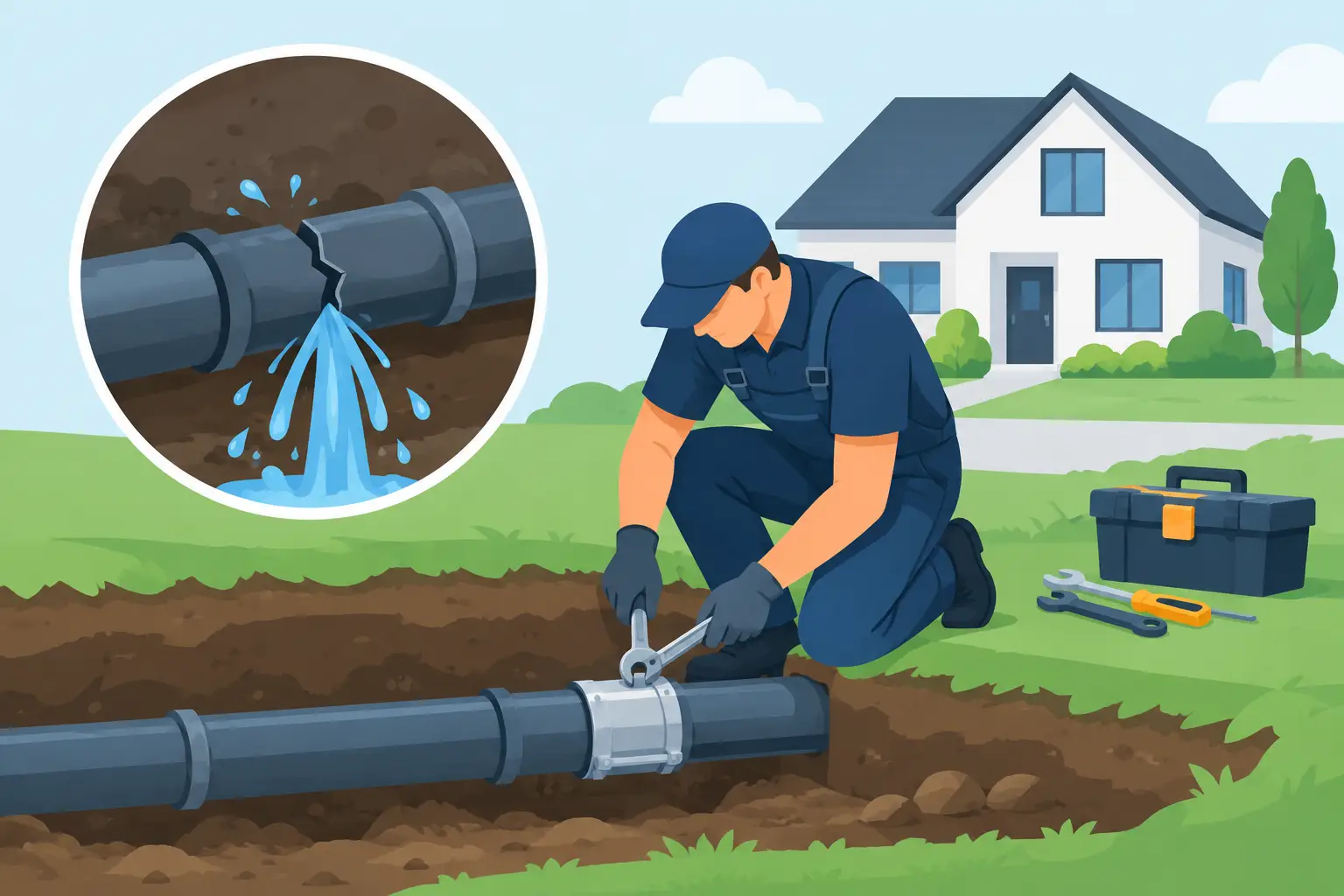
A drain does not normally “burst” in the way a pressurised water pipe does. More often, the pipe has cracked, separated at a joint, collapsed, or been damaged by tree roots or ground movement. The result can still be urgent: wastewater may escape into the ground, blockages can develop, and foundations, paving or internal floors may be affected.
Burst drain repair guide: make the area safe first
Keep people, pets and vehicles away from pooling water, soft ground and sunken paving. If the water is foul-smelling, discoloured or contains toilet waste, treat it as contaminated. Avoid touching it, keep children away, and do not attempt to remove a drain cover if it is under pressure or surrounded by unstable ground.
Stop using appliances and fittings that discharge into the affected drain. That may include toilets, showers, washing machines, dishwashers and sinks. Reducing the flow into the system prevents the overflow becoming worse while the fault is investigated.
If water is pouring out rapidly and looks clean, the issue may be a burst water supply pipe rather than a drainage defect. Turn off your internal stopcock if it is safe to do so. If the leak is outside the property boundary or you cannot isolate it, contact your water supplier as well as a specialist contractor. Clean water and foul water faults need different responses, and diagnosing that distinction early avoids wasted time.
Take clear photographs from a safe distance before any clean-up begins. Record where water is emerging, whether drains are backing up, and any visible damage to paths, lawns or walls. This information can help a contractor assess urgency and may also be useful for an insurance claim.
Signs the drain has failed below ground
Some drainage failures are obvious. Others start as a recurring blockage that returns shortly after clearance. A drain that repeatedly blocks at the same point is rarely solved by rodding alone, particularly where the pipework is old, brittle or affected by root ingress.
Look out for unpleasant smells around external gullies, damp or unusually lush patches of lawn, water collecting where it never has before, and cracks or depressions in paving. Inside a property, slow-draining fittings, gurgling noises and wastewater rising in a toilet or shower can point to a restriction or damaged pipe downstream.
For landlords and facilities teams, a sudden increase in drainage call-outs at one building should be treated as a pattern, not a series of isolated incidents. A survey can identify the underlying defect and provide a clear record of the repair scope, which is useful for planned maintenance, tenants and insurers.
Do not rely on chemical drain cleaners
Chemical products may do little or nothing where a pipe is cracked, displaced or collapsed. They can also create a risk for anyone who later has to clear or survey the drain. Avoid pouring more chemicals into a system that is backing up. Mechanical clearance and CCTV inspection are safer, more informative routes to the correct repair.
How a professional diagnosis works
The first priority is often to clear any immediate blockage and restore safe drainage where possible. High-pressure water jetting or specialist mechanical equipment can remove debris, scale and root mass, allowing the pipe to be inspected properly.
A CCTV drain survey then sends a camera through the pipework. It can show cracked sections, displaced joints, root ingress, holes, fractures, poor gradients and collapse. It also establishes the pipe diameter, depth and location of the defect. This matters because a visible puddle is not always directly above the damaged section.
A good survey-led diagnosis prevents guesswork and unnecessary excavation. It also allows the contractor to explain whether a localised repair is sensible or whether the pipe has deteriorated over a longer run. The least disruptive option is not always the cheapest initial option, but it is often the better value where access, reinstatement and future reliability are considered.
Choosing the right burst drain repair
The best method depends on the condition of the pipe, the length of damage, access and what sits above it. A cracked pipe under a driveway requires a different approach from a collapsed clay drain in an open garden.
Patch lining for localised damage
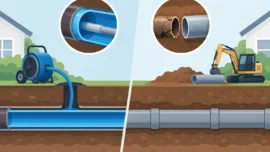
Patch lining is a no-dig repair for a specific defective section. A resin liner is positioned inside the existing pipe and cured to form a new, watertight section. It is particularly effective for isolated cracks, leaking joints and limited root ingress where the host pipe remains structurally sound.
This method avoids digging up much of the surface above the drain. For homeowners, that can mean keeping a driveway, patio or landscaped garden largely intact. For commercial premises, it can reduce closure time and disruption around entrances, car parks and service areas.
Patch lining is not suitable for every fault. If the pipe has fully collapsed, has severe deformation, or has widespread defects along its length, a more substantial repair may be required.
Full lining for longer defective runs
Where several sections are cracked or the pipe is deteriorating along a longer length, full-length drain lining can provide a continuous new pipe within the old one. This is another trenchless option and can be an efficient solution when access chambers are available and the existing pipe retains enough shape to accept a liner.
There can be limitations around badly displaced pipes, sharp bends and connections. A CCTV survey and site assessment are needed before committing to this approach.
Excavation and replacement
Excavation remains the correct answer when a drain has collapsed, has lost its line or level, or cannot be repaired internally. A competent drainage contractor will locate the defect accurately first, excavate only the required area where possible, replace the damaged pipework and test the new installation before reinstatement.
The quality of reinstatement matters as much as the pipe repair. Paths, driveways and landscaped areas should be left safe, tidy and properly finished. Where a trenchless method is unsuitable, careful excavation planning still keeps the disturbance to a minimum.
Responsibility, insurance and timing
Responsibility for drains can depend on where the pipe runs and whether it serves only your property or several properties. In many cases, pipework within your boundary serving your home is private drainage, while shared sewers and public sewers may be the responsibility of the water company. Older sites, converted buildings and shared access arrangements can be less straightforward.
Do not delay urgent mitigation while ownership is being clarified. Stop using affected drainage where necessary, document the issue and arrange an inspection. If there is damage to buildings, contents or hard landscaping, contact your insurer early and keep copies of reports, photographs and invoices.
For a landlord or business, keep records of the survey, repair method, materials and testing. Clear documentation helps demonstrate that the issue was addressed professionally and supports future maintenance planning.
What to expect from a specialist drainage contractor
You should receive a clear explanation of the fault, the recommended repair and any realistic alternatives. For non-emergency work, a written quotation should set out the scope, access requirements, excavation or lining method, and reinstatement arrangements. If the repair affects a busy home or operational site, ask how the contractor will manage access, cleanliness and service interruption.
Watermains & Drains UK uses CCTV investigation and no-dig repair methods where they are appropriate, helping property owners avoid unnecessary excavation. As WIAPS and Watersafe approved specialists, with £10m public liability insurance and long-term workmanship guarantees, the focus is on a repair that is practical, properly evidenced and built to last.
A burst or failed drain is rarely a problem to watch and wait on. Acting early protects the property, reduces the risk of contamination and gives you more repair options. The right first step is a safe inspection and an accurate diagnosis, followed by the least disruptive repair that genuinely suits the condition of the pipe.