Open Cut Trenching Works: When Excavation Is Right
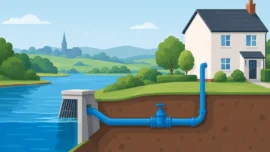
A new water supply does not always have a clear path from the boundary to the property. Tree roots, failed drainage runs, deep pipework and inaccessible ground can all make the job more involved. Open cut trenching works provide a direct, proven way to expose, install or repair underground services where a no-dig method is not suitable.
For homeowners, landlords and property managers, the concern is usually not the trench itself. It is what happens to the driveway, garden, business access or finished surface afterwards. A properly planned excavation should solve the underlying problem, protect existing services and leave the site safe, tidy and correctly reinstated.
What are open cut trenching works?
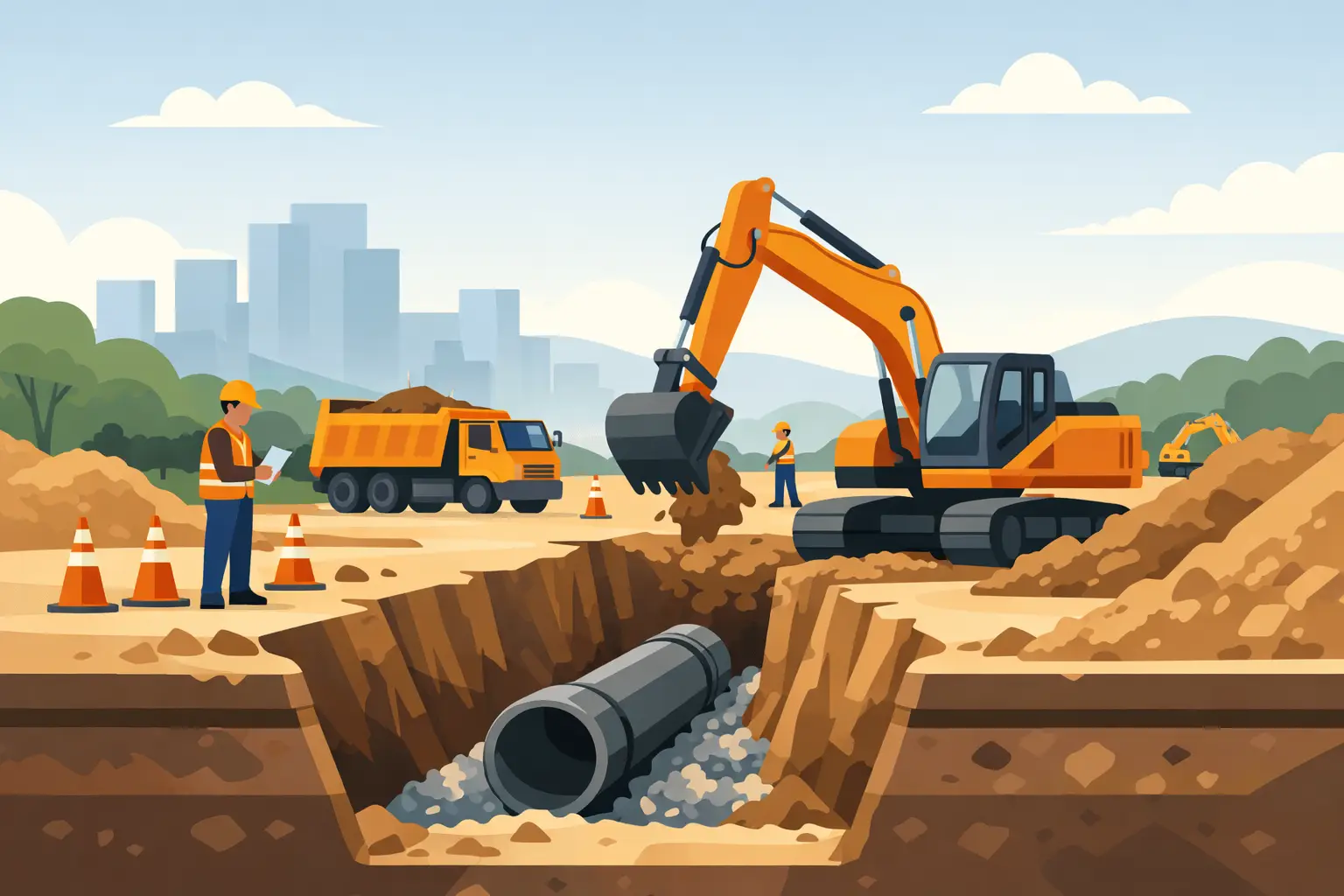
Open cut trenching is the traditional process of excavating a narrow trench from ground level to reach underground pipes, cables or drainage. Once the required service is exposed, contractors can install a new pipe, replace a damaged section, alter its route or connect it to an existing supply. The trench is then backfilled in layers and the affected surface is reinstated.
It is commonly used for new water mains, replacement supply pipes, drainage installations, repairs to collapsed drains and pipe diversions. Depending on access, excavation may be completed by hand, with a compact excavator or using larger plant on commercial sites.
The method is not automatically more disruptive than trenchless installation. On an open lawn or an unfinished development plot, excavation may be the quickest and most cost-effective option. On the other hand, digging through block paving, a newly laid tarmac drive or a landscaped garden can add reinstatement work that makes moling or horizontal directional drilling the better choice.
When excavation is the right solution
The best installation method depends on the route, depth, ground conditions and the type of work required. Open excavation is often the sensible choice when the pipe needs to be visible throughout the work, such as when a drain has collapsed, an existing connection must be altered, or several services occupy the same area.
It is also useful where a new drainage run needs precise falls. Unlike a pressurised water supply pipe, drainage relies on gravity, so its level and gradient must be controlled carefully. Excavating the route allows the contractor to form the trench, lay bedding, install the pipe at the correct fall and inspect each joint before backfilling.
There are occasions when trenchless work is not practical. Very shallow services, unknown obstructions, unstable ground, restricted launch-pit space or a route that needs multiple connections can rule it out. A specialist contractor should explain this clearly rather than recommending a single method for every property.
Water supply pipe replacement
Many older UK properties still have lead supply pipes running between the external stop tap and the house. Replacing these pipes can improve water quality and reliability, but the route may cross paths, drives or gardens. Open cut trenching can be used to install a new approved pipe where access is straightforward or where the existing pipe route needs investigation.
The trench also provides access to make secure connections and to identify complications such as old repairs, shared supplies or unrecorded pipework. Where appropriate, the route may be divided between excavation and no-dig installation to reduce the amount of ground disturbed.
Drainage repairs and new installations
A CCTV drain survey can identify a crack, displaced joint, root ingress or collapse, but some faults need excavation to be fully repaired. Patch lining is effective for certain localised defects, yet it cannot correct every problem. If the pipe has lost its shape, has severe movement or needs a new branch connection, opening the ground may be the durable repair.
For new drainage, open trenches allow the correct pipe size, bedding and fall to be achieved. This matters for homes as much as commercial premises. Poorly installed drainage can cause repeat blockages, standing water and damage to surrounding ground, creating a larger bill later.
How a professional trenching project should be planned
Good results start before any ground is broken. The contractor should establish the proposed pipe route, confirm the connection points and assess access for people, vehicles and machinery. On a domestic property, this may involve checking the external stop tap, internal entry point, existing drains and boundary position. On a commercial site, it may also require traffic management, permits, site rules and agreed working hours.
Underground services must be considered before excavation. Water, gas, electric, telecoms and drainage routes are not always where historic drawings suggest. Service searches, visual checks and careful trial holes help reduce the risk of damage. Excavation close to known services is normally carried out cautiously, often by hand.
The trench itself must be suitable for the ground and depth involved. Deeper excavations may need battering back, shoring or trench support to prevent collapse. This is a safety requirement, not an optional extra. The work area should be controlled with suitable barriers and signage, particularly where residents, tenants, customers or the public could be nearby.
The practical stages of open cut trenching works
Although every site differs, the process normally follows a clear sequence. First, the route is marked out and the working area is protected. Surface materials such as paving, turf or tarmac are removed as carefully as possible where they are to be reused.
The trench is then excavated to the required depth and width. Any exposed existing services are protected, while unsuitable material is removed or managed separately. For water pipes and drains, a prepared bedding layer supports the new installation and prevents point loading from stones or rough ground.
Once the pipe has been laid, connections are completed and checked. A new water supply may be pressure tested and flushed before being brought into use. Drainage installations may be tested for leaks and flow, with levels checked to confirm that wastewater will travel correctly.
Backfilling should be completed in suitable layers, compacted as required to reduce future settlement. The final stage is reinstatement. This may include relaying paving, repairing tarmac, replacing concrete, reinstating topsoil or re-turfing a garden. The finish should be discussed at quotation stage, because reinstatement standards and material matching affect both cost and appearance.
Managing disruption at homes and occupied premises
Excavation will always create some short-term disruption, but it should be planned around the people using the property. A clear programme helps homeowners know when access may be restricted, whether water will need to be isolated and when the surface will be made good.
For landlords and facilities teams, communication is equally important. Tenants may need notice of works, and businesses may require safe pedestrian routes or work scheduled outside peak hours. Where a water supply needs to be disconnected, the contractor should keep the interruption as short as the work safely allows.
The least disruptive route is not always the shortest route. For example, a slightly longer trench across a lawn could avoid lifting an expensive driveway. Equally, a direct route across an unmade side passage may reduce labour and reinstatement costs. A site survey is the point at which those choices should be set out honestly.
What affects the cost of trenching?
A quotation for open cut work should account for more than the metres of pipe required. Depth, ground type, access, number of connections and disposal of excavated material all influence the price. Reinstatement can be a significant part of the work, especially where surfaces are decorative, specialist or difficult to match.
Other factors include the need for permits, traffic management, service protection, dewatering and the urgency of the repair. A collapsed drain under a busy entrance, for example, is a different project from a planned supply-pipe replacement across a rear garden.
Be cautious of a figure that simply states an excavation length without explaining testing, bedding, backfill and reinstatement. A clear written scope reduces surprises and makes it easier to compare like for like. For regulated water-supply work, customers should also look for appropriate approvals, insurance and workmanship guarantees.
Choosing between open cut and no-dig methods
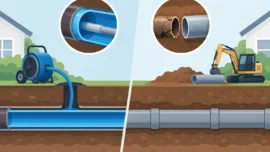
Open cut trenching and trenchless installation are not competing services. They are different tools for different conditions. Moling is often ideal for replacing a water pipe beneath gardens, paths and driveways with only small access pits. Horizontal directional drilling can be particularly useful for longer or more complex routes. Excavation remains the better option where drainage levels must be formed precisely or the defective pipe needs to be physically exposed.
At Watermains & Drains UK, the practical approach is to assess the property, explain the available methods and recommend the solution that delivers reliable pipework with the least reasonable disruption. The right answer should be based on the site, not on a one-size-fits-all method.
If excavation is needed, it should leave you with more than a covered trench. You should have a properly installed, tested service, a safe reinstated surface and a clear understanding of the work completed – so the problem does not return beneath your feet.