Property Manager Leak Response Guide in 7 Steps
A leak reported at 7am can become a flooded flat, damaged ceiling and tenant complaint before lunchtime. This property manager leak response guide sets out the practical decisions that protect people, limit property damage and keep the repair process moving – whether the issue is a dripping supply pipe, an external water main leak or wastewater backing up through a drain.
The first aim is not to diagnose every technical detail from a telephone call. It is to make the property safe, stop the flow where possible and get the right specialist on site without creating unnecessary disruption for tenants, neighbours or your wider operation.
1. Establish whether there is an immediate risk
Ask the occupier where water is visible, whether it is clean or contaminated, and whether the flow is active. A steady drip beneath a kitchen sink needs attention, but water coming through a light fitting, pooling near electrical equipment, or sewage escaping from a drain needs an urgent response.
Instruct the tenant or site contact not to touch electrical fittings, sockets or appliances affected by water. If water is close to electrics, isolate the supply only if it can be done safely and arrange a qualified electrician where required. For significant flooding, make sure people avoid the affected area and protect any vulnerable residents.
A simple distinction helps when triaging the call. Clean water from a burst or leaking supply pipe is still damaging, but foul water from a blocked or damaged drain presents a hygiene risk and should be treated as such. Do not ask occupants to clear sewage or lift drain covers themselves.
2. Stop or contain the water safely
If the leak is inside the property and the stop tap is accessible, ask the occupier to turn it clockwise. They should not force a seized valve. In blocks, commercial premises and older houses, the relevant isolation point may be in a communal cupboard, plant room or external boundary box, so keep its location recorded in your property file.
Where it is safe to do so, tenants can move small valuables away from the area and use towels or containers to contain a minor leak. They should not remove ceiling sections, disturb swollen finishes or attempt a temporary repair on pressurised pipework. Those actions can worsen the damage or conceal the route of the leak.
For an external leak, look for unexplained wet patches, a constantly damp driveway, a drop in water pressure, soil movement or water running from the ground when no appliance is in use. If the property is on a metered supply, an unusually high reading with all internal outlets turned off can also point to a concealed leak.
3. Record the incident before repairs begin
Good records support insurance claims, show that you acted promptly and help contractors arrive prepared. Ask the tenant, caretaker or site manager for clear photographs and short videos showing the affected area, the source if visible, and the extent of damage. Record the time the issue was reported, who attended, the advice given and when the water was isolated.
It is also useful to note whether the leak has affected another flat, a neighbouring property, communal areas or business operations. In leasehold and commercial buildings, responsibility may sit with the landlord, managing agent, freeholder or tenant depending on the location of the pipework and the terms of the lease. You do not need to resolve liability before making the site safe, but you do need a clear audit trail.
Avoid authorising cosmetic reinstatement too quickly. Plasterboard, flooring and joinery may retain moisture after the visible leak has stopped. A proper assessment can prevent mould, staining and repeat work later.
4. Choose the right contractor for the fault
A general maintenance contractor may be appropriate for a visible tap connection or minor internal plumbing defect. However, recurring low pressure, unexplained water loss, a leak beneath a driveway or a suspected issue on the incoming supply calls for leak detection and water supply specialists.
The same principle applies to drainage. A blocked toilet may be a local obstruction, but repeated backing-up, foul smells, external flooding or multiple affected outlets can indicate a damaged, displaced or root-intruded drain. CCTV drain surveying provides evidence of what is happening underground and avoids guessing at the repair method.
For property managers, the best appointment is not always the cheapest first call-out. A contractor who can investigate, repair and reinstate may reduce tenant visits, delays and handovers between different trades. Ask whether they can provide photographs, a clear scope of works, method statements where needed, and a written record of the completed repair.
Check approvals and site standards
Where work involves the water supply pipe, use a contractor with the relevant water-industry approvals. WIAPS and Watersafe registration provide useful assurance that work is carried out to the expected standard. For managed portfolios, public liability cover and workmanship guarantees also matter, particularly where access routes, communal areas or neighbouring land are involved.
The practical standard on site matters just as much. Contractors should explain what they have found, protect the working area, keep tenants informed and leave the site tidy. A fast repair is valuable, but a poorly managed repair can create a second complaint.
5. Reduce disruption when pipework is underground
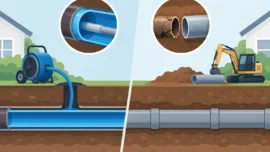
Traditional excavation is sometimes necessary, particularly where pipework is severely damaged or access is restricted. But it is not the only option. Trenchless moling can install or replace a water supply pipe beneath gardens, paths and driveways with small entry and exit pits, rather than opening a continuous trench.
This can be particularly useful for occupied homes, rented properties and commercial sites where a long excavation would affect access, landscaping or paving. Horizontal directional drilling may be suitable for more complex routes and larger installations. The right method depends on ground conditions, pipe route, existing services and the condition of the affected supply.
Do not promise tenants that there will be no disruption at all. There may still be a planned water shut-off, noise, access requirements and local excavation. The advantage is that disruption can often be shorter, cleaner and easier to reinstate than a conventional dig.
6. Keep tenants and stakeholders properly informed
Silence is often what turns a manageable repair into an escalation. Give residents a named contact, a realistic attendance window and practical instructions, such as keeping pets away from the work area or clearing access to a stop tap. If water needs to be turned off, state when it will happen, how long it is expected to last and whether toilets or kitchen facilities will be affected.
For commercial properties, consider the operational impact early. A leak near a reception area, kitchen, server room or customer space may require temporary protection, out-of-hours work or a phased repair. The most cost-effective solution depends on the severity of the fault and the cost of interruption, not just the contractor’s initial quote.
Once work is complete, confirm what was repaired, whether further drying or reinstatement is required, and who owns the next action. If the issue was a shared drain or supply, notify affected parties in writing so that responsibilities do not become unclear later.
7. Prevent the next emergency
The strongest property manager leak response guide is one that reduces the number of emergency calls. Review each incident for the underlying cause. Recurrent leaks at the same property may point to ageing supply pipes, high pressure, poor previous repairs or an unaddressed underground fault. Recurring drainage problems may justify a CCTV survey rather than another temporary unblock.
Keep an accessible record for every building covering stop tap locations, utility isolation points, drainage plans where available, previous surveys, contractor reports and photographs. For vacant properties, arrange regular checks during cold weather and ensure tenants know how to report a leak out of hours.
A planned replacement of old lead or deteriorating water supply pipework can also remove a persistent risk rather than repeatedly funding reactive repairs. Watermains & Drains UK can investigate concealed leaks, install replacement water supplies and carry out drainage repairs using no-dig methods where suitable, helping to keep occupied properties cleaner and easier to manage.
When the next call comes in, focus first on safety, water control and clear evidence. A calm response, the right specialist and honest communication will usually protect the property far better than a rushed repair based on assumptions.