How to Test Household Water Pressure Safely
A shower that drops to a trickle when someone opens a kitchen tap is more than an everyday annoyance. It can point to restricted pipework, a failing pressure-reducing valve, a leak, or an old incoming supply that cannot meet the property’s demand. Learning how to test household water pressure gives you useful evidence before arranging repairs, replacing a lead service pipe or upgrading a water supply.
Pressure is only one part of the picture. A good pressure reading does not always mean you have enough water available at busy times, while a poor reading may be caused by an issue inside the property rather than the water main in the road. The aim is to test carefully, compare the results and identify when a specialist investigation is the sensible next step.
What water pressure tells you
Water pressure is the force that pushes water through your pipes. It is normally measured in bar. Flow rate is different: this is the volume of water delivered over a set time, usually litres per minute. Both matter.
For example, a pressure gauge may show a healthy static reading when every outlet is off. But if the pressure falls sharply when a tap, shower or washing machine runs, there may be a restriction in the incoming pipe, a partly closed stop tap, undersized pipework or insufficient available flow from the supply.
Many homes operate comfortably at around 1 to 3 bar, but there is no single reading that proves every property is fault-free. The number can vary with the local network, the height of your property, demand in the area and whether your home has equipment such as a combi boiler, pumped shower or unvented hot water cylinder. What matters most is whether the pressure and flow are suitable for your fixtures and remain reasonably stable.
How to test household water pressure with a gauge
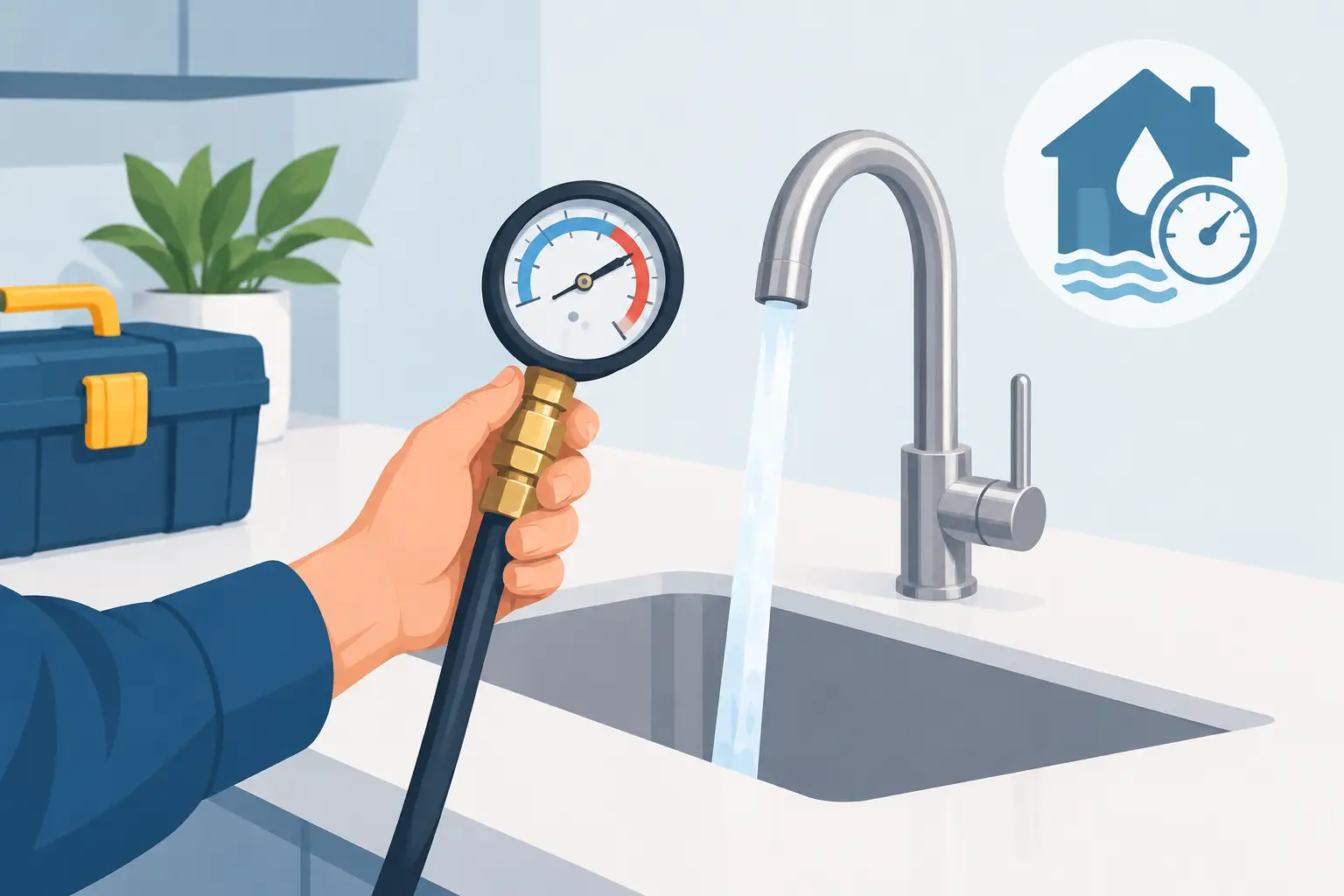
The most reliable simple check uses a pressure gauge that screws onto an outside tap, washing-machine connection or suitable threaded tap outlet. A gauge is inexpensive, but it must be fitted correctly to avoid leaks and inaccurate readings.
Before starting, choose a time when the property is quiet. Avoid using water during the test and ask anyone else in the home not to flush toilets, run appliances or turn on taps. If you live in a flat or a busy shared building, repeat the test at different times of day because demand can change the result.
First, make sure the external stop tap is fully open. Then attach the gauge to a cold-water outlet, ensuring the washer is in place and the connection is hand-tight. Open the tap fully and let the reading settle. This is your static pressure, meaning the pressure at the outlet with no other water being used.
Write down the result, then leave the gauge in place and ask someone to run a cold tap elsewhere in the property. Note how far the gauge drops. Repeat while the shower is running or a toilet is filling. A small reduction is normal. A significant, sustained fall suggests the system may struggle when demand increases.
For a clearer picture, repeat the test at morning and evening peak periods. Keep a note of the location, time, static reading and reading under demand. This information helps a water supply contractor diagnose the problem without relying on guesswork.
Check flow rate as well as pressure
A bucket-and-timer test is a useful companion to the gauge test. Use a container with known volume markings, place it under a cold tap and time how long it takes to fill. Multiply the result to calculate litres per minute. For instance, 10 litres collected in 30 seconds equals 20 litres per minute.
Test the kitchen cold tap, the outside tap and any outlet that appears weak. Do not use a bath tap fitted with a mixer if you are trying to isolate the cold supply, as the result may be affected by the hot-water system.
Good flow at the kitchen tap but poor flow at one shower often means the fault is local to that shower – perhaps a blocked head, cartridge, hose or pipe run. Weak flow throughout the house is more likely to involve the incoming service pipe, stop tap, meter, filter, pressure-control equipment or wider supply.
Signs your test points to a supply problem
One low reading on its own is not a diagnosis. However, certain patterns warrant professional investigation, particularly where the problem is new or getting worse.
- Water flow is weak at several cold taps, not just one fixture.
- Pressure drops dramatically whenever another outlet is opened.
- The property has an old lead or galvanised incoming water pipe.
- Water is discoloured, air-filled, noisy or intermittently unavailable.
- Your water bill has risen unexpectedly, or there are signs of damp ground near the incoming supply route.
Older lead pipes can become restricted internally over time and are often smaller than modern replacement pipes. Replacing them with a correctly sized new water supply can improve flow and remove the health concern associated with lead pipework. A new supply must be designed around the property’s demand and installed in line with the relevant water regulations – simply fitting a larger pipe does not automatically solve every pressure issue.
Common causes of low household water pressure
Start with the straightforward checks. Confirm that the internal stop tap, usually found beneath the kitchen sink or close to where the supply enters the property, is fully open. A stop tap may look open while its internal mechanism is corroded or restricted, especially in older homes. Do not force a stiff valve, as this can cause it to leak or fail.
Check any visible filters, water softeners or pressure-reducing valves. These can restrict flow when blocked, incorrectly set or faulty. If your property has a combi boiler, compare hot and cold performance. Strong cold water with weak hot water usually indicates a boiler, cylinder or hot-side issue rather than an incoming mains problem.
Leaks are another possibility. A leak on the private supply pipe between the boundary and your home may reduce available pressure and flow, sometimes without obvious surface water. Specialist leak detection can locate the issue with minimal excavation, allowing a targeted repair or a replacement supply where that is the more cost-effective long-term solution.
What if the pressure is too high?
Low pressure receives most attention, but excessive pressure can also damage appliances, hoses, filling valves and taps. Warning signs include banging pipes, dripping pressure-relief outlets, repeatedly failing toilet valves or leaks appearing around appliance connections.
If a gauge shows a consistently high reading, do not attempt to adjust unfamiliar valves or interfere with an unvented cylinder. These systems contain safety controls and should only be assessed by appropriately qualified professionals. A failed or incorrectly set pressure-reducing valve may need repair or replacement, but the correct solution depends on where it sits in the system and what equipment it protects.
When a professional survey saves time
A specialist survey is worthwhile when simple checks do not explain the problem, when an old service pipe is suspected, or when you are planning an extension, additional bathroom or commercial fit-out. The contractor can assess pressure and flow, inspect the incoming pipe route, consider pipe diameter and identify restrictions before recommending work.
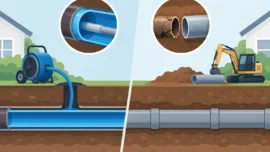
For homes with driveways, landscaped gardens or paved frontages, trenchless moling can often install a new water supply beneath the surface with far less excavation than traditional open trenching. It is not suitable for every ground condition or route, but where appropriate it can reduce mess, shorten the programme and limit reinstatement costs.
Watermains & Drains UK carries out water supply investigations and replacement installations with a focus on clear findings, compliant work and minimum disruption. For landlords and facilities teams, recorded test results and a defined scope of work also make it easier to plan repairs around tenants, trading hours and access requirements.
If your readings are inconsistent, keep the notes from your tests and resist the temptation to treat a pressure number as the whole answer. The most useful next step is to match the evidence to how your property actually performs, then have any persistent supply issue assessed before it causes further disruption.