

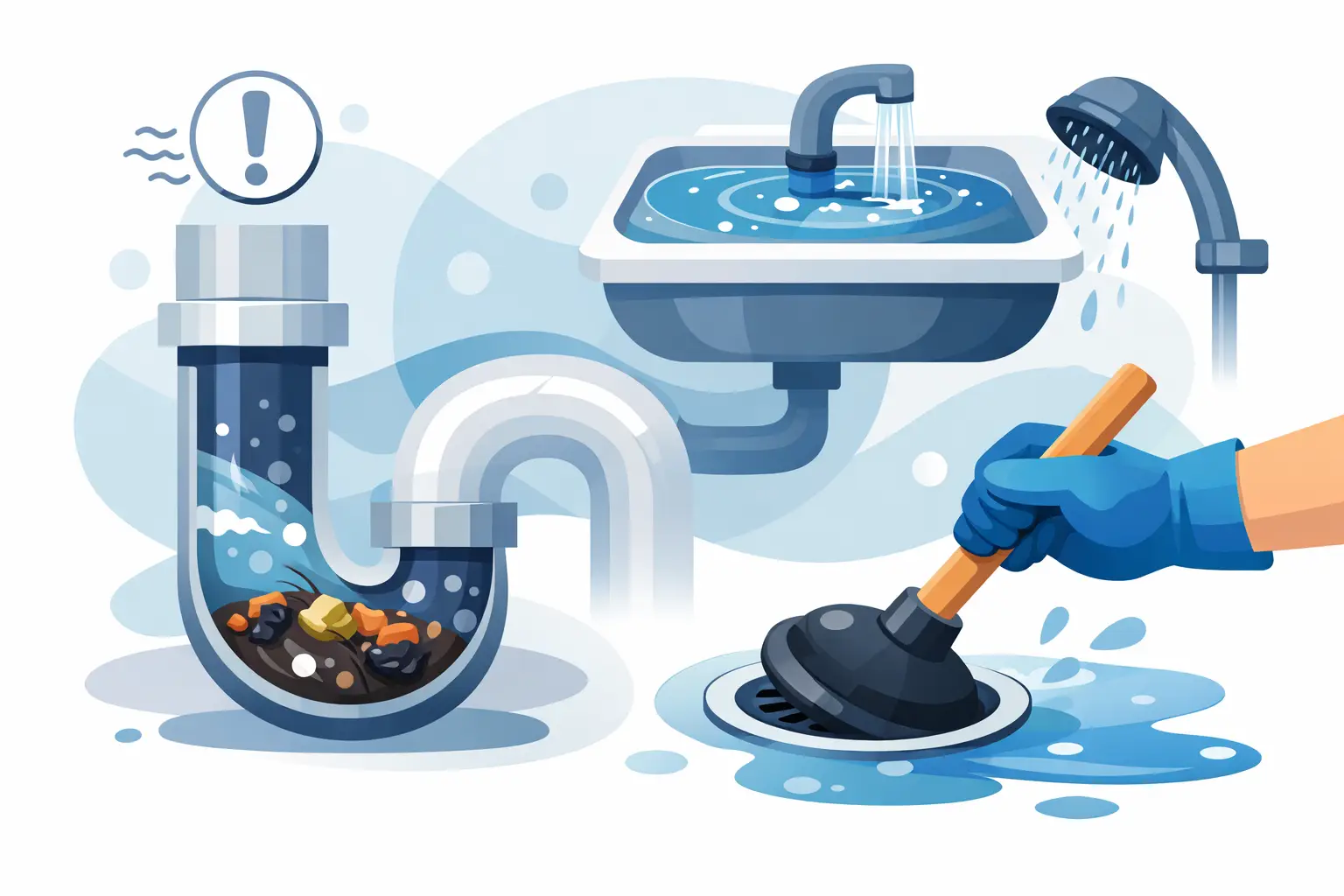
Why Drains Keep Blocking
A drain that blocks once can be bad luck. A drain that keeps blocking is usually telling you there is a fault somewhere in the system.
That matters because repeated blockages are rarely solved by clearing the immediate build-up alone. If your kitchen sink backs up every few weeks, your outside gully overflows after rain, or tenants keep reporting slow toilets and foul smells, the real issue is often deeper in the pipework. The quickest fix is not always the lasting one.
What causes drains to keep blocking?
In most cases, recurring blockages come down to one of two things – something is regularly entering the drain that should not be there, or the pipe itself has a condition that keeps catching waste and restricting flow.
For homeowners, that often means grease, wipes, hair or scale building up over time. For landlords and commercial properties, usage patterns can make the problem worse, especially where multiple occupants are putting pressure on older drainage systems. And in some cases, the drain is structurally damaged, poorly laid or affected by tree roots, so even normal wastewater struggles to pass through properly.
The reason this question matters is simple: if you only treat the symptom, the blockage usually comes back.
The most common reasons drains keep blocking
Grease, fat and food waste in kitchen drains
Kitchen drains are one of the biggest repeat offenders. Cooking oil, fat, sauces and food scraps do not always wash away as cleanly as they seem to. As they cool, they cling to the inside of the pipe and gradually narrow the passage.
At first, you may only notice water draining a little slower. Later, the sink may start gurgling, unpleasant smells can develop, and eventually the pipe blocks completely. If this has happened more than once, there is often a thick internal build-up that simple shop-bought cleaners will not remove fully.
Newer pipework can still suffer from this, but older drains with rougher internal surfaces tend to catch grease more easily.
Wipes, sanitary products and excess toilet paper
Toilet and soil pipe blockages are often caused by what gets flushed. Even wipes labelled as flushable can create problems, particularly where the drainage run is long, has bends, or already contains a partial obstruction.
Sanitary products, cotton pads and paper towels are even more likely to snag and build into a larger blockage. In rental properties, this is a frequent cause of repeat call-outs because the issue is behavioural as much as mechanical. Unless the source is addressed, the same blockage pattern can continue.
Too much toilet paper can also be enough to tip a restricted drain into a full blockage, especially if there is already scale, root ingress or a pipe defect further along.
Hair, soap and bathroom residue
Bathroom sinks, showers and baths commonly block because hair binds with soap residue and forms a dense mass inside the waste pipe. This usually starts near the plughole or trap, but over time it can extend further into the line.
The reason these blockages repeat is that partial cleaning often leaves material behind. If the pipework is awkwardly routed or has poor falls, waste catches more easily and the problem returns sooner.
Tree root ingress
If an external drain keeps blocking, tree roots are a serious possibility. Roots naturally seek moisture and can enter drains through cracked joints, small fractures or displaced sections of pipe. Once inside, they trap paper, debris and other waste passing through.
This is one of the clearest examples of why unblocking alone is not always enough. The drain may run again after clearance, but if the roots remain, they will continue to obstruct flow. A proper repair, such as patch lining or replacing the damaged section, is usually the lasting answer.
Broken, cracked or collapsed drains
Structural defects are a common cause of recurring drainage problems, particularly in older properties. A cracked pipe may allow surrounding material to enter. A displaced joint can catch waste. A section with minor collapse can hold standing water and slow everything behind it.
From the surface, this can look like an ordinary blockage. The difference is that it keeps coming back, often in the same location. If you have recurring issues with one toilet, one branch line, or one outside drain, there may be a defect that needs locating properly rather than guessed at.
Poor pipe gradient or bad installation
Drainage relies on gravity, so the pipe needs the correct fall. If the gradient is too flat, solids can settle instead of moving away. If it is too steep, liquids may run off and leave solids behind. Either way, repeat blockages become more likely.
This is sometimes found in extensions, altered bathrooms, garden rooms or replacement drainage runs where installation standards were poor. It can also affect commercial sites where previous alterations were made in stages over the years.
The trade-off here is that clearing the blockage is relatively quick, but correcting the fall may involve more work. The right approach depends on how severe the issue is, how accessible the run is, and whether trenchless repair methods are suitable.
Scale, silt and general ageing of the system
Not all blockages are caused by misuse. Older drains can become less efficient simply because scale, silt and mineral deposits reduce the internal diameter over time. In surface water systems, leaves, grit and external debris can do much the same.
This is why some properties seem to suffer more than others, even when occupants are careful. Age, material and condition all play a part.
Signs the problem is deeper than a simple blockage
A one-off slow drain does not always justify a major investigation. But there are clear signs that the issue may be more than surface-level build-up.
If several fixtures are draining slowly at once, if you can smell foul odours outside or indoors, if gullies overflow in wet weather, or if the same drain blocks again soon after being cleared, it is worth looking beyond the immediate obstruction. Gurgling sounds after flushing or water backing up in unexpected places can also point to a restriction further down the system.
For landlords and facilities teams, frequency matters. If you are paying for repeated unblocking visits at the same property, there is usually a more cost-effective route than treating each event as isolated.
Why temporary fixes often fail
Chemical drain cleaners can sometimes open up a small local blockage, but they do not solve structural defects, root ingress or poor gradients. They can also be harsh on pipework and are not ideal as a repeat solution.
Plungers and hand tools may help near the fixture, but they only reach so far. If the blockage is deeper in the line, or if the drain wall is heavily coated with grease and debris, the relief is often short-lived.
That is why persistent problems usually need the drain properly cleaned, inspected and assessed. Otherwise, you are working blind.
When a CCTV drain survey makes sense
If a drain keeps blocking, a CCTV survey is often the quickest way to establish why. It shows whether the problem is caused by a build-up issue, root intrusion, a broken section, displaced joints, standing water, or poor installation.
For homeowners, that means less guesswork and a clearer repair plan. For landlords, commercial sites and insurance-related cases, it also provides evidence of condition and helps support decisions on repair scope.
In many cases, the most practical route is to clear the line first and then inspect it while access is available. That approach identifies whether you need ongoing maintenance, localised repair, or a more substantial drainage upgrade.
The right fix depends on the cause
There is no single answer to recurring drain blockages because the cause can vary from simple misuse to underlying pipe failure.
If the issue is grease or waste build-up, high-pressure jetting and better disposal habits may be enough. If roots have entered through a damaged section, the drain may need patch lining or repair. If the pipe has collapsed or was poorly installed to begin with, replacement may be the only dependable long-term option.
Where excavation is needed, the least disruptive method is usually preferable, especially on driveways, paved areas and landscaped ground. This is where specialist drainage contractors can often offer cleaner, faster solutions than a general reactive approach.
If you are dealing with repeat blockages in Manchester, Stockport, Warrington, Cheshire or surrounding areas, Watermains & Drains UK can inspect the problem properly and recommend the most cost-effective repair with minimal disruption.
If your drains keep blocking, treat it as a fault worth investigating, not just an inconvenience to clear again. The sooner the real cause is identified, the sooner you stop paying for the same problem twice.





