

Should Home Buyers Get a Drain Survey?
Most buyers expect the survey to flag subsidence, damp, or roof issues. Fewer think about what is happening underground until a toilet backs up a week after completion.
That is the problem with drains. They can be in poor condition for years without leaving obvious signs inside the property. By the time the issue becomes visible, you are no longer negotiating with the seller – you are paying for the repair. A cctv drain survey for home buyers is often the simplest way to check whether the drainage system is sound before you commit.
What a CCTV drain survey for home buyers actually covers
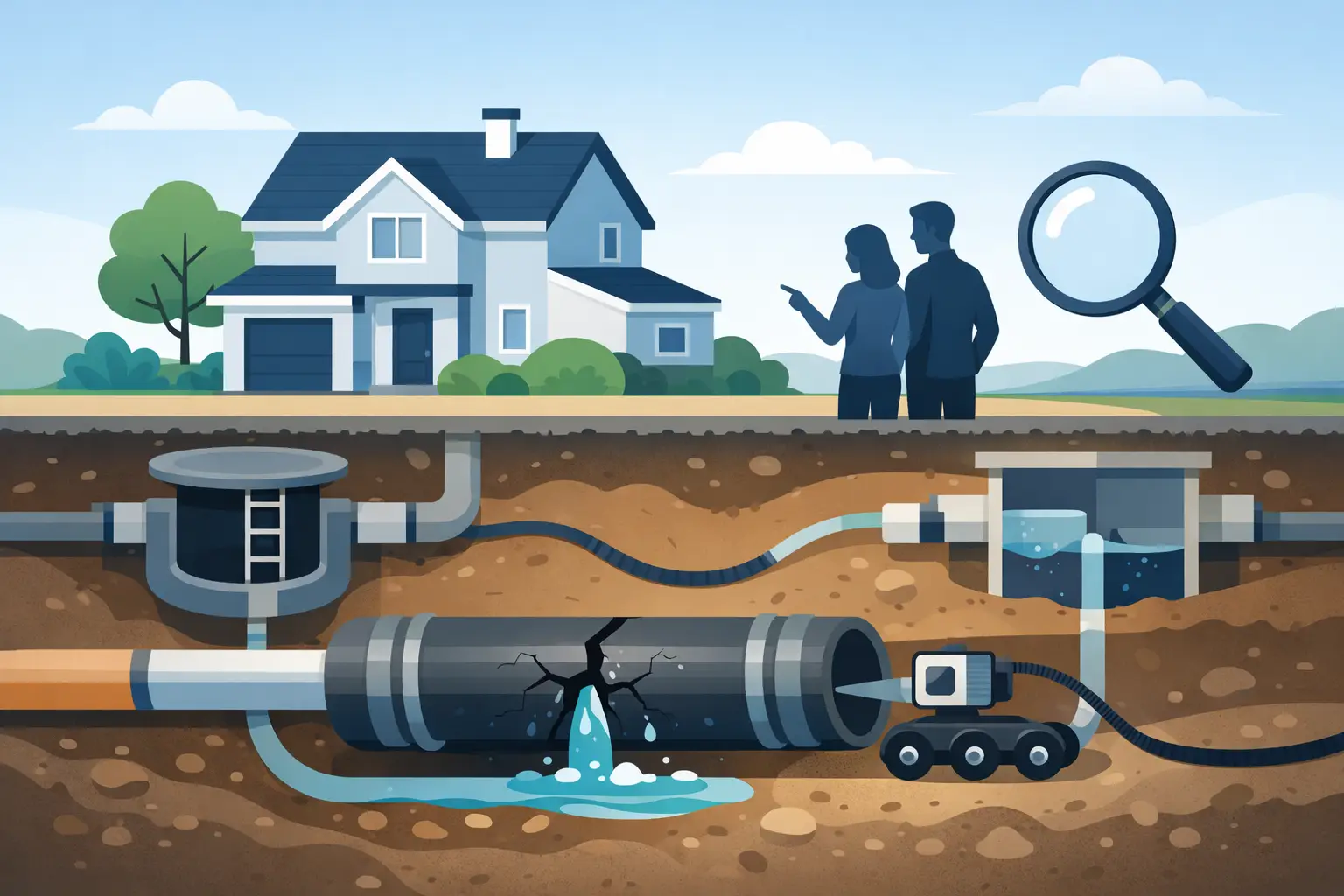
A CCTV drain survey uses a specialist camera to inspect the underground drainage serving a property. The camera is fed through the pipework, allowing the contractor to assess the internal condition of the drains and identify defects that cannot be seen from above ground.
For a buyer, that matters because drainage problems are rarely cosmetic. A cracked pipe, root ingress, displaced joint, collapsed section or poor historic repair can lead to repeated blockages, foul smells, leaks into the surrounding ground, and in some cases structural concerns if defects are left unresolved.
The survey should also help clarify how the drainage system is laid out. That can be useful where extensions have been added, where older properties have altered pipe runs, or where ownership and responsibility are not immediately clear. On some properties, particularly older homes, the layout below ground is less straightforward than buyers expect.
Why drainage issues are missed during a normal purchase
A standard property survey is not designed to inspect underground drains internally. Even a thorough building surveyor can only comment on visible clues and general risk. If drains are flowing on the day and no covers are lifted for a detailed internal inspection, serious defects may go unnoticed.
That does not mean the surveyor has missed something. It means drainage needs its own specialist assessment when there is reason to look closer. Buyers often assume that if the sinks empty and the toilet flushes, all is well. In reality, many defective drains still function – until heavy use, tree root growth or ground movement turns a manageable defect into a larger repair.
This is especially relevant if the property is older, has large trees nearby, has a history of extensions, or appears to have had patch repairs over time. It is also worth considering where there are signs of recurring drain blockages, foul odours outside, damp low down on walls, or inspection chambers that show poor flow or standing water.
When a CCTV drain survey makes most sense
Not every purchase needs the same level of investigation. On a relatively new property with a clean history and no warning signs, some buyers may decide not to commission a survey. That is a judgement call.
Where a CCTV drain survey for home buyers becomes more valuable is when the risk of hidden defects is higher or the consequences of getting it wrong are more expensive. Older housing stock across the North West often includes ageing clay drains, previous alterations, and mature landscaping – all of which can increase the chance of defects below ground.
It is also a sensible step if you are buying a property to let. Landlords inherit the practical consequences of drainage faults quickly, particularly where blocked drains affect tenants, cause emergency call-outs, or lead to complaints and disruption.
If you are already stretching your budget to buy, paying for a drain survey can feel like one more cost. But compared with the price of excavating a collapsed drain under a driveway, replacing damaged sections, or dealing with repeated blockages after moving in, it is often a modest one.
What defects a drain survey can uncover
The value of the survey depends on what it finds and how clearly those findings are explained. A professional inspection can identify common defects such as cracks, fractures, displaced joints, root ingress, scale build-up, deformities, open joints and partial or full collapses.
It can also reveal poor installation work. We regularly see drains with incorrect falls, bad connections, intruding laterals and historic repairs that were never carried out to a proper standard. These issues do not always cause immediate failure, but they can increase the likelihood of blockages and future repair work.
There is an important difference between a defect that should be monitored and one that needs prompt attention. A good report should make that distinction clear. Buyers do not need drama. They need enough information to understand the condition of the drains, the likely implications, and whether remedial work is advisable before exchange or can be planned later.
How the results can help during the purchase
A drain survey is not just about deciding whether to walk away. In many cases, it gives buyers practical leverage and better certainty.
If defects are identified, you may be able to renegotiate the purchase price, ask the seller to arrange repairs, or at least factor the works into your budget with open eyes. That is far better than discovering the problem after completion with no room to negotiate.
It can also help keep a purchase on track. Uncertainty tends to delay decisions. A clear drainage report, supported by survey footage and practical recommendations, allows solicitors, buyers and sellers to deal with facts rather than assumptions.
For some buyers, the reassurance is the main benefit. If the drains are in good condition, that is useful information too. Buying a house comes with enough unknowns already.
What to expect from the inspection process
In most cases, the survey is carried out through existing access points such as manholes and inspection chambers. A specialist drainage contractor will feed the camera through the system, record the findings and assess the condition of the pipework.
Access, layout and the condition of the drainage system affect how straightforward the survey is. Some properties have limited access or complex drainage runs, and occasionally heavy blockages need clearing before a proper inspection can be completed. That is why it helps to use a contractor who can do more than simply operate a camera. If the line needs cleaning, tracing or follow-on repair advice, you want practical answers rather than a vague report.
The final report should set out what was inspected, what defects were found, where those defects are located, and what action is recommended. If you are buying, clarity matters as much as technical accuracy. You need information that can actually support a decision.
Choosing the right contractor matters
There is a difference between a quick camera look and a survey you can rely on. Buyers should look for a specialist contractor with proper drainage experience, clear reporting, and the ability to explain findings in plain English.
That is particularly important if defects are found and you need a realistic view of what happens next. Some issues can be repaired with minimal disruption using patch lining or no-dig methods. Others may require excavation, depending on the location and severity of the defect. The right contractor will tell you which is which instead of treating every problem as a major job.
Professional standards matter as well. For homeowners, landlords and property professionals, reassurance comes from working with insured, competent contractors who understand both survey work and remedial drainage repairs. Watermains & Drains UK carries out CCTV drain surveys alongside drain repair and trenchless work, which means findings can be followed through with practical, cost-effective solutions where needed.
Is it always worth it?
It depends on the property, your appetite for risk, and how much uncertainty you are prepared to carry into the purchase.
If you are buying a newer home with no signs of drainage trouble, you may decide the risk is low enough to proceed without one. If you are buying an older property, a house with trees close by, or somewhere that already raises drainage questions, the case becomes much stronger.
The key point is simple. Drains are expensive to ignore because the fault is out of sight until it turns into disruption, repair costs and avoidable stress. For many buyers, a CCTV drain survey is less about adding another box to the purchase process and more about removing one of the hidden risks that can come back to bite later.
Before you exchange, it is worth asking not just whether the house looks right above ground, but whether the infrastructure beneath it is in equally good order. That small check can make the move-in period a lot simpler.





