Top Signs of Failing Water Supply at Home
If your shower suddenly weakens, the kitchen tap starts spluttering, or you notice damp patches near the front path, those are not minor quirks. They are often the top signs of failing water supply, and they usually point to a problem with the incoming pipe rather than your boiler or internal plumbing.
For homeowners, landlords and property managers, the main risk is delay. A damaged or ageing supply pipe can waste water, affect pressure across the property, stain fittings, and in some cases lead to more disruptive repairs if left too long. The earlier the issue is identified, the more options you usually have for a fast, tidy fix.
Top signs of failing water supply you should not ignore
A failing water supply rarely announces itself with one obvious fault. More often, it shows up as a pattern of small changes that gradually become harder to ignore.
Low water pressure across the property
If pressure has dropped at more than one tap, the problem may be on the incoming supply rather than at a single fitting. This is especially common where older supply pipes have narrowed internally, suffered a partial collapse, or developed a hidden leak.
There is an important distinction here. If one tap performs badly, you may be dealing with a local plumbing issue. If the whole property feels sluggish, including cold taps and outside taps, the supply pipe becomes a more likely suspect.
Taps spluttering or air in the line
A tap that spits and coughs before running normally can indicate air entering the system. That can happen after works in the street, but it can also point to a compromised supply pipe drawing in air through a defect.
Occasional spluttering is not always a serious fault. Repeated air in the line, particularly alongside pressure loss, is worth investigating promptly.
Discoloured water
Brown, orange or cloudy water is another warning sign. In some cases, this is temporary and linked to disturbance in the wider network. In others, it may reflect corrosion, sediment movement, or deterioration in older pipework serving the property.
If the water clears after running for a short time once and does not return, the cause may be short term. If discolouration keeps coming back, particularly after the water has been sitting in the pipe, the supply should be checked.
Unexplained wet patches outside
A leaking supply pipe often shows itself outdoors before it causes trouble indoors. You might notice a soft patch in the lawn, an area of driveway that stays damp, or water surfacing near the boundary.
This can be easy to miss in wet weather. In dry conditions, though, a patch that never seems to dry out is a strong clue that water is escaping below ground.
Higher water bills without higher usage
If your usage habits have not changed but your bill has climbed, a hidden leak should be considered. Not every bill increase points to a supply issue, but unexplained consumption is one of the top signs of failing water supply, especially where no internal leak is visible.
For landlords and facilities teams, this matters beyond cost. Ongoing leakage can undermine surfaces, create avoidable tenant complaints, and lead to bigger reinstatement work later.
Noise from pipework
Buzzing, hissing or a persistent rushing-water sound when no taps are running can indicate movement or escape of water somewhere on the supply line. Some noises relate to internal plumbing, but if the sound seems constant and pressure is poor, the incoming pipe may be under strain or leaking.
Recurring leaks or repeated patch repairs
If a water supply pipe has already been repaired once or twice, another leak is often a sign that the pipe has reached the end of its serviceable life. Spot repairs can be sensible for isolated defects, but repeated failures usually mean the material itself is deteriorating.
That is often the point where replacement becomes more cost effective than continuing to patch the same line.
What causes a water supply to fail?
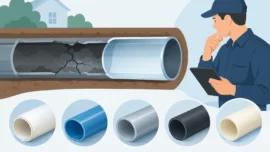
In many properties across the North West and elsewhere in the UK, age is the biggest factor. Older metal pipework can corrode internally and externally over time. Lead supply pipes present their own issues, not only in terms of age and condition but also water quality concerns.
Ground movement is another common cause. Changes in soil condition, nearby building works, traffic loading, tree root activity and seasonal movement can all place stress on buried pipes. Even a small shift can create a crack, joint failure or restricted flow.
Material matters as well. Some older pipes simply do not perform to modern expectations, particularly where household demand has increased over time. A pipe that once coped well may now struggle to serve multiple bathrooms, appliances and outside use.
When it is an inconvenience and when it is urgent
Not every symptom means emergency excavation is needed. A brief period of cloudy water after utility works may resolve on its own. Slightly reduced flow at one outlet may be a local plumbing issue. The difficulty is that supply pipe faults often begin with symptoms that seem manageable.
Urgency increases when you have pressure loss throughout the property, visible external water, repeated discolouration, or signs of leakage near the building. If water is affecting access routes, internal finishes or neighbouring land, the sensible approach is to arrange a professional assessment quickly.
For commercial sites and managed properties, response time matters even more. Poor supply can disrupt tenants, affect washrooms and kitchens, and create avoidable complaints if the issue is left to drift.
How a specialist contractor approaches the problem
The first job is not to guess. A proper assessment should establish whether the issue sits with the utility network, the private supply pipe, or internal plumbing. That may involve pressure checks, leak investigation and tracing the route and condition of the existing pipe.
Where repair is possible, a targeted fix may be enough. Where the pipe is old, undersized or repeatedly failing, replacement is often the cleaner long-term solution. This is particularly true for lead pipe replacement or where multiple previous repairs suggest the line is no longer reliable.
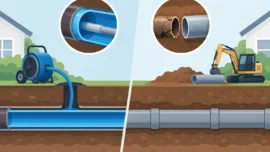
Modern methods make a major difference here. Trenchless installation techniques such as moling can often install a new water supply with far less disruption to gardens, driveways and paths than traditional open-cut excavation. That means quicker progress, less mess and simpler reinstatement in many domestic settings.
For landlords and facilities managers, that reduced disruption is not just convenient. It helps keep properties usable, protects finished surfaces, and shortens the period of inconvenience for occupants.
Why early action usually saves money
Waiting can feel sensible if the water still runs, but supply problems rarely improve on their own. A small underground leak can become a larger break. A restricted pipe can continue to lose performance. An ageing line that has already failed once is more likely to fail again.
Early action gives you more control over timing, method and cost. It is generally easier to plan a survey and quoted replacement than to deal with a full loss of supply or emergency excavation after a collapse. It also gives more scope to choose lower-disruption methods rather than reacting under pressure.
This is one reason many property owners choose specialist contractors rather than treating the issue as a general plumbing job. Water supply pipework, leak detection and external installations need the right approvals, the right methods and a clear understanding of reinstatement.
What to do if you have noticed the top signs of failing water supply
Start by paying attention to the pattern. Is the issue affecting one outlet or the whole property? Is there visible water outside? Has pressure changed gradually or suddenly? Are neighbours affected, or only your building?
Then act before the symptoms become harder to manage. A specialist contractor can determine whether repair or replacement is the better option and advise on the least disruptive route. For properties with older or lead pipework, that visit can also clarify whether an upgrade would provide a better long-term result than another temporary fix.
At Watermains & Drains UK, this is exactly the kind of work we handle – from leak investigation and new supply pipe installation to lead pipe replacement using trenchless methods where suitable. For homeowners, landlords and commercial sites alike, the aim is the same: restore a reliable supply quickly, keep disruption down, and leave the site tidy.
A weak tap or damp patch might look manageable for now, but water supply problems tend to get more expensive the longer they are left. If something has changed, it is usually worth checking while the solution is still simple.