Water Pressure Low After New Stop Tap?
You have had a new stop tap fitted, turned everything back on, and now the flow at the kitchen tap or shower is noticeably weaker. If your water pressure is low after a new stop tap, the good news is that the stop tap itself is not always the real problem. In many cases, the issue comes down to the valve not being fully open, trapped debris, air in the pipework, or an older supply pipe that was already struggling.
That matters because a poor diagnosis wastes time and can lead to the wrong repair. A simple adjustment may sort it, but sometimes the new fitting has exposed a bigger issue on the incoming main or the property’s supply pipe.
Why water pressure can be low after a new stop tap
A stop tap controls the flow of water into the property. When one is replaced, the supply is isolated, the old valve is removed, and the pipework is disturbed. That process can affect pressure and flow in a few different ways.
The first and most straightforward possibility is that the new stop tap is not fully open. It sounds obvious, but it is common. Some valves need several turns before they are fully open, and if they are left partially shut, the restriction can be enough to reduce flow around the house.
Another frequent cause is debris. On older pipework, especially galvanised or ageing metal pipe, scale and sediment can break loose when the water is turned off and back on. That debris often ends up caught in tap aerators, shower heads, appliance filters, or even inside the new valve itself. The result is a sudden drop in flow that seems to start with the stop tap replacement, even though the real issue is material from the existing system.
Airlocks can also play a part. If air has entered sections of the plumbing while the system was drained or partly isolated, some outlets may splutter, spit, or run unevenly before settling down. That usually improves once the system has been run through properly, but not always.
Then there is the issue many property owners do not realise until work starts: the internal stop tap may be new, but the incoming supply pipe may still be old, undersized, partially collapsed, leaking, or heavily restricted. Replacing one component does not improve the condition of the rest of the line.
What to check first
Before assuming there is a major fault, start with the simple checks. Look at the new stop tap and make sure it has been turned fully open. If you are unsure, do not force it aggressively, but check whether it has more travel available.
Next, test more than one outlet. If the kitchen cold tap is weak but the bathroom basin is normal, the problem is likely local to that outlet rather than the whole incoming supply. If every cold tap is affected, the restriction is more likely to be at the stop tap, meter, external stop valve, or incoming supply pipe.
It is also worth unscrewing the aerator from a tap, if fitted, and checking for grit or scale. The same applies to shower heads. After a stop tap change, these small filters often catch the debris first.
If the water splutters and then runs, give it a little time. Run the cold taps for several minutes, one at a time. In some cases, trapped air clears with no further action.
When the problem is flow, not pressure
Many people use pressure and flow interchangeably, but on site they are not quite the same. Pressure is the force behind the water. Flow is the volume coming through. A stop tap problem usually shows up as poor flow, although to the customer it feels like low pressure.
This distinction matters because a property can still have acceptable network pressure but poor flow due to a restriction in the pipe. A partially blocked valve, a kinked supply pipe, or a failing section of old pipe can all reduce the amount of water getting through. That is why the shower may run weakly when another tap is opened, or why outside taps and downstairs outlets seem especially poor.
Could the new stop tap be faulty?
It is possible, but it is not the first assumption to make. A faulty valve, incorrect installation, or a stop tap with an internal restriction can cause reduced flow. Equally, if the wrong size valve has been fitted on a larger pipe, that can create a bottleneck.
However, in practice, a newly fitted stop tap often gets blamed for an existing weakness in the system. Once water is isolated and reintroduced, old problems become more noticeable. For example, a lead supply pipe or ageing shared supply may have been delivering marginal performance for years. The disturbance caused by the work simply brings it to the surface.
Older supply pipes often tell a bigger story
In many North West properties, especially older homes, poor flow after plumbing work can point to the condition of the incoming water supply pipe. Lead pipes, ageing iron, and old MDPE connections with poor joints can all limit performance.
If your stop tap has been changed but pressure is still low across the property, it may be time to look beyond the valve. Warning signs include discoloured water after disturbance, recurring poor flow, noticeable difference between upstairs and downstairs outlets, or a history of leaks and patch repairs.
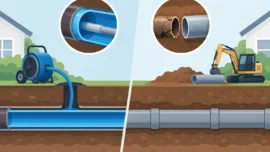
Where the supply pipe is undersized or deteriorated, replacement is often the proper fix. For many homeowners and landlords, that sounds disruptive, but modern trenchless methods can reduce excavation significantly. In the right ground conditions, moling allows a new pipe to be installed with far less disturbance to driveways, gardens, and paved areas than traditional open-cut digging.
What about the outside stop tap or water meter?
The issue is not always inside the property. If there is an external stop tap in the pavement or meter chamber, that valve may not be fully reopened after works, or there may be a fault there affecting supply.
On metered properties, a blockage or issue around the meter assembly can also affect flow. Equally, if works were carried out near the boundary and something has disturbed the communication pipe, pressure problems may appear afterwards.
This is where proper fault finding matters. Guesswork can lead to repeated visits and unnecessary plumbing changes indoors when the actual restriction is outside.
When to call a specialist contractor
If the problem affects the whole property, has not cleared after basic checks, or seems worse than before the stop tap was replaced, it is sensible to get it assessed properly. A specialist contractor will look at the system as a whole rather than focusing on one fitting.
That usually means checking where the restriction is likely to be, whether the issue is on the internal plumbing or incoming supply, and whether the existing service pipe is suitable for the property’s demand. For landlords and commercial sites, it also means making sure any remedial works are compliant, properly reinstated, and carried out with minimal disruption to occupants or operations.
At that stage, experience matters. A contractor used to lead pipe replacement, new water supply installations, leak detection, and trenchless methods can usually identify whether you need a minor correction, a repair, or a full supply upgrade.
The right fix depends on the cause
If the new stop tap is partially closed or obstructed with debris, the solution may be quick. If the issue is isolated to one outlet, cleaning filters or replacing a local valve might be enough.
If the incoming supply pipe is restricted, leaking, or simply too old, the longer-term answer is often renewal rather than repeated small repairs. That tends to be more cost effective over time, especially where low flow has become a recurring problem or where future leakage is likely.
For property owners worried about disruption, that is where a specialist approach makes a difference. Firms such as Watermains & Drains UK carry out supply pipe replacements using modern methods designed to keep sites tidy, reduce excavation, and get water services restored quickly, with the assurances customers expect around accreditations, insurance, and workmanship guarantees.
Don’t ignore a sudden change in performance
A sudden drop in water flow after a stop tap change should not be brushed off as one of those things. Sometimes it is minor. Sometimes it is the first clear sign that the supply arrangement to the property needs attention.
The key is to avoid assumptions. Check the simple causes first, but if the whole property is affected or the problem continues, have it investigated properly. A clear diagnosis saves time, avoids repeat call-outs, and gets you to the right repair faster.
If the water has gone weak after a new stop tap, the best next step is not to keep guessing – it is to find out exactly where the restriction starts and deal with the real cause.