

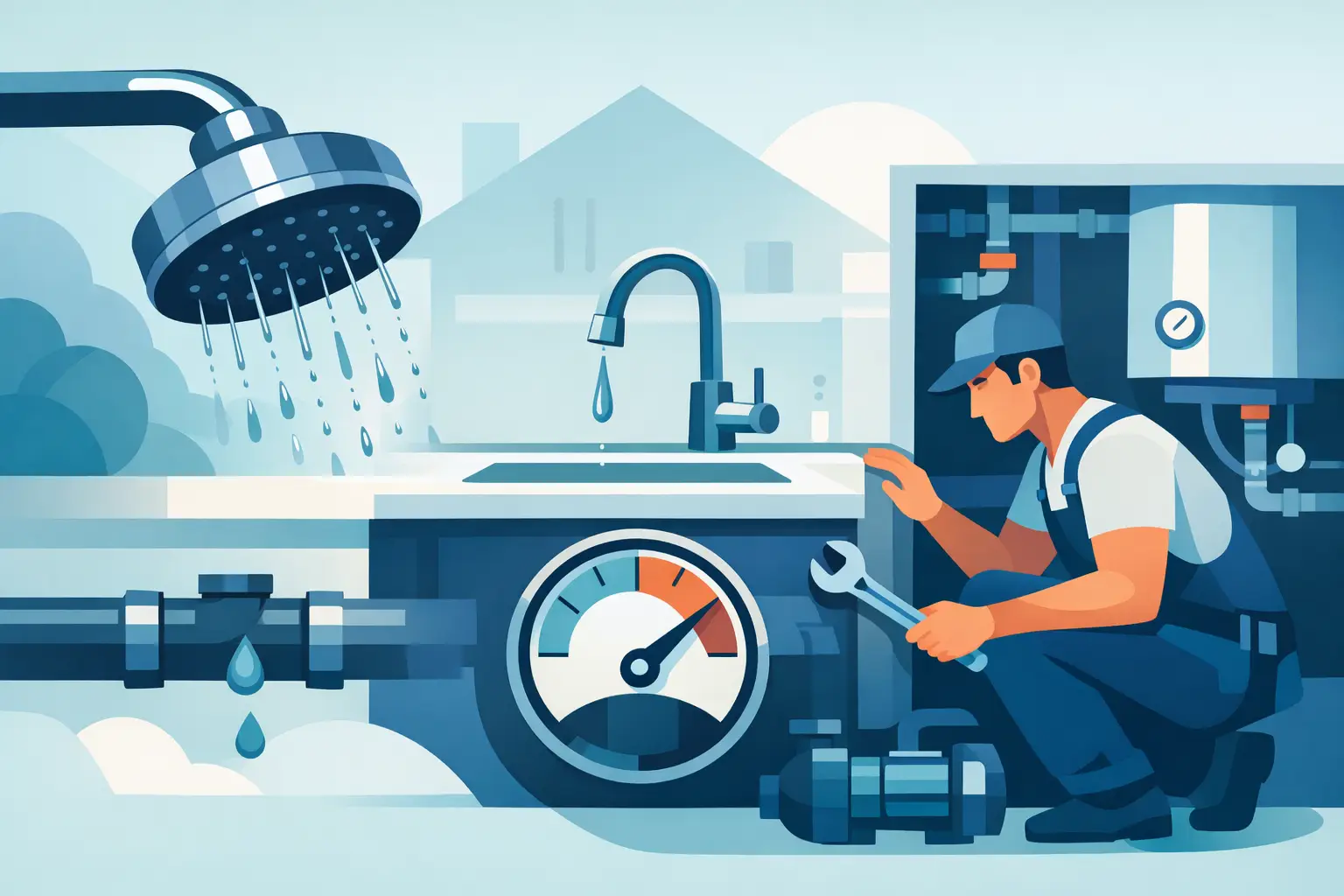
How to Fix Low Water Pressure at Home
Low water pressure usually shows itself at the worst possible moment – when the shower turns weak, the washing machine takes ages to fill, or the kitchen tap barely rinses a plate. If you are searching for how to fix low water pressure, the first job is to work out whether the problem is inside your property, on the incoming supply, or caused by a leak or ageing pipework underground.
That distinction matters. Some pressure issues are simple and inexpensive to sort. Others point to a failing stop tap, a partially blocked filter, a hidden leak, or an old supply pipe that is too narrow or deteriorated to deliver the flow your property needs. A quick check now can save a much bigger repair later.
How to fix low water pressure: start with the basics
Before assuming the worst, check whether the issue affects one tap, one appliance, or the whole property. If only the bathroom basin tap is weak, the fault is usually local to that outlet. If every cold tap is underperforming, the issue is more likely to be on the main supply side.
Start with the simplest possibilities. Make sure the internal stop tap is fully open. It is often found under the kitchen sink, in a utility room, or where the water service enters the building. If it has been partly closed after plumbing work, you can lose a surprising amount of flow.
Then check whether the problem is limited to hot water, cold water, or both. Low pressure on the hot side only may relate to the boiler, cylinder, or associated valves rather than the mains supply itself. Low pressure on the cold side, especially across multiple outlets, usually points towards the incoming supply, pipe condition, or a restriction somewhere on the line.
If you live in a flat or a managed building, it is worth asking neighbours whether they have the same problem. A wider issue could be due to local network works or a supply-side fault rather than something within your own demise.
Common causes of low water pressure
One of the most common causes is a partially closed stop tap or boundary valve. It sounds obvious, but it is often overlooked. Even a small restriction can reduce flow to showers, kitchen taps, and appliances.
Another frequent cause is blocked tap aerators or clogged shower heads. In hard water areas, limescale builds up steadily. If the problem affects one fitting only, remove the aerator or shower head and inspect it. Cleaning it may restore normal performance straight away.
Older pipework is another major factor, particularly in properties with ageing metal or lead supply pipes. Over time, internal build-up and corrosion can reduce the effective bore of the pipe. That means less water reaching the property, especially at peak demand times. In older homes across the North West, this is a regular reason for poor flow.
Leaks can also cause pressure loss, and they are not always visible. A hidden leak on the supply pipe between the boundary and the house can reduce available pressure while increasing water bills or causing damp ground outside. If the low pressure has come on suddenly, or you have noticed unexplained wet patches, subsidence signs, or a constantly running internal stop tap sound, a leak should be considered early.
There is also a difference between pressure and flow rate. Many customers describe both as low pressure, but the underlying cause may be different. Pressure is the force in the system. Flow is the volume of water delivered. A property can have reasonable pressure but poor flow because the supply pipe is undersized, restricted, or too long for modern demand.
Checks you can safely do yourself
If you want to know how to fix low water pressure without jumping straight to a repair visit, there are a few sensible checks a homeowner or landlord can do.
Run the cold kitchen tap fully and see whether the flow is consistently weak or only drops when another outlet is used. If it falls away sharply when a toilet is flushed or a second tap is opened, the supply may be struggling to meet demand.
Look at the stop tap and any visible isolation valves to make sure they are fully open. Do this gently, especially in older properties, as forcing a stiff valve can create another problem.
Clean tap aerators and shower heads if only one or two outlets are affected. If appliances such as combi boilers or washing machines have inlet filters, these may also need inspection by a competent person.
Finally, check for signs of leakage. Listen for water movement when nothing is in use. Inspect the route where the incoming main enters the property. Look outside for unusually soft ground, damp patches, or areas that remain wet in dry weather.
If these checks do not reveal a simple cause, it is usually time for a proper investigation rather than guesswork.
When low water pressure points to the supply pipe
If every outlet is poor and the problem has been ongoing for months or years, the incoming water supply pipe is often the real issue. This is especially common where the property still relies on an older lead pipe or a small-diameter service pipe that was installed for a much lower level of household demand.
Modern homes use more water at the same time. A shower, dishwasher, washing machine and outside tap can all be drawing from the same line. If the pipe feeding the property is old, restricted, or simply too small, no amount of changing tap fittings indoors will fully solve it.
In those cases, repair may not be enough. Upgrading the supply pipe can provide a lasting improvement in both flow and reliability. For homeowners, that means a better day-to-day experience. For landlords and property managers, it means fewer complaints, less reactive maintenance, and a more resilient service to the building.
The method matters as well. Traditional excavation is not always necessary. Specialist contractors can often install a new water supply with trenchless methods such as moling, which keeps disruption to driveways, gardens and paved areas to a minimum.
How specialists diagnose the problem
A proper low-pressure investigation should do more than confirm that the water is weak. It should identify where the loss is happening and what repair route makes most sense.
That may involve checking static and dynamic pressure, assessing flow rate, inspecting valves, and tracing the supply route. If a leak is suspected, leak detection methods can help pinpoint the fault without unnecessary excavation. If the issue appears to be pipe condition or sizing, the contractor should be able to explain whether repair, partial renewal or full replacement is the most cost-effective option.
For commercial sites and managed properties, documentation also matters. Approved contractors with relevant water industry accreditations can give added confidence that the work will be compliant and properly completed.
When to call for help
You should bring in a specialist if the pressure drop is across the whole property, if you suspect a leak, or if the building has older supply pipework. The same applies if pressure has worsened over time, if neighbours are unaffected, or if previous plumbing fixes indoors have not made a difference.
This is one of those situations where the cheapest-looking fix is not always the least expensive overall. Replacing shower heads, taps or internal pipe sections will not solve a restricted underground supply. A clear diagnosis at the start usually avoids repeated call-outs and piecemeal spending.
For customers in the North West, Watermains & Drains UK typically sees low water pressure linked to ageing external supply pipes, leaks on private water mains, and older lead services that are no longer fit for modern demand. In those cases, specialist repair or replacement is often the simple solution.
The right fix depends on the cause
There is no single answer to how to fix low water pressure because the remedy depends on what is actually wrong. If one outlet is affected, cleaning or replacing the fitting may be enough. If a valve is partly closed, opening it solves the issue. If a leak is pulling pressure from the line, that leak needs locating and repairing. If the incoming supply pipe is deteriorated or undersized, replacement is usually the proper long-term answer.
The main thing is not to ignore it. Low water pressure is not just an annoyance. It can be a warning sign of failing infrastructure, wasted water, or a supply arrangement that no longer suits the property. A prompt, professional assessment gives you a clearer answer, a cleaner repair route, and a better result with less disruption.
If your taps have been underperforming for a while, treat it as a property issue worth diagnosing properly rather than something to put up with.





