

When to Book CCTV Drain Survey for Your Property
A drain can appear to be working normally until a blockage, crack or collapsed section causes a much bigger problem. When you book CCTV drain survey services at the right time, you can see what is happening below ground without lifting driveways, patios or floors unnecessarily. It gives homeowners, landlords and property managers a clear basis for repair decisions rather than relying on guesswork.
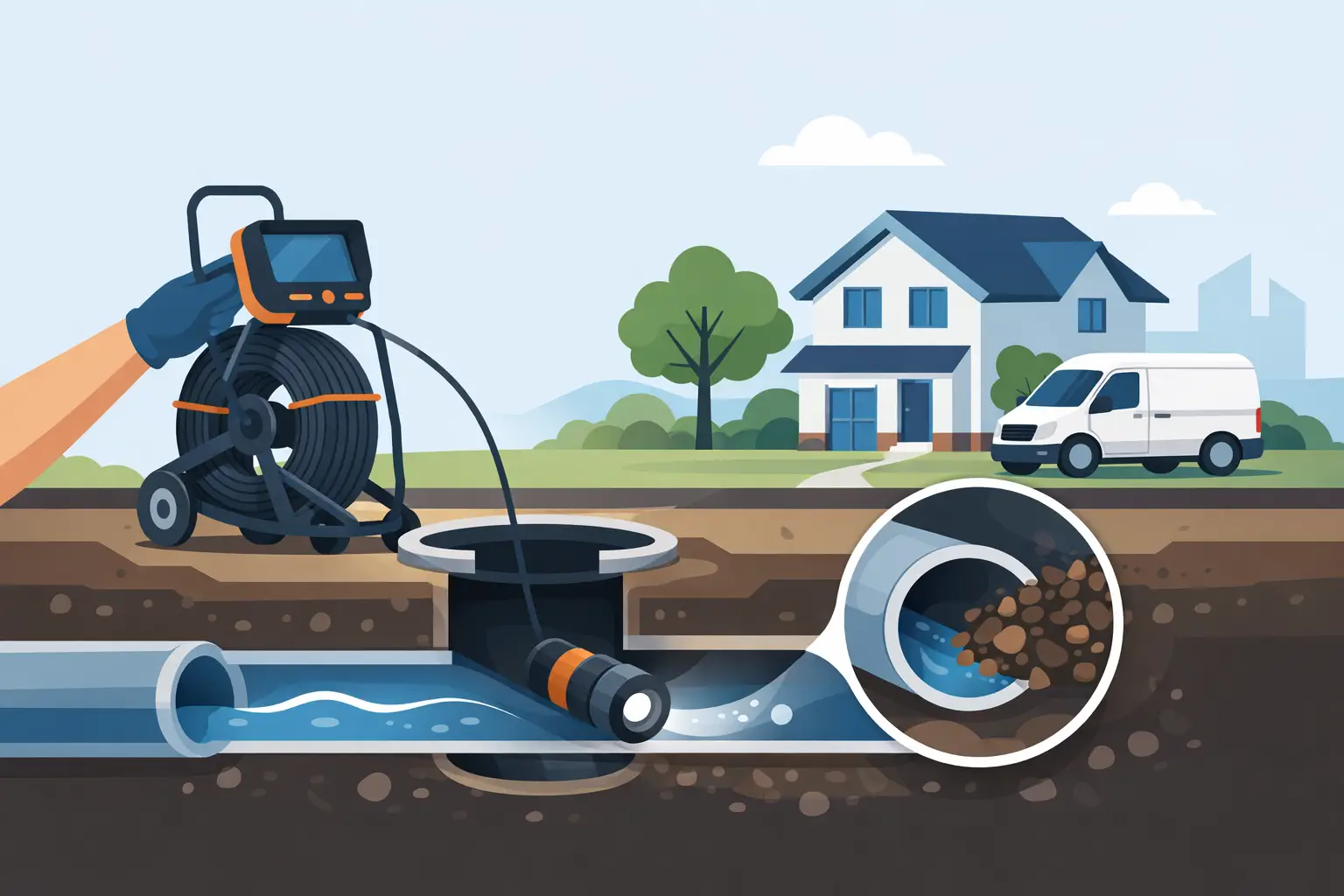
A CCTV drain survey uses a purpose-built camera fed through the drainage pipework. The camera records the condition of the line, helping a specialist identify defects, their position and the most sensible way to resolve them. For many properties, it is the quickest route to a targeted, cost-effective repair with the least disruption.
When should you book CCTV drain survey work?
Repeated blockages are the most common reason to arrange a survey. One blockage may simply be a build-up of wipes, fat, scale or debris. If the same toilet, sink, gully or external drain keeps backing up after cleaning, however, there may be an underlying issue such as root ingress, a displaced joint or a damaged pipe.
Slow drainage is another warning sign. Water draining away gradually from more than one fitting can indicate a partial obstruction further along the system. Bad smells outside, damp ground around a drain run, gurgling pipework and unexplained pooling are also worth investigating before they develop into an overflow or internal flooding event.
A survey is particularly useful before buying a property, taking on a commercial lease or carrying out an extension. Older properties can have ageing clay drains, redundant pipework or drainage runs that have been altered over time. Knowing the condition of the system before work begins can prevent costly delays once builders are on site.
Landlords and facilities teams may also need an independent record after a tenant reports recurring drainage problems, before planned maintenance, or when an insurer asks for evidence of the cause of damage. A properly recorded survey provides far more useful information than a verbal assessment alone.
What a CCTV drain survey can find
The camera does not just confirm that a drain is blocked. It helps establish why it is blocked and whether cleaning is enough. Common findings include cracked or fractured pipes, open or displaced joints, root intrusion, collapsed sections, scale build-up, construction debris and pipework that has lost its correct alignment.
In some cases, the issue is not damage but poor drainage design. A pipe may have insufficient fall, an old connection may be restricting flow, or a drain run may have been incorrectly connected. These problems can produce recurring symptoms even after a thorough unblocking.
The survey also helps locate the defect accurately. That matters because excavation should be limited to the smallest practical area. If a fault is suitable for no-dig repair, such as patch lining, the work can often be completed without digging up large sections of garden, paving or driveway. If the pipe has fully collapsed, excavation may still be necessary, but the survey allows the repair to be planned properly from the outset.
CCTV surveys are not a substitute for drain cleaning
A camera needs a reasonably clear view to deliver reliable findings. Where a drain is full of standing water, heavy silt or solid debris, high-pressure water jetting may be required before the survey can be completed. This is not an unnecessary extra step. Cleaning the line first allows the camera to assess the pipe wall, joints and any smaller defects that would otherwise be hidden.
Equally, a survey does not always mean a repair is required. A minor amount of scale or a small root entry may be manageable through cleaning and monitoring, depending on the pipe condition and how the property is used. The right outcome depends on the evidence, not on selling the largest job.
What happens during a CCTV drain survey?
A drainage technician will normally begin by discussing the symptoms and checking accessible inspection chambers. This helps establish which runs are likely to be affected and whether there are obvious signs of surcharge, standing water or damaged covers.
The camera is then introduced through a suitable access point and guided through the drainage line. Modern equipment provides a live view of the pipe interior, allowing the technician to inspect the run and identify defects. For more complex systems, particularly at commercial sites, the survey may cover several branches and connections to build a complete picture.
Once the inspection is complete, the findings should be explained in plain terms. You should understand where the problem is, how serious it is and what options are available. A useful report will include footage or images, the location of key defects and recommendations for repair or further cleaning where needed.
For homeowners, this clarity avoids paying for broad exploratory digging. For property managers, it supports budgeting, planned maintenance and communication with tenants, insurers or contractors. The survey is a diagnostic step, but it is often the step that prevents disruption later.
Choosing the right repair after a survey
The best repair depends on the type of fault, the pipe material, access conditions and the surrounding surface. A localised crack or joint defect can often be repaired using a patch liner. This creates a new watertight section inside the existing pipe and can avoid excavation altogether.
Where roots have entered through joints, jetting and root removal may restore flow temporarily, but the damaged joint may still need lining or repair to reduce the chance of regrowth. A severely displaced or collapsed pipe may require excavation and replacement. The key is to target the affected section rather than disturb an entire drain run where there is no need.
Reinstatement also matters. A repair beneath block paving, tarmac, a lawn or a commercial yard needs to be planned with the finished surface in mind. Specialist drainage contractors should consider access, public safety, working hours and the need to keep a home or business functioning while work is underway.
Why experience and reporting matter
Not every drainage issue is straightforward. Properties may share drains, have private pipework crossing neighbouring land, or connect into older systems with limited access points. Commercial premises can have grease, high usage or long external runs that need a more structured inspection.
That is why it pays to use a specialist contractor with the equipment and experience to diagnose the issue properly. Watermains & Drains UK provides CCTV drain surveys alongside drain unblocking, patch lining, repairs and full drainage installations, so recommendations can be based on the most practical solution rather than a single method.
For planned work, ask what the survey includes and whether the report will show the location and condition of defects clearly. For an urgent blockage, ask whether jetting and camera inspection can be carried out as part of the visit if the drain needs more than a simple clearance. Clear scope and clear pricing help avoid surprises when the source of the problem is uncovered.
Getting your property ready for the visit
You do not usually need to do much preparation. If possible, clear access to inspection chambers, gullies and external drains, and let the contractor know about any recent building work, previous drainage repairs or areas that flood. For commercial sites, details such as site access, parking restrictions and operating hours can help the work be organised safely and with minimal interruption.
Try not to use harsh chemical drain cleaners before the appointment. They rarely solve structural drainage defects and can create an unpleasant or unsafe environment for anyone opening the system. If wastewater is backing up inside the property, reduce water use where possible and arrange urgent assistance rather than waiting for the problem to clear on its own.
A CCTV survey is a small, controlled investigation that can prevent a larger and more expensive drainage failure. Whether you are dealing with repeat blockages, preparing for a purchase or protecting a busy property, early evidence gives you more repair options and more control over disruption.





