How to Spot Drain Collapse Before It Worsens
A drain rarely collapses without leaving clues first. Slow drainage, recurring blockages and unexplained wet ground can all point to damage below ground. Knowing how to spot drain collapse early gives homeowners, landlords and property managers the best chance of arranging a targeted repair before wastewater backs up, ground movement worsens or a driveway has to be opened up.
A collapsed drain means part of the pipe has cracked, fractured, disjointed or caved in enough to restrict the flow of waste. It is different from a straightforward blockage, although the two can feel very similar from inside the property. The key is to look for repeat problems and obtain a clear view of the pipework rather than repeatedly treating the symptom.
The main signs of a collapsed drain
The most common warning sign is a blockage that keeps returning. If a drain has been cleared but toilets, sinks, baths or gullies begin draining slowly again within days or weeks, there may be a structural fault catching waste and debris. Tree roots, displaced joints and fractured pipe sections can all create a point where material repeatedly builds up.
Foul smells are another reason to investigate. A persistent sewage odour around an outside drain, inspection chamber, patio or garden may mean wastewater is not travelling through the pipe as it should. Do not assume this is simply a temporary build-up of debris, particularly if the smell returns after the drain has been cleaned.
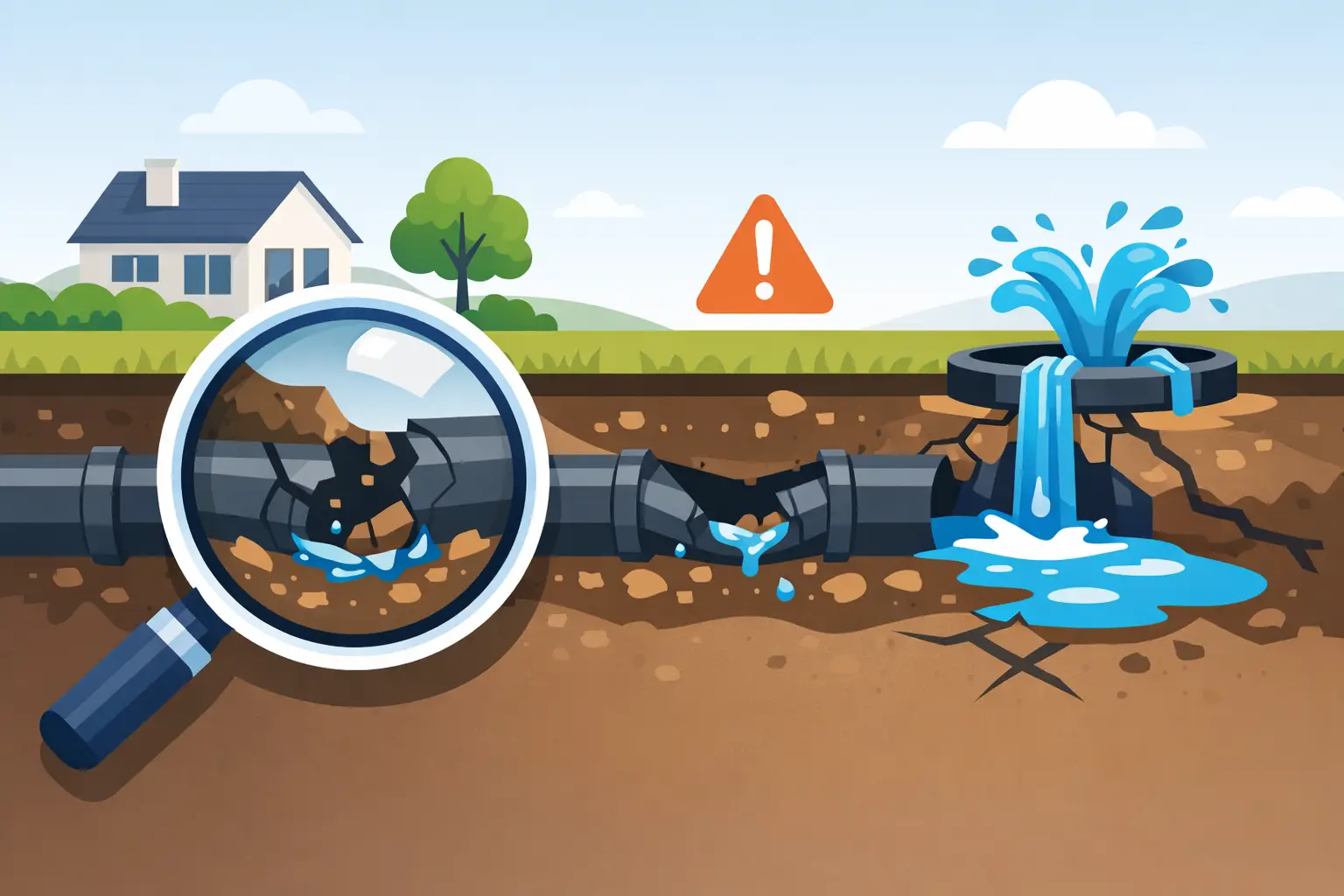
Pay attention to changes outside too. A soft patch in a lawn, unusually lush grass in one small area, damp ground in dry weather or standing water near a drain run can indicate that water is escaping underground. On hardstanding, you may notice a sunken section of driveway, loose paving or new cracks. These signs do not prove a collapse on their own, but they justify professional investigation.
Inside the building, gurgling sounds from plugholes or toilets can indicate restricted flow and trapped air in the drainage system. If more than one fitting is affected at the same time, such as a kitchen sink draining slowly while a downstairs toilet bubbles, the issue is more likely to be in a shared pipe run rather than at a single appliance.
How to spot drain collapse rather than a simple blockage
A one-off blockage is often caused by inappropriate material entering the system: wipes, fats, food waste, sanitary products or excessive paper. Once professionally cleared and used correctly, that drain may continue working normally.
A collapse or damaged pipe behaves differently. The problem tends to recur in the same area, sometimes after heavy rain or periods of high use. Drainage may improve briefly after jetting, then slow again as debris catches on a crack, offset joint or root intrusion. In severe cases, water may not pass the damaged section at all.
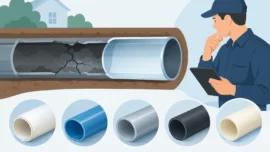
Age and pipe material matter. Older clay drains can be durable, but joints may shift over time and individual sections can crack under ground movement. Pitch fibre pipes, found at some properties built between the 1950s and 1970s, can deform or blister as they age. Modern plastic drainage is less prone to some of these issues, though poor installation, heavy loading or nearby excavation can still cause damage.
Location also changes the likelihood. Drains beneath mature trees are more vulnerable to root ingress. Pipes running under a driveway can be affected by vehicle loads, especially if the ground beneath has settled. Extensions, boundary walls and landscaping works can create issues where drains have been disturbed, bridged or inadequately protected.
It depends on the symptoms, the age of the property and the position of the pipework. That is why guesswork is rarely cost effective. A reliable diagnosis should distinguish between removable debris and a defect that needs repair.
What a CCTV drain survey can show
A CCTV drain survey is the most direct way to confirm whether a drain has collapsed. A specialist camera is fed through the pipework, providing recorded footage of the internal condition and the location of any defect. This avoids excavating an area simply to find out what is wrong.
The survey can identify cracks, open joints, displaced sections, root ingress, scale build-up, deformed pipework and complete collapses. It can also establish the depth and route of the drain, which is useful when planning repairs beneath gardens, paths, driveways or commercial hardstanding.
For a landlord or managing agent, a written survey report provides useful evidence when planning maintenance, discussing responsibility or supporting an insurance claim. For a homeowner, it replaces uncertainty with a clear explanation of what needs doing and why.
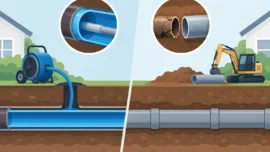
Not every fault requires a full excavation. If the pipe is broadly sound but has a localised crack or defective joint, patch lining may provide a fast, cost-effective repair from within the drain. A resin liner is installed over the affected section to create a new sealed pipe wall. This can be particularly useful where access is limited or where digging would damage quality paving, landscaping or a finished driveway.
Where the pipe has fully collapsed, is badly deformed or has several defects, excavation and replacement may be the better long-term solution. The right option depends on the survey findings, access, pipe depth and the condition of the surrounding run. A professional contractor should explain the practical choices before work begins, including how the surface will be reinstated.
When to act urgently
Some warning signs need prompt attention. Wastewater backing up into a property, sewage coming out of an external gully, or a drain that has stopped flowing completely should be treated as urgent. Keep children and pets away from affected areas, avoid using toilets, showers, washing machines and dishwashers where possible, and arrange professional help.
A newly formed dip or hole near a drain line also needs quick assessment. Ground can settle where leaking water has washed away supporting soil, and the surface may become unsafe. Avoid driving or parking over the area until the cause has been checked.
For commercial premises, the priority is often to protect staff, customers and operations. A recurring drainage failure can affect hygiene standards, tenant comfort and trading hours. Early CCTV investigation makes it easier to plan work at a suitable time, rather than dealing with an unplanned closure after a complete blockage.
Avoid making the damage worse
Chemical drain cleaners are not a solution for a collapsed drain. They may do little to shift the obstruction and can create hazards for anyone working on the system afterwards. Repeatedly forcing rods through a badly damaged pipe can also worsen a fracture or push debris further into the line.
It is sensible to make a note of when the problem occurs, which fittings are affected and whether rain makes it worse. If safe to do so, check visible inspection chambers for a high water level or obvious debris, but do not enter a chamber or attempt to remove heavy covers without the right equipment.
Do not delay because the drain appears to be working again. Partial collapses can allow a small amount of flow through, giving a false sense that the issue has resolved. Meanwhile, leakage and soil movement may continue beneath the surface.
A clear repair plan means less disruption
The best drainage repairs start with evidence, not assumptions. Once the defect has been located, the repair can be designed around the property, whether that means internal patch lining, a short excavation or replacement of a failed run. Careful planning is especially valuable where pipework sits beneath landscaped gardens, block paving, tarmac or busy access routes.
Watermains & Drains UK provides CCTV drain surveys, drain repairs and no-dig lining options for properties across the North West, with a focus on clear findings and tidy reinstatement. For urgent or recurring drainage problems, arranging an assessment early is usually the simplest way to protect the property and avoid a more disruptive repair later.