

Does Drain Lining Reduce Diameter? The Facts
A drain that has started backing up is not the place for guesswork. Homeowners and property managers often ask, does drain lining reduce diameter enough to make future blockages more likely? The short answer is yes, a liner takes up a small amount of internal space – but, when the correct lining method is specified and installed properly, it will not normally cause a drainage problem. In many cases, lining improves flow by creating a smooth, sealed pipe inside a damaged one.
The key is understanding the condition, size and use of the existing drain before any repair is chosen. A CCTV drain survey provides that information and helps establish whether a patch liner, a full-length liner or a different repair is the sensible option.
Does drain lining reduce diameter?
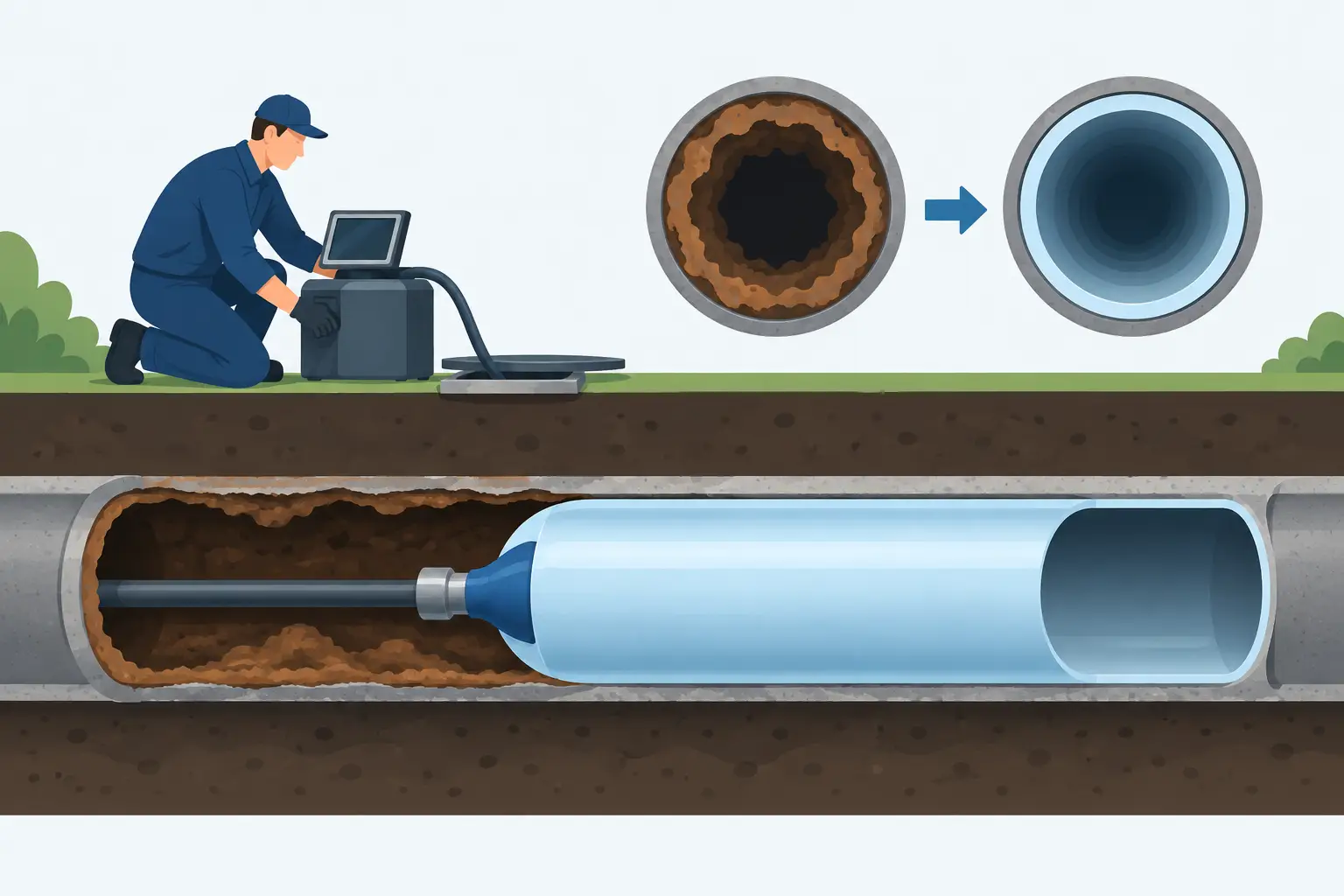
Drain lining creates a new pipe within the old pipe. A resin-impregnated liner is installed through an access point, positioned over the damaged section or along the full run, then cured in place. Once hardened, it seals cracks, displaced joints, small holes and root entry without the need to excavate the full length of the drain.
Because the liner sits inside the original pipe, it does reduce the internal diameter slightly. The reduction is generally only a few millimetres, depending on the liner system, pipe condition and number of layers required. On a typical 100mm domestic foul drain, that small change is rarely significant when the pipe has been surveyed, cleaned and lined to the right specification.
What matters more is the usable bore of the original pipe. A cracked or poorly jointed drain may have roots, scale, displaced pipework or rough internal edges that disrupt the flow of waste. A correctly installed liner covers these defects with a continuous smooth surface. The practical result can be better flow and fewer repeat blockages, despite the modest reduction in size.
Why a smooth liner can improve drainage performance
Drainage capacity is not determined by diameter alone. The pipe gradient, the condition of the internal surface, the amount and type of waste entering the system, and the layout of bends and junctions all play a part.
A drain with rough fractures and root intrusion creates points where paper, fats and other debris can catch. Water may still pass through initially, but the restriction encourages material to build up until the pipe blocks. Lining removes those snag points and prevents further root ingress through failed joints or cracks.
This is particularly useful where a drain runs beneath a driveway, extension, patio, landscaped garden or commercial hardstanding. Rather than excavating and reinstating the surface, a no-dig repair can often be completed through existing chambers. That means less disruption, less mess and a faster return to normal use.
When the smaller diameter does matter
Drain lining is not a universal answer, and a competent contractor should not recommend it without inspecting the pipe first. The internal diameter can matter where the existing drain is already undersized, heavily scaled or distorted.
For example, an older small-bore pipe serving several flats, a busy commercial kitchen or a property with repeated high-volume discharge may have limited spare capacity. Adding a liner to a pipe that is already struggling could be the wrong solution. Equally, if the drain has severe deformation, a collapse or a major change in level, lining may not restore the required shape or fall.
A liner also needs a clean, stable host pipe. Before installation, the drain should be cleared and descaled as required. If debris is left behind or the pipe is not properly prepared, the finished liner may not fit evenly. This can create a local restriction that is avoidable with thorough cleaning and correct preparation.
The main situations that need closer assessment are:
- drains with a history of frequent blockages after professional cleaning
- pipes that are already unusually small for the property they serve
- commercial drains carrying fats, food waste or high volumes of wastewater
- collapsed, badly flattened or misaligned pipework
- sections where several branches enter close together
These issues do not automatically rule out lining, but they do mean a CCTV survey and clear repair plan are essential.
Patch lining versus full drain lining
The amount of diameter reduction also depends on the type of repair. Patch lining repairs a local defect, usually over a short section of pipe. It is often suitable for an isolated crack, open joint or small area of root ingress. Because it only covers the defective area, it is a cost-effective solution where the rest of the drain is sound.
Full drain lining runs along a longer length of pipe, sometimes between two chambers. It is usually considered where there are repeated fractures, multiple failed joints or widespread root damage. A full liner gives the drain a new continuous internal wall and can prevent several separate defects from becoming future call-outs.
Neither option should be selected solely because it avoids digging. The repair must suit the survey findings. A local patch on a pipe that is damaged throughout may only delay a larger problem. On the other hand, lining an entire run when one joint has failed may add unnecessary cost. The best solution is the one that restores reliable drainage with the least disruption to the property.
How contractors make sure lining will not restrict the drain
A professional lining job begins before the liner is brought to site. The drain is surveyed by CCTV to identify its material, approximate diameter, route, defects and connections. The footage also shows whether roots, scale or standing water are affecting performance.
The pipe is then cleaned using the appropriate jetting equipment. Any roots may need specialist cutting, while hard scale can require mechanical removal. Once the line is clear, the contractor can confirm whether the pipe is suitable for lining and measure the section accurately.
During installation, the liner is sized for the host pipe and cured under controlled conditions. Connections and branch openings should be reinstated where necessary, so wastewater can continue to enter the main drain without obstruction. A final CCTV survey is good practice because it confirms the liner is smooth, fully cured and correctly positioned.
For landlords, managing agents and facilities teams, this evidence is valuable. It provides a record of the defect, the repair undertaken and the condition left behind. For homeowners, it offers reassurance that the work has addressed the cause of the issue rather than simply clearing the symptom.
Common concerns about lined drains
One concern is whether a lined drain will be harder to clean in future. In fact, a sound, smooth liner is generally easier to maintain than a cracked pipe with open joints. Standard drain cleaning and CCTV inspection can still be carried out through normal access points.
Another question is whether lining can reduce the diameter at bends. It can follow bends within its designed limits, but tight bends, complex junctions and badly distorted sections need careful assessment. This is why a survey matters more than a one-size-fits-all quotation.
Property owners also sometimes worry that lining is a temporary repair. A properly specified and installed liner is a long-term rehabilitation method, not a quick sealant application. The expected lifespan depends on the system used, the condition of the host pipe and what passes through the drain, but reputable contractors should explain their workmanship guarantee and the scope of the repair clearly.
Choosing the right repair for your property
If a drain repeatedly blocks, smells, leaks or allows roots to return after jetting, arrange a CCTV survey before committing to excavation or lining. The footage will show whether the problem is a local defect, a capacity issue or a more serious structural failure.
At Watermains & Drains UK, drainage repairs are assessed with practical outcomes in mind: a reliable drain, clear evidence of the fault and the least disruption possible to your home, tenants or business. Where lining is appropriate, it can avoid unnecessary excavation while delivering a clean, durable repair.
A small reduction in diameter is not usually the deciding factor. The right question is whether the repaired drain will have a clear, smooth and properly sized route for the wastewater it needs to carry. With a thorough survey and the right repair method, that answer can be established before work begins.





