

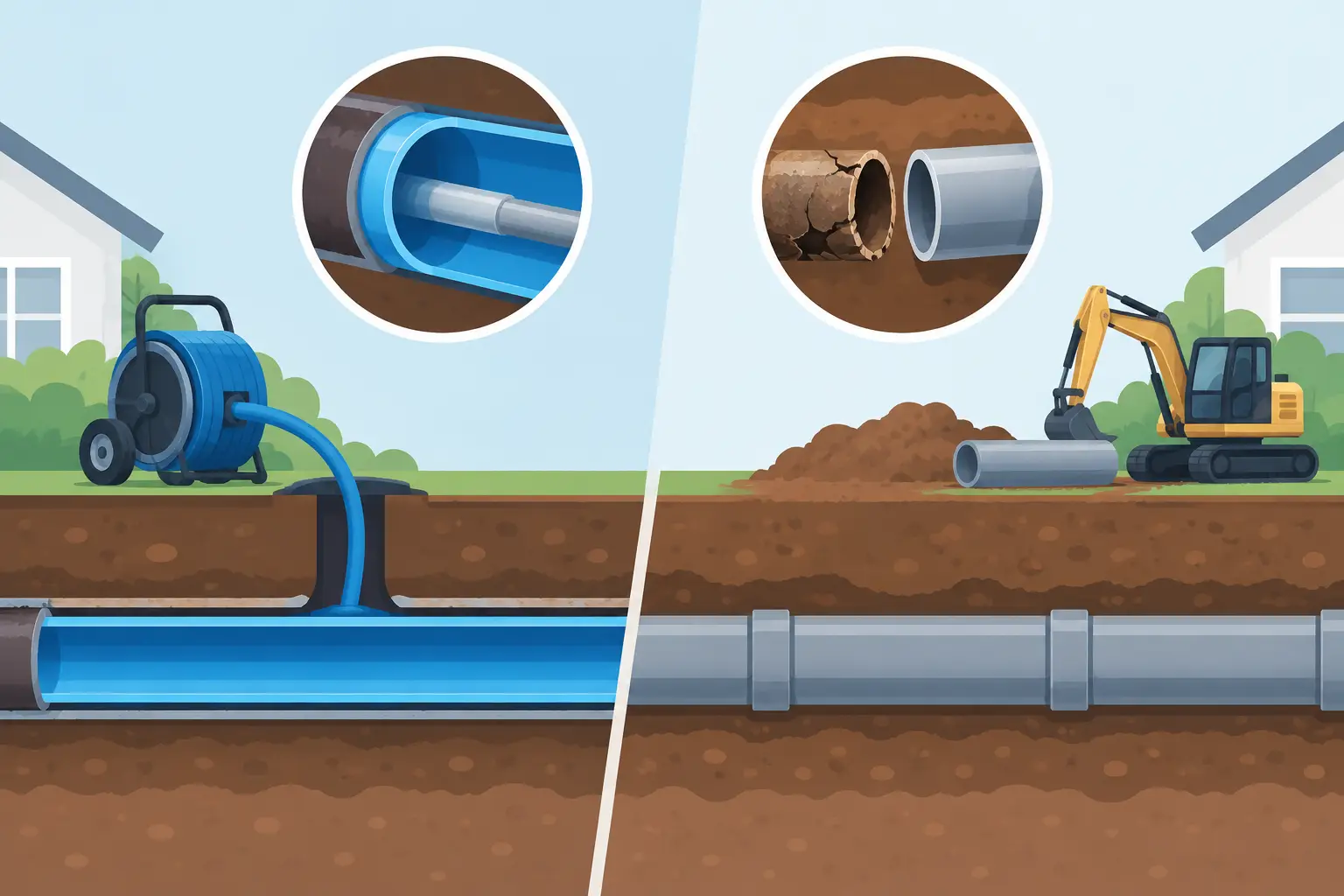
Drain Relining Versus Pipe Replacement Explained
A blocked drain beneath a driveway, patio or commercial entrance creates an immediate concern: will the repair mean digging up the surface you have paid to install? Drain relining versus pipe replacement is not simply a choice between a quick repair and a permanent one. Both can provide a long-lasting solution when they are specified for the right condition of pipe.
The deciding factor is the evidence inside the drain. A professional CCTV drain survey shows whether the pipe has local cracks, root ingress, open joints, collapse, poor alignment or a wider structural failure. From there, a specialist contractor can recommend the method that protects the property, controls cost and avoids unnecessary disruption.
Drain relining versus pipe replacement: the key difference
Drain relining repairs the existing pipe from within. A resin-impregnated liner is installed through access points such as manholes, then cured to form a new pipe within the damaged one. It seals cracks and joints, prevents roots entering through defects and restores the pipe without excavating its full length.
Pipe replacement involves removing and renewing the damaged drain, either through carefully planned excavation or, in suitable circumstances, trenchless installation methods. It is the stronger option where the existing pipe no longer provides a sound route for a liner, such as when it has collapsed, dropped out of line or has insufficient fall.
Neither approach is automatically better. Relining is often the least disruptive solution for a structurally sound pipe with defects. Replacement is usually the sensible investment when the drain has failed beyond what an internal repair can reliably correct.
When drain relining is the right repair
Relining is particularly effective for cracked, fractured or root-damaged drains where the pipe still holds its shape. It can also be a practical answer to leaking joints in older clay drainage, especially where the line runs below a driveway, landscaped garden, extension or finished internal floor.
The principal benefit is access. Rather than opening a long trench, the work can often be completed from existing manholes or rodding points. That means less spoil, fewer reinstatement works and less inconvenience for households, tenants, customers and staff. For landlords and facilities teams, this can reduce the time a shared entrance, car park or operational area is affected.
A full liner normally covers a continuous length of pipe. If a survey identifies one isolated defect, a patch liner may be enough. This localised repair is installed only at the damaged area and can be a cost-effective option where the rest of the drainage run is in good order.
Relining also has a role in planned maintenance. A drain may still be flowing but repeatedly allow roots to enter at joints. Clearing the roots without sealing the entry point can lead to the same blockage returning. Lining addresses the underlying defect rather than only treating the symptom.
That said, relining does slightly reduce the internal diameter of the pipe. In a standard domestic drain, the reduction is usually small, but capacity must still be considered. A contractor should check the pipe size, use, existing flow performance and the type of waste passing through it before recommending a liner.
What relining cannot correct
A liner follows the route of the existing pipe. If the drain has major displacement, a severe belly, a collapse or an incorrect gradient, lining will not put it back into the proper position. It may bridge a small local issue in certain cases, but it is not a substitute for rebuilding a drain that has lost its structural integrity.
Access can also limit the method. Very tight bends, multiple connections, badly damaged chambers or a pipe blocked by hardened concrete or large debris may need excavation before a lasting repair can be completed.
When pipe replacement is the better choice
Replacement is normally recommended when a CCTV survey shows extensive collapse, displaced sections, broken pipework, significant ground movement or recurring failures along several parts of the run. These problems need the pipe to be exposed, re-levelled and renewed so that wastewater can flow correctly.
It is also the right choice when the drainage layout itself is unsuitable. For example, a property may have an old undersized line, poorly made connections, redundant pipe branches or a drain installed with too little fall. Installing a liner within that system could seal leaks, but it would not correct the design issue causing slow drainage or repeated blockages.
Traditional excavation remains necessary for some repairs, particularly where chambers need rebuilding or a collapsed section must be removed. Good planning makes a substantial difference. The affected area should be clearly identified before digging begins, with reinstatement agreed in advance for surfaces such as block paving, tarmac, concrete, turf and planted areas.
Where ground conditions and the pipe route allow, trenchless techniques can reduce the extent of excavation. This may involve creating only targeted access pits rather than opening the full length of a driveway or garden. The most suitable approach depends on utilities in the area, depth, ground type, available access and the condition of the failed pipe.
For commercial sites, replacement decisions should account for more than the pipe itself. Safe segregation, traffic management, tenant access, hygiene controls and working hours can all shape the method and programme. A competent contractor will explain these requirements before work starts rather than treating them as an afterthought.
Cost, disruption and lifespan: what really affects the decision
It is tempting to compare one quoted figure for lining with one for excavation, but the scope behind each price matters more. A drain repair quotation should account for the survey findings, access arrangements, pipe diameter and length, cleaning requirements, connections, depth, ground conditions and reinstatement.
Relining can cost less overall when it avoids lifting a driveway, patio or internal floor. The saving is not just in the repair itself but in the reduced need to remove and replace finished surfaces. It is often quicker too, which is valuable where a business needs to keep trading or a landlord needs to minimise disruption to occupants.
Replacement can be better value where defects are widespread. Repeated patch repairs on a failing drainage system can become more expensive than renewing the affected run properly. The right decision is the one that resolves the reason for the failure, not simply the option with the lowest initial cost.
Lifespan depends on correct diagnosis, materials, installation quality and how the drain is used. A professionally installed liner can provide a durable structural repair. Equally, a correctly installed replacement pipe gives the opportunity to improve falls, connections and access points for future maintenance. Ask what workmanship guarantee applies, what it covers and whether the completed drain will be tested and recorded.
Start with a CCTV drain survey, not an assumption
Drain symptoms do not always reveal the cause. Slow flow could be caused by a simple blockage, while recurring backups may point to roots, fractured clay pipes, scale build-up or a damaged connection. Guesswork risks paying for drain cleaning when the pipe needs repair, or arranging excavation where lining would have solved the issue with far less disruption.
A detailed CCTV survey provides footage and a condition report that identifies the location and nature of faults. This gives homeowners a clear basis for deciding what work is needed. For property managers, it also provides useful evidence for maintenance records, insurers, landlords and planned repair budgets.
The survey should lead to a practical recommendation. Where lining is suitable, the contractor should explain whether a full liner or patch repair is proposed and how access will be achieved. Where replacement is necessary, they should identify the excavation area, likely reinstatement and any measures needed to protect services and occupants.
Choosing a contractor for drainage repairs
Drain repair work affects hidden infrastructure, finished surfaces and, often, the day-to-day use of a property. Look for a specialist contractor that can investigate, clear, repair and reinstate rather than passing responsibility between separate trades. Relevant insurance, recognised approvals, clear method statements for commercial work and a written workmanship guarantee all reduce risk.
Watermains & Drains UK combines CCTV investigation, drain repair and no-dig methods where conditions permit, helping property owners reach a solution with the least practical disruption. A clear survey-led quotation should always set out what is included, what may affect the final scope and how the area will be left on completion.
If your drain is repeatedly blocking, showing signs of root ingress or causing damp patches and unpleasant odours, arrange an inspection before the damage becomes more disruptive. The best repair is the one that leaves you with a sound drain and no uncertainty about what is happening beneath the surface.





