Your Water Main, Drainage & Trenchless Solution Specialists

News

A Guide to Supply Pipe Compliance for Homes
Blog

A Guide to Supply Pipe Compliance for Homes

A new water supply pipe is not simply a case of laying blue pipe from the pavement to the house. It must protect drinking water, connect correctly to the water company’s network and remain accessible, durable and safe for years to come. This guide to supply pipe compliance explains what homeowners, landlords and property managers need to check before work starts, particularly when replacing lead pipework or upgrading an ageing private supply.

Where supply pipe responsibility usually begins

In most UK properties, the water company is responsible for the public water main in the road and, often, the communication pipe running from that main to the external stop tap or boundary point. The property owner is normally responsible for the supply pipe from that point into the building.

That division is not identical everywhere. Older properties can have shared services, non-standard stop tap locations or pipework that crosses neighbouring land. Before planning replacement work, establish where the company’s responsibility ends and your private pipe begins. Your local water company can confirm its arrangement, while an experienced water supply contractor can survey the route and identify obvious complications.

This matters because a new private supply must be compatible with the water company connection. Installing a good-quality pipe is only one part of the job. The route, depth, entry point, fittings and final connection all need to be considered together.

Why supply pipe compliance matters

Compliance is about far more than paperwork. The requirements are designed to prevent contamination, leaks, freezing, poor water flow and avoidable disruption to roads, gardens and neighbouring properties.

For homeowners, a compliant installation provides reassurance that the replacement has been carried out using suitable materials and proper methods. For landlords and commercial property managers, it also creates a clearer record of work undertaken, which can be valuable when responding to tenant concerns, insurer queries or future maintenance requirements.

Lead replacement is a common reason for upgrading a supply pipe. Lead can still be present in pipes serving pre-1970 properties, and the risk is greater where lead remains on both the public and private sides of the connection. Replacing the private section with a modern pipe can improve water quality and often provides a more dependable flow. Your water company may offer guidance or a replacement programme where its own section is also lead, but eligibility and process vary by area.

The main rules behind supply pipe compliance

Private water supply installations are generally governed by the Water Supply (Water Fittings) Regulations 1999 in England and Wales, with equivalent provisions in Scotland and Northern Ireland. Their central purpose is to protect wholesome water from waste, misuse, undue consumption, incorrect measurement and contamination.

In practical terms, the work should use materials and fittings suitable for potable water, avoid cross-connections with other systems, and be installed in a manner that will not damage the water network. There may also be water company-specific requirements for new connections, service alterations and connections at the boundary.

A competent installer should be able to explain the proposed method before starting. In many cases, work may need to be notified to the local water supplier in advance, especially where a new service connection, significant alteration or particular type of fitting is involved. Do not assume that notification is unnecessary because the work is wholly within your boundary. The correct route depends on the scope of work and the local supplier’s rules.

Use drinking-water approved materials

Modern blue MDPE pipe is widely used for underground cold-water supply pipes because it is durable, flexible and suitable for potable water when correctly specified. However, pipe alone is not the whole specification. Connectors, valves, insulation, protective ducts and any internal transition fittings must also be suitable for drinking-water use and appropriate for the operating conditions.

Avoid mixing unknown older materials with a new installation unless their condition and compatibility have been assessed. A poor transition between old and new pipework can become a weak point for leaks, restricted flow or contamination risk.

Install the pipe at a suitable depth and route

The supply pipe needs protection from frost, physical damage and future excavation. Water companies commonly set minimum cover-depth expectations for pipes in private land, and the required depth can differ where a pipe crosses a driveway, vehicle access or other vulnerable ground.

A straight, sensible route is usually best, but the shortest route is not always the right one. The pipe must avoid drainage runs, fuel lines, electrical services and areas likely to be excavated later. Where separation cannot be achieved, extra protection or a revised route may be needed. A proper site survey is particularly useful on older properties, where records of buried services may be incomplete.

Protect the point where the pipe enters the property

The pipe entry through an external wall or floor should be sleeved and sealed correctly. This protects the pipe from abrasion and allows for minor movement without damaging the service. It also helps prevent water ingress, draughts and pests entering around the penetration.

The internal stop tap should be accessible and clearly identifiable. In an emergency, occupants need to be able to isolate the water quickly. A stop tap hidden behind fixed kitchen units or in an inaccessible void may not meet the practical needs of the property, even if the new pipe itself has been installed well.

What a compliant replacement project should include

A professional supply pipe replacement starts with investigation, not excavation. The contractor should identify the likely existing route, locate the internal stop tap and external boundary arrangement, consider ground conditions, and assess whether the property has one supply or a shared service.

The quotation should make clear what is included: excavation or trenchless installation, connection arrangements, pipe material, reinstatement, testing and any exclusions. This is especially relevant if the work involves a water company connection, a public highway permit, traffic management or third-party land.

Once installed, the pipework should be pressure tested before final reinstatement. The system should be flushed as appropriate before being brought into use, and the property should be checked for leaks and satisfactory flow. Good contractors also leave the site tidy and reinstate disturbed surfaces to an agreed standard. A fast installation is helpful, but a rushed job that leaves an uneven driveway, damaged lawn or inaccessible stop tap is not a good outcome.

For reassurance, use a contractor with relevant water-industry approval, such as WIAPS or WaterSafe recognition where applicable, appropriate insurance and a clear workmanship guarantee. These are meaningful indicators that the installer understands the standards involved, although the water company retains its own requirements for any connection to its network.

Trenchless installation and compliance

Many supply pipe replacements can be completed without digging a full-length trench. Trenchless moling creates a narrow underground route between small launch and reception pits, allowing the new pipe to pass beneath lawns, paths and driveways with far less surface disturbance.

This approach is often ideal for terraced homes, landscaped gardens and properties with recently laid paving. It can reduce labour, shorten the programme and limit reinstatement costs. It is not automatically suitable for every site, though. Dense rock, obstructions, unstable ground, congested buried services and very precise route requirements may make traditional excavation, or a combination of methods, the safer option.

Compliance still applies in full with trenchless methods. The pipe must be installed at an appropriate depth, its route must be controlled, and it must remain protected from other services. The benefit of no-dig work is reduced disruption, not reduced standards.

Common compliance problems to avoid

The most expensive issues often begin with small shortcuts. Reusing a visibly deteriorated section of old pipe to save time can compromise an otherwise new installation. Running a pipe too shallow beneath a driveway can expose it to freezing and damage. Using unsuitable fittings or failing to protect the wall entry can create faults that only become apparent after floors, paving or landscaping have been restored.

Shared supplies need particular care. If several properties are served by one pipe, replacing only one section may change pressure or reveal weaknesses elsewhere. There may be legal and practical questions around access, ownership and the cost of future repairs. In these cases, a survey and a clear plan agreed with affected owners are preferable to an emergency repair after failure.

Another common mistake is treating poor water pressure as proof that the external supply pipe needs replacement. A restricted lead pipe can certainly be the cause, but so can an internal stop tap that is not fully open, a fault in internal plumbing, a shared service or wider network conditions. Diagnosis should come before committing to major work.

A practical checklist before approving work

Before you proceed, confirm the ownership boundary with the water company, ask whether notification or approval is required, and check that the proposed materials are suitable for drinking water. Ensure the contractor has surveyed for buried services and explained how the route, depth and property entry will be protected.

You should also agree the reinstatement standard in writing, particularly for block paving, tarmac, concrete and landscaped areas. If trenchless moling is proposed, ask where the entry and exit pits will be and whether there are any site conditions that could require a change of method.

For homeowners across the North West, Watermains & Drains UK can assess the existing supply, plan a compliant replacement route and use trenchless methods where conditions allow. The aim is straightforward: a dependable new water supply with the least disruption to your home, driveway or garden.

A compliant supply pipe is a long-term part of the property, not a temporary repair. Taking time to confirm the route, approvals and installation method before work begins is usually the simplest way to avoid future leaks, disruption and unnecessary cost.
Outside Drain Smells? Causes and Practical Fixes
Blog

Outside Drain Smells? Causes and Practical Fixes

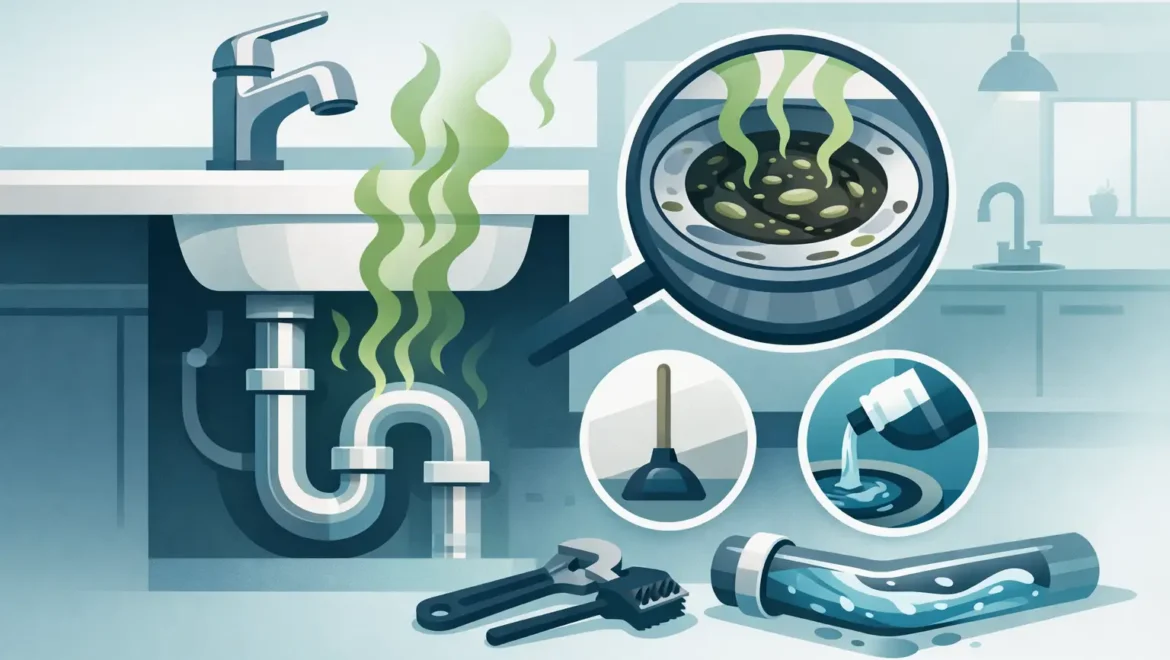
A bad smell around a gully, inspection chamber or patio drain is more than an unpleasant welcome home. Outside drain smells can indicate standing wastewater, a blocked branch line, a dry trap or, in some cases, a fault in the drainage system that needs prompt attention. The right response depends on where the odour is strongest, when it appears and whether water is draining as it should.

For homeowners, landlords and facilities teams, acting early usually means a smaller, cleaner job. It can also help avoid a blockage backing up into the property, particularly after heavy rain or when several appliances are in use.

Why outside drain smells develop

Most outdoor drains are connected to the foul-water system, carrying waste from toilets, sinks, showers, washing machines and kitchens to the public sewer or a private treatment system. A gully trap contains water that forms a seal between the drain and sewer gases. When that seal is present and the pipework is flowing freely, you should not notice a persistent sewage smell.

Problems arise when the water seal disappears, waste is held in the pipe or air escapes through a damaged connection. Smells can be worse in warm weather because bacteria break down organic material more quickly. They may also become noticeable after a dry spell, when infrequently used drains have evaporated, or after prolonged rainfall, when a partially blocked drain cannot cope with the additional flow.

The location of the smell offers a useful first clue. An odour directly above one gully may be a local issue. A smell around an inspection chamber, across a driveway or close to an external wall can point to a blockage or defect further along the line.

Common causes of outside drain smells

A dry or dirty gully trap

External gullies often take water from kitchen waste pipes, rainwater outlets, utility rooms or condensate pipes. If an outlet is rarely used, the water in its trap can evaporate. This creates a direct route for drain gases to escape.

Leaves, silt, moss and food debris can also build up in the gully pot. Even where water still passes through, decomposing material sitting at the bottom can create a strong odour. This is particularly common beneath kitchen waste outlets, where fats and food particles may have entered the system over time.

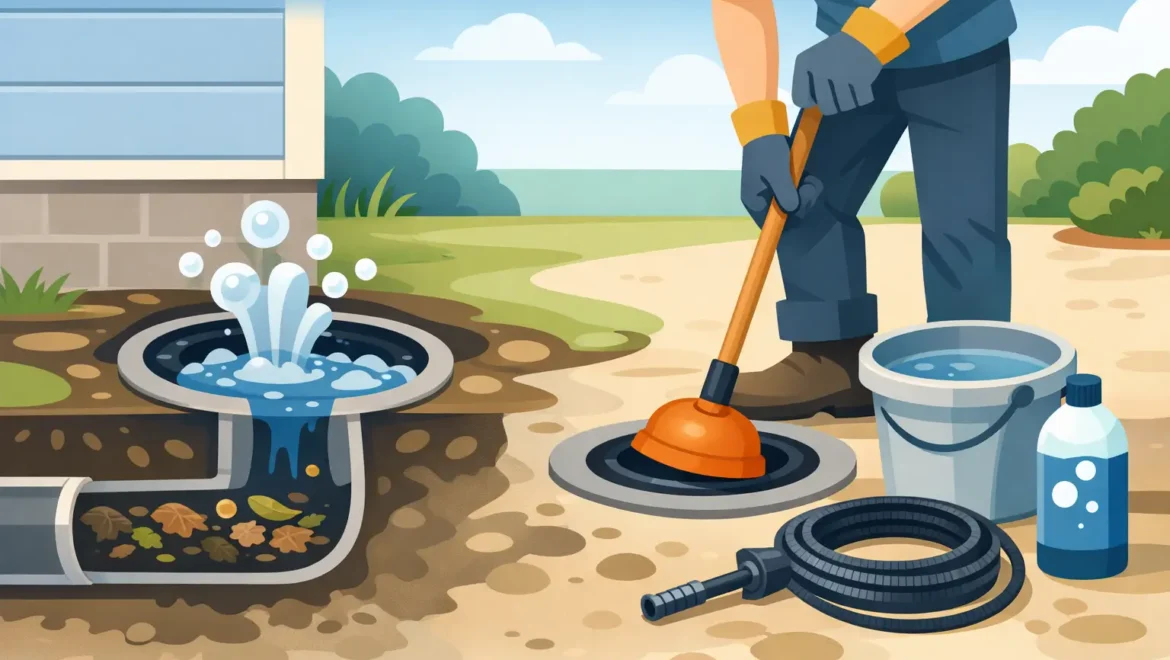
If the gully is accessible and the water level is low, carefully pouring a bucket of clean water into it may restore the seal. Remove loose leaves and surface debris by hand while wearing gloves. Do not force rods into the drain or use sharp tools, as this can damage older pipework or push a partial blockage further down the system.

A developing blockage

Slow drainage, gurgling sounds and recurring smells often go together. Fat, grease, wipes, sanitary products, scale, hair, tree roots and collapsed debris can restrict the pipe. Wastewater may still appear to drain away at first, but the obstruction catches solids and creates stagnant conditions.

A blockage is more likely if the smell gets worse after using the kitchen sink, washing machine or toilet. It is also a concern if water rises in an outside gully, an inspection chamber is full, or more than one drain at the property is slow. These signs call for professional drain unblocking rather than repeated use of chemical cleaners.

Cracked pipes, failed joints or displaced covers

Drainage pipes move over time. Ground settlement, vehicle loading, root growth and previous excavation can crack pipes or pull joints apart. A damaged section may leak wastewater into the surrounding ground and allow sewer gases out. The problem is not always visible at the surface.

Older clay drains are especially prone to root ingress and joint movement, while plastic pipework can be damaged if it has been poorly supported. A loose, broken or poorly seated inspection chamber cover can also let smells escape, particularly where the chamber contains standing water.

A CCTV drain survey provides a clear view of the pipe from the inside. It can identify cracks, root ingress, displaced joints, scale build-up and collapsed sections without unnecessary digging. Depending on the defect, patch lining can repair a localised section with minimal disruption, while more severe damage may require excavation and replacement.

A problem with ventilation

Your drainage system needs ventilation to equalise pressure and direct gases safely above roof level. A blocked soil vent pipe, faulty air admittance valve or unapproved alteration can affect how the system behaves. You may notice foul smells outside alongside gurgling from internal appliances or changes in toilet water levels.

Ventilation faults are not always a drainage blockage, so a proper assessment matters. The solution may involve a drain specialist, plumber or both, depending on the layout and the cause. For landlords and commercial sites, this should also be considered in the context of maintenance records and any recent building work.

Rainwater connected incorrectly

Rainwater and foul drainage are separate systems in many UK properties. Incorrect connections can send kitchen or toilet waste to a surface-water drain, or allow rainwater to overload foul drainage during heavy weather. Either situation can contribute to smells, slow running or overflowing gullies.

This is not a job for guesswork. A drainage survey can trace the route of the pipes and establish whether connections are functioning as intended. Correcting the issue protects the property and helps avoid pollution concerns.

Safe checks before arranging a call-out

There are a few sensible observations you can make without putting yourself at risk. Check whether the smell is constant or only appears after rain, during warm weather or when appliances are discharged. Look for water sitting above the outlet, visible debris, damp ground, overflowing covers or signs that the smell is strongest near one specific point.

Run water from a sink or washing machine and observe the relevant outside gully from a safe distance. If it fills, drains slowly or bubbles, stop using that appliance where practical and arrange an inspection. Avoid opening an inspection chamber if it is flooded or you are unsure of its condition. Never enter a chamber, lean over it for prolonged periods or attempt to clear a severe blockage with improvised equipment.

Household drain cleaners may seem like a quick answer, but they rarely remove a substantial obstruction. They can also be hazardous, damage certain materials and make the work less safe for anyone attending afterwards. Bleach and disinfectant may mask an odour briefly, but they do not repair a broken pipe, remove root ingress or restore a failed connection.

When outside drain smells need urgent attention

A drain odour should be treated as urgent when wastewater is backing up, an inspection chamber is overflowing, toilets are slow to flush across the property, or the smell is entering living areas. The same applies if tenants, customers or staff are affected, as drainage problems can quickly become a hygiene and operational issue.

For commercial premises, document the symptoms, affected areas and any recent work on site. This helps the attending contractor assess the likely route and plan access. A clear drainage report and CCTV footage can also support planned repairs, landlord responsibilities or an insurance claim where appropriate.

Watermains & Drains UK provides emergency drain unblocking, CCTV surveys and drainage repairs across the North West, using professional equipment to identify the cause rather than simply treating the smell. Where repair work is needed, trenchless options such as patch lining may avoid lifting large areas of paving, driveways or landscaped ground.

Preventing smells from returning

Prevention is usually straightforward once the cause has been identified. Keep leaves and garden debris clear of gully gratings, and flush rarely used external drains with water during dry periods. Do not pour cooking fat, oil or food waste down sinks, even if followed by hot water. Fat cools and solidifies further along the pipe, where it traps other debris.

For rental and managed properties, regular visual checks of gullies and chambers are worthwhile, especially before winter and after major landscaping work. If a drain has blocked more than once, do not assume repeat jetting is the long-term answer. A CCTV survey can establish whether a structural defect is allowing roots or debris back into the line.

A drain that smells outside is often giving an early warning. Addressing it while the issue is limited to an odour can keep the repair faster, cleaner and far less disruptive than dealing with a full internal backup.

Commercial Drain Repairs Process Explained
Blog

Commercial Drain Repairs Process Explained

A backed-up foul drain in a commercial building rarely stays a small problem for long. One blocked line can affect toilets, kitchens, staff welfare areas, customer access and, in some cases, trading itself. That is why the commercial drain repairs process needs to be fast, properly scoped and managed in a way that keeps disruption under control.

For commercial property managers, landlords and facilities teams, the real question is not just how a drain gets repaired. It is how quickly the fault is identified, whether the fix is proportionate, what access will be needed, and how the site will be left afterwards. A good contractor should bring clarity from the first call, not add more uncertainty.

What triggers a commercial drain repair

Commercial drainage faults usually start with a practical issue on site. Slow-draining sinks, repeated toilet blockages, gully overflows, foul odours, standing water in yards or car parks, and recurring call-outs for the same line all point to a system that needs more than simple unblocking.

In some buildings, the problem is age-related. Pitch fibre drains can deform, older clay pipes can crack or displace, and busy sites often suffer from root ingress, grease build-up or loading damage. In others, the issue is linked to changes in use. A property that now handles more staff, more visitors or more kitchen waste may be putting extra demand on drainage that was never designed for that level of use.

The trade-off is simple. If the defect is minor and localised, a patch repair may be the quickest and most cost-effective route. If the pipe has failed over a longer run, repeated spot repairs can become false economy.

The commercial drain repairs process step by step

The strongest drainage repairs begin with diagnosis, not guesswork. In a commercial setting, that matters because the wrong repair method can lead to repeat disruption, tenant complaints and unnecessary cost.

1. Initial assessment and site briefing

The first stage is establishing what is happening on site and how urgent it is. A contractor will usually ask where the issue is showing, when it started, whether it is affecting one area or multiple areas, and whether there is any history of previous drainage faults.

For commercial sites, access and operating conditions matter straight away. Work may need to be planned around delivery times, customer footfall, school hours, occupied units or traffic routes. In some cases, the repair can be completed during normal working hours. In others, out-of-hours attendance is the better option to reduce operational impact.

2. Clearance if the line is blocked

If the drain is surcharged or heavily obstructed, the line often needs to be cleared before a proper inspection can take place. High-pressure water jetting is commonly used to remove silt, scale, grease and debris so the pipe condition can actually be seen.

This stage is important because symptoms do not always tell you the underlying cause. A blockage may look like a simple build-up from the surface, but once the line is clean it may reveal a fracture, collapsed section or displaced joint underneath.

3. CCTV survey to identify the defect

A CCTV drain survey is usually the point where the repair strategy becomes clear. The camera inspection shows the pipe material, the extent of damage, the location of the fault and whether there are multiple defects across the run.

For facilities teams and insurers, this is also where reporting becomes useful. A proper survey should give clear evidence of the defect, not just a verbal opinion. That helps with approvals, budgeting and deciding whether a local repair or larger renewal is justified.

Choosing the right repair method

Not every damaged drain needs excavation. In fact, one of the main improvements in modern drainage work is the ability to repair many defects with far less disruption than traditional dig-and-replace methods.

No-dig repairs where suitable

If the pipe structure is broadly sound and the damage is localised, no-dig repair methods can often solve the problem quickly. Patch lining is commonly used for isolated cracks, joint displacement or small areas of root ingress. A resin-impregnated liner is installed internally and cured in place, forming a new watertight section inside the existing pipe.

The benefit for commercial sites is obvious. There is usually less excavation, less mess, shorter programme time and less impact on paving, yards, landscaped areas or internal finishes. That can make a major difference in places where access is difficult or where reinstatement would otherwise drive up costs.

That said, no-dig is not always the answer. If the pipe has fully collapsed, has severe deformation, or has lost line and level, excavation may still be the correct method.

Excavation and replacement when required

Some drains need to be physically exposed and replaced. This tends to apply where there is structural failure, major displacement, collapse, or damage that cannot be bridged reliably with lining. On commercial premises, that may involve work in service yards, car parks, access roads, basements or landscaped areas.

A competent contractor should keep excavation targeted. The aim is not to dig more than necessary, but to reach the failed section safely, replace it to the right standard, test where needed and reinstate the area properly. For landlords and property managers, reinstatement quality matters nearly as much as the pipe repair itself.

Why planning matters on occupied commercial sites

Commercial drainage work is rarely just about the pipe. It is about keeping a building usable while the repair is carried out.

Managing the commercial drain repairs process with minimal disruption

On an occupied site, sequencing is everything. Pedestrian routes may need to stay open, shared access may need temporary management, and noisy work may need to be timed around trading or tenant activity. If the drainage fault affects welfare facilities, temporary arrangements may also be needed.

This is where experience shows. Specialist contractors plan around live environments because they know that a technically sound repair can still be a poor outcome if it causes unnecessary disruption. Clear communication, tidy working, sensible barriers and realistic timescales all matter.

For larger or more sensitive sites, you may also need method statements, risk assessments and confirmation of insurance cover before work starts. Commercial clients are right to ask for that. Drainage repairs can be urgent, but they still need to be controlled properly.

Cost, timescales and what affects them

The cost of a commercial repair depends on access, pipe depth, defect type, location of the failure and the repair method selected. A single patch lining repair in an accessible run is very different from replacing a collapsed section beneath a trafficked area.

Timescales vary for the same reasons. Some repairs can be diagnosed and completed quickly, particularly if the defect is straightforward and no-dig methods are suitable. Others need traffic management, excavation, spoil removal, reinstatement curing time or coordination with tenants and site teams.

The key point is that clear quoting should follow clear diagnosis. If a contractor prices before properly inspecting the fault, the final cost may move significantly once the drain is opened up. That is not always avoidable, but it should be explained early and honestly.

What a good repair outcome looks like

A commercial drain repair is only successful if the problem stays solved and the site is handed back in good order. That means the drain flows correctly, the defect has been addressed with the right method, and any disturbed area has been reinstated to an acceptable standard.

It also means the paperwork matches the work. For commercial clients, that may include survey footage, defect reporting, repair records and confirmation of what has been installed. If future maintenance teams or insurers need to review the job, that record saves time.

Where possible, modern methods should support that outcome rather than complicate it. Watermains & Drains UK works this way on drainage projects by focusing on accurate diagnosis, least-disruption repair options and dependable reinstatement, especially where live premises cannot afford drawn-out works.

When to act sooner rather than later

The longer a damaged commercial drain is left, the more likely the cost moves beyond the pipe itself. Water can undermine surfaces, foul flooding can affect hygiene and reputation, and repeat blockages can become a constant operational headache.

There is also the issue of responsibility. For landlords and facilities teams, delaying repairs can lead to more tenant complaints, more emergency visits and more difficulty proving that issues were managed promptly. Early intervention tends to preserve more options, especially when no-dig repair is still viable.

If you are seeing recurring drainage trouble on a commercial property, the sensible next step is a proper inspection and a repair plan based on evidence. The right contractor should make the process feel straightforward – identify the fault, explain the options, carry out the repair cleanly, and leave you with a system that works as it should.

A Guide to Common Supply Pipes
Blog

A Guide to Common Supply Pipes

If your water pressure has dropped, your drinking water tastes odd, or you have been told there may be an old lead connection on your property, a guide to common supply pipes quickly becomes more than a bit of background reading. For homeowners, landlords and property managers, knowing what type of pipe serves a building helps you make better decisions on repairs, upgrades and compliance – especially when you want the job done with minimal disruption.

Guide to common supply pipes in UK properties

The supply pipe is the private water pipe that carries clean water from the public water main into your property. In many UK homes, especially older ones, that pipe may have been installed decades ago and could be made from materials that are now considered outdated. In newer builds, you are far more likely to find modern plastic pipework designed for reliability and easier installation.

The challenge is that supply pipes are usually out of sight. They run underground, pass beneath driveways, gardens or footpaths, and often only get attention when there is a leak, poor flow or planned building work. That is why the pipe material matters. It affects water quality, durability, repair options and how disruptive replacement is likely to be.

Lead supply pipes

Lead is the material most homeowners know about, and for good reason. If your property was built before the 1970s, there is a chance some or all of the supply pipe is lead. These pipes were widely used because they were easy to shape and install, but they are now a concern due to the health risks linked to lead in drinking water.

A lead supply pipe is often dull grey in colour and soft enough to be lightly scratched with a coin. In many older houses, a short visible section may be found where the pipe enters internally near the stop tap. If that section is lead, the underground run may be lead as well.

The main issue is not simply age. Lead can affect water quality, and partial repairs are rarely the best long-term answer. If a lead supply is confirmed, full replacement is usually the sensible route. That is particularly relevant for households with young children, pregnant women, or landlords who want to reduce risk across their properties.

Copper supply pipes

Copper became a common replacement for older lead systems and is still a recognised, reliable material in many plumbing applications. It is durable, corrosion-resistant in the right conditions and familiar to most contractors. In above-ground plumbing, copper remains a sound option.

For underground external supply pipes, however, copper is less often the first choice for new installations than it once was. Ground conditions, cost and ease of installation all come into play. It can still be found in existing supply runs, particularly where upgrades were carried out years ago.

Copper is generally a significant improvement on lead from a health perspective, but it is not automatically problem-free. Poor joints, ground movement and age-related wear can still lead to leaks. If an underground copper pipe develops repeated faults, replacement with modern approved plastic pipe may be more cost effective than carrying out one repair after another.

MDPE and modern plastic supply pipes

In most current installations, medium-density polyethylene, usually shortened to MDPE, is the standard choice. This blue plastic pipe is widely used for underground water supply because it is durable, flexible and well suited to modern installation methods.

For property owners, the biggest practical advantage is that MDPE works well with trenchless techniques such as moling. That means a new water supply can often be installed beneath gardens, drives and paved areas without opening up the full route. Less excavation usually means faster completion, cleaner reinstatement and less disruption to the household or site.

MDPE also handles the everyday demands of a modern supply line well. It resists many of the corrosion issues associated with older materials and, when installed correctly, provides a dependable long-term solution. That makes it the usual material of choice when replacing lead pipes or renewing damaged underground supplies.

How to tell what supply pipe you have

You cannot always identify the full pipe material from one visible section, but there are a few practical clues. The age of the property is one of the strongest indicators. Older homes are more likely to have lead somewhere on the incoming supply, while newer properties are far more likely to have plastic.

Visible internal pipework near the stop tap can also help. Lead looks matt grey and does not ring like copper when tapped. Copper has the familiar reddish-brown metallic look, though painted sections can hide that. MDPE is usually blue where visible externally or at the point of entry.

Records from previous works, water company information and professional inspection all help build a clearer picture. If there is any doubt, especially before renovation work or a property purchase, it is worth having the incoming supply assessed properly. Assumptions can lead to the wrong repair method and unnecessary cost.

Signs your supply pipe may need attention

Sometimes the pipe material itself is the issue. In other cases, the problem is the condition of the pipe. A supply pipe may need investigation if you notice falling water pressure, unexplained wet patches outdoors, higher-than-normal water bills or discoloured water after periods of standing.

With lead pipes, the concern is often proactive replacement rather than waiting for failure. With copper or older plastic, the trigger may be an active leak or repeated repairs. For landlords and commercial property managers, there is also the wider question of risk management. Waiting for a complete failure can mean emergency response, tenant disruption and more extensive reinstatement.

Not every symptom points to a supply pipe fault. Pressure issues can come from internal plumbing, and water quality complaints may have more than one cause. That is why proper leak detection and site assessment matter. The right diagnosis saves time and avoids digging in the wrong place.

Replacement or repair – what is usually best?

It depends on the age, material and condition of the pipe, as well as the route it takes across the property. A small localised leak on a relatively modern supply may justify a targeted repair. If the pipe is lead, badly deteriorated, undersized or suffering repeated faults, full replacement is often the better long-term decision.

There is also the issue of value. A cheaper repair is not always the most economical option if it leaves an old pipe in the ground that is likely to fail again. Many customers understandably want the least disruptive job, but they also want confidence that they will not be dealing with the same problem a few months later.

This is where modern installation methods make a real difference. Specialist contractors can often install a new supply with trenchless moling rather than excavating the entire route. For homes with finished driveways, landscaped gardens or busy access areas, that can change the decision from a major project into a much more manageable one.

Why installation method matters as much as pipe type

A good supply pipe is only as reliable as the way it is installed. Depth, bedding, jointing, entry points and connection standards all affect long-term performance. Just as importantly for most property owners, the method used affects how your site looks once the work is complete.

Traditional trench excavation still has its place, particularly where access is straightforward or other buried services need exposure. But it is not always the best route. On many residential and commercial sites, trenchless installation reduces surface damage and keeps the job moving with less mess.

That matters if you have block paving, a new lawn, tenant parking, or a business that cannot afford prolonged disruption. Accredited contractors with the right equipment can often deliver a cleaner, faster result while still meeting the required standards for water supply work.

Choosing the right contractor for supply pipe work

Supply pipe replacement is not a general odd job. It is specialist groundworks and water infrastructure work, often involving regulations, utility coordination and reinstatement. Competence matters.

Look for contractors who understand private water supplies specifically, not just internal plumbing. Approvals such as WIAPS and Watersafe are useful indicators, particularly when compliance and sign-off are important. Insurance cover, clear quoting and workmanship guarantees also matter, especially for landlords, commercial clients and insurance-led projects.

It is also reasonable to ask how the work will be carried out. Will the contractor look for a no-dig option first? How will they protect finished surfaces? What happens if a leak is harder to trace than expected? A professional contractor should be able to answer those questions plainly and set out the likely route before work starts.

For many customers across the North West, that mix of practical know-how and minimal disruption is exactly what makes specialist firms such as Watermains & Drains UK a better fit than a general contractor.

If you suspect an ageing, leaking or lead supply pipe, the most useful first step is not guesswork – it is getting the pipe identified properly and the replacement options explained in plain English. A clear diagnosis now usually saves far more disruption later.

Drain Smell in House Causes and Fixes
Blog

Drain Smell in House Causes and Fixes

You usually notice it first in the kitchen at breakfast or when you walk into the bathroom after the room has been shut all night – that stale, sewer-like smell that should not be there. When people search for drain smell in house causes and fixes, they are usually trying to work out one thing quickly: is this a simple issue they can sort themselves, or a sign of a drainage fault that needs proper attention?

The answer depends on where the smell is coming from, how long it has been happening, and whether there are other warning signs such as slow drainage, gurgling pipework or water backing up. Some causes are minor and straightforward. Others point to a developing problem in the waste system, underground drainage, or venting arrangement. Getting the cause right matters, because masking the smell does nothing to solve it.

Drain smell in house causes and fixes: where to start

The most common source of a drain smell indoors is a trap that is not holding water properly. Every sink, basin, bath, shower and floor waste should have a water seal in the trap. That small amount of standing water acts as a barrier between the room and the foul air inside the drainage system. If the trap dries out, sewer odours can pass back into the property.

This is particularly common in spare bathrooms, utility rooms, unused en suites and rental properties between tenants. If a shower or sink has not been used for some time, the water in the trap can evaporate. In many cases, simply running water for a minute or two is enough to restore the seal. If the smell disappears and stays away, the issue was likely straightforward.

A second common cause is a build-up of grease, soap, hair or food waste inside the waste pipe. In kitchen sinks, fats and food residue can cling to the inside of the pipe and start to smell before a full blockage develops. In bathrooms, soap scum and hair often collect in traps and wastes, creating a sour odour. You may not have a complete blockage yet, but the smell can still be unpleasant.

In these cases, the fix may be a careful clean of the trap and waste fitting. It is worth checking for obvious debris around plugholes and removable traps. If the smell improves after cleaning but returns quickly, there may be a deeper obstruction further along the pipe run.

When the smell points to a drainage fault

If the odour is strong, persistent, or affecting more than one room, it is less likely to be a simple trap issue. A damaged waste pipe, loose connection, failed seal or cracked underground drain can all allow foul air to escape. These faults often get worse over time and may start with smell alone before visible leaking or backing-up appears.

Toilets deserve particular attention. If there is a bad smell near the base of the pan, the problem could be with the pan connector, the toilet seal, or movement in the fitting. A toilet may still flush, but that does not mean the connection is airtight. Even a small fault can allow odours into the room.

Another possibility is a venting issue. Drainage systems need proper airflow to maintain pressure and move waste efficiently. If a soil vent pipe is blocked, poorly terminated, or affected by a fault elsewhere in the system, it can pull water from traps or force smells back indoors. Gurgling sounds after flushing or after water runs away from a basin often suggest that pressure is not balancing correctly.

For homeowners and landlords, this is the point where guesswork becomes expensive. Replacing one trap after another will not solve a defect in the drainage line or a ventilation problem. A proper inspection saves time and usually avoids unnecessary work.

What you can check safely yourself

Before calling a specialist, there are a few sensible checks you can make. Run water through little-used fixtures, including showers, basins and floor drains. Clean accessible traps where practical. Check whether the smell is strongest at one fitting or spread across several rooms. Notice whether it gets worse after flushing the toilet, using the washing machine, or emptying the kitchen sink.

It also helps to step outside and see whether there is a corresponding smell near external gullies, inspection chambers or the soil vent pipe. If outdoor smells are strong at the same time as indoor odours, that can point to a wider drainage issue rather than one isolated fitting.

What you should not do is start pouring multiple chemical products down the drain in the hope that one of them works. These can damage pipework, create fumes, and make later investigation more unpleasant. If the smell is linked to a partial blockage, professional cleaning or jetting is usually a far more effective fix.

Common drain smell in house causes and fixes by location

In kitchens, the cause is often organic build-up in the sink waste, overflow, or appliance connection. Washing machine and dishwasher wastes can harbour stagnant residue, especially if the connection has been poorly installed or rarely used. The fix may be cleaning, trap replacement, or clearing a partial blockage in the branch pipe.

In bathrooms, dried traps, hair build-up and toilet connection faults are among the most frequent issues. Shower wastes are a regular culprit because debris can collect below the visible grate where it is not immediately obvious. If a bathroom smells only at certain times, such as after a toilet flush or after the bath empties, that can indicate pressure problems or a hidden restriction in the waste line.

In utility areas or ground floor extensions, smells can sometimes be traced to poorly connected wastes, old pipework alterations, or external drainage defects close to the property. Extensions and converted spaces occasionally reveal historic drainage shortcuts that only become obvious when odours appear.

When a blockage is the real problem

A drain does not have to be fully blocked to smell bad. In fact, many odour complaints start before water stops draining altogether. Waste catches on a rough patch inside the pipe, grease narrows the bore, or wipes and sanitary products snag in the line. The result is stagnant waste, trapped debris and foul air.

If you are also seeing slow drainage, repeated backing-up, gurgling, or overflowing external gullies, there is a strong chance the smell is being caused by a blockage or restriction. At that stage, proper diagnosis matters. The right fix could be a straightforward unblocking visit, but if the issue keeps returning, a CCTV drain survey is often the next sensible step.

A survey helps identify whether the problem is build-up, root ingress, pipe damage, poor falls or a defect at a joint. That is especially useful for landlords, commercial sites and homeowners dealing with recurring smells that have never been fully resolved.

Why recurring smells should not be ignored

Bad drain odours are more than a nuisance. They can indicate poor waste flow, damaged pipework, or failed seals that may lead to leaks, water damage or hygiene concerns if left untreated. In tenanted properties, they also create avoidable complaints and can affect bathrooms, kitchens and shared spaces very quickly.

For commercial premises and managed properties, speed matters for practical reasons as well as compliance. Staff, customers and occupants notice smells immediately. A fast inspection and clear quote are usually better value than repeated temporary fixes that do not address the source.

Where repairs are required, the best approach depends on the fault. Some issues can be resolved internally with trap or connection work. Others need external drain cleaning, localised repair, patch lining or a more substantial drainage intervention. It is not always a case of excavation, and modern no-dig methods can often reduce disruption to paved areas, gardens and access routes.

When to bring in a drainage specialist

If the smell keeps returning, affects multiple fittings, or comes with slow drains or backing-up, it is time to get it checked properly. The same applies if you suspect a hidden leak, damaged underground drain, or a fault around a toilet or external chamber. An experienced drainage contractor can identify whether the issue is within the appliance waste, internal soil pipework, or the underground drainage network.

For property owners across the North West, that usually means looking for a contractor who can do more than just clear a blockage. You want someone who can inspect, diagnose and repair the problem properly, with minimal disruption and a clear explanation of what has been found. That is often the difference between a one-off fix and a recurring call-out.

Watermains & Drains UK deals with these issues as part of wider drainage investigations and repairs, from emergency unblocking through to CCTV surveys and no-dig repair work where appropriate. For homeowners, landlords and property managers, the main benefit is simple: getting to the real cause quickly, without unnecessary mess or delay.

If your house smells like a drain, trust what your nose is telling you. A small issue might only need water in a trap or a proper clean, but persistent odours usually mean the system wants attention before the problem becomes bigger.

How the New Water Connection Process Works
Blog

How the New Water Connection Process Works

If you are building an extension, converting a property, developing a new plot or separating a shared supply, the new water connection process usually becomes urgent the moment you realise how many parties are involved. It is not just a case of laying a pipe and turning the water on. In most cases, there is an application to the local water company, a design decision about route and pipe size, compliance checks, excavation or trenchless installation, testing and final connection.

For homeowners and landlords, the main concern is usually disruption. For commercial sites, it is often programme risk, compliance and keeping tenants or operations running. The process can be straightforward, but it tends to move faster and cleaner when the site is assessed properly at the start and the installation method suits the ground conditions, access constraints and reinstatement requirements.

What the new water connection process involves

A new connection is the point where a property gains its own potable water supply from the public main. That might be for a brand new build, a garden annexe, a commercial unit or an existing property that needs an independent feed. In some cases, the work also involves replacing an outdated or undersized supply pipe on private land so the final connection can meet current standards.

The process usually splits into two parts. The water company controls the connection to the public main and any approvals attached to that. The private supply pipe route on your land, from the building to the boundary or agreed connection point, is typically installed by a suitably competent contractor. That division matters because delays often happen when one side is ready and the other is not.

For many properties, the practical work includes planning the route, checking for other buried services, excavating or using trenchless methods, installing the new pipework, arranging inspection and then completing the final tie-in. Where gardens, driveways, footpaths or finished surfaces are involved, the installation method can make a significant difference to cost, timescale and how much reinstatement is needed afterwards.

Who does what in a new water connection process?

The local water authority or network operator is generally responsible for approving and making the actual connection to its main. It may also specify pipe material, depth, boundary box position and inspection requirements. If the site is unusual, such as a long private run, a busy frontage or a commercial premises with higher demand, extra design information may be needed before approval is issued.

The contractor working on private land is responsible for installing the supply pipe to the required standard. On a well-managed job, that means more than digging a trench. It includes selecting the right route, protecting existing services, keeping the site safe, coordinating inspections and leaving the area tidy and properly reinstated. Accredited installers can also help reduce avoidable issues because they understand what water companies are looking for when they inspect a new supply installation.

For the customer, the simplest route is usually to deal with one specialist contractor who understands the approval side as well as the groundworks. That does not remove the water company from the process, but it does reduce handover problems and uncertainty.

Step by step: from application to live supply

The first stage is establishing what the property actually needs. A small domestic connection for a single house is different from a supply serving multiple units or a commercial building. Pipe diameter, expected water demand and meter requirements all affect the design.

Next comes the application. This is typically made to the relevant water company with site details, plans and proposed use. If there is no clear plan showing the route from the main to the building, expect questions. A proper site survey at the beginning often saves time here, especially where there are trees, retaining walls, shared drives or limited access.

Once the application is accepted, the private supply pipe can usually be installed in readiness for inspection. This is where method matters. Traditional trenching may be suitable if the route is open and easy to reinstate. If the pipe needs to cross a driveway, patio, landscaped garden or other finished area, trenchless moling can often provide a faster, less disruptive option. For longer or more complex routes, directional drilling may also be appropriate.

After installation, the water company or approved inspector may need to check the depth, materials, fittings and layout before the trench is backfilled fully. If the work does not meet the required standard, it may need to be reopened and corrected. That is one of the main reasons experienced, approval-aware installation matters.

The final stage is connection and commissioning. Once the connection to the main has been completed, the supply is tested and brought into use. On some projects, there may also be meter installation, chlorination requirements or additional checks depending on the property type and local rules.

What causes delays?

Most delays in the new water connection process are not dramatic. They are small coordination problems that add up. Missing plans, unclear ownership boundaries, unmarked underground services and inspection bookings left too late are common examples.

Ground conditions can also change the job. A straightforward trench across soft ground is one thing. A route that crosses concrete, old foundations or congested utility corridors is another. If the site frontage is on a busy road, traffic management or permits may affect the programme as well.

Then there is the question of access. If the route crosses areas that need careful reinstatement, the cheapest installation method on paper may not be the best value overall. A no-dig approach can cost more in isolation than basic excavation, but less once you factor in reduced disruption, shorter programme time and lower reinstatement costs. It depends on the site.

Costs: what you are actually paying for

Customers often ask for a quick price for a new connection, but accurate costing depends on more than pipe length. The total figure may include application fees, water authority charges, excavation or trenchless installation, pipework and fittings, inspections, reinstatement and any traffic or permit requirements.

A short, accessible domestic run on private land is usually the simplest scenario. Costs rise when the route is long, access is restricted, surfaces are high value or the building demand is higher than standard domestic use. Commercial sites may also need more coordination, site-specific documentation and tighter programming.

The important point is that a low initial quote is not always the lowest finished cost. If a contractor has not allowed properly for reinstatement, approvals or complications on site, the final bill can move quickly. Clear scoping at the start is what keeps a job controlled.

Choosing the right installation method

There is no single best method for every property. Open-cut trenching still has its place and can be the most sensible option on clear sites with easy access. It gives direct visibility of the route and can be efficient when surfaces are unfinished or due for replacement anyway.

Trenchless installation is often the better answer where disruption matters. For occupied homes, rental properties and commercial premises, protecting driveways, gardens and paved areas can be just as important as the pipe installation itself. Less excavation usually means less mess, quicker reinstatement and fewer complaints from occupants or neighbours.

That is one reason specialist contractors are regularly brought in for this type of work. At Watermains & Drains UK, projects are planned around the practical outcome the customer cares about most – a compliant new supply installed quickly, safely and with the least disruption possible.

Why accreditation and compliance matter

A water supply connection is not decorative work. If it is installed badly, the consequences can include contamination risk, failed inspections, leaks and repeat excavation. That is why approvals, recognised industry standards and proper insurance matter.

For homeowners, this gives reassurance that the work is being done correctly. For landlords and commercial clients, it also helps with record-keeping, contractor due diligence and reducing liability. If the property is occupied or forms part of a larger project, dependable scheduling and professional site conduct become just as important as the technical installation.

The strongest contractors do not treat compliance as paperwork after the fact. They build it into the job from the survey stage onwards, so the connection progresses with fewer surprises.

How to make the process easier

If you are planning a new supply, the best step you can take is to get the route and site conditions checked early. That means understanding where the main is, what surfaces the pipe needs to cross, whether trenchless methods are viable and what the water company will require before connection.

It also helps to be clear about the end use. A domestic annexe, a landlord split, a new office unit and a self-build plot can all look similar on a sketch plan while needing different technical solutions. The earlier those details are dealt with, the smoother the job tends to run.

A good contractor should be able to explain the likely process in plain English, flag possible delays before they happen and recommend the installation method that gives the best result, not just the quickest yes to a quote.

The new water connection process is manageable when it is approached properly: with the right approvals, the right method and a team that understands both compliance and site disruption. Get those three things right, and what feels complicated at the outset usually becomes a far more straightforward piece of work.

How to Clear a Blocked Drain Outside
Blog

How to Clear a Blocked Drain Outside

When you need to clear blocked drain outside, the first thing that matters is not speed for its own sake – it is avoiding a mess that turns a simple blockage into a flooded path, overflowing gully or backed-up toilet indoors. Outside drains often give a bit of warning before they fail completely, but once wastewater starts rising, the job becomes more urgent and less pleasant.

For homeowners and landlords, the question is usually straightforward: can this be dealt with safely today, or is it time to get a drainage contractor in before the problem spreads? The answer depends on where the blockage sits, what is causing it, and whether water is draining slowly or not moving at all.

What an outside drain blockage usually looks like

A blocked outside drain rarely stays subtle for long. You might notice standing water around a gully, a bad smell near inspection chambers, or wastewater backing up when sinks, showers or toilets are used. In some cases, the first sign is a gurgling sound indoors followed by water collecting outside.

Leaves, silt, food waste, wet wipes, fats and invasive roots are all common causes. Surface water drains can block with debris from gardens and driveways, while foul drains tend to suffer from a build-up of waste, scale or items that should never have been flushed. Older pipework can also contribute, especially where drains have shifted, cracked or partially collapsed.

That distinction matters. If the issue is just debris trapped in an accessible gully pot, you may be able to deal with it yourself. If the blockage sits deeper in the line, keeps returning or affects multiple fixtures, it is usually a sign that the problem needs professional investigation rather than repeated guesswork.

How to clear blocked drain outside safely

Start by checking whether the blockage is limited to one outside point or whether several outlets are slow. If your kitchen sink, downstairs toilet and external gully are all struggling, the obstruction is likely further along the system.

Put on waterproof gloves and, if possible, eye protection. Lift the drain cover carefully using the right tools rather than improvised objects that can slip. If the chamber is full of water, that tells you the blockage is downstream from that point. If it is empty but water backs up elsewhere, the problem may be upstream.

If there is visible debris near the top – leaves, mud, paper build-up or congealed waste – remove what you can by hand or with a small scoop. In some cases, that alone restores flow. Pouring a bucket of water through afterwards gives a quick indication of whether the drain is beginning to clear.

A drain rod can help if the blockage is within reach, but it needs to be used properly. Push steadily rather than aggressively, and always rotate the rods in the correct direction so they do not unscrew in the pipe. For straightforward obstructions such as soft waste or silt, rods can be effective. For roots, scale, displaced joints or compacted fat deposits, they are often not enough.

Hot water may help with light grease in some foul drainage runs, but chemical drain cleaners are not always the answer outside. They can fail to shift the actual obstruction, create splash hazards, and complicate later repair work. If the chamber is already surcharging, adding chemicals to standing wastewater rarely improves the situation.

When a DIY fix is reasonable – and when it is not

There is a practical middle ground here. A simple blockage in an accessible outside gully is one thing. A drain that repeatedly overflows, smells strongly, or causes internal fixtures to back up is another.

DIY is generally reasonable if the blockage is minor, localised and visible, and if you can clear it without dismantling anything or working in unsafe conditions. It stops being sensible when the cover is difficult to lift, the chamber is full of foul water, or the drain serves more than one part of the property and the cause is unclear.

For landlords and commercial sites, there is also the issue of liability and disruption. If wastewater is affecting tenant access, shared areas or business operations, the cost of delay can be higher than the cost of a proper call-out. A quick response with the right equipment is often the cleaner and more cost-effective option.

Signs the blockage is deeper in the system

If you clear surface debris and nothing changes, look at the wider pattern. Slow drainage across several appliances, recurring blockages in the same location, and water levels rising in inspection chambers usually point to a restriction further down the line.

Tree roots are a frequent cause in older external drainage runs. They exploit small defects in joints and gradually trap tissue, grease and solids until the pipe loses capacity. Pipe deformation, scale build-up and collapsed sections can behave in a similar way. In those cases, no amount of repeated rodding solves the underlying fault for long.

This is where CCTV drain surveys come into their own. Rather than treating symptoms, a camera inspection shows the exact position and nature of the problem. That means the remedy can be targeted, whether it is high-pressure jetting, root cutting, patch lining or a more substantial repair.

Why outside drains block again after being cleared

A drain that blocks once may simply have caught debris. A drain that blocks twice in a short period is telling you something else.

Sometimes the pipe has a fall issue, so waste is not travelling as it should. Sometimes wipes, sanitary products or cooking fats are entering the system regularly. Sometimes a previous repair has left an internal lip that keeps snagging debris. It can also be a sign that the original line is ageing and starting to fail.

This is why professional drainage work is not just about getting water moving today. The better outcome is identifying whether the problem is operational, behavioural or structural. Once that is clear, the fix tends to last longer and causes less disruption over time.

Professional methods to clear a blocked drain outside

When basic clearing does not work, contractors will usually move to mechanical or water-powered methods. High-pressure water jetting is effective for many external blockages because it cuts through grease, flushes out silt and cleans the pipe wall more thoroughly than hand tools. It is fast and often restores full bore flow where rodding only punches a temporary hole through the obstruction.

If the blockage is linked to damage, repair options vary. A localised defect may be suitable for patch lining, which avoids digging up large sections unnecessarily. If a drain run has collapsed or shifted badly, excavation may still be needed, but the right contractor will first look for the least disruptive route.

That matters on driveways, paved areas and landscaped gardens. Modern no-dig methods are not relevant to every drainage issue, but where they are suitable, they can reduce reinstatement costs and shorten the programme considerably. For property owners, that usually means less mess and faster normal use of the site.

Heading off the next blockage

Prevention is rarely glamorous, but it is cheaper than an emergency. Keep leaves and garden debris away from external gullies, especially in autumn and after heavy rain. Avoid washing fats and food residue into the sink, and never flush wipes, even the ones labelled as flushable.

If a property has a history of drainage issues, periodic maintenance makes sense. That is particularly true for rented homes, older commercial premises and buildings with mature trees close to underground runs. A planned inspection can pick up defects before they become overflows, complaints or insurance headaches.

When to call a specialist straight away

If sewage is backing up, more than one drain is affected, or the blockage returns after a basic clear, it is time to stop experimenting. The same applies if you suspect root ingress, a broken pipe or a problem under hardstanding where unnecessary excavation would be expensive.

A specialist drainage contractor can identify the fault properly, clear it using the right equipment and advise whether any repair is needed. For householders and property managers alike, that usually means less downtime, less mess and a much better chance of getting it sorted in one visit. Watermains & Drains UK deals with exactly these problems across the North West, with professional drainage support focused on fast response, clear quoting and minimal disruption.

If your outside drain is overflowing or repeatedly slowing down, the best next step is the one that solves the cause, not just the symptom.

Top Warning Signs of Drain Blockage
Blog

Top Warning Signs of Drain Blockage

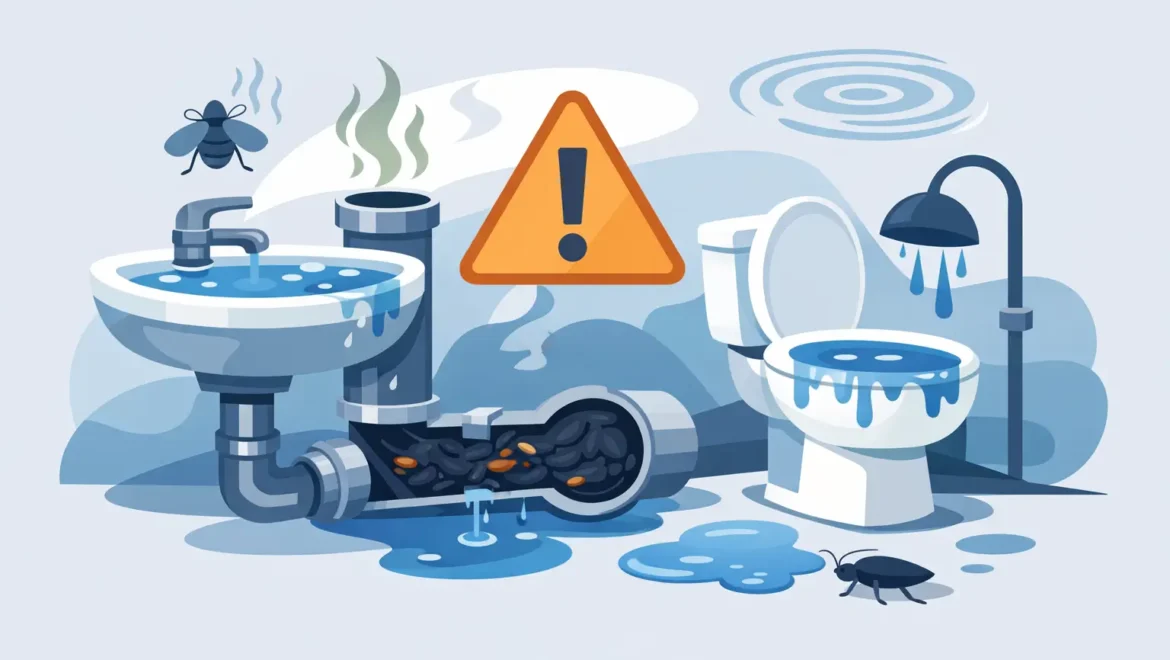
A blocked drain rarely starts as a full-blown emergency. More often, it starts with a basin that empties slower than usual, a toilet that bubbles once and then seems fine, or a smell outside that you hope will pass. These are often the top warning signs drain blockage is developing somewhere in the system, and acting early usually means a faster, cleaner and more cost-effective fix.

For homeowners, landlords and property managers, the main risk is waiting too long. What begins as a partial restriction can turn into internal flooding, foul odours, repeat tenant complaints or damage to external drainage runs. The earlier the issue is identified, the more likely it is that unblocking or a targeted repair will solve it without major disruption.

The top warning signs of drain blockage

The most common early sign is slow drainage. If water sits in a sink, shower tray or bath longer than normal, that tells you flow is being restricted. In isolation, a single slow-fitting waste might point to a local build-up of soap, hair or grease. If more than one fitting is draining slowly, the problem may be further down the line in the branch pipework or main drain.

Gurgling sounds are another strong indicator. When a drain is partially blocked, air can become trapped and forced back through plugholes or toilet pans. You may hear bubbling after flushing the loo, running a tap, or emptying a bath. That noise matters because it often suggests the system is no longer venting and flowing as it should.

Bad smells are easy to dismiss at first, especially outdoors near gullies or inspection chambers. But persistent foul odours usually mean waste water is not moving away properly. In some cases, debris sitting in the line starts to break down and smell. In others, a blockage causes water levels to rise and disturb trapped gases. A brief smell after heavy rain may not mean much, but a repeated or worsening odour should not be ignored.

Toilet behaviour can also reveal a developing blockage. If the water level rises higher than usual after flushing, or the flush lacks its normal force, there may be a restriction in the line. Equally, if flushing one toilet affects another appliance nearby, such as causing a shower waste to gurgle, that often points to a shared drainage problem rather than a fault with one fixture.

When the problem is deeper in the system

Some warning signs are less obvious because they happen outside the property. Water backing up around a gully, standing water near inspection covers, or unusually soggy ground around the drain run can all indicate a blockage below ground. If waste water cannot pass freely, it will usually find the weakest point to escape.

This is where the location of the issue starts to matter. A simple blockage close to the fixture may be resolved quickly. A blockage in the main drain, especially if caused by scale, wipes, roots or a damaged pipe, may need specialist equipment and a proper inspection. Repeated symptoms are a clue that the issue is not just surface-level.

Another sign that the blockage may be further along is when several appliances are affected at once. For example, if the kitchen sink, downstairs toilet and external gully all show signs of poor drainage, the problem is unlikely to be a single trap or short waste pipe. It is more likely to be in the shared system serving that part of the building.

Top warning signs drain blockage is becoming urgent

There is a difference between an inconvenience and a drainage emergency. If water or waste is backing up into the property, the issue needs immediate attention. The same applies if toilets cannot be used safely, if foul water is overflowing externally, or if commercial premises are at risk of disruption.

A sudden change after weeks of minor warning signs is common. Drains often cope poorly for a while before reaching the point where flow stops altogether. That is why recurring slow drains or intermittent gurgling should be taken seriously even if everything appears usable in between.

Landlords and facilities teams should also watch for complaint patterns. One tenant reporting a slow sink may not sound urgent. Several reports from different areas of a building, especially around smells, poor flushing or outside standing water, usually justify investigation before the issue escalates.

What causes these warning signs?

In domestic properties, the usual causes are grease, food waste, wipes, sanitary products, soap residue and hair. Outside, drains can also become restricted by silt, scale and tree root ingress. Older systems may have displaced joints, cracked sections or minor collapses that catch debris and gradually build a blockage.

It depends on the age of the drainage, how the property is used and whether the issue is internal or external. A family home may suffer from kitchen fat build-up and wet wipes. A rented property might see misuse through unsuitable items being flushed. Commercial sites often deal with higher drainage volumes, which means small defects can become operational problems more quickly.

This is one reason repeat blockages should not be treated as normal. If the same drain keeps blocking, there is usually an underlying reason. Simply clearing it each time may restore flow, but it does not tell you whether there is structural damage or a recurring defect that needs repair.

When to stop guessing and get the drain checked

There is a limit to what can be diagnosed from surface symptoms alone. If you are seeing more than one of the warning signs, or if the problem keeps returning, a professional assessment is usually the sensible next step. For straightforward blockages, specialist unblocking equipment can clear the obstruction quickly. If there is doubt about the cause, a CCTV drain survey gives a much clearer picture of what is happening underground.

That matters because the right repair depends on the actual fault. A soft blockage is very different from root ingress or a cracked pipe. In some cases, a drain can be restored with cleaning and routine maintenance. In others, patch lining or a localised repair may be the better long-term option. The advantage of proper diagnosis is that it avoids unnecessary excavation and helps keep disruption to a minimum.

For property owners in the North West, speed also matters. The longer a partially blocked drain is left, the greater the chance of internal mess, odour complaints and avoidable damage. A specialist contractor will normally be able to identify whether the issue is a simple clearance job or whether the line needs surveying and repair planning.

A practical way to respond early

If you notice one-off slow drainage at a single fitting, it may be a local issue. If the symptoms spread, recur or involve toilets and external drains, assume the problem could be further down the system. Avoid repeated use of appliances that are backing up, and do not rely on temporary chemical solutions if the issue appears to be persistent or below ground.

The most useful approach is straightforward: pay attention to the pattern, act before overflow starts, and get the drainage properly checked if more than one sign is present. Watermains & Drains UK handles blocked drains, CCTV surveys and drainage repairs with a focus on fast response, tidy working and the least disruption possible.

A drain blockage nearly always gives some warning before it becomes serious. Catching those signs early is often the difference between a quick fix and a much bigger job.

Can Lead Pipes Affect Water Taste?
Blog

Can Lead Pipes Affect Water Taste?

You turn on the kitchen tap, fill a glass, and something seems off. The water may taste metallic, stale, or just different from what you expect. If your property still has an older supply pipe, it is reasonable to ask: can lead pipes affect water taste? The short answer is yes, they can – but taste on its own does not tell the full story.

For homeowners and landlords, the bigger issue is not just whether the water tastes unpleasant. It is whether an ageing lead supply pipe is affecting water quality, creating health concerns, or signalling that the incoming main needs upgrading. Taste is often the first thing people notice, but it should not be the only thing they rely on.

Can lead pipes affect water taste in real homes?

Yes, lead pipes can affect how water tastes, although not always in an obvious or consistent way. Some people describe it as a metallic taste. Others say the water tastes flat, bitter, or slightly chemical. In some properties, there is no noticeable taste at all, even when a lead supply pipe is present.

That variation matters. Water taste depends on more than the pipe material alone. It can change with water temperature, how long the water has been sitting in the pipe, the local water chemistry, and whether any internal plumbing is also ageing. Water left standing overnight in an old lead pipe may taste different first thing in the morning, then seem normal later once the system has been flushed through.

So while lead can affect taste, a normal-tasting glass of water does not prove the pipe is safe, and odd-tasting water does not automatically confirm lead as the cause. It is one clue, not a diagnosis.

Why lead supply pipes can change taste

Lead supply pipes were widely used in older UK properties, especially those built before lead was phased out. Over time, water passing through a lead pipe can interact with the internal surface of the pipework. That interaction may contribute to changes in taste, particularly where the pipe is old, the water has stood still for several hours, or the water chemistry makes dissolution more likely.

In practical terms, the first draw from the tap is often the most noticeable. If water has been sat in the supply pipe overnight or while the property has been empty during the day, that standing water has had more contact time with the pipe. That can increase the chance of a metallic or unpleasant taste.

It also explains why some customers report that only certain taps seem affected, or that the taste comes and goes. If the issue is strongest on the kitchen cold tap after periods of non-use, the incoming supply pipe becomes a sensible place to investigate.

Taste is not the main risk

The problem with relying on taste is simple: lead in water is not always detectable by taste, smell, or appearance. You can have water that tastes completely normal and still have lead present. Equally, you can have unpleasant-tasting water caused by something else entirely, such as old internal pipework, low use in vacant properties, or issues within fittings and appliances.

That is why lead supply pipes are usually treated as a replacement issue rather than something to monitor casually. From a property owner’s point of view, the concern is less about whether the water tastes slightly metallic on some mornings and more about removing an outdated material from the incoming supply altogether.

For households with young children or pregnant women, this becomes even more important. Landlords also need to think beyond complaints about taste and consider their wider duty to provide safe, properly maintained services to tenants.

Other signs that may point to lead pipework

Taste is one sign, but it rarely appears on its own. Older properties with lead supply pipes often show a pattern. The home may have a known history of old incoming services. There may be lower flow rates than expected, previous patch repairs, or uncertainty about where the boundary supply runs. In some cases, the pipe material is visible where it enters the property and has the dull grey appearance typical of lead.

If you gently scratch the surface of an exposed old pipe and it reveals a shinier silver-coloured finish underneath, that can be an indicator of lead. Softness is another clue. Still, identification should be handled properly, especially where replacement work may be needed.

An odd taste can also sit alongside practical supply problems. Older lead pipes are often smaller in diameter than modern replacements, which can affect pressure and flow. So a property owner may start with a concern about taste, then discover the incoming water service is outdated in more than one way.

What else can make tap water taste strange?

Not every taste issue comes from a lead pipe. Water can taste different for several reasons, and a proper assessment looks at the full picture. Internal plumbing materials, dead legs in pipework, poorly maintained storage arrangements, long periods of stagnation, and even seasonal changes in water treatment can affect flavour.

If only the hot tap tastes unusual, the issue is less likely to be the incoming lead supply. If the taste is present on every outlet, especially on the cold drinking water tap, the incoming service becomes more relevant. If the problem appears after building works or plumbing alterations, internal changes may be part of the cause.

This is where an experienced contractor can save time. Rather than guessing, it helps to identify whether the issue sits with the supply pipe, the internal plumbing, or both.

When replacement makes sense

If a property still has a lead supply pipe, replacement is usually the long-term answer. That is true whether the trigger is taste, health concerns, poor flow, renovation plans, or a landlord wanting to modernise ageing services. Replacing the lead pipe removes the uncertainty and brings the incoming water supply up to a more suitable modern standard.

For many homeowners, the concern is disruption. They imagine major excavation across the front garden, driveway, or paving. In reality, modern installation methods can keep disruption to a minimum. Trenchless moling is often used to install a new water supply pipe with far less digging than traditional excavation. That means quicker progress, cleaner sites, and less reinstatement to worry about.

Where access is tight or the route is more complex, the right approach depends on the property layout, ground conditions, and the connection point. A proper site assessment helps determine the most practical option.

Can lead pipes affect water taste enough to justify action?

In many cases, yes. Even if the taste issue is occasional, it may be the first visible sign that the property still relies on an obsolete supply pipe. For owner-occupiers, replacing it can improve confidence in the water supply as well as performance. For landlords and property managers, it can reduce complaints, support compliance, and avoid repeat concerns from tenants.

The decision does not need to rest on taste alone. If the property age, pipe material, and supply condition all point in the same direction, replacement is often the sensible investment. It solves more than one problem at once.

What to expect from a professional assessment

A proper assessment should be straightforward and practical. The first step is usually to confirm whether the incoming supply pipe is lead and to understand its route, condition, and size. From there, the contractor can advise on replacement options, likely installation method, and what level of disruption to expect.

For domestic properties, the goal is usually simple: get a safe, reliable water supply installed quickly and with as little mess as possible. For commercial sites or managed properties, there may also be requirements around scheduling, tenant communication, reinstatement standards, and documentation.

This is where specialist contractors matter. Lead pipe replacement is not general plumbing. It involves external excavation or trenchless installation, water regulations compliance, proper connection work, and tidy reinstatement. Companies such as Watermains & Drains UK handle this as a dedicated service, with approved methods designed to keep disruption low and completion standards high.

The practical next step if you are unsure

If your water tastes metallic, stale, or unusual, do not ignore it – but do not assume taste is the whole story either. Check the age of the property, look at any visible incoming pipework, and consider whether you have also noticed poor flow or recurring concerns about water quality.

Where lead pipework is suspected, getting the supply professionally assessed is the clearest way forward. It gives you an answer based on the actual installation, not guesswork. And if replacement is needed, modern no-dig methods often make the job faster and cleaner than people expect.

A strange taste from the tap might seem like a small annoyance. Sometimes it is. Sometimes it is the first sign that an old supply pipe has reached the point where replacement is the sensible fix.

Is Lead Pipe Replacement Mandatory in the UK?
Blog

Is Lead Pipe Replacement Mandatory in the UK?

If you have found a lead water pipe at your property, the first question is usually simple: is lead pipe replacement mandatory? The honest answer is not always – but in many cases, replacement is strongly recommended, and in some situations it becomes a practical requirement if you want a safe, compliant and reliable water supply.

For homeowners and landlords, the confusion often comes from the gap between legal duty, water company requirements and common-sense risk management. A pipe might not be subject to an immediate blanket legal order for replacement, yet still need upgrading because of water quality concerns, renovation work, repeated leaks or a requirement from the local water undertaker when a new connection or supply alteration is being carried out.

Is lead pipe replacement mandatory for every property?

No, not every property in the UK is automatically forced to replace lead pipes by law on a set deadline. That is the short answer.

Older homes can still have lead supply pipes in place, particularly properties built before the 1970s. In many of these homes, the pipe remains until the owner decides to replace it, a leak occurs, major building work is planned, or the water company upgrades its side of the supply and encourages or requires the private section to be renewed as part of the same process.

That said, “not always mandatory” should not be confused with “fine to ignore”. Lead pipework is outdated for good reason. Modern standards do not favour it, and if there is an opportunity to remove it, that is usually the right long-term decision.

Why lead pipes are still a concern

Lead can enter drinking water when water passes through old lead pipework. The level can vary depending on the pipe condition, water chemistry and usage patterns, but the concern is real. This matters most in homes with young children, pregnant women, or any setting where long-term exposure is a worry.

From a contractor’s point of view, lead pipes also create practical problems. They are more vulnerable to disturbance, often undersized by modern standards, and commonly found alongside ageing stop taps and supply arrangements that are no longer ideal. Even if the pipe is not actively leaking, it may still be limiting flow, pressure and reliability.

For landlords and property managers, there is also a wider duty to consider tenant welfare and the condition of the services feeding the building. While the legal position will depend on the property type and use, keeping known lead pipework in service indefinitely can become harder to justify once the issue has been identified.

When lead pipe replacement can become necessary

Water company connection requirements

One of the most common situations is when a water company will only proceed with certain supply works if the private supply pipe is brought up to current standards. If the communication pipe in the street is being renewed, or a new connection is being installed, the customer-side pipe may also need replacement.

This is especially common where the existing lead pipe is too small, in poor condition or not suitable for the proposed arrangement. In practice, that can make replacement effectively mandatory if you want the new supply approved.

Major renovations or extensions

If you are carrying out substantial works, it often makes little sense to leave an old lead supply in the ground. Building works can expose weaknesses in the existing service, and once access is available, replacement is usually the cleaner and more cost-effective route.

For landlords refurbishing a rental property, this is also the point where an ageing supply pipe moves from being an old feature to being a known defect that should be dealt with properly.

Leaks, poor flow or repeated repairs

A leaking lead pipe may force the issue. You can sometimes carry out a local repair, but on older lead supplies that is often a short-term answer. If the pipe has already failed, there is a strong case for replacing the full run rather than paying for repeat call-outs and patch repairs.

The same applies if the pipe is causing low pressure or restricted flow. An undersized lead supply might still technically function, but it may not meet the demands of a modern household or commercial unit.

Risk management for landlords and commercial sites

In residential lettings, schools, healthcare settings and commercial buildings, the tolerance for outdated drinking water infrastructure is understandably lower. Even where replacement is not explicitly mandated on the spot, many owners choose to replace lead pipes because the cost of doing nothing can be higher later – in complaints, disruption, water quality concerns and emergency repairs.

Who is responsible for replacing lead pipes?

Responsibility usually depends on where the pipe is located.

In general terms, the water company is responsible for the public water main and often the communication pipe up to the property boundary, although exact arrangements can vary. The property owner is usually responsible for the private supply pipe from the boundary into the building.

That split matters. A water company may replace its section, but that does not automatically mean the private lead pipe on your land will be replaced at the same time unless it forms part of an agreed scheme. For many properties, full lead removal only happens when both sides are addressed.

This is why clear site assessment matters. Before any work starts, you need to know what material is in the ground, where the pipe runs, and which section belongs to whom.

Is lead pipe replacement mandatory under current UK law?

There is no simple nationwide rule saying every private property owner must replace all lead pipes by a fixed date. If you are asking, “is lead pipe replacement mandatory under UK law?”, the accurate answer is that it depends on the property, the work being undertaken and the standard required for the supply.

What does exist is a strong regulatory and public health framework that makes lead pipework increasingly difficult to justify. Water quality standards are strict. Approved materials and installation methods are well established. Any new supply work is expected to meet current requirements, which means lead is not the accepted material.

So while an existing lead pipe may remain in service in some cases, any replacement or new installation should be carried out using modern approved pipework and fittings. In practical terms, once work is triggered, lead is usually out.

The practical case for replacing lead pipes now

The biggest reason most customers go ahead is certainty. Once the old lead supply is replaced, you remove a known risk and avoid the uncertainty of waiting for a failure, a water quality concern or a future compliance issue.

There is also the issue of disruption. Traditional excavation can put people off, especially if the pipe runs beneath a driveway, garden or paving. That is where modern trenchless methods make a real difference. Using moling or other no-dig techniques, a new water supply pipe can often be installed with far less surface damage than people expect.

For occupied homes and busy sites, that matters. Less excavation usually means a faster job, tidier reinstatement and less inconvenience for the household, tenants or business operations.

What to expect from a proper replacement

A professional lead pipe replacement should not be treated like a basic plumbing patch-up. It is underground infrastructure work, and it needs to be planned that way.

A proper contractor will identify the existing route, confirm responsibility boundaries, advise on the best installation method and use approved materials. If trenchless installation is suitable, that should be considered first to reduce disruption. The work should also be carried out with the right water industry approvals, proper testing and a clear standard of reinstatement.

For customers, that means the quote should cover more than just “new pipe installed”. You want to know how the pipe will be laid, what surfaces will be affected, whether the stop tap arrangement needs upgrading and what guarantee is provided afterwards.

The real answer for homeowners and landlords

If you were hoping for a straight yes or no, the reality is more practical than that. Lead pipe replacement is not universally mandatory in every UK property today, but it is often necessary once a problem, upgrade or compliance issue brings the supply into focus.

For some owners, replacement becomes mandatory because the water company requires it as part of supply works. For others, it becomes the sensible option because the existing pipe is old, restrictive, leaking or simply no longer appropriate for a modern property. In both cases, delaying the decision rarely improves the outcome.

If you suspect you have a lead supply, the best next step is to have it assessed properly. A clear site survey tells you what is in the ground, whether replacement is needed now, and how the work can be completed with the least disruption. For many properties, the right solution is straightforward – replace the lead pipe once, do it to current standards, and move on with confidence.