

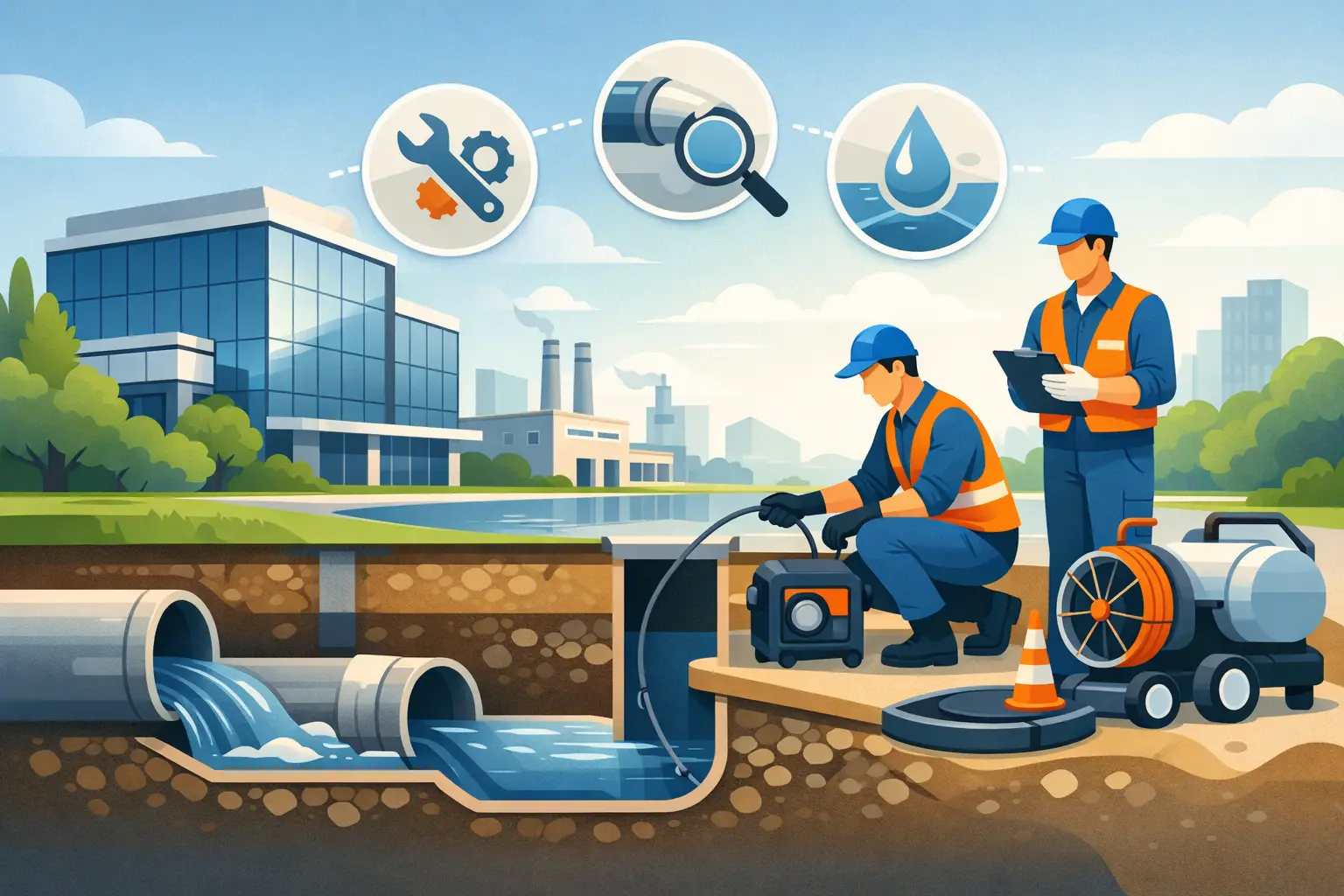
Guide to Commercial Drainage Maintenance Plans
A blocked drain at a commercial site rarely starts as an emergency. More often, it begins as a slow-running gully, standing water in a yard, foul odours near a kitchen line, or repeated call-outs that seem unrelated until trading is affected. That is why a proper guide to commercial drainage maintenance plans matters. For property managers, facilities teams and landlords, the right plan reduces disruption, controls cost and gives you a clearer route when something does go wrong.
What a commercial drainage maintenance plan is really for
A maintenance plan is not just a diary reminder to clear drains once a year. It is a practical schedule built around the way a site is used, the condition of the drainage system and the consequences of failure.
For a small office, that may mean periodic inspection and occasional cleaning. For a restaurant, care home, industrial unit or multi-let property, the plan usually needs to be more active. Higher wastewater volumes, grease, silt, scale, wipes and surface water all increase the risk profile. The goal is simple – prevent avoidable blockages, spot deterioration early and deal with defects before they become expensive repairs.
That is the difference between planned maintenance and reactive attendance. Reactive work gets you moving again. Planned work helps stop the same problem returning every few weeks.
Guide to commercial drainage maintenance plans by site type
No two sites need exactly the same programme. A sensible plan starts with how the building operates.
Food premises often need more frequent line cleaning because fats, oils and grease build up quickly. Schools and public buildings can suffer from misuse, sanitary blockages and high demand at fixed times of day. Warehouses and yards may be more vulnerable to silt, debris and surface water issues, particularly where gully maintenance has been missed. Residential blocks can have a mix of foul drainage defects, poor access records and tenant-related misuse.
This is where many maintenance plans fail. They are copied from another site, priced to look tidy on paper, and then prove too light to prevent call-outs. A better approach is to match inspection and cleaning frequency to actual risk. If a line has blocked three times in twelve months, annual jetting is unlikely to be enough.
Start with a clear picture of the drainage system
Before setting a schedule, you need to know what you are maintaining. That sounds obvious, but many commercial properties have incomplete drainage records, altered layouts or legacy pipework that nobody has fully mapped.
A good starting point is a site review that identifies access chambers, manholes, gullies, downpipes, foul and surface water runs, and any known problem areas. If the history is unclear, a CCTV drain survey can save time and money. It shows whether recurring issues are caused by misuse, poor falls, root ingress, fractures, displaced joints or collapses rather than simple build-up.
Without that baseline, maintenance can become guesswork. You may keep cleaning a line that actually needs patch lining or local repair. Equally, you may assume a defect is structural when the real issue is inadequate routine servicing.
What should be included in commercial drainage maintenance plans
A useful plan combines inspection, cleaning, reporting and escalation. It should set out what is being checked, how often, and what happens if defects are found.
Routine inspections usually focus on signs of blockage, damage, odour, flooding risk and poor flow. Cleaning may include high-pressure water jetting, gully clearance and removal of silt or debris from key points. Where CCTV is part of the programme, reports should be clear enough for facilities teams, insurers or managing agents to act on.
It also helps to agree thresholds for repair. If an inspection finds a minor crack with no infiltration, monitoring may be reasonable. If there is evidence of repeated ingress, loss of bedding or local collapse risk, repair should move up the priority list. That balance matters because not every defect needs immediate excavation, but delaying the wrong one can lead to larger reinstatement costs later.
Frequency depends on risk, not guesswork
There is no universal timetable that suits every commercial property. The right frequency depends on usage, age, drainage design, previous incidents and the impact of failure on operations.
High-risk sites may need monthly or quarterly attendance. Moderate-risk sites often work well with six-monthly inspections and annual cleaning. Lower-risk properties with modern, well-performing systems may only need annual checks, with additional visits after heavy weather or tenant changes.
Seasonal pressure should also be considered. Autumn can increase debris in surface water systems. Winter can expose existing defects when rainfall is high and drainage capacity is tested. Retail and hospitality sites may need more attention before peak trading periods, not after disruption has already started.
The practical point is this: frequency should be evidence-led. If attendance records show recurring issues between planned visits, the programme needs adjusting.
Compliance, records and contractor accountability
For commercial sites, maintenance is not only about keeping drains flowing. It is also about having records that show a reasonable standard of care. Property managers and facilities teams are often expected to demonstrate what was inspected, when it was serviced and how defects were handled.
That is especially relevant where there are tenant obligations, insurance claims, environmental concerns or health and safety scrutiny. If flooding, pollution or repeated internal backing-up affects a site, poor records make everything harder.
A dependable contractor should provide clear visit reports, photographs where useful, CCTV findings when requested and practical recommendations rather than vague observations. Method statements, insurance cover and recognised approvals also matter on commercial work, particularly where access, reinstatement and risk management are under closer review.
When maintenance should lead to repair work
A drainage maintenance plan should not become an excuse to keep sending jetting teams to the same defect. Repeated cleansing has its place, but it does not solve cracked pipes, displaced joints, root ingress or poorly installed sections.
This is where condition-based repair becomes part of the plan. In some cases, a localised no-dig patch lining repair is the quickest and least disruptive answer. In others, a more substantial repair or replacement is the right call, particularly if the line is badly deformed or has already begun to fail structurally.
The benefit of planned maintenance is that these decisions are made earlier, when there is usually more choice. Emergency repairs tend to be more disruptive, harder to schedule and more expensive once flooding, contamination or business interruption enters the picture.
Budgeting for a drainage plan without under-scoping it
One of the most common mistakes is buying the cheapest plan rather than the most suitable one. A low annual figure can look attractive, but if it excludes meaningful inspection, proper reporting or enough visits for the site type, it often shifts cost into emergency call-outs and lost time.
A better budget looks at whole-life cost. What does one blocked drain incident cost in staff time, access issues, tenant complaints, cleanup, lost trade or damage to stock? On many sites, a slightly more active maintenance plan is cheaper than two or three avoidable emergencies a year.
That does not mean every property needs an intensive contract. It means the plan should be proportionate. Some sites need regular jetting and CCTV review. Others only need annual servicing with a clear reactive route if conditions change.
Choosing a contractor for planned drainage work
Commercial drainage maintenance needs more than basic drain clearing. You want a contractor who can inspect, diagnose, clean and repair without turning one supplier issue into three separate appointments.
Look for practical capability as well as responsiveness. If a survey finds a defect, can the same contractor advise on repair options? Can they work with minimal disruption to tenants, staff or customers? Can they provide straightforward reporting and sensible scheduling rather than overcomplicating simple works?
For many commercial clients, it also helps to use a contractor that understands reinstatement-sensitive sites and modern repair methods. Where excavation can be avoided, disruption is lower and programmes are often easier to manage. For businesses that cannot afford prolonged access restrictions, that makes a real difference.
A sensible guide to commercial drainage maintenance plans starts with the problem areas
If you are putting a plan in place for the first time, start with evidence rather than assumptions. Review call-out history, identify repeat blockage locations, check whether site drawings are accurate and inspect the areas most likely to affect operations if they fail. Build the schedule around those risks first.
From there, the plan can be refined over time. Some sites stabilise quickly once key lines are cleaned and defective sections repaired. Others reveal more underlying issues as soon as the first proper survey is carried out. That is normal. The point of a maintenance plan is not to pretend everything is fine. It is to create a controlled, cost-aware way of keeping the system serviceable.
For commercial properties across the North West, that usually means working with a specialist contractor who can combine planned maintenance with CCTV surveys, repairs and minimal-disruption methods when needed. If you need practical advice on setting the right schedule for your site, Watermains & Drains UK can help you assess the system properly and quote for a plan that fits the way the property is actually used.
A drainage system does not need much attention when it is working well, but it needs the right attention before it stops.





