

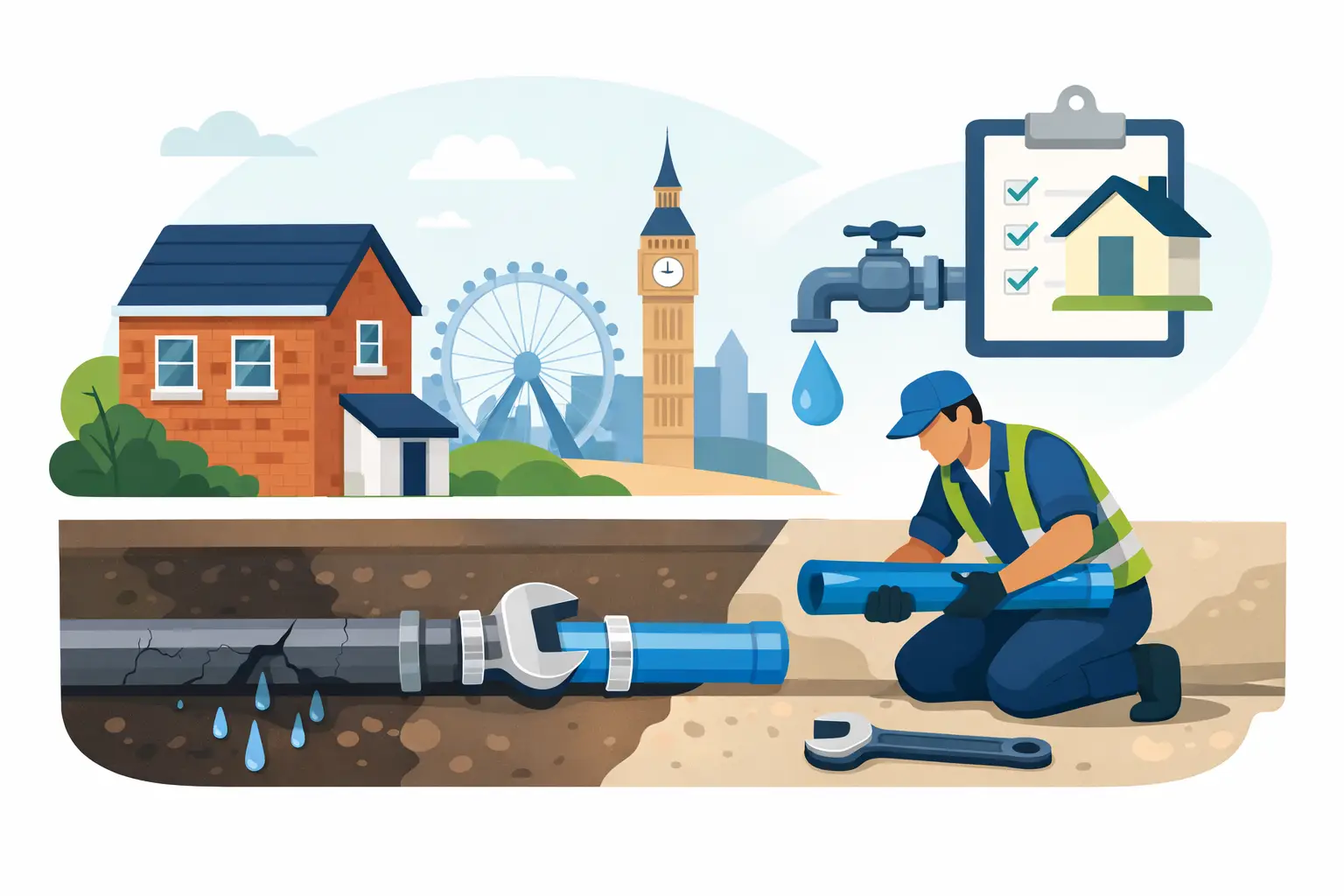
A Guide to Lead Pipe Replacement UK
If your water supply pipe was installed before the 1970s, there is a fair chance part of it is still lead. Many homeowners only find out when they spot low pressure, discoloured water, repeated leaks, or they start asking sensible questions about drinking water quality. This guide to lead pipe replacement UK property owners can rely on explains what matters, what the job usually involves, and how to get it done with the least disruption.
Lead pipe replacement is rarely just about swapping one old pipe for a new one. It often sits alongside questions about responsibility, water company approval, excavation, reinstatement and whether a trenchless method could avoid digging up a drive or garden. Getting those points right at the start usually saves time, cost and frustration later.
Why lead pipes are still a problem
Lead was widely used for water supply pipes in older UK properties because it was easy to work with and durable for its time. The issue is that age, wear and changing water conditions can increase the risk of lead entering the water supply. Even where the risk is not obvious day to day, many owners choose replacement because they want a modern, compliant pipework system and peace of mind.
There is also a practical side. Older lead services are often narrower than modern replacements, so they can contribute to weak flow and pressure. If the pipe is leaking underground, you may also be paying for water you never use, while damp ground or repeated repair visits become a recurring nuisance.
For landlords and commercial property managers, the decision can be even more straightforward. Older incoming supplies raise maintenance and compliance concerns, and repeated reactive repairs usually cost more over time than planned replacement.
A guide to lead pipe replacement UK homeowners can actually use
The first thing to understand is which section of pipe is yours. In many cases, the property owner is responsible for the private supply pipe running from the boundary to the building. The water company will usually remain responsible for its section in the public highway. That split matters because a full lead removal job may involve coordination between both sides.
If you are not sure whether the pipe is lead, a specialist contractor can usually identify it during a site survey. Lead pipe has a dull grey appearance, feels relatively soft compared with copper or plastic, and older internal stop tap arrangements can offer clues. A proper assessment is still the best route, particularly if the pipe route is unclear or the issue may involve leaks as well as material replacement.
Once confirmed, the next question is whether the whole pipe should be replaced or only part of it. In most cases, full replacement is the better long-term option. Partial replacement can leave older sections in place and may not deliver the pressure improvement or long service life you want. It can also create a patchwork system that becomes harder to maintain.
What the replacement process usually involves
Most lead pipe replacement jobs begin with a survey. This checks the pipe route, entry point, ground conditions, likely depth, and whether there are surfaces such as block paving, tarmac or landscaping that need protecting. It also helps establish whether trenchless installation is possible.
The actual works usually involve disconnecting the old private supply and installing a new underground water pipe, typically in modern approved materials. The new pipe is then connected, pressure tested and brought into service. Internal connection points may also need minor alterations, especially where older stop taps or outdated arrangements are present.
The biggest difference between one project and another is how the new pipe gets from the boundary to the property. Traditional excavation means digging a trench along the route. That can be suitable on some sites, especially where access is simple and surfaces are already due for replacement. But where there is a driveway, lawn, patio or finished landscaping to protect, trenchless methods can make far more sense.
No-dig methods and when they make sense
Trenchless moling is often the most practical choice for domestic lead pipe replacement. Instead of opening a full trench, the contractor creates small excavations at entry and exit points, then uses specialist equipment to install the new pipe underground. For homeowners, the main benefit is obvious – far less mess and far less reinstatement.
That reduced disruption can have a real cost benefit too. A cheaper excavation quote can quickly stop looking cheap once you factor in the rebuilding of decorative paving, resin surfaces, mature gardens or access routes. No-dig methods are not right for every site, because ground conditions, route length and underground obstructions all matter, but they are often the cleanest solution where appearance and access are important.
For commercial sites, minimising open excavation can also reduce disruption to residents, staff, customers or vehicles. That matters just as much as the pipework itself.
How much does lead pipe replacement cost?
Costs vary because no two sites are exactly alike. The length of pipe run, ground conditions, access, internal connection changes, traffic management requirements and reinstatement all affect the final figure. A straight run across a soft front garden is very different from a replacement beneath a paved driveway with limited access.
This is why a proper site-specific quote matters more than generic online price ranges. If you are comparing quotes, check what is actually included. Some prices cover installation only, while others include excavation, spoil removal, testing, reinstatement and liaison for approvals. A detailed quotation is usually the one that gives you fewer surprises.
It is also worth asking whether the contractor can offer the least disruptive route rather than simply the shortest route. The cheapest line on paper is not always the best outcome once the site is made good.
Can you get help with the cost?
Some water companies offer support schemes or contribution programmes where lead supply pipes are being replaced, especially if their section is also lead. Availability depends on the region and the specific circumstances, so it is worth checking early. Requirements often include approved materials, correct installation standards and inspection arrangements.
This is one reason many owners prefer a specialist contractor rather than a general groundworker. Accredited installers understand the standards, the paperwork and the connection requirements. That can help keep the process moving and reduce the risk of rework.
Choosing the right contractor
Lead pipe replacement looks simple from the outside, but it is a specialist utility job. You need a contractor who understands water regulations, underground installation methods, testing, reinstatement and how to work tidily on occupied properties.
Look for recognised approvals such as WIAPS and Watersafe, clear insurance cover and a workmanship guarantee that gives proper long-term reassurance. Ask how they plan to install the new pipe, what disruption to expect, and whether they can carry out reinstatement to a good standard rather than leaving you to arrange separate trades afterwards.
Speed matters, but clarity matters more. A good contractor should be able to explain the route, the method, the programme and any likely caveats in plain terms. For homeowners and landlords in the North West, that practical, specialist approach is often the difference between a straightforward project and a drawn-out one.
Common questions before work starts
Many customers ask whether they need to leave the property without water for a full day. Usually, no. There is often some interruption during the changeover, but experienced crews aim to keep that period as short as possible.
Another common concern is whether the whole garden or driveway will be dug up. Again, not necessarily. With the right route and the right equipment, a trenchless installation can keep excavations to a minimum.
People also ask whether replacing lead pipe will improve water pressure. It often does, particularly where the old pipe is narrow, restricted or deteriorating. That said, pressure also depends on the wider network and the property’s internal plumbing, so results vary.
When to act sooner rather than later
If you already know you have lead pipe, delaying replacement rarely improves the situation. The pipe will not become easier to access with age, and if there is an existing leak, pressure issue or water quality concern, waiting can mean more disruption later.
The same applies if you are planning other external works. If you are about to resurface a driveway, landscape a front garden or renovate an older property, that is usually the best moment to deal with the incoming supply. It is far more sensible to replace the pipe before new finishes go down than to disturb everything afterwards.
Where speed, cleanliness and compliance matter, specialist contractors such as Watermains & Drains UK can assess the route, advise on the least disruptive method and provide a clear quotation for full replacement work.
A lead pipe is one of those hidden property problems that is easy to ignore until it starts affecting your water, your plans or your budget. Dealing with it properly gives you a modern supply, fewer unknowns underground and one less ageing utility line to worry about.





