

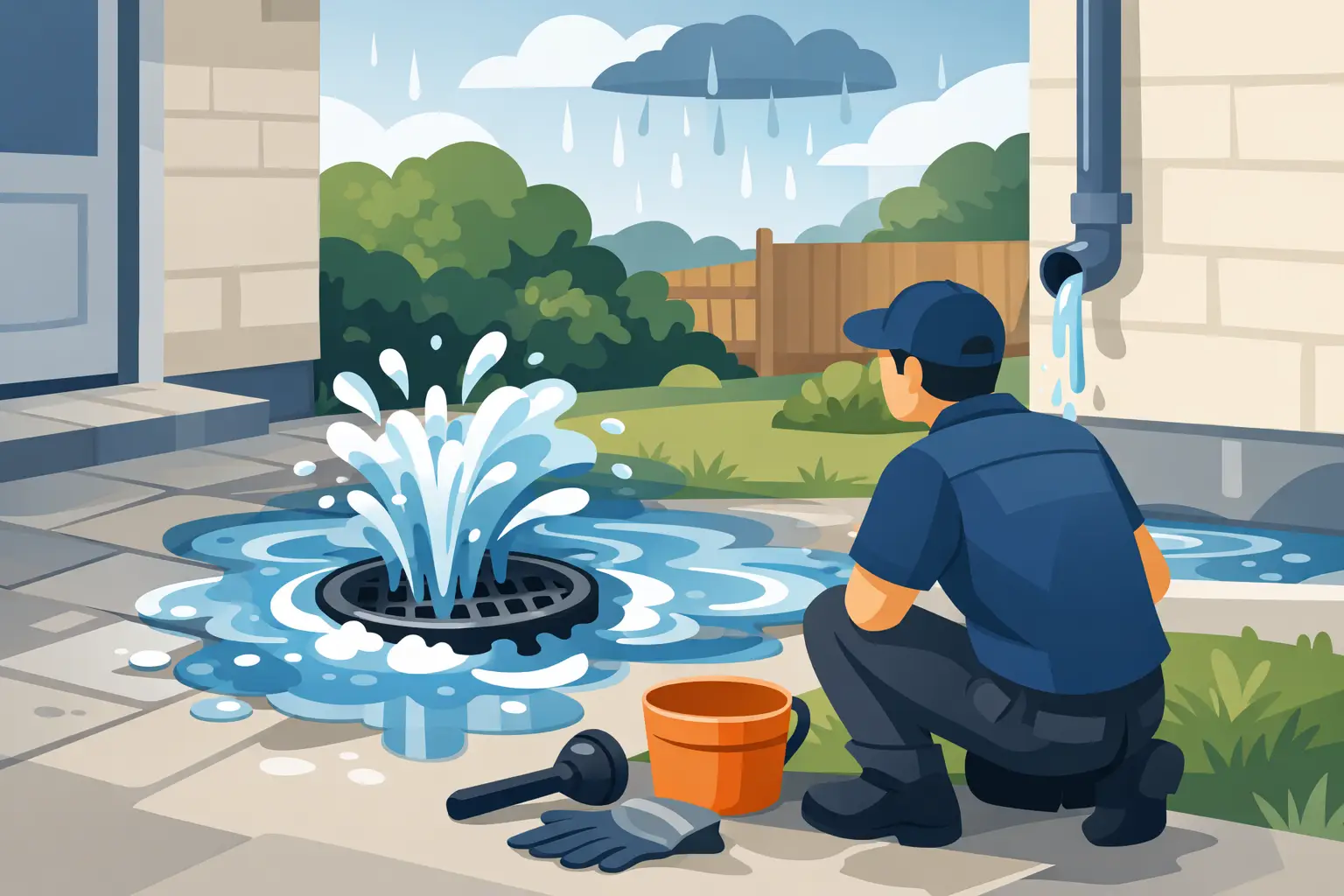
How to Respond to Overflowing Outside Drain
When an outside drain starts backing up, the problem usually moves from inconvenient to unpleasant very quickly. If you need to respond to overflowing outside drain issues, the priority is simple – keep wastewater away from people, stop it spreading if you can, and work out whether this is a local blockage or a sign of a bigger drainage fault.
Outside drain overflows are rarely something to ignore and hope will clear on their own. For homeowners, it can mean foul smells, standing water and a risk to patios, driveways or garden areas. For landlords and commercial sites, it can also mean tenant complaints, hygiene concerns and disruption that needs dealing with fast and properly.
How to respond to overflowing outside drain safely
Start by assuming the water is contaminated. If the drain is overflowing near a gully, inspection chamber or manhole, keep children and pets away from the area and avoid walking through the affected water unless absolutely necessary. If you do need to go near it, wear suitable gloves and waterproof footwear, and wash thoroughly afterwards.
If wastewater is close to the house, try to reduce further discharge into the drainage system. That usually means avoiding washing machines, dishwashers, baths and long showers until the problem has been checked. If toilets are draining slowly or gurgling, treat that as a warning sign that the blockage may be affecting the main run rather than a single waste pipe.
Next, look at where the overflow is coming from. An overflowing gully that only serves one sink or one kitchen line can point to a more isolated blockage. An inspection chamber that fills when any appliance is used often suggests a blockage further along the underground drain. That distinction matters because it affects both urgency and the likely repair method.
You should also move anything that could be damaged by dirty water. Bins, stored items, outdoor furniture and planters near the affected area are best shifted out of the way. It will not solve the blockage, but it does limit clean-up and helps a contractor access the problem quickly.
What usually causes an outside drain to overflow?
Most overflows come down to one of three issues: a blockage, a damaged drain, or a system that cannot cope with the volume going through it. In domestic settings, the first is by far the most common. Fat, grease, wet wipes, sanitary products, food waste and silt build-up can all restrict flow until wastewater has nowhere to go but back out.
Tree root ingress is another common cause, especially in older properties across the North West where mature planting and ageing drainage runs often overlap. Roots can enter through cracked joints, catch debris and gradually create a more stubborn obstruction than a routine blockage. In that situation, simply clearing the immediate build-up may only be a temporary fix.
Heavy rainfall can also expose drainage defects. If a drain overflows during storms but seems normal the rest of the time, there may be partial blockage, collapsed pipework, poor fall, or surface water entering a system that was never designed to carry that volume. This is where proper diagnosis matters. Treating every overflow as just a blockage can mean the same issue returns after the next spell of wet weather.
Signs the problem is more serious than a simple blockage
Some outside drain issues are straightforward unblocking jobs. Others point to underlying defects that need repair. If the same drain has overflowed more than once, if you notice sunken ground nearby, or if there are persistent foul odours even after water levels drop, there is a fair chance the pipework itself needs attention.
Slow drainage from more than one fixture inside the property is another sign the issue may sit in the shared drain rather than a branch waste. Gurgling toilets, backing up at the lowest outlet, and wastewater appearing in an inspection chamber when sinks or baths are used all suggest a more significant restriction downstream.
For landlords and facilities teams, repeat attendance for the same blockage should always trigger a closer look. Repeated jetting without a proper survey can keep a site operational for a while, but it may not be the most cost-effective route if there is a fracture, displacement or root ingress that keeps recreating the problem.
What not to do when you respond to overflowing outside drain problems
It is tempting to try a quick fix, especially if the overflow is causing mess around a driveway or rear yard. But lifting covers without the right tools, pushing rods into a drain you cannot see properly, or pouring strong chemicals into a backed-up system can make things worse.
Chemical cleaners are particularly poor choices for outside drainage issues. They rarely clear a serious underground obstruction, and they can create handling risks for anyone inspecting the drain afterwards. Improvised rodding can also compact debris further into the line or catch on damaged sections of pipe.
If sewage is backing up extensively, avoid any attempt to hose the area down into another drain before the blockage has been resolved. That can spread contamination rather than remove it. The right order is contain, diagnose, clear, then clean and disinfect the affected area properly.
When to call a drainage specialist
If wastewater is actively overflowing, if the blockage affects toilets, or if more than one outlet is draining badly, it is usually time to bring in a specialist contractor. The same applies if the drain has overflowed before, or if you suspect a damaged pipe rather than a one-off blockage.
A professional response is not just about getting water moving again. The real value is in identifying why it happened and choosing the least disruptive fix. In many cases, high-pressure water jetting will clear the obstruction quickly. Where there is concern about cracked pipework, displaced joints or root ingress, a CCTV drain survey gives a clear view of the condition underground.
That matters because the repair approach can vary. Some drains need cleaning only. Some need localised patch lining. Others require excavation, although not every repair means digging up a full driveway or garden. Modern no-dig methods can often reinstate the drain with far less disruption than people expect.
Respond to overflowing outside drain issues with the right diagnosis
The first successful clearance is not always the end of the job. A contractor should be looking at the wider picture – how the drain is laid, whether the blockage is recurring, whether there is evidence of structural failure, and whether access points are functioning as they should.
For homeowners, that means a clearer answer on what has happened and what to expect next. For landlords and commercial clients, it means fewer repeat call-outs and better evidence for maintenance records, tenants, insurers or follow-on repair approval.
At Watermains & Drains UK, that practical approach is central to drainage work. The aim is not only to unblock a line quickly, but to identify the fault accurately, carry out repairs with minimal disruption where needed, and leave the site clean and properly reinstated.
Can you prevent an outside drain overflowing again?
In many cases, yes, although prevention depends on the cause. If the issue came from misuse, such as wipes, grease or unsuitable materials entering the system, changing what goes down the drain makes a real difference. If the property has older drainage, recurring issues may need planned inspection rather than waiting for the next emergency.
Routine maintenance can be sensible for some sites, particularly rental properties, food-related premises or buildings with a history of blockages. It is not necessary everywhere, and there is no value in overservicing a drain that performs well. But where there are repeat symptoms, a planned approach is often cheaper than emergency attendance and clean-up each time.
If the overflow was linked to pipe defects, prevention usually means repair rather than behaviour change. Patch lining, sectional repairs or more extensive replacement may be the right answer depending on the condition of the drain and the location of the fault. This is where specialist equipment and trenchless options make a real difference to cost, programme and disruption.
An overflowing outside drain is unpleasant, but it is usually manageable when dealt with early and properly. Keep people clear, limit further use of the system, and get the drain assessed before a blockage turns into a larger repair. The sooner the cause is identified, the sooner the property can get back to normal with less mess, less disruption and fewer repeat problems.





