Lead Pipe Replacement Cost in the UK
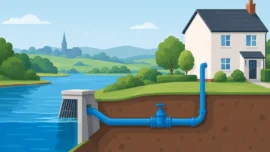
If your kitchen tap runs fine but the supply pipe is still lead, the real problem is often outside the house – under the path, driveway, or front garden where you cannot see it. That is why the first question most homeowners and landlords ask is not “can you do it?”, it is “what is the lead water pipe replacement cost, and what will it do to my driveway?”
Typical lead water pipe replacement cost (UK ranges)
In the UK, replacing a lead supply pipe is usually priced as a small civil job rather than a simple plumbing visit. You are paying for locating services, safe excavation or trenchless installation, new pipework, connection work, and making good.
As a realistic guide, many straightforward domestic replacements land in the low thousands. If access is clear and the run is short, costs can be closer to the lower end. If the pipe run is long, crosses hardstanding, or needs traffic management, it can push higher. The biggest swings come from what is in the ground and how much reinstatement is needed afterwards.
Because every property is different, reputable contractors will normally quote after a quick site survey. That is not a sales tactic – it is the only reliable way to confirm the route, depths, entry points, and whether trenchless methods are suitable.
What actually drives the price?
Homeowners often assume the cost is mainly the pipe itself. In reality, the pipe is the easy part. The cost is driven by labour, method, and reinstatement.
1) Length of run and route complexity
A short run from the boundary stop tap to an internal stop tap is naturally cheaper than a long run that has to travel around extensions, retaining walls, or neighbouring services. Older terraces can have awkward routes and shared service corridors that take time to investigate.
2) Ground conditions and depth
Hard clay, made ground, shallow rock, or very deep services can slow progress. If the existing pipe is deeper than expected, excavation and safe working practices increase the time on site.
3) Surface type – and what needs reinstating
This is where quotes can vary sharply. Digging across soil is one thing. Digging across block paving, patterned concrete, resin-bound, or a tarmac drive is another. Even when the installation itself is quick, the cost of lifting, storing, cutting, and reinstating surfaces can rival the installation cost.
This is also why “no-dig” is not a gimmick. If you can install a new pipe with minimal excavation pits rather than an open trench, you are usually reducing reinstatement risk and cost, not just inconvenience.
4) Connection points and internal works
Some properties need a simple external replacement up to the internal stop tap. Others need additional internal pipework alterations, rerouting, or a new internal stop valve position. If your internal plumbing is older or has been modified over the years, the connection can take longer.
5) Locating existing services and avoiding surprises
Petrol, electric, comms, drains, and older unknown services all affect how the work is planned. A contractor who takes time to locate and plan properly can often prevent delays and reduce the chance of damage – which is always cost-effective compared to fixing a strike.
6) Permits, highways work, and traffic management (when required)
If the supply route or connection involves the pavement or a public highway, permits and traffic management may be required. That can add cost, but it is sometimes unavoidable, particularly on busy roads or where the stop tap is located in the footway.
Trenchless vs open-cut: the cost trade-off
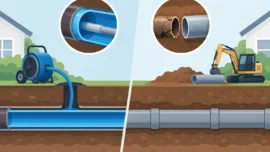
A key decision is whether your job is best done with open excavation or a trenchless technique such as impact moling or horizontal directional drilling.
Open-cut excavation can be the most straightforward option where the route is short, surfaces are soft, and reinstatement is simple. It also gives full visibility, which can help when there are many unknowns in the ground.
Trenchless installation is often a better fit where the route crosses a driveway, patio, or landscaped frontage. It can reduce the number of excavations to small entry and exit pits, which typically means less mess and fewer reinstatement headaches. The equipment and planning can mean trenchless is not always the cheapest line item on paper, but it frequently becomes better value when you factor in what you are not paying for – extensive breaking out and making good.
The right approach depends on your property. A contractor who offers both methods can choose what suits the site rather than forcing every job into the same process.
What a good quote should include (and what to watch for)
When comparing quotes for lead replacement, you want clarity more than a headline price. Two quotes can look similar but include very different levels of finish.
A proper quotation should make clear the route assumptions, the installation method, what is being connected to, and what reinstatement is included. It should also confirm whether testing and commissioning are part of the job, and whether the contractor will provide the relevant paperwork for the installation.
Be cautious if a price is offered without anyone visiting site, especially for properties with block paving or a long frontage. The most common cause of cost overruns is not contractor greed – it is uncertainty. A site survey turns unknowns into a plan.
How to keep lead water pipe replacement cost under control
You cannot change the length of your front garden, but you can control how smoothly the job runs.
If you can, clear access to likely entry points before the visit. If you have old photos of previous works, or you know where services run, share that information. Knowing where your internal stop tap is, and ensuring it is accessible, can save time.
It also helps to talk openly about surfaces. If your driveway has a particular pattern or you have spare blocks, mention it. Reinstatement is often where people feel most anxious, and a practical conversation upfront avoids disappointment.
Finally, choose a contractor who is set up for this work. Lead replacement sits between plumbing and civils. You want someone who routinely installs underground services, understands reinstatement, and works to recognised standards.
Landlords and commercial sites: budgeting and compliance considerations
For landlords, the cost question often sits alongside tenant disruption and compliance. Planning the work around occupancy, keeping water downtime short, and leaving a tidy site matters as much as the pipe itself.
For commercial property managers and facilities teams, the key is predictability. You need a contractor who can produce clear RAMS when required, work within site rules, and coordinate with other trades if the water supply feeds multiple areas. A slightly higher quote can be justified if it reduces programme risk and aftercare issues.
Should you replace the whole supply pipe or just the lead section?
Sometimes only part of the supply is lead. Partial replacement can look cheaper, but it is not always the best long-term call.
If you replace only a short lead section, you may still have lead upstream, and you may still face disruption later. Full replacement from the boundary to the internal stop tap is often the cleanest solution, particularly if you are already opening up an area or arranging access.
That said, there are genuine “it depends” scenarios. If a section runs under a structural slab or a protected surface where disturbance is not acceptable, a targeted approach may be practical. The best outcome is usually achieved by surveying properly and agreeing a scope that balances cost, disruption, and future risk.
Timescales and what to expect on the day
Most domestic lead supply replacements are completed within a day, sometimes two, depending on complexity and reinstatement. Trenchless installs can be quicker on site, but they still require careful setup, locating, and safe digging for pits.
You should expect some water downtime while the final connection is made and the system is tested. A professional crew will keep this as short as possible and communicate clearly, especially if you have tenants, a business premises, or vulnerable occupants.
Getting an accurate price in the North West
If you are in Greater Manchester, Cheshire, Warrington, Stockport or nearby and want a clear, disruption-conscious quote, a quick site visit is usually the fastest route to certainty. At Watermains & Drains UK, lead pipe replacements and new water supply installations are quoted based on the route, surface types, and the least disruptive method that suits the property, backed by recognised approvals and long-term workmanship guarantees.
The best next step is simple: treat the cost as a project, not a guess. Once you know the route, method, and reinstatement plan, the price stops being a worry and starts being a decision – one that protects your water supply, your property, and your peace of mind.