How We Locate Leaks Beneath Driveways
A damp patch at the edge of a drive, an unexplained rise in your water bill, or a water meter that continues to move when every tap is off can point to a buried supply pipe leak. The challenge is to locate leaks beneath driveways without turning a small fault into a costly excavation and reinstatement project. Accurate investigation comes first. Once the leak position and pipe route are understood, the right repair method can be selected with the least disruption to your property.
For homeowners, landlords and facilities managers, speed matters, but so does getting the diagnosis right. Water may travel through soil and emerge some distance from the actual leak. Breaking out paving where the water appears is therefore rarely the best first step.
Why leaks beneath a driveway need specialist investigation
A driveway can conceal several services: the incoming water supply, drainage runs, electrical ducts and, occasionally, older redundant pipework. On many properties, particularly those with older lead or metal supply pipes, the private supply pipe runs from the external stop tap or boundary to the house beneath paving, tarmac, concrete or landscaped areas.
Leaks on these pipes are not always obvious. A small escape of water can soak into the surrounding ground without showing at the surface. In colder weather, persistent wet ground may become icy. In warmer periods, a section of driveway may remain damp while the rest dries. If the leak is substantial, it can undermine sub-base material, cause paving to settle or create voids below tarmac or concrete.
The visible symptom does not confirm the cause. Surface water after rainfall, a damaged drain, a leaking outside tap, condensation from a condensate pipe and a water supply leak can look similar. A professional investigation separates these possibilities before repair work begins.
Signs you may have a water supply leak
The water meter is often the most useful early indicator. With no taps, appliances, toilets or heating systems drawing water, a moving meter may suggest a leak on the supply. This does not establish where it is, but it gives a contractor a sound reason to investigate.
Other common signs include a sudden increase in water charges, reduced pressure at taps, discoloured water after disturbance, a constantly wet patch near the drive or a sound of running water when the property is quiet. You may also notice that an area of block paving has started to dip, or that moss and algae are growing unusually quickly in one place.
These signs need context. A leaking toilet or internal pipework can also affect meter readings, while poor driveway drainage may cause standing water without any supply pipe fault. Checking the meter and isolating internal appliances where possible helps narrow the investigation, but it is not a substitute for leak detection.
Do not ignore movement in paving or tarmac
Water escaping under pressure can wash fine material out of the ground over time. The result may be loose blocks, cracking, local settlement or a hollow sound when the surface is tapped. These are not always caused by a leak, but they warrant prompt assessment. Leaving a suspected leak can increase water loss and make future reinstatement more involved.
How specialists locate leaks beneath driveways
A good leak detection visit begins with the basics: discussing when the issue started, reviewing meter behaviour, identifying stop taps and tracing the likely route of the incoming supply. On older properties, the route is not always straightforward. Alterations, extensions and previous driveway works can mean the pipe does not follow the most obvious line.
The investigation may combine several non-destructive methods. The precise approach depends on the pipe material, depth, ground conditions and whether the service is a pressurised water main or a drainage pipe.
Acoustic leak detection
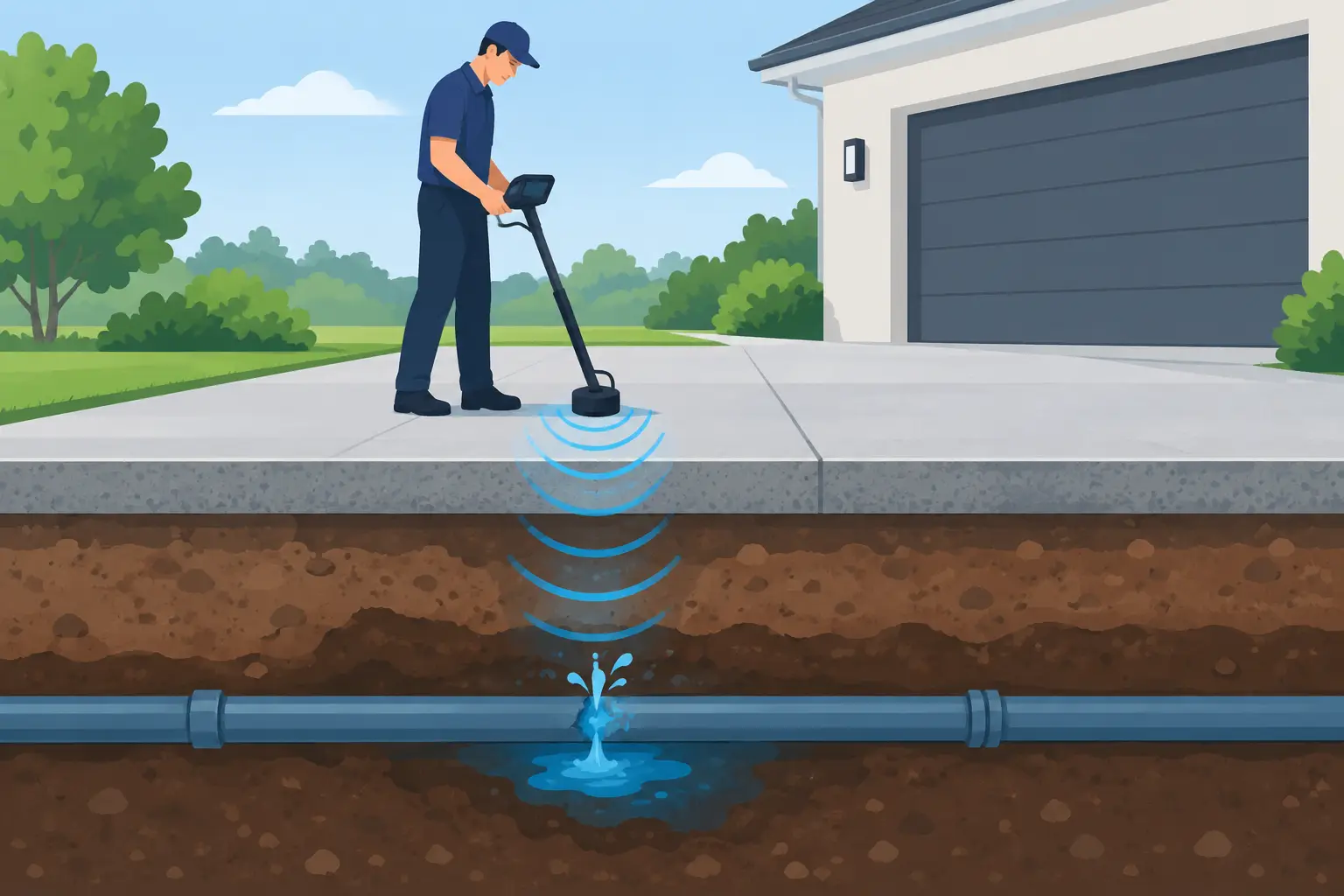
Pressurised water escaping from a pipe creates vibration and noise. Sensitive listening equipment can pick up this sound through the ground or at accessible fittings. An experienced operator compares readings along the suspected route to identify the strongest point of leakage.
Acoustic methods are particularly useful for water supply leaks, though traffic, pumps, rain and certain ground surfaces can interfere with readings. On a busy road-facing property, testing may be more effective during a quieter period. Plastic pipes can also transmit less noise than metal pipes, so acoustic results are assessed alongside other evidence rather than treated as a standalone answer.
Tracer gas testing
Where the pipe can be isolated, drained and tested safely, tracer gas may be introduced into the line. A detector is then used above ground to identify where the gas is escaping. This can be highly effective where the surface is dense concrete, block paving or tarmac and where acoustic detection is less clear.
Tracer gas testing is a controlled specialist procedure. It is not a reason to start lifting paving at random. Its value is in reducing the search area so any access excavation is targeted and proportionate.
Pressure testing and pipe tracing
Pressure testing helps establish whether a supply pipe is losing water and how significant the loss may be. Pipe tracing equipment can then assist in mapping the service route. This is useful before moling, directional drilling or local excavation, as it helps plan a safe route around existing services and structures.
Where a drain is suspected instead, a CCTV drain survey can show cracks, displaced joints, root ingress, collapsed sections or defective connections. Drainage faults often require a different repair strategy from pressurised water leaks, even when the surface symptoms appear similar.
Repair choices after the leak is found
There is no single best repair for every driveway leak. The right option depends on the pipe condition, leak location, material, depth and whether there is reason to expect further failures elsewhere on the line.
If the pipe is otherwise sound and the leak is accurately pinpointed, a small local excavation may allow a direct repair. This can be cost effective where access is simple and only one isolated defect is present. Good reinstatement matters: blocks should be lifted and relaid carefully, and any excavated ground compacted correctly to reduce the risk of later settlement.
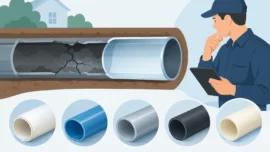
If the supply pipe is old lead, corroded metal or has suffered repeated leaks, replacing the full private supply is often the more dependable solution. A repair may stop today’s water loss but leave ageing pipework beneath the rest of the driveway. For lead supplies, replacement also removes a material that is no longer preferred for drinking water services.
Trenchless installation can protect the driveway
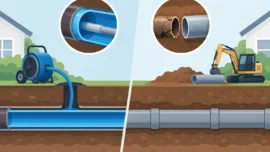
No-dig methods can reduce the amount of surface disruption needed for a replacement pipe. Trenchless moling uses a pneumatic tool to create a bore underground between carefully chosen launch and reception pits. Horizontal directional drilling can provide a controlled route where conditions and access are suitable.
These methods are not appropriate for every site. Ground type, pipe depth, nearby utilities, tree roots, retaining walls and access all need consideration. However, where feasible, they can avoid a long open trench through paving, lawns or access routes. That usually means a quicker programme, less spoil to remove and less reinstatement to manage.
Watermains & Drains UK uses modern leak detection and trenchless installation methods to help keep disruption to a minimum, while planning works around the specific risks and layout of each property.
What to expect from a professional visit
A competent contractor should explain what is being tested, what the findings mean and whether the evidence points to a water supply or drainage problem. For landlords and commercial property managers, the process should also account for tenant access, business hours, safe working areas and the need to keep entrances usable where possible.
Before excavation or replacement, ask for a clear scope of work covering the proposed method, access points, likely reinstatement and any assumptions that could affect the quote. It is sensible to check that the contractor holds appropriate water-industry approvals for supply pipe work, carries suitable public liability insurance and can provide a workmanship guarantee.
For urgent water loss, turn off the internal stop tap if doing so is safe and practical, then record the meter reading. Avoid driving or parking over any visibly sinking section of drive. Do not attempt to dig around suspected utilities yourself, particularly near the boundary where several services may be present.
A leak beneath a driveway is inconvenient, but it does not automatically mean extensive excavation. A careful survey, accurate detection and a repair method suited to the pipe’s condition can protect both your water supply and the surface you have paid to maintain. Acting while the signs are still minor gives you more options and a better chance of keeping the work clean, contained and cost effective.