

Moling vs Open Trenching: Which Is Better?
If you need a new water supply pipe or an underground pipe replaced, the real question is usually not whether the work can be done. It is how much of your driveway, garden or paved area needs to be disturbed to do it. That is where moling vs open trenching becomes an important decision for homeowners, landlords and commercial property managers alike.
Both methods have a proper place. One is not automatically better than the other. The right option depends on the route of the pipe, the ground conditions, access to the site and what sits above the excavation area. If you are trying to balance speed, cost and disruption, it helps to understand where each method works well and where it does not.
Moling vs open trenching: the core difference
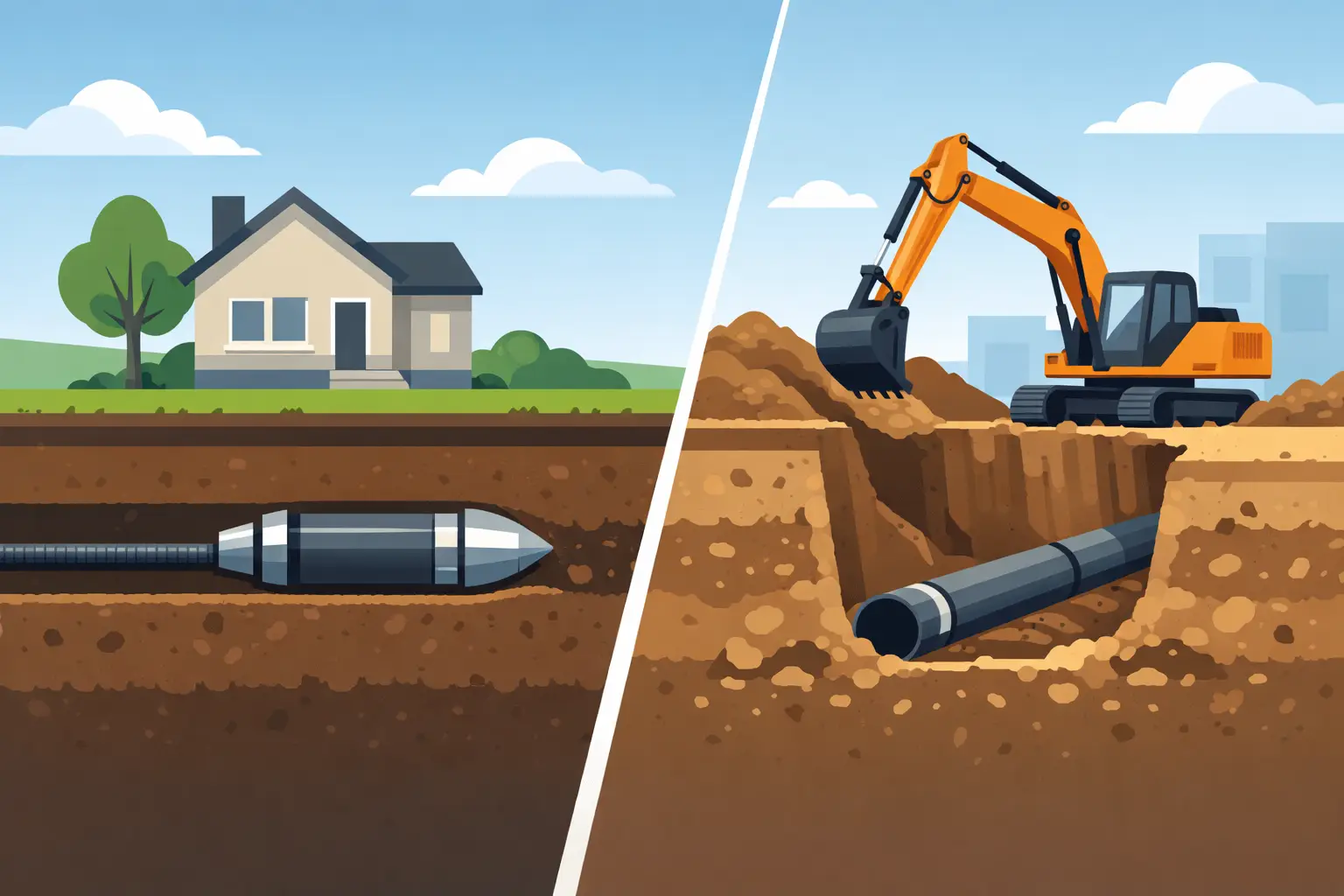
Moling is a trenchless installation method. A specialist pneumatic tool creates a bore underground, allowing a new pipe to be installed with only small launch and reception pits rather than a full trench across the site. For many domestic water supply replacements, this means a pipe can pass under lawns, paths and driveways with far less surface disturbance.
Open trenching is the traditional excavation method. The ground is dug out along the route of the pipe, the old service is exposed or removed, and the new pipe is laid in an open trench before backfilling and reinstatement. It is straightforward, proven and often necessary where full access to the pipe run is required.
In simple terms, moling reduces excavation. Open trenching gives full visibility. That difference affects everything else – programme, reinstatement, mess on site and sometimes overall cost.
When moling is the better option
Moling is often the preferred choice when the goal is to install a new pipe with the least disruption possible. On a domestic property, that can mean avoiding the need to break out large sections of tarmac, concrete, block paving or decorative landscaping just to get from the boundary to the building.
This is especially useful for lead pipe replacement and new water supply installations. If the route is fairly direct and the ground is suitable, moling can be faster and cleaner than excavating the full distance. The site stays tidier, there is less spoil to remove, and reinstatement is more limited because only small excavation points are needed.
For occupied homes and managed properties, that matters. Less open ground means less inconvenience for residents, less risk of damaging finished surfaces and less time with the work area out of use. In many cases, the practical benefit is not just the pipe installation itself but avoiding a wider making-good job afterwards.
The main advantages of moling
The biggest advantage is reduced disruption. Driveways, patios and gardens can often remain largely intact, which is why trenchless methods are popular where surface finishes are expensive or difficult to match.
There can also be time savings. Because there is less excavation and less reinstatement, the overall programme may be shorter. That is valuable if access is tight, the property is occupied, or the work needs to be completed quickly.
Moling can also make commercial sense where reinstatement costs would otherwise be high. Digging through decorative paving or recently laid surfaces can turn a simple pipe installation into a more expensive external repair project.
Where moling has limits
Moling is not suitable for every site. Ground conditions matter. Very rocky ground, unstable material or areas with a high risk of striking unknown services can rule it out or make it less predictable.
Accuracy also has limits compared with open excavation. For straightforward service runs this is usually manageable, but complex routes, multiple crossings or congested underground service areas may need a different approach.
If the existing pipe needs detailed inspection along its full length, or if there is a repair rather than a new installation involved, moling may not solve the whole problem. Sometimes a trenchless installation is ideal for the new supply route, but local excavation is still needed at connection points.
When open trenching is the right choice
Open trenching remains the right method in many situations, and there is no value in pretending otherwise. If the pipe route is short and easy to excavate, traditional trenching may be entirely sensible. If the surface above is soft ground rather than expensive paving, the disruption may be modest and the job straightforward.
It is also the better option where the contractor needs to expose existing assets, confirm depths, inspect joints, or carry out repairs across a known run. For drainage work in particular, full excavation is sometimes unavoidable because the issue is not just installing a new pipe but accessing damaged sections, correcting falls or dealing with collapsed materials.
Where there are changes in direction, complicated connections or uncertainty about what is underground, open trenching gives direct visibility. That can reduce risk and allow the team to adapt quickly if site conditions are different from what was expected.
The main advantages of open trenching
The biggest benefit is control. The contractor can see the excavation, inspect the condition of surrounding services and make precise adjustments as the work progresses. That makes trenching dependable for repairs, alterations and complex installations.
It can also be the more economical method on short runs or clear sites. If there is little to reinstate and access is good, the extra specialist equipment required for trenchless work may not offer any real advantage.
Open trenching is also easier to apply where regulations, service layouts or connection details require visible excavation. For some commercial and insurance-related works, a fully exposed trench can support record-keeping and site verification.
The downside of trenching
The obvious drawback is disruption. Excavating a full route across a front garden, driveway or access road creates more mess, more noise and more reinstatement. That affects appearance, access and sometimes timescales.
There is also the issue of finish quality afterwards. Even with good reinstatement, some surfaces are difficult to return to their exact original look, particularly older paving, patterned concrete or weathered tarmac. For many property owners, this is the deciding factor.
Cost: which is cheaper?
Cost is rarely as simple as comparing one method with the other in isolation. Moling can look more expensive at first glance because it uses specialist equipment and requires experienced trenchless operatives. Open trenching can look cheaper because the method is familiar and direct.
But the real cost sits in the whole job, not just the excavation method. If trenching means breaking out and reinstating a long driveway, removing large quantities of spoil and extending time on site, the price can increase quickly. In those cases, moling may offer better value overall.
On the other hand, if the run is short, the ground is easy, and there is nothing sensitive above the pipe route, open trenching may be the simpler and more cost-effective choice. This is why a proper site assessment matters. The cheapest method on paper is not always the most economical once reinstatement and disruption are factored in.
Which method is best for water supply pipes?
For domestic water supply renewals, especially lead pipe replacement, moling is often the preferred option where conditions allow. It suits the common requirement of getting from the boundary stop tap to the property with as little disturbance as possible.
That said, open trenching still has a role. If the route is obstructed, if the property has difficult access, or if there are reasons to expose the full run, trenching may be the more practical route. A specialist contractor should be able to assess both methods rather than pushing a single solution.
For clients, that is usually the best indicator of a reliable recommendation. The method should fit the site, not the other way round.
How to choose between moling vs open trenching
The decision usually comes down to five practical questions. What is above the pipe route? What are the ground conditions? How complex is the installation? Is this a new pipe run or a repair? And how important is it to keep the site usable and tidy during the works?
If you have a finished driveway, landscaped frontage or occupied property where disruption needs to be kept low, moling is often worth serious consideration. If the route is uncertain, the repair is more involved, or visible access to the pipe is needed, open trenching may be the safer choice.
At Watermains & Drains UK, this is exactly why site-specific advice matters. A good contractor will look at the installation route, access, reinstatement risk and connection requirements before recommending the method that gives the best outcome rather than the most obvious one.
The best choice is usually the one that solves the underground problem without creating an unnecessary surface one afterwards. If you are planning pipe replacement work, it pays to think beyond the excavation itself and focus on what the property needs to look and function like once the job is finished.





