

Moling vs Trenching Costs Explained
If you need a new water supply pipe, the headline price rarely tells the full story. When people compare moling vs trenching costs, they are usually weighing more than excavation alone – they are trying to work out which option gets the job done properly without turning a driveway, lawn or access route into a building site.
For most homeowners and landlords, the cheapest quote on paper is not always the lowest overall cost. Reinstatement, time on site, access restrictions and the risk of extra groundworks can quickly change the picture. That is why the right method depends on the property, the surface finishes involved and how much disruption you can realistically tolerate.
Moling vs trenching costs – what is the actual difference?
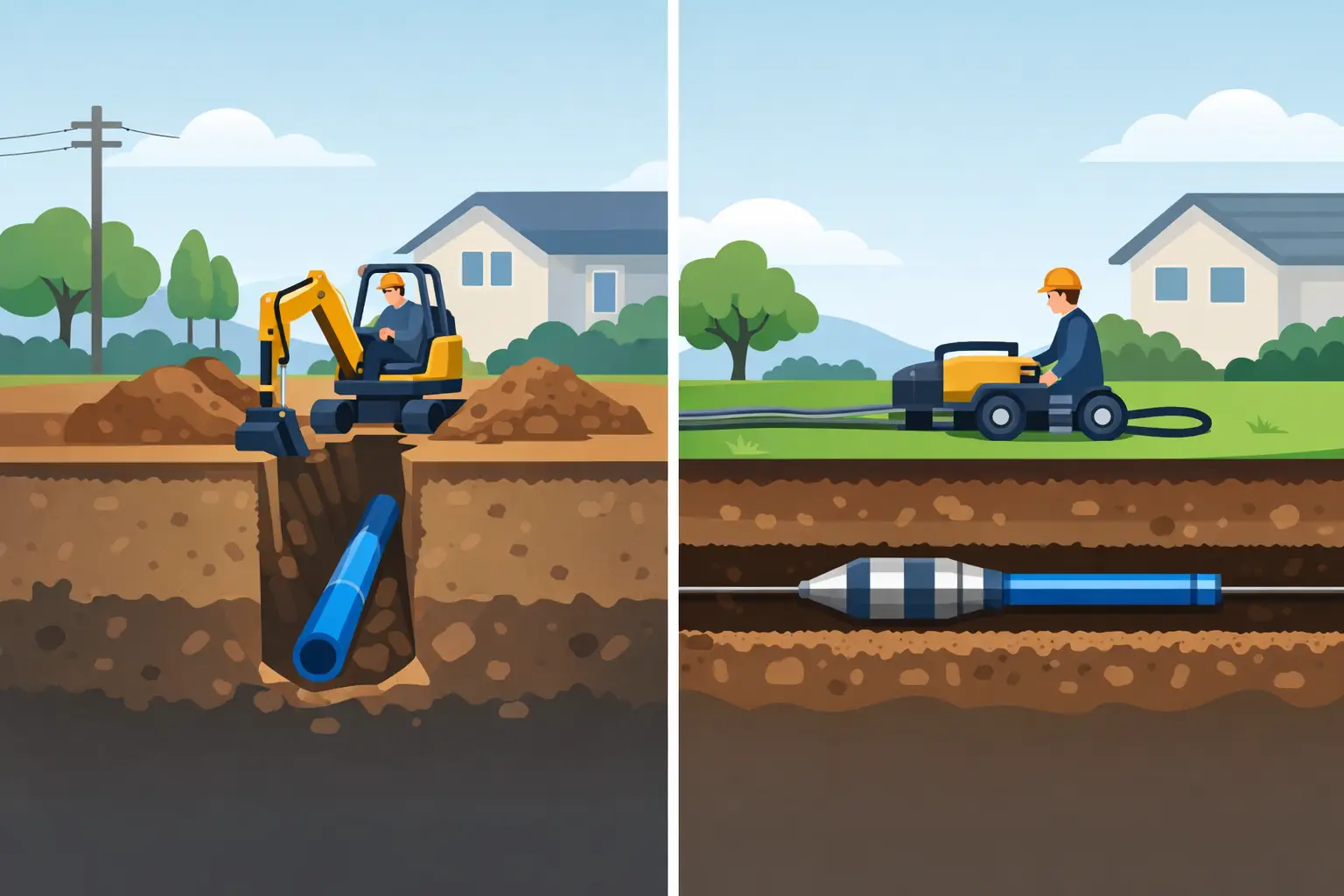
Trenching is the traditional method. A contractor excavates a continuous trench between the connection point and the property, lays or replaces the pipe, then backfills and reinstates the surface. It is straightforward in principle, but it can become labour-heavy where there are driveways, patios, walls, landscaping or limited access.
Moling is a trenchless method. Instead of opening the whole route, small launch and reception pits are dug and a pneumatic mole drives underground to create a path for the new pipe. In the right ground conditions, this allows the pipe to be installed with far less surface disturbance.
The reason moling and trenching can look similar on an initial quote is that both still involve labour, materials, compliance and connection work. The real separation usually appears in reinstatement costs and programme time. If a trench has to cross block paving, tarmac, concrete or decorative gardens, the price can rise quickly. Moling often reduces those costs because much less of the surface is disturbed.
Why trenching can appear cheaper at first
There are jobs where trenching is perfectly sensible. If the route is short, open and easy to dig – for example across a plain soil border or an area due for landscaping anyway – trenching can be cost effective. The method is visible, direct and does not rely on specialist trenchless equipment.
It can also be the better option if the ground is unsuitable for moling, if there are too many buried services in a tight corridor, or if the installation depth and route need constant visual control. On some older sites, especially where records are poor, careful open excavation may be the safer route.
But what looks cheaper at the start can become more expensive once the full scope is priced properly. Removing and replacing paving, making good a concrete path, reinstating tarmac, and returning a garden to a tidy condition all add cost. So does the extra time spent excavating, carting spoil away and restoring the area afterwards.
Where moling often saves money
Moling tends to offer best value when the route passes under finished surfaces that would be expensive or inconvenient to disturb. A front garden with a driveway, a patio, a path and boundary features is a good example. Digging all of that out and reinstating it to a good standard can easily outweigh any saving from using a more traditional excavation method.
This is why moling is regularly chosen for lead pipe replacement and new water supply pipe installations at occupied homes. The pipe can often be installed beneath lawns, paths and driveways with only small excavation points. That normally means less mess, fewer skips, reduced reinstatement and a faster job overall.
For landlords and commercial sites, there is another cost to consider – disruption. If trenching affects access, parking, customer routes or tenant movement, the financial impact goes beyond the excavation itself. A quicker, cleaner installation can be worth more than the difference between two headline quotes.
The main factors that affect cost
Ground conditions matter. Moling works best in suitable soil conditions, while heavily obstructed ground, very loose material or dense rubble can make it less practical. Trenching is more predictable in some difficult ground, but difficult digging can still increase labour and disposal costs.
Route length is another obvious factor, though not always in the way people expect. A longer run does not automatically make trenching the better value option. Once a route crosses expensive surfaces, the cumulative reinstatement cost can push trenching well above a trenchless installation.
Access also changes pricing. Tight side passages, restricted machinery access, cellar entries, shared drives and urban plots all affect how quickly a team can work. A specialist contractor will price not just the pipe installation, but the practical reality of getting the work done safely and neatly.
Then there is reinstatement standard. Basic backfill is one thing. Reinstating block paving so it sits correctly, matching tarmac, repairing decorative surfaces and leaving the property presentable is another. This is often the area clients underestimate when comparing methods.
Moling vs trenching costs for driveways and gardens
This is where the decision usually becomes clearer. If a trench has to cut through a finished driveway, the excavation itself is only part of the bill. Breaking out the surface, removing spoil, laying the pipe, backfilling in layers and restoring the finish all take time and materials. Even where the job is completed properly, there is still a visible intervention across the route.
With moling, the contractor may only need small pits at either end or at key points along the run. The driveway or garden remains largely intact. For a homeowner who has invested in landscaping or paving, that reduction in disruption is often just as important as the invoice total.
Gardens are similar. A trench across a lawn may sound manageable until you consider flower beds, edging, irrigation, mature planting and the simple inconvenience of having the whole route opened up. Moling will not suit every site, but where it is viable, it often gives a cleaner result with less reinstatement to worry about.
When trenching is still the right call
There is no honest answer that says moling always wins. Some installations need open-cut excavation because the line must be exposed throughout, the existing services are too congested, or the route includes changes that are better managed in an open trench. If repairs are also needed to other buried infrastructure, trenching may make more sense because everything can be accessed in one operation.
There are also properties where the surface finish is low value and easy to make good. In those cases, trenching can be an entirely practical choice. The right contractor should explain why one method suits the site better rather than pushing a single approach regardless of conditions.
Looking beyond the quote total
The most useful way to assess cost is to ask what is included. Does the quote cover spoil removal, reinstatement, connection work, pressure testing and making the area tidy afterwards? Is there a clear allowance for surfaces that need to be lifted and reinstated? Has the route been assessed properly, or is the price likely to change once work starts?
That matters because the cheapest quote can sometimes leave out the expensive parts. A specialist contractor will usually be more upfront about method, constraints and likely outcomes. For homeowners, that means fewer surprises. For commercial clients and facilities teams, it means a clearer programme and lower operational risk.
Accreditations, insurance and workmanship guarantees should also be part of the value calculation. If a contractor is carrying out underground pipework at your property, you want confidence that the installation is compliant, properly tested and backed if anything goes wrong later.
Which option offers better value?
If the route is simple, open and easy to reinstate, trenching may be the lower-cost option. If the pipe has to pass beneath driveways, paved areas, gardens or other finished surfaces, moling often proves better value once full reinstatement and disruption are taken into account.
That is why site-specific advice matters. At Watermains & Drains UK, trenchless moling is often the preferred solution for replacing lead pipes and installing new water supplies because it reduces mess, shortens programmes and limits damage to finished surfaces. But where trenching is the more suitable method, a professional contractor should say so plainly.
The best question is not simply which method is cheaper. It is which method gives you a safe, compliant installation with the least avoidable cost and disruption for your particular property. A good quote should answer that clearly before the ground is broken.
If you are comparing options, ask for a proper site assessment rather than a rough price based on guesswork. The right method usually becomes obvious once the route, surfaces and access are looked at properly – and that can save a lot of money, mess and frustration later.





