Best Drain Repair Options for Root Ingress
A drain can seem fine for months, then suddenly start backing up after heavy rain, gurgling at the gullies, or leaving slow-draining sinks and foul smells around the property. When a CCTV survey shows roots inside the pipe, the next question is usually the same: what actually needs repairing, and how much disruption will it cause?
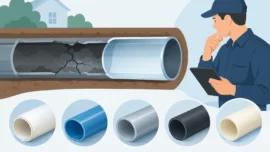
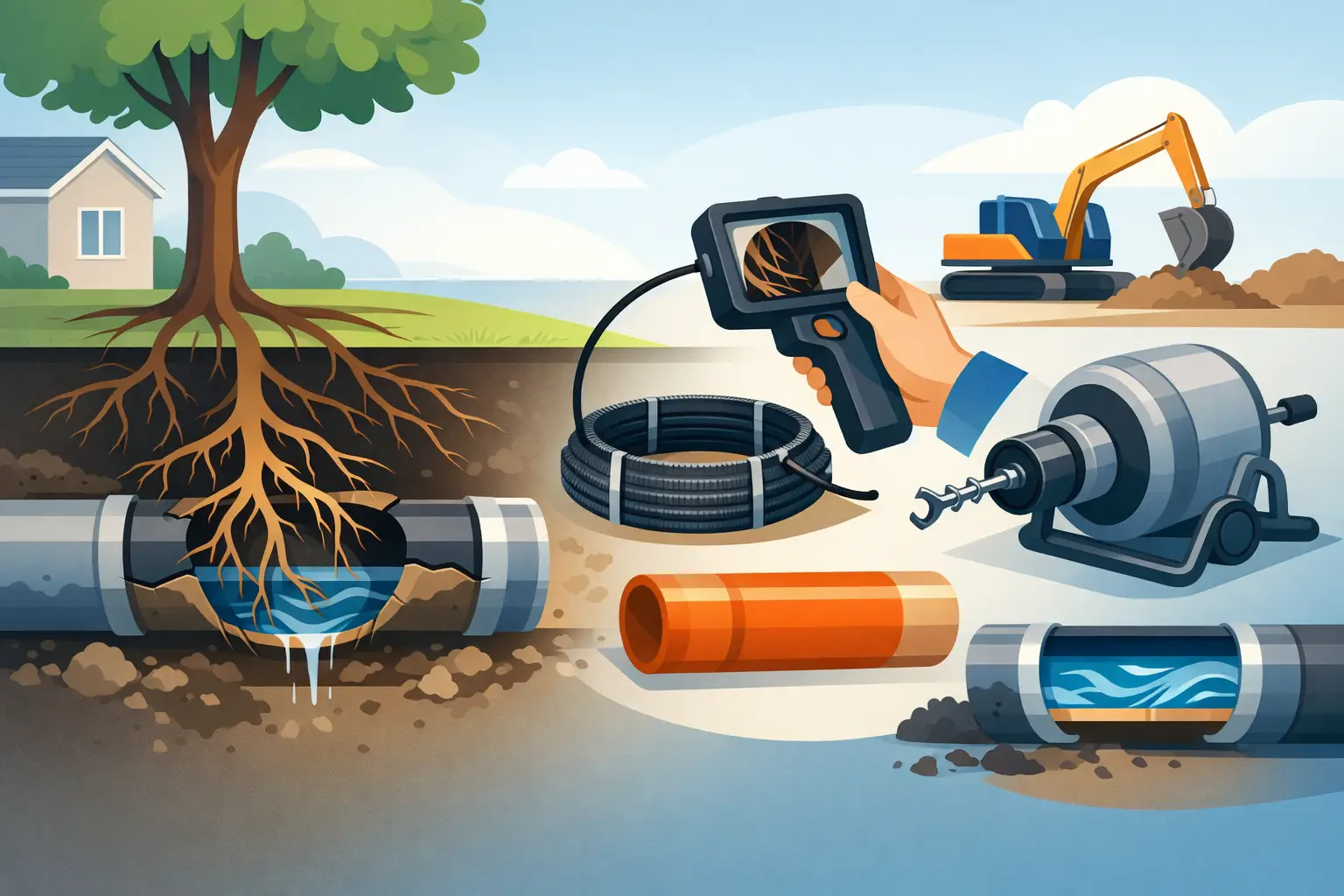
Root ingress is common in older drainage systems across the UK, especially where pipes have aged joints, minor cracks or displaced sections. Tree roots do not usually break into a perfect pipe on their own. They exploit a weak point, then expand as they search for moisture and nutrients. That means removing the roots is only part of the job. The real fix is choosing the right repair method for the condition of the drain.
Understanding tree root ingress drain repair options
The best tree root ingress drain repair options depend on three things: how severe the damage is, what the pipe is made from, and whether access allows a no-dig repair. In many cases, the least disruptive solution is not full excavation. Just as importantly, the cheapest short-term option is not always the most cost effective once repeat blockages are factored in.
A proper diagnosis usually starts with a CCTV drain survey. This shows whether roots have entered through a small joint gap, a fracture, a collapsed section, or multiple defects along the run. It also helps identify whether the issue is localised or part of a wider drainage problem. For homeowners, that means clearer quoting. For landlords and commercial property managers, it means the repair method can be matched to the asset condition rather than guessed.
Why root ingress keeps coming back
If roots are simply cut out and nothing else is done, they often return. The opening in the pipe remains, moisture is still present, and the root mass continues to grow externally. Mechanical root cutting can restore flow quickly, but on its own it is usually a holding measure rather than a full repair.
That is why experienced drainage contractors look beyond the blockage itself. The priority is to restore the pipe structurally, seal the entry point, and do it with the least disruption practical for the site. On a driveway, in a landscaped garden, or beneath a commercial access route, that choice matters.
Root cutting and drain cleaning
Where the pipe is still structurally serviceable, the first stage is often root removal using specialist cutting heads or high-pressure water jetting. This clears the obstruction and allows a better inspection of the host pipe once the root mass has been removed.
This option is useful when a customer needs immediate relief from backing-up drains, but it should not be mistaken for a permanent cure unless the follow-on repair is also completed. It works best as part of a wider repair plan, not as the end result. If the defect is minor and highly localised, the next step may be a patch repair or lining rather than excavation.
Localised patch lining
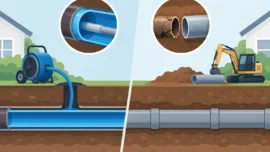
For many properties, patch lining is one of the most practical tree root ingress drain repair options. A resin-impregnated liner is inserted into the drain and positioned over the damaged section. Once cured in place, it forms a new sealed section within the existing pipe.
This is especially effective where roots have entered through one or two isolated cracks or displaced joints. It avoids digging up long runs and can often be completed from existing access chambers. For homeowners, that usually means less mess and faster completion. For commercial sites, it can reduce downtime and limit disruption to parking areas, footpaths or service yards.
That said, patch lining has limits. If the pipe is heavily deformed, badly collapsed, or affected over a long distance, a short repair sleeve may not be enough. The survey findings need to support it.
Full drain lining
Where defects extend along a longer stretch of pipe, full structural lining can be the better option. This no-dig method creates a continuous liner inside the existing drain, sealing cracks, poor joints and root entry points across a greater length.
In the right conditions, full lining provides an efficient repair with minimal excavation. It is often a strong choice where there are repeated root ingress issues on older clay drains that are otherwise still broadly intact. The advantage is clear: one installation can address multiple weak points at once rather than dealing with them one by one.
The trade-off is that lining slightly reduces the internal diameter of the pipe. In most domestic drainage systems this is not a problem, but the drain still needs to be correctly assessed for flow and condition first. If there is a major collapse or severe displacement, lining may not be suitable without preparatory work.
Excavation and traditional drain replacement
Sometimes excavation is simply the right answer. If a section of drain has collapsed, if there is significant deformation, or if root damage is so extensive that the pipe cannot reliably support a liner, excavation and replacement may be the only sound repair.
This tends to be more disruptive than trenchless methods, but local excavation of one failed section is still very different from replacing an entire run. A specialist contractor should aim to keep excavation targeted, reinstate properly, and avoid unnecessary disturbance to the surrounding area.
Traditional repair can also make sense where the damaged section is shallow, easy to access, and unlikely to affect paving, structures or mature landscaping. In those situations, the cost difference between digging and no-dig methods may be smaller than people expect. The right choice depends on location, depth and reinstatement requirements, not just the pipe defect itself.
When a full drain replacement is worth considering
If CCTV inspection shows repeated faults across the system, multiple intrusions, poor historical repairs or ageing pipework near the end of its serviceable life, piecemeal repairs can become false economy. A fuller replacement may offer better long-term value, especially for landlords dealing with recurring tenant reports or commercial sites where repeat attendance is disruptive.
This is where a clear condition-led recommendation matters. There is no benefit in selling a major replacement if a local trenchless repair will solve the issue properly. Equally, there is little value in carrying out isolated patches on a drain that is failing in several places. Good drainage advice is practical, not generic.
Choosing the right repair for your property
The best repair method is influenced by more than the drain itself. Access restrictions, surface finishes, urgency, budget and future plans for the property all play a part. A root ingress problem under a block-paved driveway calls for a different approach from a damaged drain in open garden ground. A rental property with active tenant complaints may prioritise speed and reliability. A commercial site may need method statements, scheduling around operations and clear reinstatement standards.
For that reason, quotes should be based on survey evidence and site conditions, not guesswork. The right contractor will explain what the camera has found, which options are suitable, and where a lower-cost repair may only be temporary. That allows the customer to make an informed decision rather than facing repeated call-outs.
Preventing root ingress after repair
Once the drain has been repaired, preventing recurrence is mostly about ensuring the entry point has genuinely been sealed and the pipe has enough structural integrity to resist further intrusion. Cutting back roots externally can help in some situations, but it is not always practical or advisable, particularly with mature trees subject to legal protection or close to buildings.
The better approach is usually to repair the drain correctly and monitor if needed. Follow-up CCTV checks may be sensible on higher-risk systems or where there has been a history of repeated blockage. For many customers, a durable no-dig repair gives the balance they want: minimal disruption now, with a reliable result that reduces the chance of the same problem returning.
Getting a repair that lasts
When comparing tree root ingress drain repair options, the key is not just removing the blockage. It is choosing a repair that suits the actual condition of the pipe and the realities of the site. In many cases, that means a no-dig solution such as patch lining or full lining. In others, a targeted excavation is the correct and more durable choice.
At Watermains & Drains UK, the focus is on identifying the defect properly, recommending the least disruptive effective repair, and completing the work to a professional standard with clear quoting and tidy reinstatement. If your drains are showing signs of root ingress, the most useful next step is a proper survey and a repair recommendation based on evidence, not assumption.
A blocked drain is frustrating enough once. If roots are the cause, a repair that deals with the defect as well as the symptoms is usually the option that saves the most time, cost and disruption over the long run.