What Causes Low Mains Pressure?
You turn on the kitchen tap and the flow is barely more than a trickle. The shower goes weak when another tap is running. If you are asking what causes low mains pressure, the answer is not always straightforward. Sometimes the issue sits with the wider network. Quite often, though, the problem is much closer to home – in the stop tap, the supply pipe, or a leak that has gone unnoticed underground.
Low mains pressure is one of those problems that people often live with for too long. They assume it is normal for an older property, or that all houses in the street are the same. In practice, poor pressure can point to a fault that is repairable, and in some cases replacing an ageing supply pipe gives a clear, lasting improvement.
What causes low mains pressure at a property?
Mains pressure refers to the pressure of the water being delivered from the public water main into your property. That is different from water flow, although the two are closely linked in day-to-day use. Pressure is the force behind the water. Flow is how much water actually comes out at the tap.
A property can have acceptable static pressure on paper but still perform badly because the pipework is too narrow, partially blocked, leaking, or restricted somewhere along the route. That is why a proper assessment matters. Looking at the symptom alone rarely tells the full story.
The most common causes tend to fall into two groups. Either the incoming supply from the water authority is lower than it should be, or the pressure is being lost between the boundary and the point of use inside the building.
Problems with the public water supply
There are times when the issue genuinely sits outside the property. Utility works, bursts in the local network, planned maintenance, or high demand at peak times can all affect incoming pressure. This can be more noticeable in certain locations, including properties at the end of a network run or on higher ground.
If the pressure drop has appeared suddenly and your neighbours are seeing the same thing, that points towards a network issue rather than a private supply pipe fault. In that case, the first step is usually to check whether there is a known problem in the area.
That said, external supply issues are not always the whole story. A marginal public supply can expose weaknesses on the private side, especially where an older pipe is already undersized or deteriorating.
A partially closed stop tap or faulty valve
It sounds basic, but it is common. If the internal stop tap or external boundary stop valve is not fully open, water flow into the property is restricted from the outset. The same applies if a valve is damaged, seized, or failing internally.
This sometimes happens after repair work, meter installation, or emergency attendance when a valve has been turned down and not fully reinstated. On older systems, the fitting itself may have degraded enough to create a bottleneck.
Old or undersized supply pipes
Many older homes still rely on outdated supply pipes that were never designed for modern water demand. A pipe that once served a single cold tap and a basic bathroom may now be expected to supply combi boilers, multiple bathrooms, appliances, and garden use.
Lead and older narrow-gauge pipework are common culprits. Even where the pipe is technically still serviceable, its diameter may be too small to deliver the flow people expect today. In simple terms, the supply cannot keep up.
This is particularly relevant in period properties across the North West, where legacy pipework is still found regularly. Replacing an old incoming main with a modern MDPE supply often improves both performance and reliability.
Leaks can be a major reason for low mains pressure
A leak on the private underground supply pipe is one of the most overlooked answers to what causes low mains pressure. If water is escaping before it reaches the property, the pressure and flow at the tap will often suffer.
Not every supply pipe leak is obvious. You may not see standing water. The ground can absorb a surprising amount, especially in gardens, under drives, or beneath paved areas. In some cases the only signs are weaker pressure, damp patches, unexplained water usage, or a supply pipe that seems to run continuously.
Leak location matters as well. A small pinhole leak may produce a gradual decline, while a larger split or joint failure can cause a much more noticeable drop. Where the pipe has been damaged by ground movement, tree roots, corrosion, or age, the problem often gets worse rather than stabilising.
For landlords and commercial sites, this matters beyond convenience. A leaking supply can lead to wasted water, rising bills, localised ground damage, and avoidable disruption if left too long.
Corrosion, scale, and internal build-up
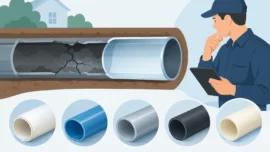
Older metallic pipes can narrow internally over time. Corrosion, mineral deposits, and general build-up reduce the effective bore of the pipe, meaning less water can pass through. The result feels like low pressure, even where the incoming main itself is acceptable.
This tends to be more common in ageing galvanised or lead systems, and the effect can be uneven. One property may have poor flow throughout, while another sees the worst issues at one bathroom or kitchen branch.
There is no practical point treating badly restricted supply pipework as a permanent fix. Once the pipe has deteriorated significantly, replacement is usually the sensible route.
Internal plumbing faults that mimic low mains pressure
Not every pressure complaint starts underground. Sometimes the incoming supply is fine, but internal plumbing is creating the same symptoms.
Faulty pressure reducing valves, blocked tap connectors, clogged filters, failed isolation valves, and issues within unvented or boosted systems can all affect performance. Shower mixers and appliance valves can be especially misleading because the problem appears localised at first.
The key difference is consistency. If every outlet in the property is weak, the incoming supply or main stop arrangement becomes more likely. If only one or two outlets are affected, internal plumbing should be checked first.
There can also be an issue of expectation. Mains pressure will not compensate for poor internal system design. If several outlets are being used at once, even a decent supply can feel stretched if the plumbing layout is inefficient.
How to tell what is actually causing the pressure drop
The most useful starting point is whether the issue is sudden or gradual. A sudden drop suggests a valve issue, leak, burst, or external network event. A gradual decline points more towards ageing pipework, internal restriction, or a developing leak.
It also helps to notice whether the problem affects the whole property or only certain outlets. Check whether neighbours are experiencing the same issue. Look for damp ground, higher bills, or the sound of running water when nothing is in use.
Basic checks can rule out simple causes, but proper diagnosis usually means testing both pressure and flow and tracing the route of the incoming main. That is where specialist contractors add value. Rather than guessing, they can assess whether the fault sits with the utility side, the private supply pipe, or internal plumbing.
In many cases, the answer is not a patchwork repair. If the incoming pipe is old, leaking, undersized, or made from lead, replacement often becomes the most cost-effective option over time.
When low mains pressure needs professional attention
If low pressure is affecting showers, heating appliances, day-to-day use, or tenants and staff on a commercial site, it is worth addressing quickly. Waiting rarely improves things. Small leaks become larger ones, old pipes continue to deteriorate, and temporary restrictions can hide a more serious fault.
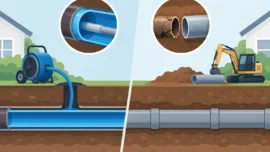
Professional investigation is particularly important where there are signs of an underground leak, a suspected lead supply, repeated pressure complaints, or a need to improve supply without tearing up gardens, drives, or paved access routes. Modern trenchless methods can often install a new water main with far less disruption than people expect.
For property owners, that means fewer assumptions and a clearer path to a proper fix. A specialist contractor can test the supply, identify the cause, and advise whether repair, leak detection, or full replacement is the right answer. Where replacement is needed, no-dig methods and accredited installation standards make a real difference to speed, cleanliness, and reinstatement.
Watermains & Drains UK deals with this kind of problem regularly, especially at older properties where low pressure is linked to ageing or damaged supply pipes rather than the public main alone.
If your water pressure has changed, feels consistently poor, or has never seemed right since moving in, treat it as a sign worth checking rather than something to put up with. The cause is often fixable, and the right solution can leave you with a stronger, more reliable supply without unnecessary disruption.