Choosing Water Mains Installers Without Regret
A burst supply pipe can turn a normal morning into a cancelled workday, a soaking wet driveway, and a scramble to stop the damage. Even when it is not an emergency, a new connection for an extension, a split supply line under a path, or a persistent leak that keeps reappearing all come down to the same question – who do you trust to install or replace your water main properly, with the least disruption and the right approvals?
This is where choosing the right water mains installation contractors matters. The work sits in that awkward space between “it’s just a pipe” and “if it goes wrong, you are digging it up again”. A good contractor makes it feel straightforward: clear scope, tidy excavation (or no-dig where possible), compliant materials, proper testing, and a clean handover. A poor one leaves you with reinstatement issues, delays, and a job that becomes more expensive the second time around.
What water mains installation contractors actually do
For most homeowners and landlords, “water main” means the pipe bringing fresh water from the boundary into the property. Contractors install new supply pipes, replace old or lead pipework, divert supplies around building works, and repair leaks that cannot be fixed with a simple patch.
On commercial sites and managed properties, the scope can include multiple supplies, shared service routes, meter relocations, and access planning to keep tenants or operations running. The best contractors are set up for both planned projects and reactive call-outs, because a leak does not wait for a convenient slot.
The work is not only about the pipe. It is about locating the route, protecting other services, choosing the correct installation method, managing reinstatement, and leaving you with a result that is reliable and easy to evidence if you ever need paperwork for insurance or compliance.
The decision that changes the whole job: dig or no dig
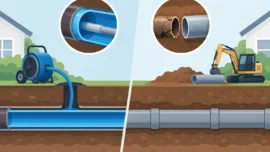
A traditional open-trench replacement is sometimes the right answer. If the pipe route is short, the ground is soft, and you are already lifting a driveway or landscaping, open excavation can be efficient and cost effective. It is also more straightforward when you need to work around multiple unknowns or heavily congested services.
But many properties in the North West have exactly the surfaces you do not want to disturb: block paving, printed concrete, mature gardens, or a narrow side passage. In these cases, trenchless installation can be a better fit.
No-dig methods such as moling or horizontal directional drilling (HDD) allow a new pipe to be installed with small entry and exit pits, rather than a full trench. The trade-off is that trenchless work needs the right ground conditions and a contractor who does it routinely. If you are on very rocky ground, or the route has tight bends and obstacles, it may not be suitable. A competent contractor will explain that honestly rather than forcing a method that does not fit.
For many homeowners, the real benefit is not only speed. It is the difference between a couple of neat excavations and a full strip of reinstatement across the front of the property.
Questions to ask before you book anyone
When you are comparing quotes, the difference is often hidden in the assumptions. You are not being difficult by asking for clarity – you are protecting yourself from surprise extras.
Start with the basics: what exactly is being installed and where does the contractor believe the route will run? A good contractor will talk you through the proposed route, any known risks (like crossing a shared driveway), and what they will do if the actual route differs once they start.
Ask whether they are set up for water industry compliance. In the UK, you should be looking for recognised approvals such as WIAPS and Watersafe for installers working on water supply pipes. These give reassurance that materials and installation practices meet the expected standard.
Then get practical. How will they locate services before digging? How will they protect your surfaces and manage spoil? What is included for reinstatement, and to what standard? If the job requires a shut-off, how long will the water be off, and will they plan the work to minimise downtime?
Finally, ask about insurance and guarantees. Public liability cover is not a bonus – it is a basic safety net, especially if the route passes near neighbours’ property or shared access. A workmanship guarantee also matters, because many issues only show up after the ground has settled and the property is back in use.
Why costs vary so much (and when cheaper is not cheaper)
Water main installation costs are not one-size-fits-all, and that is not contractors being evasive. The price is heavily affected by route length, excavation difficulty, surface type, and whether trenchless installation is suitable.
A short run across a soft front garden is very different to a longer route under paving with limited access. Likewise, a straight run with clear entry pits is different to a route that needs careful navigation around other services.
The biggest “hidden” cost is reinstatement. Two quotes can look similar until you realise one includes making good to a proper standard and the other includes only a basic backfill. If you care about your driveway, paths, or kerb appeal, be very clear on what reinstatement you are paying for.
There is also the cost of uncertainty. If the quote is based on guesswork rather than a site survey, you are more likely to face changes once the ground is opened up. A proper site visit and route assessment often saves money overall, even if the initial quote is not the lowest.
Signs you are dealing with a specialist, not a generalist
Water mains work rewards routine. Specialists tend to have the right kit on the van, the right paperwork ready, and a calm way of handling the parts that worry customers – road access, messy excavations, and water shut-offs.
Look for contractors who talk in outcomes rather than just tasks. You want to hear about keeping disruption low, protecting surfaces, and leaving the site tidy, not just “we’ll dig it out and replace it”. You also want someone who can switch between methods. If they only do open-trench, every job becomes an open-trench job. If they only talk about no-dig, they may be overselling it when the ground conditions do not suit.
Specialists also tend to integrate related services. That matters because supply issues often overlap with drainage or leak detection. If a contractor can investigate a leak properly rather than replacing pipe on a hunch, you reduce the risk of spending money on the wrong fix.
Domestic jobs: lead pipe replacement and new supplies
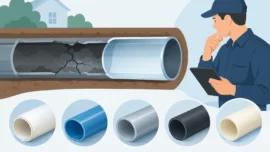
For homeowners and landlords, lead pipe replacement is one of the most common drivers for new water supply installation. Apart from the health and compliance concerns, lead supplies are often older, more prone to leaks, and can restrict flow.
A modern replacement typically means installing a new MDPE supply pipe from the boundary into the property, routing it in a way that suits the building layout and reduces future risk. The best route is not always the shortest route. It is the route that avoids known problem areas, gives sensible access points, and minimises disruption.
If you are renovating or extending, timing matters. Getting the supply sorted early can prevent delays later when you are trying to book kitchens, bathrooms, or final inspections.
Commercial and managed sites: documentation and predictability
Facilities teams and property managers tend to care about different risks: scheduling, tenant disruption, and documentation. For these jobs, method statements, risk assessments, and clear communication are not “nice to have”. They keep the site safe and the programme moving.
You also need a contractor who understands that reinstatement is often politically sensitive on commercial sites. A poor patch repair outside a shopfront or a rough finish across a car park entrance becomes a complaint, even if the pipe is perfect.
If you are managing multiple properties, it is worth working with a contractor who can handle both planned upgrades and reactive leaks, so you are not reinventing the wheel every time.
What a well-run installation looks like
A professional job usually starts with a site survey, agreement on the route, and a plan for access and reinstatement. On the day, the team should protect surfaces, keep excavation tidy, and communicate clearly if they find anything unexpected.
After installation, pressure testing and commissioning should be handled properly, and you should be told what was done and where the new pipe runs. That last part is more valuable than many people realise – it helps with future works, and it can save a lot of time if a different trade needs to dig nearby.
If you want a local specialist that combines accredited water supply work with trenchless capability and a service-led approach in the North West, Watermains & Drains UK is set up for exactly these projects, from lead pipe replacement through to diversions and leak investigation.
A final thought worth keeping in mind: the best water main installation is the one you never have to think about again. If a contractor is planning around disruption, reinstatement, and long-term reliability from the first conversation, you are already on the right track.