

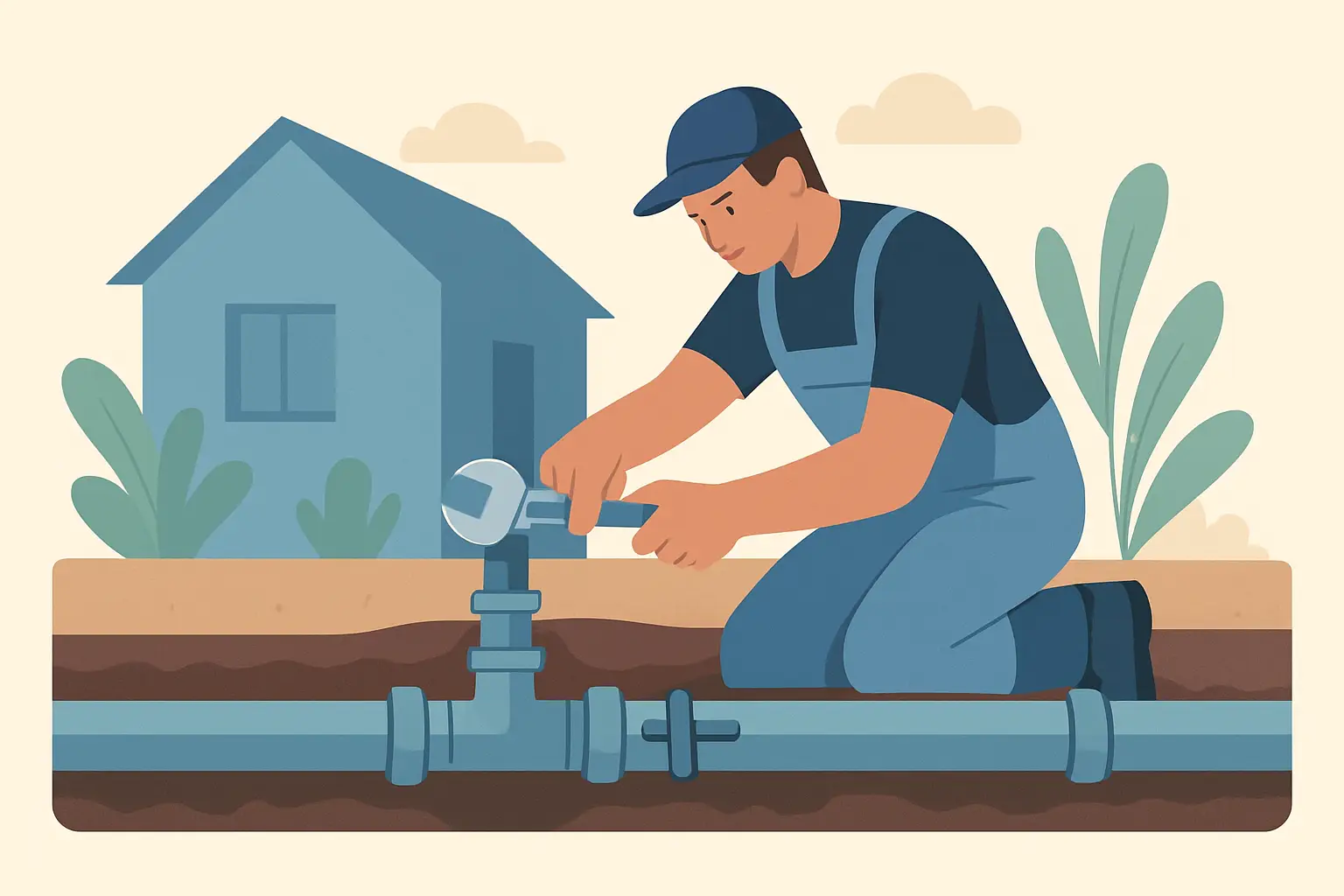
New Water Supply Pipe Installation: What to Expect
A stop tap that barely turns, a kitchen tap that coughs and splutters, or a supply that drops to a trickle whenever the shower goes on – these are the moments people realise the incoming water supply is the weak link. For many UK homes and small commercial buildings, the fix is not another internal plumbing tweak. It is a new water supply pipe from the boundary into the property, installed properly, pressure-tested, and signed off.
New water supply pipe installation is one of those jobs that sounds simple until you factor in driveways, shared service strips, older lead or galvanised pipework, and the need to meet water industry requirements. Done well, it is a once-in-decades upgrade that improves flow, reduces leak risk, and removes the uncertainty that comes with ageing supplies.
When a new supply pipe is the right answer
Sometimes a repair is sensible. If a modern MDPE (blue plastic) supply has a single, accessible leak, targeted repair may be quicker and cheaper. But there are plenty of situations where a full replacement or new line is the cleaner solution.
Low pressure that has gradually worsened often points to an undersized or corroded pipe, particularly if the supply is an older lead or iron line. Recurring leaks are another red flag. Every leak repair involves disturbance and reinstatement, and repeated call-outs can quickly overtake the cost of replacing the run.
Property changes also drive new installations. If you are converting a house into flats, adding bathrooms, or creating a separate commercial unit, you may need a new, correctly sized supply. And if you are removing a lead supply pipe, replacement is usually the right long-term decision, not just for performance but for peace of mind.
It also depends where the problem sits. If the issue is on the incoming service pipe between the stop tap at the boundary and your internal stop tap, that is the area where new water supply pipe installation typically delivers the biggest improvement.
The two main approaches: open trench vs trenchless moling
Most people imagine a long trench from the pavement to the kitchen. Traditional open-cut installation still has its place. If the route is short, clear, and you are already lifting surfaces as part of other works, digging can be straightforward.
But in real homes the route often crosses block paving, tarmac, concrete paths, landscaped gardens, or tight side passages. That is where trenchless installation changes the job.
Open trench installation
With open trenching, the contractor excavates along the route, lays the new pipe at the correct depth and with suitable bedding, then backfills and reinstates. The advantage is direct visibility: you can see the ground conditions, navigate around obstacles, and make connections with full access.
The trade-off is disruption. Even with tidy working, trenching can mean more spoil, more making-good, and more time spent reinstating finishes that you would rather keep intact.
Trenchless moling (no-dig)
Trenchless moling uses a pneumatic soil displacement tool to create a bore underground between small access pits, typically at the boundary and near the property entry point. A new MDPE pipe is then pulled through.
For many driveways and front gardens, moling is the least disruptive option. You avoid a full-length trench, which usually means faster completion and a cleaner site. It is not suitable for every ground condition – very stony ground, certain made-up areas, or complex routes can make moling harder – but where it is viable it is often the method that homeowners and facilities teams prefer.
For longer runs, complex sites, or commercial work, horizontal directional drilling (HDD) can also be used. The principle is similar: install the pipe with minimal surface disturbance, but with more control over longer distances.
How the job is planned: route, depth, and sizing
A reliable installation starts with a sensible route. Contractors will look for the most direct line from the boundary stop tap to where the pipe enters the building, while avoiding obvious risks such as mature tree roots, retaining walls, and areas packed with other services.
Depth matters because the pipe needs protection from frost and future disturbance. The correct depth can vary depending on site conditions and local requirements, but the key point for property owners is this: a proper contractor will not run it shallow to save time.
Pipe sizing is another area where “it depends” is genuine. Many domestic supplies are installed in 25mm MDPE, but higher demand properties, longer runs, or buildings with multiple units can benefit from larger diameters to maintain flow. Sizing should reflect the property’s expected demand, not just what fits the easiest through a tight entry point.
What happens on the day (and how long it takes)
Most domestic new water supply pipe installation projects are completed within a day, especially when trenchless methods are used. More complex jobs – long runs, tricky access, commercial sites, or multiple supplies – can take longer.
You should expect:
First, the team locates the boundary stop tap and confirms the intended connection point. If access is poor or the stop tap is buried, that gets dealt with early because it affects everything that follows.
Next comes the excavation of small pits (for moling) or the trench (for open cut). A professional crew will keep spoil controlled and protect surfaces where practical.
Then the new pipe is installed and connected. Connections are made using approved fittings and correct techniques. This is not a place for improvised plumbing parts.
Finally, the supply is pressure-tested and checked for leaks. Once everything is proven, the excavations are backfilled and surfaces reinstated.
The best indicator of a well-run job is not just that the water comes back on. It is that you are left with a tidy finish, a clear explanation of what was done, and confidence that the pipework is correctly installed for the long term.
Water regulations, approvals, and why they matter
A new incoming supply has to meet water industry standards. That includes the right materials, correct installation practices, and compliance with water regulations.
This is where using an approved contractor reduces risk. Accreditations such as WIAPS and Watersafe show the contractor is recognised for water supply work and understands the requirements. For landlords and facilities managers, that assurance is often as important as the physical installation because it supports compliance and helps avoid disputes later.
Insurance and guarantees matter too. If you are paying for a new supply, you want to know the contractor has meaningful public liability cover and will stand behind workmanship.
Costs: what drives the price up or down
People understandably want a figure straight away. The reality is that pricing depends on site specifics, and any contractor giving a firm price without asking questions is guessing.
Length of run is a major factor. A short, straight run from the footpath to a front wall is very different to a long route around an extension.
Surface type also changes the cost. A lawn is simpler to reinstate than patterned block paving. Likewise, tight access down a narrow alley can add labour time.
Method selection affects cost in both directions. Trenchless moling can reduce reinstatement costs and time, but it still requires specialist equipment and experienced operators. On balance, many customers find it offers better value because it avoids the biggest disruption costs.
Finally, the complexity of connections can add time. Working around existing services, bringing the pipe into a specific plant room, or coordinating with other trades are all manageable, but they need planning.
If you want a price that holds, a site visit or clear photos and measurements are the quickest way to get an accurate quote.
Signs you have a lead supply (and what to do)
Lead is still present in older housing stock, particularly on the private side between the boundary and the internal stop tap. Clues include a dull grey pipe that marks easily when scratched, or a supply line that looks metallic rather than plastic.
If you suspect lead, the practical next step is to have the incoming supply assessed and quoted for replacement. Many replacements are done trenchlessly, which is often the deciding factor for households that have put the job off because they do not want their driveway dug up.
Choosing a contractor: what “good” looks like
A dependable contractor will be clear about the method, the route, and what reinstatement is included. They will explain where access pits or trenches will be, and they will be upfront if moling is not suitable for your ground.
They should also be able to show relevant approvals and insurance, and provide workmanship guarantees in writing. For commercial sites and managed properties, the ability to work to schedule, keep the site orderly, and communicate with tenants or staff is not a bonus – it is the job.
If you are in the North West and want a minimal-disruption approach, Watermains & Drains UK installs new supplies using trenchless moling and HDD where suitable, with accredited, fully insured teams and long-term guarantees.
A final thought before you book
If your water supply is already causing hassle, waiting rarely makes it easier. The most cost-effective time to replace an ageing or problematic incoming pipe is before it fails completely, when you can choose the method, book it in, and keep control of the disruption rather than reacting to an emergency.





