Supply Pipe Leak Outside? What to Do Next
You step outside and the paving looks darker than usual. There’s a faint hiss near the stop tap box, or a puddle that never quite dries – even in warm weather. Then the water bill lands.
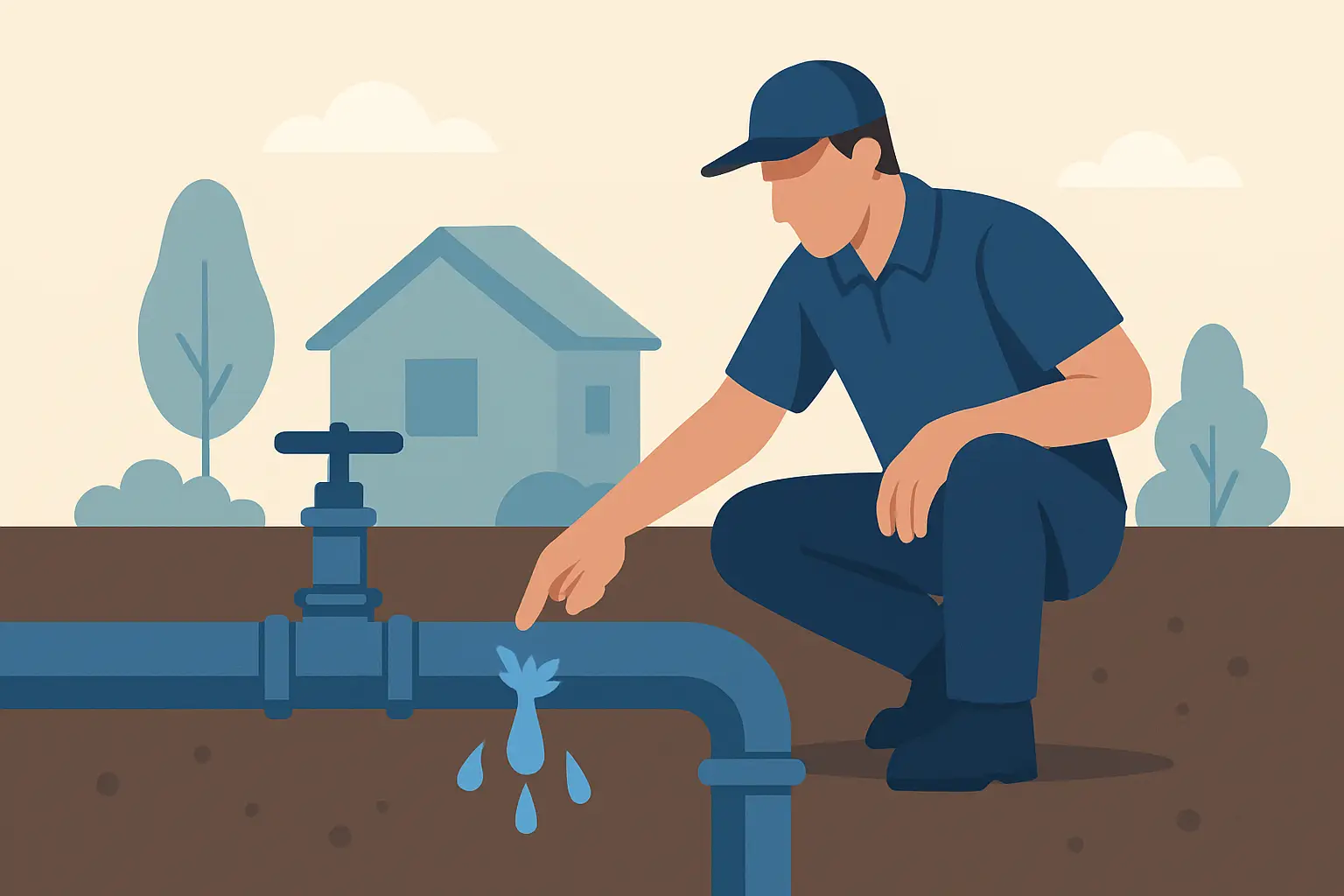
A leak on supply pipe outside house is one of those problems that starts small and quickly becomes expensive, disruptive, and stressful. The good news is most supply pipe leaks can be located and repaired quickly when you know what you’re looking at and you act early.
What a supply pipe is – and why outside leaks are common
Your water supply pipe is the pipe that brings clean water from the water main in the street into your property. On many homes it runs under the front garden, driveway, or path, and enters the house near the internal stop tap.
Outside leaks are common for a simple reason: that section of pipe is buried and often out of sight for years. Small issues can build up unnoticed. Ground movement, older materials, poor historic joints, and even driveway works can all take their toll. In winter, freezing conditions can worsen hairline cracks. In summer, dry ground can shrink and shift, stressing pipework.
A lot depends on the age of the property. Older homes may still have lead or galvanised sections, or a mixture of materials where previous repairs have been pieced together. Those transitions can be weak points.
Signs you may have a leak on the supply pipe outside the house
Some leaks are obvious, but many are not. If the leak is under concrete or tarmac, the water can travel and show up in a different place.
The most common early signs are a persistently wet patch on the drive or lawn, a sudden drop in water pressure, or the sound of running water when nothing is on. You might also notice your boiler losing pressure more often than usual if you are topping up, although that can also point to internal issues.
The strongest clue is your meter. If you have an external meter chamber near the boundary and the little indicator wheel spins when all taps and appliances are off, that suggests water is moving somewhere. If you do not have a meter, an unusually high bill is often the first sign, particularly in rented properties where usage is fairly predictable.
Who is responsible for the pipe outside?
Responsibility is a grey area for many homeowners and landlords, and it matters because it affects who pays.
In most cases, you are responsible for the private supply pipe from your property boundary to the point where it enters the house – and sometimes back to the connection at the water main, depending on local arrangements and whether the pipe is shared. The water company is usually responsible for the water main in the street and the communication pipe up to the boundary.
If you share a supply pipe with a neighbour (common in older terraces), you may have shared responsibility for the section feeding both properties. These situations are fixable, but it helps to get clarity early so you can plan a repair without delays.
If you are unsure, a contractor can often advise from the layout and meter position, and your water company can confirm the typical responsibility split for your area.
What to do immediately (and what not to do)
If you suspect a supply pipe leak, the priority is to reduce wasted water and prevent damage.
Start by checking the internal stop tap and making sure it is accessible and working. If the leak is severe, turning the stop tap off can limit water loss, but be realistic – if you are in a busy household or managing tenants, you may need a planned shut-off window.
If you have a meter, take a reading, leave everything off for 30-60 minutes, and check again. This gives you a simple baseline that helps confirm it is not just heavy use.
Try not to break out paving “to have a look” unless the leak is clearly visible and you are confident you can reinstate safely. Random excavation often increases costs, damages other services, and still doesn’t guarantee you hit the leak.
Why quick action saves money
A supply pipe leak rarely fixes itself. Even a small pinhole leak can wash away bedding material around the pipe, creating voids under paths and driveways. That leads to sinking, cracking, and bigger reinstatement.
There’s also the bill. Metered properties can rack up significant costs quickly, and many water companies have limits and conditions on leakage allowances. Early documentation and fast repair improves your chances of support where applicable.
For landlords and facilities teams, speed is also about reputation and continuity. Low pressure, unplanned shut-offs, or repeated call-outs are disruptive for tenants and operations.
How the leak is found without unnecessary digging
Leak detection is about narrowing the search before any ground is opened up. The approach depends on the site and the likely pipe route.
A practical starting point is tracing the line from boundary to internal stop tap position, then looking at typical entry points and any historic works. Acoustic listening equipment can sometimes pick up the noise of pressurised water escaping, particularly on quiet streets and at night.
On some jobs, pressure testing sections of the supply line can confirm whether the leak is on the incoming supply or within the property. Where the pipe material and access allow it, isolating sections can save time.
The goal is always the same: locate accurately, excavate minimally, and keep reinstatement neat.
Repair vs replacement: what actually makes sense?
The right fix depends on the condition of the pipe, not just the leak itself.
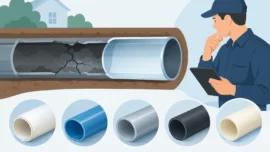
If the pipe is relatively modern (for example MDPE plastic) and the leak is at a joint or a localised damage point, a targeted excavation and repair can be cost effective. You get the water back on quickly and disturbance can be limited to a small section.
If the pipe is lead, older copper, or a patchwork of materials, repairing one spot can be a short-term win but a long-term gamble. It is common to see repeat leaks as the rest of the line is the same age and condition. In those cases, full replacement is often the better value decision, especially if the route crosses under a driveway you don’t want digging up again next year.
There is also a health and compliance angle. Lead supply pipes remain a concern in older properties, particularly where you are renting out or managing a building with duty of care. Upgrading to a modern MDPE supply line removes that risk and is a clean reset.
“No-dig” options when the pipe runs under a driveway
Many homeowners delay dealing with a leak because they picture a trench across the front drive and weeks of mess. That is not the only way.
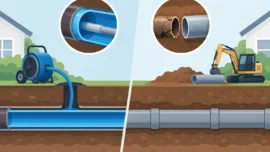
Trenchless moling and horizontal directional drilling allow a new supply pipe to be installed with minimal excavation points, typically at the boundary and at the entry point to the building. The new pipe is pulled through underground, leaving most of the surface untouched.
It is not a magic answer for every site. Ground conditions, existing services, and tight access can limit suitability. But when it is viable, it is usually the least disruptive route – particularly for block paving, patterned concrete, or recently tarmacked drives where reinstatement quality really matters.
For commercial sites, trenchless methods can also reduce downtime and keep pedestrian routes and entrances usable, which is often as important as the repair itself.
How long does it take and what affects cost?
Timeframes vary, but many outside supply pipe leaks can be addressed in a day once the route and method are agreed. Replacement can also be completed quickly where access is straightforward and the reinstatement scope is clear.
Cost depends on depth, surface type, pipe length, and whether the job is a simple repair or a full renewal. A leak under soil is usually quicker and cheaper to access than a leak under thick concrete. Shared supplies, unknown routes, or multiple historic repairs can add complexity.
A good quote should be clear about what is included: detection, excavation, materials, connection points, pressure testing, and reinstatement standard. If you are comparing options, make sure you are comparing like-for-like. A cheaper figure that excludes reinstatement can become expensive later.
What you should expect from a specialist contractor
With a leak on a supply pipe outside the house, you’re not just paying for someone to dig. You’re paying for accurate diagnosis, correct installation, tidy working, and a finish that does not leave you with a patchwork driveway.
Look for water industry approvals and evidence of proper insurance, especially if the work involves connection and compliance-sensitive installation. Ask what guarantee is provided on workmanship and what method will be used to minimise disruption.
If you are in the North West and want a contractor that can both locate and renew supply pipes using low-disruption methods, Watermains & Drains UK (https://www.watermainsanddrains.co.uk) carries WIAPS and Watersafe approvals, holds £10m public liability insurance, and backs workmanship with a 25-year guarantee.
A final thought before the leak gets worse
If you’ve spotted the signs, treat it as a time-sensitive job rather than a “keep an eye on it” issue. The quickest, cleanest fixes happen when the ground hasn’t been washed out, the route is still predictable, and you can plan access – so your driveway, your tenants, and your water bill don’t end up paying the price for delay.