Patch Lining Drain Repair Explained
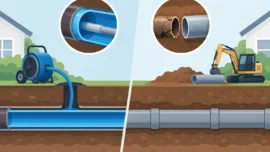
A cracked drain under a drive or patio used to mean one thing – digging. For many property owners, that is the part they worry about most. Not just the repair bill, but the mess, the delay, and the disruption to access, tenants, customers, or everyday life.
That is exactly where patch lining drain repair comes into its own. When the damage is localised rather than spread through the full drain run, it can often be repaired internally with no need to excavate the whole area above. Done properly, it is a fast, clean, and cost-effective way to restore a pipe and keep disruption to a minimum.
What patch lining drain repair actually is
Patch lining is a no-dig drain repair method used to fix isolated defects within an existing pipe. Instead of replacing the full drain line, a specialist resin-impregnated patch is positioned over the damaged section from inside the pipe. Once in place, it is inflated, bonded to the host pipe, and left to cure. The result is a new structural lining over the defect that seals cracks, small fractures, displaced joints, and minor areas of infiltration.
In practical terms, it is a targeted repair rather than a full reline. That makes it particularly useful when a CCTV drain survey shows one or two problem areas in an otherwise serviceable drainage system.
For homeowners, that can mean avoiding excavation across a driveway, lawn, extension approach or decorative paving. For landlords and commercial sites, it often means less downtime and a quicker return to normal use.
When patch lining is the right solution
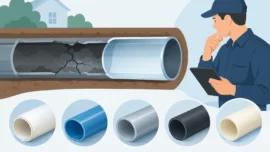
Patch lining drain repair is best suited to local defects. Common examples include a crack in a clay pipe, a leaking joint, root ingress at one connection point, or a small section of pipework weakened by age or movement.
If the surrounding drain is still in reasonable condition, patch lining can be the simplest option. It avoids replacing more pipe than necessary, which helps keep costs under control and limits disturbance to the property.
Typical defects it can address
A properly specified patch liner can often deal with isolated cracks, open joints, minor deformation, water ingress and root entry points. It is also used where a short section has started to deteriorate but the rest of the line remains structurally sound.
This is why a survey matters. The decision should not be based on guesswork. A CCTV inspection shows the exact location, condition, and extent of the fault so the repair method matches the actual problem.
When it may not be enough
Patch lining is not the answer to every drain issue. If a pipe has collapsed, if there are repeated defects across a long run, or if the drain has major displacement or heavy deformation, a local patch may only be a temporary improvement. In those cases, full lining or excavation may be the better long-term repair.
That is the trade-off. Patch lining is excellent for isolated defects, but it should not be used to avoid a more appropriate repair where the drain is broadly failing.
How the process works on site
The repair usually starts with a CCTV drain survey. This confirms the defect, measures its distance, and checks whether the rest of the line is suitable for patching. If there is a blockage, root mass, scale build-up or debris, the drain is cleaned first so the liner can bond properly.
The patch itself is then prepared to suit the pipe diameter and the length of the damaged section. It is wrapped around an inflatable packer, inserted into the drain, and guided to the exact position. Once aligned over the defect, the packer is inflated to press the patch firmly against the inside wall of the pipe.
After curing, the packer is removed, leaving the patch in place as a sealed internal repair. A further CCTV check is typically carried out to confirm the finish and ensure flow is unobstructed.
For clients, the key benefit is straightforward – the work is completed within the pipe, often from an existing access chamber, so there is far less disruption than open-cut excavation.
Why property owners choose this method
The strongest advantage of patch lining drain repair is minimal disruption. That matters whether the damaged drain runs beneath a tarmac drive, block paving, garden path, warehouse floor or shared access route.
Excavation still has its place, but when a no-dig repair is possible, it can reduce reinstatement costs as well as labour and programme time. There is also less impact on the surrounding area, which is important where finished surfaces need to be protected or access must be maintained.
Cost is another factor, although it depends on the location, pipe size, depth, and condition of the drain. A patch repair is often more economical than digging out and replacing a short section, particularly where the surface above would be expensive to reinstate. That said, if multiple patches are needed across one run, a full liner can sometimes offer better value.
What affects suitability and price
No responsible contractor should quote a drain repair method purely from a phone description. The same symptom – recurring blockage, foul odour, slow drainage, or local subsidence – can point to very different faults.
With patch lining, price and suitability usually depend on five things: the exact defect, the pipe material, the diameter, access to the line, and whether cleaning or root cutting is needed before repair. Depth also matters. Even though patch lining avoids full excavation, access arrangements and working conditions still affect the overall job.
This is why a clear survey-led recommendation is important. It gives homeowners confidence that they are not paying for more work than needed, and it gives landlords or facilities teams the documentation they may need for maintenance records, insurers or remedial planning.
Patch lining compared with full drain lining
These two methods are often confused, but they serve different purposes. Patch lining targets one isolated area. Full lining creates a continuous new lining through a longer section or entire pipe run.
If a CCTV survey shows one failed joint under a driveway, patch lining is often the sensible option. If the survey shows repeated cracking, root ingress in several places, and signs of general wear along the run, full lining may be more effective.
Neither is automatically better. It depends on the condition of the host pipe and the long-term objective. A good contractor should explain that clearly rather than pushing a one-size-fits-all solution.
The importance of a proper drain survey
The quality of the repair starts with the quality of the diagnosis. A CCTV drain survey does more than confirm there is a problem. It identifies where the problem starts, how severe it is, whether the pipe remains structurally viable, and which repair method is most suitable.
That matters because some defects look worse than they are, while others appear minor on the surface but point to broader movement or deterioration. Without a survey, patch lining can be misapplied. With the right survey, it becomes a precise and reliable repair method.
For older properties across the North West, where clay drains, ageing joints and root ingress are common, that level of accuracy is particularly valuable. It helps avoid unnecessary excavation while still making sure the repair is fit for purpose.
Choosing a contractor for patch repairs
Patch lining is specialist drainage work, not a general handyman task. The contractor should be able to inspect, diagnose, clean, repair and re-survey the drain properly, with suitable equipment and clear reporting.
For homeowners, the practical questions are simple. Will the repair solve the problem, how much disruption will there be, and will the site be left tidy afterwards? For landlords and commercial clients, there is usually another layer – insurance cover, scheduling reliability, health and safety compliance, and confidence that the recommendation is proportionate to the defect.
That is why many clients look for specialist contractors with no-dig capability, clear quoting, and a proven approach to reinstatement-sensitive work. At Watermains & Drains UK, that same focus on minimal disruption and dependable delivery runs across drainage and water infrastructure services alike.
When to get it checked
If drains are backing up repeatedly, if there is a persistent foul smell outside, if gullies are slow to clear, or if a survey has already identified cracks or joint defects, it is worth getting the pipe assessed before the problem spreads. Local damage rarely improves on its own.
A patch repair carried out at the right time can prevent water escaping into surrounding ground, reduce the chance of further root ingress, and avoid a larger structural failure later on.
The helpful thing about patch lining is not that it works everywhere. It is that, in the right situation, it solves a very specific problem cleanly and efficiently – which is usually exactly what property owners want.