

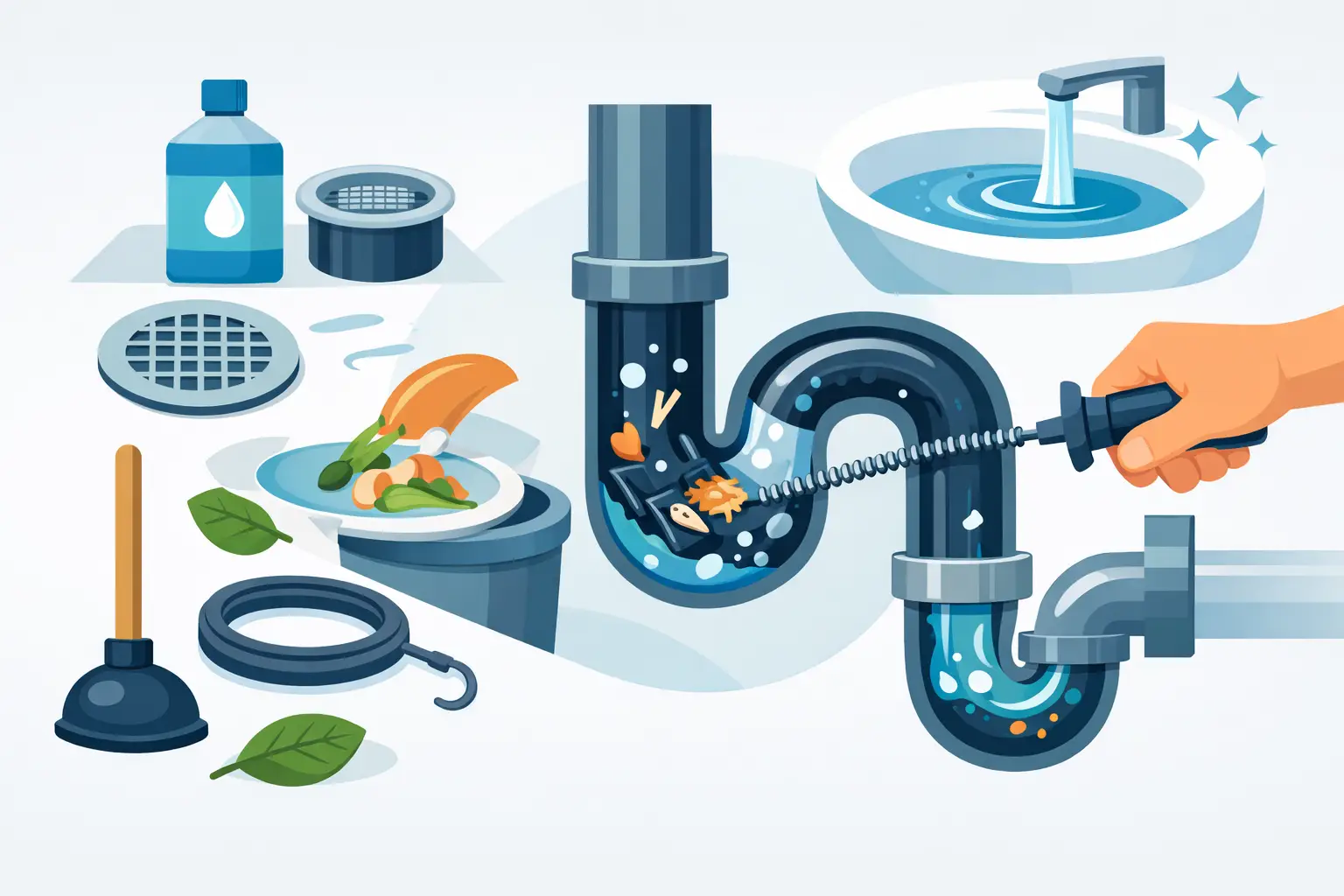
8 Best Ways to Stop Drain Blockages
A blocked drain rarely starts as an emergency. More often, it begins with a slow-draining sink, a shower tray that holds water a little longer than usual, or an outside gully that smells after rain. The best ways to stop drain blockages are usually simple, but they work best when you catch the problem early and stay consistent.
For homeowners, landlords and property managers, prevention matters because blocked drains do more than cause inconvenience. They can lead to bad odours, internal flooding, disrupted tenants, and avoidable repair costs. The good news is that most routine blockages come from a small number of everyday habits, which means they can often be prevented with practical changes.
The best ways to stop drain blockages at home
The biggest cause of drain problems inside the home is what goes down the plughole in the first place. In kitchens, fats, oils and grease are the main culprits. They may go down warm and liquid, but they cool inside the pipework and begin to cling to the pipe walls. Over time, food particles stick to that layer and the pipe diameter narrows until water can no longer pass freely.
The simplest fix is also the most effective – never pour cooking oil, fat or greasy leftovers into the sink. Let them cool, wipe pans with kitchen roll, and dispose of waste in the bin. If you run a rental property or commercial kitchen area, this is worth making part of your written handover or site instructions, because one bad habit repeated daily soon becomes a blocked line.
In bathrooms, hair and soap residue are the usual problem. Hair binds together in the trap and catches soap scum, toothpaste and other debris. The result is often a slow blockage rather than a sudden one, which is why it gets ignored for too long. Fitting a simple hair catcher over the plughole makes a real difference, especially in households with multiple occupants.
Toilets are another common issue, and here the rule is straightforward. Only flush toilet paper and human waste. Wet wipes, cotton pads, sanitary products, nappies and excessive paper do not break down properly in the drainage system. Even products labelled as flushable can cause trouble, particularly in older pipework or drains with existing defects.
Keep outside drains clear before weather makes things worse
External drains are often forgotten until heavy rain exposes the problem. Gullies, channel drains and surface water points collect leaves, moss, silt and general debris throughout the year. In autumn and winter, that build-up can turn a small restriction into standing water around doors, paths and driveways.
One of the best ways to stop drain blockages outside is to inspect these areas regularly, especially after storms or prolonged wet weather. If you can see leaves or debris around a gully grate, clear it before it gets washed further into the system. This is a quick job, but it prevents a lot of avoidable call-outs.
Properties with trees nearby may need more attention. Roots can exploit small cracks or loose joints in underground drains and then expand inside the pipe. That is not something routine cleaning will fix. If you have recurring blockages in the same line, especially outside, a CCTV drain survey is often the right next step because it shows whether the issue is simply debris or a structural defect that needs repair.
Be careful with DIY drain cleaning methods
Many people reach for chemical drain cleaners as soon as a sink starts backing up. Sometimes they appear to help, but they are not always the best answer. If the blockage is caused by grease, wipes or a physical obstruction further down the line, chemicals may do very little. Used repeatedly, some products can also be harsh on older pipework, seals and fittings.
A safer first step is usually hot water and washing-up liquid for grease in kitchen waste pipes, or removing and cleaning the trap under a basin if it is accessible. A plunger can also be effective for minor local blockages. The key point is to avoid forcing the issue blindly. If water is backing up in several fixtures, or if the toilet level rises when other appliances discharge, the problem may be further along the drainage run.
That is where professional diagnosis matters. A blockage in a single trap is very different from a blockage in the main drain, and treating them as the same problem often wastes time.
Build simple maintenance into your routine
Prevention works better when it becomes routine rather than a one-off reaction. In most homes, that means regularly flushing waste pipes with hot water, clearing plughole strainers, and checking outside drainage points every few weeks. In rented or commercial settings, it can mean planned inspections between tenancies or as part of wider property maintenance.
This does not need to be complicated. A few minutes spent checking how quickly sinks and showers empty can tell you a lot. If a drain starts slowing down, deal with it then rather than waiting for a full blockage. Early action is usually cheaper, cleaner and less disruptive.
For landlords and facilities teams, recurring drain issues should also be documented by location. If the same stack, gully or branch line keeps causing trouble, that pattern often points to an underlying defect, poor gradient, root ingress or partial collapse rather than tenant behaviour alone.
Know when a blockage points to a bigger drainage problem
Some blockages are one-off events. Others are symptoms of a system that needs repair. If you notice repeated blockages, foul smells outside, gurgling sounds from plugholes, slow drainage across multiple fixtures, or localised flooding around inspection chambers, it is sensible to investigate further.
This is particularly relevant in older properties across the North West, where ageing drains may have shifted, cracked or suffered from root ingress over time. In those cases, clearing the blockage restores flow, but only temporarily. The underlying fault remains and the problem returns.
A proper CCTV survey removes guesswork. It helps identify whether the issue is grease build-up, a displaced joint, a fracture, scale, roots or another restriction. From there, the right repair can be planned. In some situations, patch lining or another no-dig repair is enough. In others, a more extensive drainage repair may be required. The right option depends on the condition of the line, access, and how much disruption needs to be avoided.
Good habits matter more than drain gadgets
There is no shortage of products marketed as a quick answer to blocked drains, from strong cleaners to plug-in devices and improvised home remedies. Some have their place, but none of them outperform basic prevention. The best ways to stop drain blockages still come down to controlling what enters the system, spotting warning signs early, and acting before a minor restriction becomes a full obstruction.
In practical terms, that means keeping grease out of kitchen sinks, using strainers in showers and basins, avoiding the flushing of wipes and hygiene products, and checking external drainage points after bad weather. These steps are not glamorous, but they are effective.
When professional help is the sensible next step
If a drain is repeatedly blocking, if multiple outlets are affected, or if you suspect the issue is in the underground system rather than a single waste pipe, it is time to bring in a specialist contractor. Fast attendance matters, but so does proper diagnosis. Clearing a blockage is only part of the job if the root cause is still there.
For urgent problems and planned drainage work alike, the value of using a specialist is that you get more than a temporary fix. You get access to the right equipment, clear findings, and repair options that fit the site. Where excavation can be avoided, modern no-dig methods can often reduce mess and disruption around driveways, gardens and hard landscaping.
At Watermains & Drains UK, that practical approach is central to how drainage issues are handled – identify the cause, resolve the immediate problem, and recommend the least disruptive long-term solution.
The most effective drain prevention is rarely complicated. It is a mix of better habits, occasional checks, and knowing when a recurring problem needs expert attention rather than another short-term fix.





