

How to Unblock a Drain Without Damaging Pipes
A blocked sink or slow-draining gully can turn into a much bigger job when the first reaction is to pour in harsh chemicals or force a tool down the pipe. If you need to unblock drain without damaging pipes, the safest approach is usually the simplest one – start gently, work methodically, and know when to stop before a minor blockage becomes a repair.
For homeowners, landlords and property managers, that matters for one reason above all: pipework is rarely the expensive part until it breaks. Once a trap cracks, a joint is disturbed, or an old drain line is damaged, the job can move quickly from routine unblocking to leak investigation, excavation or internal reinstatement. A careful approach protects the system and often gets the drain moving again without unnecessary disruption.
Why drains get blocked in the first place
Most domestic blockages are not caused by one dramatic event. They build up over time. In kitchens, fats, oils, grease and food debris gradually narrow the pipe. In bathrooms, hair, soap residue and scale are the usual problem. Outside, leaves, silt, wipes and tree root ingress can all restrict flow.
The location of the blockage changes what is safe to try. A basin waste blocked with hair near the plughole is very different from a foul drain backing up externally. The first may respond to a simple clean-out. The second may need professional jetting or a CCTV survey to check for a collapsed section, displaced joint or root entry.
That is why guessing can be costly. The right method depends on pipe material, pipe age, where the blockage sits, and whether the issue is a soft build-up or a structural defect.
How to unblock a drain without damaging pipes safely
The best starting point is always the least aggressive option. Before doing anything, check whether the blockage affects one fixture or several. If only one sink is slow, the issue is likely local to that waste pipe. If multiple appliances are backing up, or an outside chamber is full, the blockage may be further down the line.
Hot water is often a sensible first step for kitchen wastes, especially where grease is suspected. It should be hot, not boiling, particularly if you have plastic pipework or older fittings. Boiling water can soften some plastics and may stress old joints. A few controlled pours with a pause in between is safer than flooding the pipe all at once.
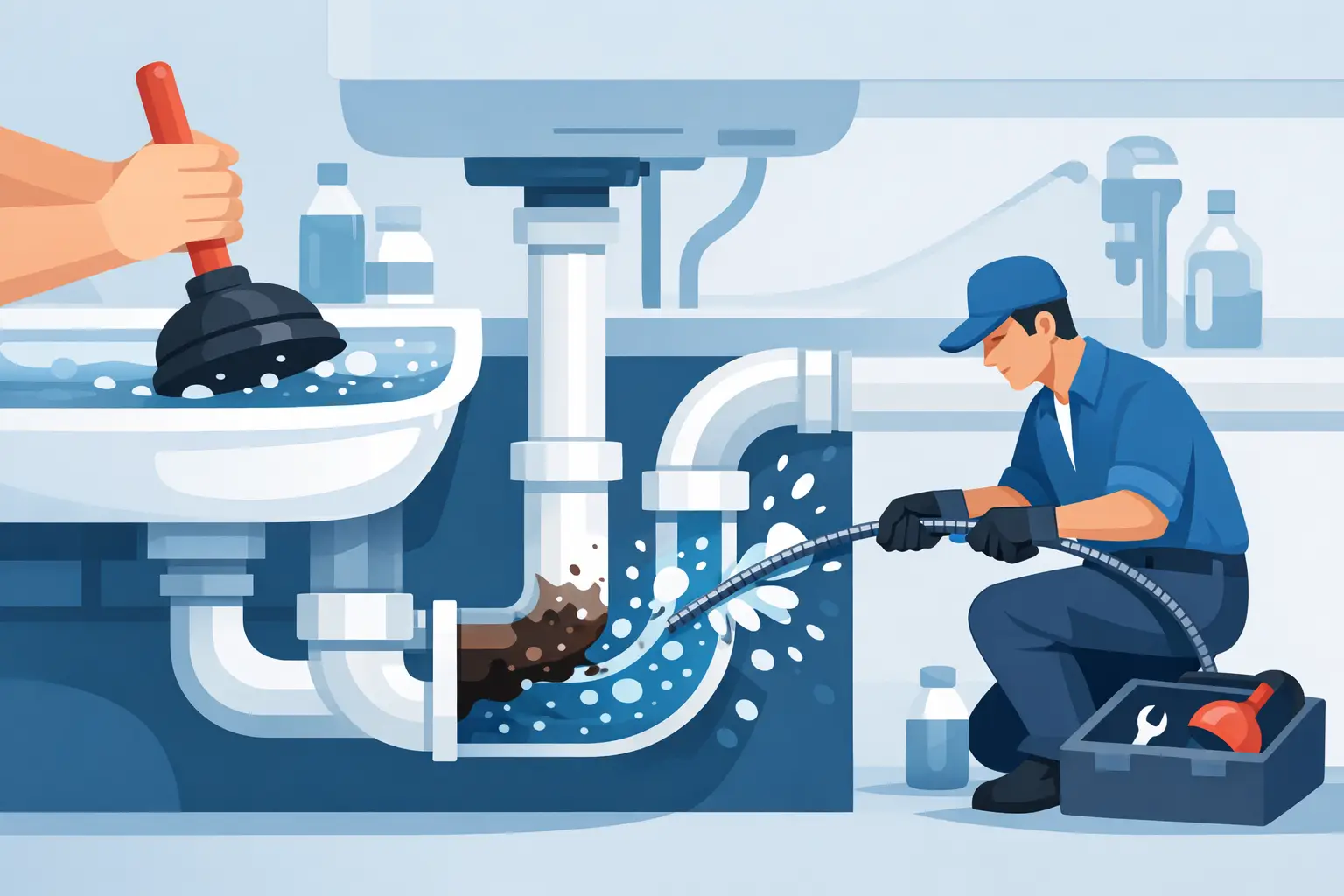
If that does not shift it, a plunger is usually the next low-risk option. Used properly, it creates pressure and suction to move a soft blockage without scraping the inside of the pipe. The seal matters more than force. Too much aggression can dislodge weak trap seals or disturb poorly fitted waste connections, so firm and steady is better than frantic.
For basin and shower blockages, removing and cleaning the trap is often more effective than trying to ram the blockage through. Place a bowl or towel underneath, unscrew the trap carefully, and clear out hair, soap residue or kitchen waste by hand. This approach is slower than pouring in chemicals, but it is far kinder to the pipework and lets you see exactly what is causing the restriction.
A basic hand auger or drain snake can help when the blockage is slightly further in, but this is where caution matters. Metal tools can scratch, puncture or snag fragile pipework if used carelessly, especially on older plastic wastes or badly aligned joints. Feed the tool in gently. If you meet resistance, do not force it. Resistance may mean a bend, a fitting, or a defect rather than a removable blockage.
Methods to avoid if you want to protect the pipework
If your priority is to unblock drain without damaging pipes, harsh chemical drain cleaners are usually the first thing to avoid. They promise a quick fix, but they are often the wrong answer for anything beyond a light build-up. They can sit in the pipe if the blockage is complete, generate heat, and make later manual work more hazardous. On older pipework, repeated use is especially unhelpful.
Improvised tools can also create problems. Coat hangers, rigid rods not designed for internal wastes, and pressure washers used without the right hose or control can crack traps, puncture flexible waste pipes, or push a blockage into a more difficult position. It is common to see a simple blockage become a hidden leak after a DIY attempt has damaged a joint behind a kitchen unit or under a floor.
There is also a point where repeated attempts stop being sensible. If water levels rise quickly, foul water backs up, or a toilet is involved, the job needs a different level of care. The longer wastewater sits, the greater the hygiene risk and the more likely it is that the blockage lies in the main run rather than the fixture.
When a blocked drain may be more than a blockage
Not every drainage problem is just debris in the line. Recurring blockages often point to an underlying fault. A drain may be partially collapsed, holding standing water that catches waste. Tree roots may have entered through a defective joint. Scale, displaced pipework or poor installation falls can all produce the same symptom – slow drainage that keeps returning despite repeated clearing.
That is where professional drainage equipment earns its place. High-pressure jetting, used correctly, clears heavy build-up far more effectively than household methods. More importantly, a CCTV drain survey shows whether the line is sound once the blockage is removed. Without that visibility, you may clear the symptom and miss the reason it happened.
For landlords and commercial property managers, this is often the difference between a one-off reactive cost and a recurring maintenance issue. If tenants report repeated backing up, bad odours, or external gullies overflowing, evidence-based diagnosis matters. It supports the right repair decision and helps avoid unnecessary repeat call-outs.
Signs you should stop DIY attempts and call a specialist
A careful DIY approach has its place, but it should have limits. If several drains are affected, if there is sewage backing up, or if an external inspection chamber is surcharging, the problem is unlikely to be at the plughole end. The same applies if the blockage returns quickly after clearing, or if you hear gurgling from multiple fixtures.
Older properties deserve extra caution. Ageing clay drains, legacy pipework and previous patch repairs can be less forgiving than modern installations. Forcing rods or relying on chemicals in that setting can create a repair that did not exist before.
A specialist contractor will usually combine the right clearing method with diagnosis. That may mean jetting, mechanical cleaning, or CCTV inspection, followed by a repair only if one is actually needed. The benefit for the customer is straightforward – faster resolution, less mess, and less chance of turning a blockage into an excavation.
Professional drain unblocking with minimal disruption
For many properties across the North West, the right outcome is not just getting water moving again. It is getting it sorted quickly, cleanly and without unnecessary damage to kitchens, bathrooms, driveways or landscaped areas. That is why modern drainage contractors put as much emphasis on method as they do on speed.
At Watermains & Drains UK, blocked drain work is approached as a specialist service rather than a guess-and-go call-out. That means using suitable equipment, identifying whether the issue is a simple obstruction or something more serious, and recommending the least disruptive fix. Where a defect is found, repair options such as patch lining may resolve the issue without full excavation.
For homeowners, that keeps the problem contained. For landlords and facilities teams, it also provides a clearer basis for maintenance planning, insurance discussions and tenant communication. Accreditation, insurance cover and reliable workmanship matter most when a drainage issue affects more than one person or one area of the property.
A practical approach that saves pipes and money
If you are dealing with a slow waste or minor local blockage, start with safe methods – hot water, a plunger, and trap cleaning before anything more aggressive. Treat chemicals as a last resort rather than a standard fix, and be wary of forcing tools into pipework you cannot see.
The general rule is simple: if the blockage is stubborn, widespread or keeps coming back, the cheapest option is often to stop early and get it assessed properly. Preserving the pipework is usually what saves the money.
A drain does not need brute force. It needs the right method, applied at the right point in the system. When you approach it that way, you are far more likely to clear the blockage and keep the pipe intact.





