Does Drain Lining Require Excavation?
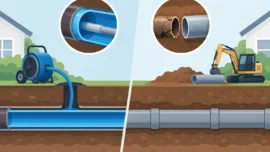
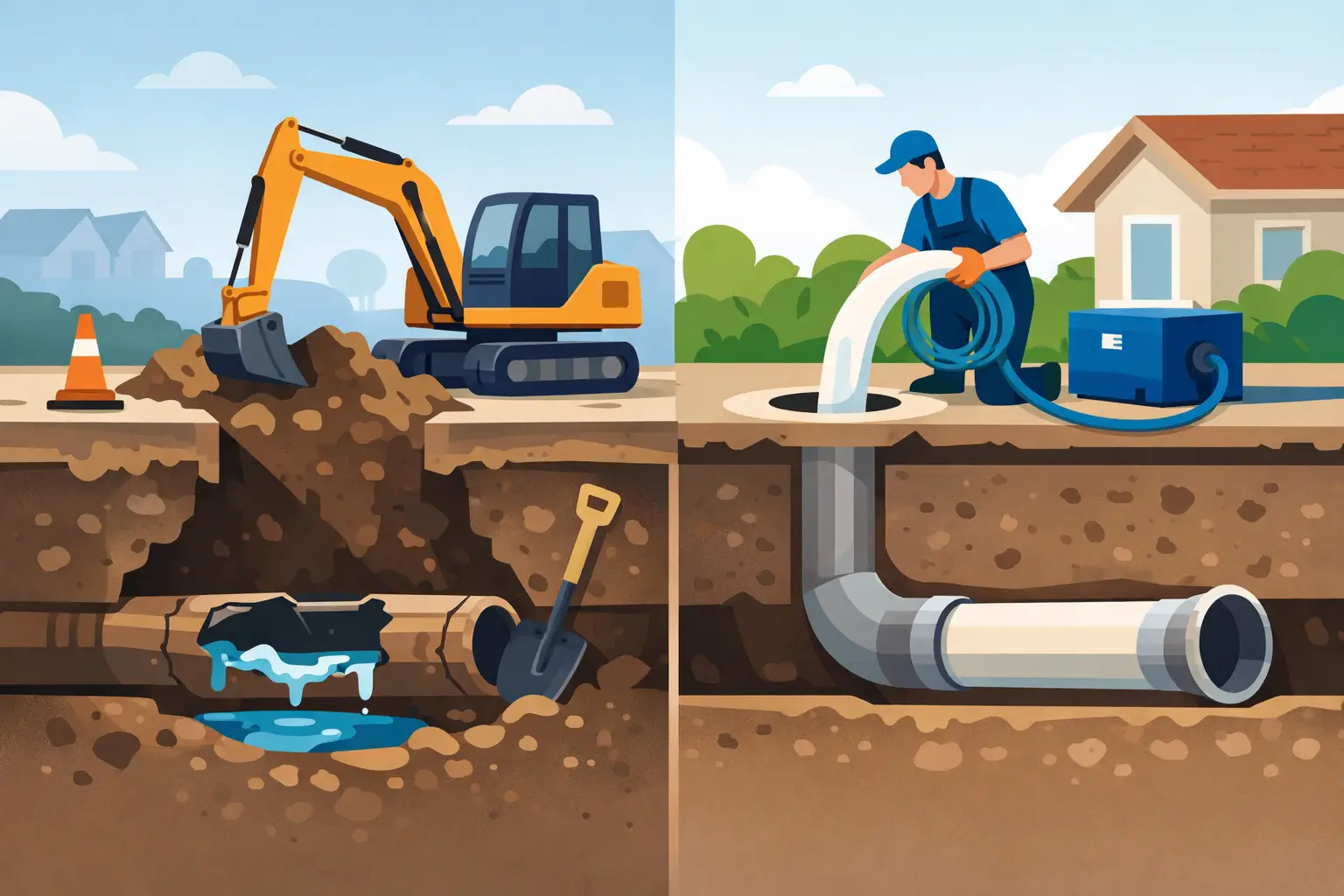
If you have a cracked or leaking drain under a drive, lawn or extension, the first question is usually the right one: does drain lining require excavation? In many cases, no. Drain lining is designed as a no-dig repair method, which means the existing pipe can often be repaired from within using existing access points such as manholes, rather than digging a trench across the property.
That said, there is no honest one-size-fits-all answer. Some drains are excellent candidates for lining and can be repaired with very little disruption. Others are too badly damaged, collapsed or displaced, and those sections may still need excavation. The key is proper diagnosis before any repair method is recommended.
Does drain lining require excavation in most cases?
In straightforward terms, drain lining usually does not require excavation. The purpose of the method is to avoid unnecessary digging by creating a new internal lining inside the host pipe. Once installed and cured, that liner forms a durable new pipe wall within the old one, sealing cracks, minor fractures, open joints and small areas of root ingress.
For homeowners and landlords, that often means avoiding the mess and cost that come with breaking out paving, lifting landscaped areas or disturbing finished surfaces. For commercial sites, it can also mean less disruption to tenants, staff access and day-to-day operations.
A contractor will normally access the drain through an inspection chamber, clean the pipe thoroughly, carry out a CCTV survey and then decide whether full lining or a localised patch repair is suitable. If the drain is structurally stable enough to hold a liner, excavation can often be avoided altogether.
When drain lining works well
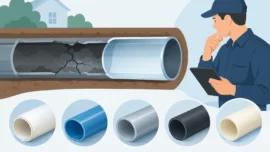
Drain lining is best suited to pipes that are damaged but still broadly intact. If the drain has cracks, slight deformation, leaking joints or isolated defects, lining can restore serviceability without opening the ground above.
This is why it is commonly used beneath driveways, patios, internal floors, roads and landscaped gardens where excavation would be more disruptive and more expensive to reinstate properly. It is also useful where access is restricted and traditional digging would be difficult.
There is also more than one lining option. A full-length liner can rehabilitate a longer run of pipe, while patch lining can target a specific defect over a shorter section. That makes the repair more proportionate to the problem, which is often the most cost-effective route.
When excavation may still be needed
The no-dig label is useful, but it should never be used to oversell what lining can do. Some drainage problems cannot be solved properly from inside the pipe.
If a drain has fully collapsed, has severe displacement at joints, has large voids around it, or has lost its shape to the point where a liner cannot be installed correctly, excavation may be necessary. The same applies if there is no workable access for cleaning, surveying and installation, or if the pipe material and condition make lining unsuitable.
There are also cases where lining could technically be installed, but excavation remains the better long-term repair. For example, if a short section has failed badly in one accessible area, digging out and replacing that section may be more sensible than lining a longer run. Good drainage contractors will explain that trade-off clearly rather than pushing one method for every job.
How contractors decide whether to dig or not
The decision starts with condition, not assumption. A proper CCTV survey shows whether the pipe is cracked, displaced, deformed, blocked by roots or partially collapsed. It also confirms the pipe diameter, length of defect and any bends or junctions that could affect installation.
Before lining, the drain usually needs high-pressure water jetting or mechanical cleaning to remove silt, scale, grease and roots. Once the pipe is clean, the survey footage gives a much more accurate picture of whether a liner will bond and cure properly.
At that point, the contractor can advise whether the repair is suitable for patch lining, full lining or excavation. For domestic customers, that means a clearer quote and less guesswork. For landlords and facilities teams, it means a repair recommendation that can be justified on condition and lifespan, not just speed.
What the drain lining process actually involves
Where lining is suitable, the process is relatively controlled. After cleaning and surveying, a resin-impregnated liner is inserted into the affected section of drain. This is positioned in place and expanded against the inner pipe wall, often using air or water pressure depending on the system being used.
The liner is then left to cure, forming a hard-wearing new internal surface. Once cured, the contractor will usually carry out a further CCTV inspection to confirm that the liner is correctly installed, the flow path is restored and any connections are reopened if required.
From the customer side, the main benefit is simple: the repair happens within the pipe, so the surface above often stays untouched. That is why trenchless methods are so popular for properties where reinstatement would otherwise be a major part of the cost.
The trade-off with no-dig drain lining
Avoiding excavation is a major advantage, but it helps to understand the trade-off. Because lining creates a new pipe within the old one, there is a small reduction in internal diameter. In most properly specified domestic drainage repairs, that reduction is not a practical issue, but it still needs to be considered.
Lining also relies on the existing pipe retaining enough integrity to act as a host. If the old drain is too badly damaged, lining will not correct the underlying structural failure. In those cases, excavation is not a setback. It is simply the correct repair method.
This is where experience matters. The cheapest initial option is not always the best value if it stores up future problems. A sound contractor will look at the defect, the location, access, reinstatement costs and expected lifespan before recommending the method.
Why homeowners often prefer lining
For many domestic properties, the appeal is obvious. If the drain runs under a block-paved drive, mature garden, conservatory edge or recently finished patio, nobody wants unnecessary excavation. A no-dig repair can reduce mess, shorten the programme and limit the reinstatement work afterwards.
It can also make the overall process feel more manageable. Instead of arranging excavation, spoil removal, replacement pipework and surface repairs, the issue may be dealt with through inspection chambers and specialist equipment. That is often faster and less stressful, especially where drainage issues are already causing disruption inside the property.
Why landlords and commercial clients ask the same question
Landlords, managing agents and facilities teams usually frame the question slightly differently. They still want to know whether drain lining requires excavation, but they are also thinking about access, tenant impact, business continuity and defensible repair choices.
On occupied sites, avoiding excavation can reduce health and safety complications, access restrictions and complaints from residents or users of the building. It can also simplify scheduling where the repair needs to be completed quickly and with minimal disturbance.
That said, commercial decision-makers also need confidence that the repair is appropriate and durable. CCTV evidence, a clear scope of works, and work carried out by specialist drainage contractors with suitable insurance and trenchless capability all matter here.
Choosing the right contractor for a no-dig repair
If you are considering drain lining, the important question is not just whether digging can be avoided. It is whether the contractor has the equipment and experience to assess the pipe properly first.
Look for a specialist contractor that can carry out CCTV surveying, drain cleaning, patch lining and excavated repairs where needed, rather than forcing every job into one method. That gives you a more balanced recommendation. It also means that if part of the line can be repaired without digging and one section cannot, the solution can be tailored accordingly.
For property owners in the North West, Watermains & Drains UK handles both trenchless and traditional drainage repairs, which is often the practical advantage customers need. The aim should always be the least disruptive suitable repair, not disruption for its own sake and not no-dig for the sake of it either.
So, does drain lining require excavation? Usually no, but the honest answer depends on the condition of the drain. A proper survey will tell you quickly whether lining is the clean, cost-effective option or whether a dug repair is the better long-term fix. If you are facing a drainage problem beneath finished surfaces, the best next step is simple: get the line inspected before anyone starts breaking ground.