

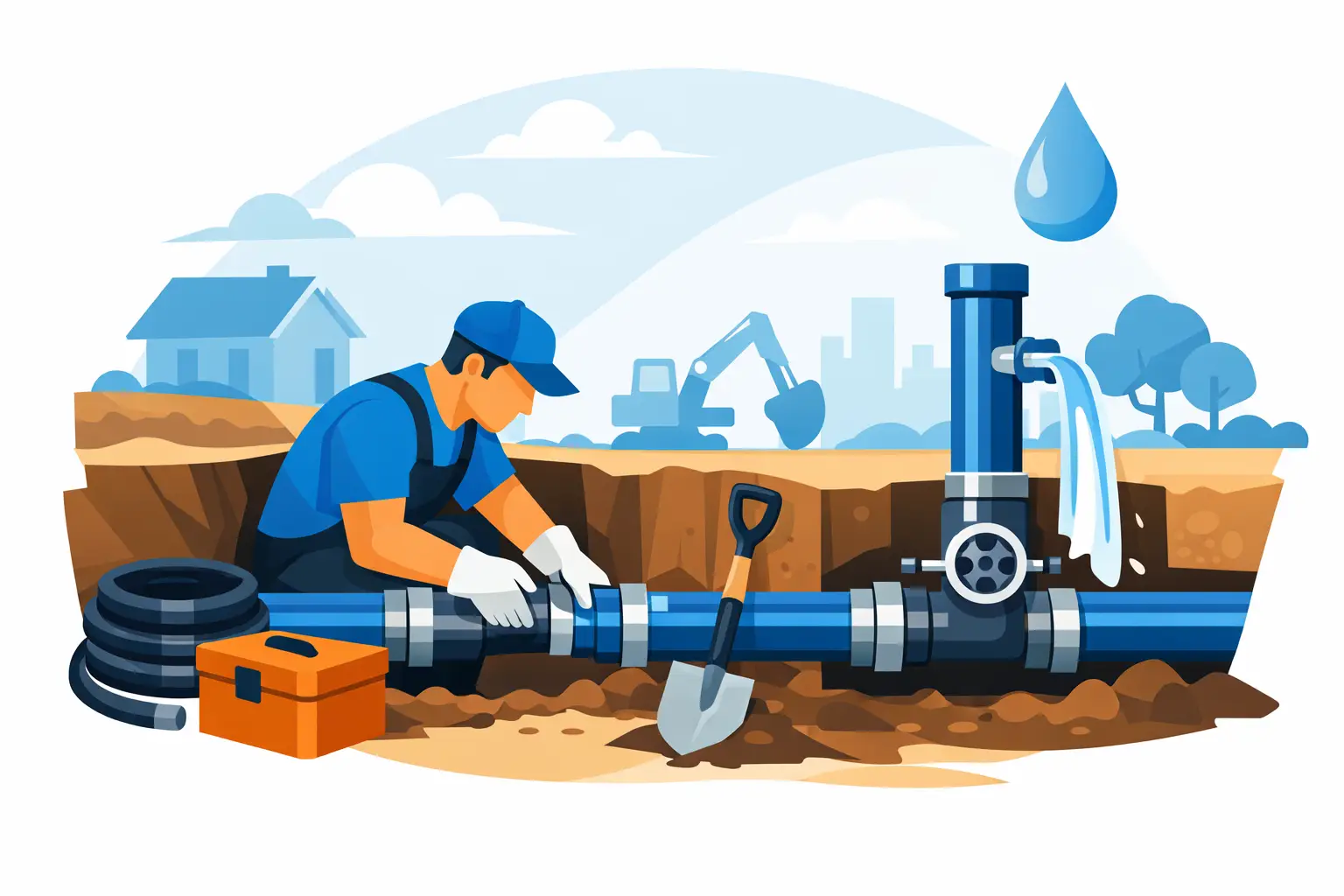
How to Install a New Water Supply Pipe
If your incoming water pipe is old, undersized, leaking or made from lead, the right fix is often to install new water supply pipe rather than keep paying for repairs. For homeowners, that usually means better flow, improved water quality and fewer surprise leaks. For landlords and commercial sites, it also means less risk, cleaner compliance and a more dependable service into the building.
This is one of those jobs where the method matters as much as the pipe itself. A poor installation can leave you with low pressure, repeat leaks or unnecessary disruption across driveways, paths and gardens. A properly planned job gives you a clean connection from the boundary to the property, with the least disruption possible and a clear standard of workmanship from start to finish.
When you need to install new water supply pipe
In most properties, the first signs are practical rather than dramatic. Water pressure drops when more than one tap is in use, the pipe leaks intermittently, or discoloured water appears after long periods of standing. Older homes across Manchester, Stockport, Warrington, Cheshire and surrounding areas often still have ageing supply arrangements, including lead pipework or sections that have been patched over the years.
Sometimes the reason is straightforward. A leak has been traced on the private supply pipe and repair is no longer cost effective. In other cases, a renovation, extension or change of use means the existing incoming main is no longer adequate. Commercial premises may also need a new supply route to meet operational demand or site layout changes.
Where lead is involved, replacement is usually the sensible long-term decision. Lead pipework is outdated, and many property owners now want it removed for health, resale and insurance reasons. If the pipe is buried, difficult to access or runs beneath finished surfaces, replacing the full length often makes more sense than repeatedly opening the ground for localised repairs.
What the installation process usually involves
To install a new water supply pipe properly, the work starts with a site assessment, not a digger. The contractor needs to confirm the incoming route, locate existing underground services, review access restrictions and decide whether open-cut excavation or a trenchless method is the better fit.
The next step is choosing the route from the property to the connection point. That sounds simple, but it affects cost, reinstatement and programme. A route straight across a lawn is different from one passing under a block-paved drive, retaining wall or recently landscaped front garden. The shortest route is not always the best route if it creates more disruption than necessary.
Once the route is agreed, the old pipe may be isolated or abandoned depending on its condition and the layout on site. The new supply pipe is then installed at the correct depth, typically in accordance with local water authority requirements and current standards. Internal connection work is completed where the new pipe enters the building, and the final connection to the mains side is arranged through the proper approval process where required.
Pressure testing, chlorination requirements where applicable, and careful reinstatement complete the job. For the customer, the key point is that this is not just about getting water back on. It is about leaving a compliant, durable supply in place with tidy finishing above ground.
Open trench or trenchless installation?
This is where experienced contractors add real value. Traditional excavation still has its place. If the ground is already open, the route is short, or there are multiple other repairs happening at the same time, digging a trench may be the most practical option.
But in many domestic and commercial settings, trenchless installation is the better answer. Moling allows a new pipe to be installed underground with only small launch and reception pits, rather than a continuous trench. Horizontal directional drilling can also be used on more complex routes and larger-scale work. The main benefit is obvious – far less disruption to finished surfaces.
For homeowners, that can mean keeping most of a driveway, patio or garden intact. For landlords and facilities teams, it means less mess, faster completion and fewer complaints from tenants, staff or visitors. It also reduces reinstatement work, which often becomes a major part of the total cost on traditional excavation-led jobs.
That said, trenchless methods are not automatic. Ground conditions, buried obstructions, route length and connection positions all need checking first. A good contractor will not force a no-dig method where it is unsuitable. The right answer is the one that gives a reliable result with the least disruption overall.
What affects the cost?
Customers often ask for a price before anyone has seen the site, but new supply pipe work is difficult to price accurately from a description alone. The distance from boundary to building is one factor, but not the only one. Surface type, access, depth, traffic management needs, internal connection complexity and whether the existing supply is live all affect the final figure.
Reinstatement can make a bigger difference than many expect. Digging through tarmac, concrete or decorative paving is not the same as crossing soft ground. The same applies where routes pass close to walls, drainage runs or other utilities. On commercial sites, programme restrictions and permit requirements may also shape the cost.
This is why a proper site survey is worth having. It allows the contractor to set out the method clearly, explain the likely timescale and quote against the actual conditions rather than broad assumptions. Clear quoting matters because it reduces surprises once the work starts.
Approvals, compliance and why they matter
Water supply work is not a general building job. It needs to be carried out to the required standard, with the right materials, methods and approvals. If the connection or installation is not compliant, problems can surface later through failed inspections, poor performance or disputes over responsibility.
For homeowners, that can feel like unnecessary paperwork until something goes wrong. For landlords, managing agents and commercial property teams, it is a risk issue from day one. Using contractors with recognised water industry approvals helps protect the job and gives confidence that the work will stand up to scrutiny.
That is also where guarantees and insurance cover matter. They are not just sales points. They are part of reducing risk on a buried asset that you do not want to revisit once the ground has been reinstated. Watermains & Drains UK positions this work as specialist infrastructure contracting for exactly that reason – the standard of installation matters long after the site has been tidied and reopened.
Choosing the right contractor for a new supply pipe
Price matters, but it should not be the only filter. If two quotations look very different, the reason is often in the method, reinstatement allowance or level of site management included. One contractor may be pricing for a full professional installation with proper testing and making good, while another is allowing for a bare minimum approach.
Look for a contractor that can explain the route, the installation method and what happens at the point of connection. Ask how disruption will be kept down, what reinstatement is included and whether trenchless installation is an option on your site. If the property has lead pipework, ask whether the whole run can be replaced rather than leaving old sections in place.
For commercial customers, programme reliability is just as important. You need a contractor who can work safely, provide documentation when required and complete the job without unnecessary impact on tenants, staff or operations. Domestic customers usually want the same thing in simpler terms – turn up when promised, do the job properly, leave the site tidy.
Install new water supply pipe with the least disruption
The best installations are usually the least noticeable once finished. Water pressure improves, leaks stop, and the property is put back into order without days of avoidable upheaval. That is why planning, route choice and installation method deserve more attention than the pipe specification alone.
If you need to install new water supply pipe at a house, rental property or commercial site, the goal is not simply to replace what is there. It is to put in a dependable new service with the least disruption, a clear standard of compliance and a finish that does not create another problem above ground. A good contractor will make that feel straightforward, which is exactly how this type of work should be.





