

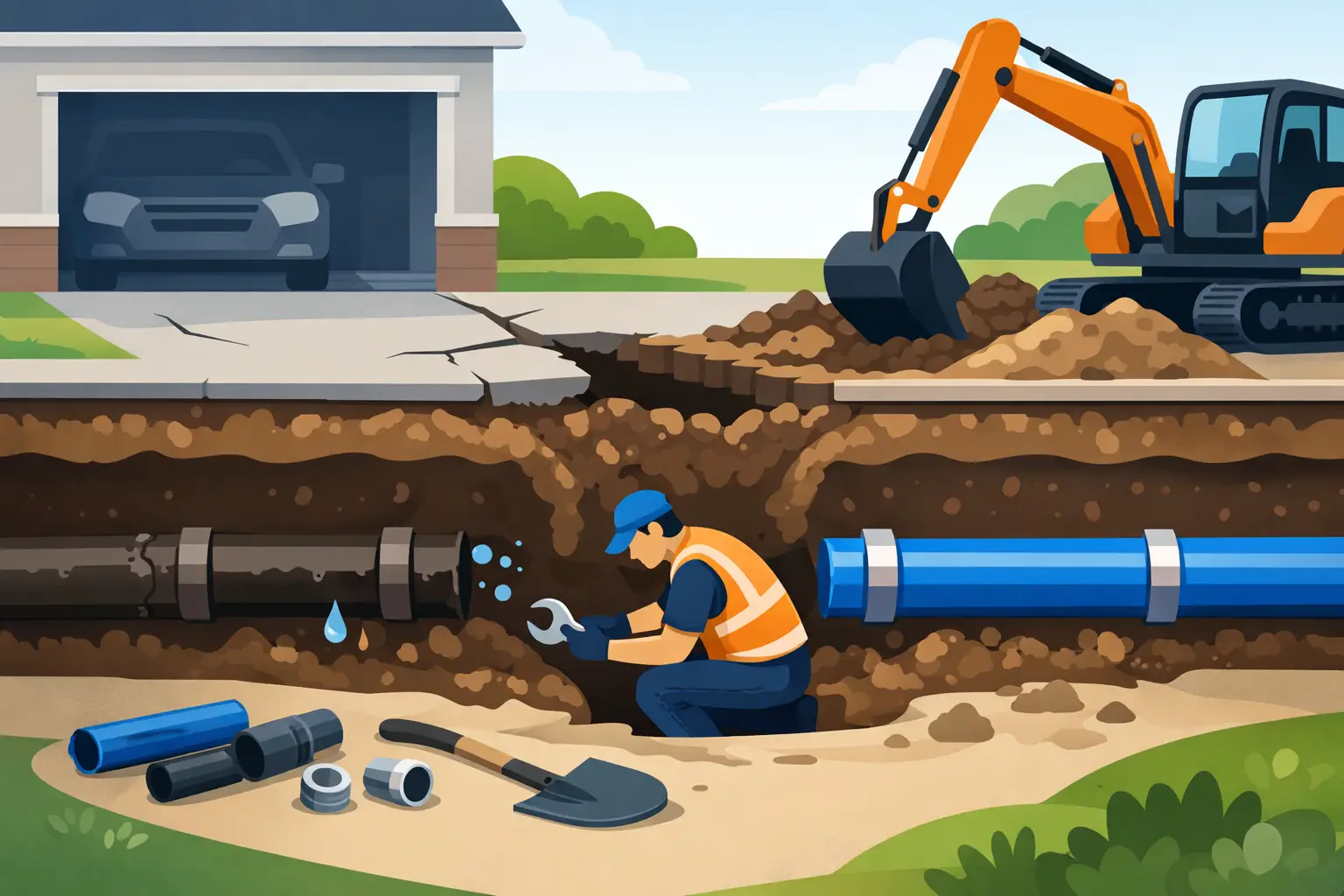
Replacing Water Pipe Under Driveway
If you are looking at replacing water pipe under driveway, the main concern is usually not the pipe itself – it is the thought of digging up a finished drive, blocking access and paying for reinstatement on top of the repair. In many cases, that level of disruption is not necessary. The right method depends on the pipe route, the surface above it, the depth, and whether the existing supply can be abandoned and replaced with a new line.
When replacing water pipe under driveway becomes necessary
A water supply pipe under a driveway is often out of sight for years, then suddenly becomes urgent. You might notice a drop in pressure, a higher water bill, damp ground near the entrance, or recurring leaks that never seem fully resolved. In older properties, especially across parts of Manchester, Stockport, Warrington and Cheshire, the issue can also be the age and material of the pipe rather than a single break.
Lead supply pipes are a common example. Even where they are not actively leaking, many homeowners and landlords choose replacement to improve water quality and avoid future failure. Older plastic or metal pipework can also suffer from crushed sections, poor past repairs, joint failure or ground movement beneath the drive.
For landlords and commercial sites, there is another factor – disruption. A leaking or restricted supply affects tenants, staff and visitors quickly. That makes speed, access planning and tidy reinstatement just as important as the pipe replacement itself.
The first question: does the driveway need to be dug up?
Not always. This is where specialist contractors differ from general excavators. Traditional open-cut excavation still has a place, but it is no longer the default option for every job.
Where conditions allow, trenchless installation methods can often avoid full excavation across the driveway. Instead of cutting a continuous trench from the boundary to the property, the contractor creates small launch and reception pits and installs a new water pipe beneath the surface. For many domestic jobs, this is done using moling. On more complex routes or larger sites, horizontal directional drilling may be the better fit.
That matters because the biggest cost is not always the pipework. It is often the making good afterwards – block paving, tarmac, concrete or decorative finishes can all add time and expense if they need to be broken out and replaced.
When trenchless replacement is usually suitable
Trenchless methods are often a good option where the route is fairly direct, the ground is suitable, and there are no major obstructions that force an open excavation. They work particularly well when a new supply pipe can be installed on a fresh line and the old one left out of use.
This is common on domestic properties where the goal is a new, reliable connection from the boundary stop tap into the house with as little disruption as possible.
When excavation is still needed
There are cases where digging cannot be avoided. If the pipe route passes through congested ground, if there are unknown services beneath the driveway, or if the depth and entry points are awkward, an open trench may still be the safer and more practical method. The same applies where precise repairs are needed at a known damaged section rather than full replacement.
A good contractor will not push a no-dig method where it is not suitable. The right answer is the one that gives a dependable result with the least overall disruption.
How the job is usually approached
Replacing a supply pipe under a driveway starts with identifying the existing arrangement. That includes where the current pipe runs, where it enters the property, the likely material, and whether there are signs of leakage or restriction. On some jobs, the route is straightforward. On others, older properties may have pipework installed in unpredictable positions.
The next step is planning the new supply. In many cases, replacing the whole private supply pipe is more cost effective than carrying out repeated spot repairs. A full new line gives you a clean start, improves reliability and can often improve flow and pressure at the same time.
If the driveway is to be protected, the contractor will look at a trenchless route first. Small excavations are made at each end, the bore is completed beneath the drive, and the new pipe is drawn through. Internal connection work is then completed, the old pipe is isolated, and the excavated areas are reinstated.
Where excavation is required, the work should still be controlled and tidy. That means a clearly marked trench line, safe spoil management, proper bedding and backfill, pressure testing, and reinstatement that matches the surrounding surface as closely as possible.
Replacing water pipe under driveway: costs and what affects them
There is no fixed price for replacing water pipe under driveway because the main cost drivers vary from site to site. Length is one factor, but surface type, access, ground conditions and reinstatement usually have just as much impact.
A straightforward domestic replacement beneath a standard driveway may be relatively contained if a trenchless method is suitable. If the route is longer, the pipe enters the property in a difficult location, or the drive surface is premium paving that needs careful lifting and relaying, the cost will rise.
You may also need to factor in connection changes, internal plumbing alterations near the point of entry, and any coordination required with the water authority if boundary-side works are involved.
For landlords and commercial clients, cost should also be weighed against downtime and disruption. A cheaper excavation-led quote is not always better value if it leaves access restricted for longer, creates a larger reinstatement liability, or causes avoidable inconvenience for occupiers.
How long does it take?
Many domestic replacements can be completed quickly once the route and method are confirmed. A simple trenchless installation may be completed within a day, while more involved work can take longer if there are access constraints, difficult ground or additional connection works inside the property.
Weather, surface reinstatement and utility checks can also affect programme. The key point is that specialist planning usually shortens the overall job. Less excavation generally means less spoil, less reinstatement and a faster return to normal use of the driveway.
That is particularly important for homes with limited parking and for commercial premises where access needs to be kept open as far as possible.
Why specialist contractors matter on this type of work
This is not just a plumbing issue and not just a digging job. Replacing a buried water supply under a finished driveway sits between underground utility work, surface reinstatement and property access management. That is why method choice matters.
A specialist contractor should be able to assess whether moling, directional drilling or excavation is most suitable, explain the trade-offs clearly, and complete the work to a standard that protects both the new pipe and the surface above it. Accreditations such as WIAPS and Watersafe also matter because they give reassurance that the installation is being carried out to recognised standards.
For property owners, insurance cover and workmanship guarantees are also worth checking. If a contractor is working on buried services and finished surfaces, you want confidence not only in the installation itself but in how any incidental issues would be handled.
What to ask before you go ahead
Before booking the work, ask how the new route will be installed, whether the driveway can be crossed without full excavation, what reinstatement is included, and whether the quote covers testing and final connection. If the answer is vague, that is usually a warning sign.
You should also ask who is responsible for approvals if any are required, how access will be managed during the work, and whether the contractor regularly handles this type of replacement rather than treating it as occasional groundwork.
A clear quote and method statement are especially useful for landlords, managing agents and commercial sites, where scheduling and tenant communication are part of the job.
Choosing the least disruptive solution
The best result is not simply a new pipe in the ground. It is a reliable water supply installed with minimal mess, minimal delay and minimal impact on the property. That is why trenchless methods are increasingly preferred where conditions allow.
At Watermains & Drains UK, this is exactly the kind of job where specialist no-dig installation can make a real difference – particularly on finished driveways, paved frontages and properties where access needs to be preserved.
If your supply pipe runs beneath a driveway, the sensible next step is not to assume the worst. Get the route assessed properly, understand the installation options, and choose the method that solves the problem without turning a necessary repair into a larger building job.





