Lead Pipe Upgrade Before House Sale
If a buyer’s survey flags a lead supply pipe a week before exchange, the issue suddenly stops being theoretical. A lead pipe upgrade before house sale can be the difference between a straightforward transaction and a round of price renegotiation, delayed paperwork, or a buyer walking away because they do not want another job to manage after moving in.
For sellers, landlords and property managers, the question is rarely just whether lead pipework should be replaced. It is whether replacing it now will protect the sale, reduce objections and make the property easier to market. In many cases, the answer is yes – but the timing, method and scope matter.
Why a lead pipe can affect a sale
Lead supply pipes still turn up regularly in older UK properties, particularly where the original incoming water pipe has never been upgraded. Buyers are more aware of the health concerns than they were a decade ago, and surveyors are more likely to note suspected lead pipework in reports. Even when the pipe is not actively leaking, it can create uncertainty.
That uncertainty causes problems during conveyancing and negotiation. A buyer may ask whether the incoming supply has been replaced, whether any part of the pipe remains in lead, and whether the work was carried out by an approved contractor. Mortgage lenders do not always make it a formal barrier, but buyers and their solicitors often treat it as a risk that needs a clear answer.
For landlords selling tenanted or recently vacated stock, there is also a practical point. A buyer who sees old pipe materials may assume other hidden services have also been deferred. One issue can shape their view of the whole property.
Should you arrange a lead pipe upgrade before house sale?
A lead pipe upgrade before house sale usually makes the most sense where the property is older, the pipework is clearly identified, or the buyer has already raised concerns. It can also be worthwhile before listing the property if you want to remove a predictable objection upfront.
There are, however, trade-offs. If the property is being sold as a full refurbishment project, some buyers may expect to replace services themselves and may not pay a premium for the upgrade. Equally, if the lead section is short, internal, or part of a wider planned renovation, the best route may depend on the rest of the plumbing layout.
What sellers generally want is certainty. A completed replacement with clear records is easier to explain than a vague assurance that the pipework is probably fine. It gives estate agents, solicitors and buyers something concrete to work with.
What buyers and surveyors usually look for
Surveyors are not excavating drives or tracing every metre of pipe, but they do flag visible indicators. If the incoming pipe appears grey and soft, if it leaves a dull metallic mark when scraped, or if the property age suggests lead is likely, it may be mentioned as requiring further investigation.
Once that note appears on a survey, the buyer often asks follow-up questions. Has the mains supply pipe from the boundary to the house been replaced? Was the work completed to current standards? Is there paperwork? Was disruption to paving, gardens or driveways properly reinstated?
These are sensible questions. Buyers are not only thinking about water quality. They are thinking about cost, mess and the hassle of arranging groundwork after completion.
The value of replacing the supply pipe before marketing
Replacing a lead supply pipe before you go to market can make the sale process cleaner. It reduces the chance of a last-minute issue, helps avoid reactive quoting under pressure, and gives buyers confidence that the property has been properly maintained.
That does not always mean a dramatic jump in sale price. More often, it protects value by limiting reductions. A buyer who was planning to chip away at the agreed figure because of possible pipe replacement costs has less room to manoeuvre when the work is already complete.
It also helps with speed. Delays often happen not because the work itself is complicated, but because no one knows who is responsible, how the pipe is routed, or what reinstatement will be needed. Sorting that out before the property is under offer puts you in control of the timeline.
Minimising disruption matters as much as the upgrade itself
Many sellers hesitate because they picture trenches across the front garden, broken paving and a drawn-out building site while viewings are still taking place. That concern is understandable, but it is also why the installation method matters.
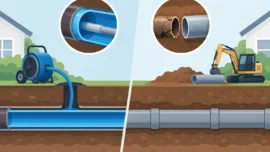
Modern trenchless methods can often reduce excavation significantly. Moling, for example, allows a new water supply pipe to be installed underground with far less surface disruption than open-cut trenching. Where conditions suit the method, that means less mess, quicker completion and less reinstatement to worry about.
For occupied homes, rental properties and commercial premises, minimal disruption is not a nice extra. It is central to the job. Sellers want the property to remain presentable. Landlords want tenants disturbed as little as possible. Facilities teams want works completed safely and efficiently without unnecessary downtime.
This is where specialist contractors stand apart from general trades. They can assess the route, ground conditions, entry point and reinstatement requirements properly, then recommend the most practical method rather than defaulting to excavation.
Why paperwork and approvals matter
A buyer may be reassured by the physical improvement, but solicitors and surveyors will also want evidence that the work was carried out correctly. That is why contractor credentials matter.
Using an accredited specialist with appropriate insurance and recognised water industry approvals gives the buyer a stronger level of confidence. It shows the work has not simply been patched or improvised. A workmanship guarantee also helps because it reduces perceived risk after completion.
For commercial properties and managed blocks, this point is even stronger. Property professionals often need method statements, compliance records and a contractor who understands reinstatement-sensitive sites. Speed is important, but so is doing the job in a way that stands up to scrutiny.
When it may be better to disclose rather than replace
There are cases where immediate replacement is not the right call. If the property is being sold very quickly, if access constraints make the works more involved, or if the pipe issue is only one part of a broader redevelopment, a seller may choose to disclose the situation and price accordingly.
That approach can still work, but it needs honesty and realism. Trying to play down known lead pipework often backfires once the survey is done. A clearer route is to obtain a professional assessment and quotation, then decide whether to complete the work or use that information to support transparent negotiation.
In other words, the real mistake is not always leaving the pipe in place. It is leaving the question unanswered.
Lead pipe upgrade before house sale – practical timing
If you are considering a lead pipe upgrade before house sale, the best time is usually before the property is listed or as soon as the issue is identified. That gives enough space for surveying, quoting, installation and any reinstatement without placing the whole transaction under pressure.
If the sale is already progressing, speed becomes more important. A contractor who can carry out a site visit promptly, explain the likely route clearly and complete the work with minimal disruption can help keep the chain moving.
Across older housing stock in Greater Manchester, Stockport, Warrington, Cheshire and surrounding areas, this kind of upgrade is rarely unusual. The key is treating it as a specialist infrastructure job rather than an afterthought. Companies such as Watermains & Drains UK are brought in for exactly that reason – to replace outdated supply pipes properly, keep excavation to a minimum where possible, and leave sellers with a tidy, documented result they can put in front of buyers with confidence.
What sellers should do next
If you suspect there is still lead on the incoming supply, do not wait for the buyer’s survey to tell you. Get the pipework checked, understand what actually needs replacing and ask how the works would be carried out. A straightforward site assessment can tell you far more than guesswork ever will.
The best outcome is not simply a new pipe underground. It is a sale that keeps moving because one common point of concern has already been dealt with properly. When the job is planned well, completed cleanly and backed by the right approvals, it becomes one less thing for a buyer to question – and one more reason for them to proceed.