Lead Service Renewal Before Renovation Example
Renovation jobs tend to expose problems that have been sitting quietly for years. A common one is the incoming water supply. If you are looking for a lead service renewal before renovation example, the key point is simple: replacing the old lead pipe before kitchens, driveways, floors or landscaping are finished is usually quicker, cleaner and cheaper than dealing with it afterwards.
For many older properties across Manchester, Stockport, Warrington, Cheshire and surrounding areas, the supply pipe from the boundary to the house may still be lead. You might only discover it when planning an extension, redoing the front garden, replacing internal floors or upgrading a bathroom and kitchen. At that stage, timing matters. If the lead pipe is left in place until after the building work starts, you risk opening up newly completed areas, delaying other trades and paying twice for reinstatement.
A lead service renewal before renovation example
Take a typical semi-detached house built before the 1970s. The owner is planning a rear extension, a new kitchen and utility room, and a full front driveway replacement. During pre-start checks, the plumber notices poor flow at the kitchen tap and identifies an older lead incoming main. The water pressure is serviceable but not great, and the renovation plans include new appliances, more outlets and higher daily demand.
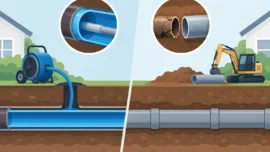
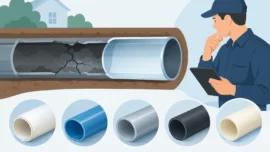
In this example, the best course is to renew the lead service pipe before the main renovation programme begins. The route is assessed from the boundary stop tap to the property entry point. If there is a lawn or soft ground, a moling installation may allow the new pipe to be pulled through underground with very little excavation. If access is tighter or other buried services create constraints, a short open-cut section may still be needed. The point is not that one method is always right, but that planning it early gives options.
The contractor agrees the pipe specification, entry point and reinstatement plan before the driveway is laid and before internal finishes are completed. The old lead supply is isolated, the new pipe is installed, pressure tested and connected, and any small excavations are reinstated while the site is still in early works. The builder then proceeds with the rest of the project knowing the water supply is compliant, reliable and suitable for the upgraded property.
That is the practical value of doing it first. You deal with the buried infrastructure once, not after the expensive finishes are already in place.
Why replace a lead pipe before renovation?
The first reason is access. Before renovation, the site is already in a state where some disruption is expected. Groundworkers, builders and utility contractors can coordinate routes, levels and entry points without having to protect finished surfaces. Once the new kitchen is fitted or the block paving is down, even a small pipe renewal becomes more awkward.
The second reason is performance. Older lead pipes are often narrower than modern supply pipes and may have flow restrictions built up over time. If your renovation adds extra bathrooms, outside taps, utility appliances or boosted demand, keeping the old supply can undermine the rest of the investment. There is little value in spending heavily on the property if the incoming main remains the weak point.
The third reason is health and compliance. Lead pipework has been phased out for good reason. While not every old property owner notices a problem day to day, renovation is the right moment to remove that uncertainty. For landlords and property managers, it is also a sensible step in reducing future tenant concerns and maintenance issues.
What should be checked before renewal starts?
A proper assessment should cover more than just whether the pipe is lead. The route matters, the depth matters, and the condition of surrounding surfaces matters. A contractor will normally look at the likely entry point into the property, where the external stop tap sits, whether there are trees, walls or paved areas in the route, and whether trenchless installation is realistic.
Internal planning matters too. If floors are being replaced, there may be an easier route for bringing the new pipe into the building. If the front garden is being remodelled, it makes sense to align the water service works with that programme. If the property is occupied throughout the build, the temporary water arrangements may also need thought.
This is where specialist contractors add value. A general builder may identify the issue, but a contractor who regularly handles lead replacement and new water supply installations is more likely to provide the cleanest route, the least disruptive method and a clear connection plan.
Lead service renewal before renovation example – timing and sequence
The sequencing is often what saves money. In a straightforward domestic project, the lead service renewal is usually best scheduled after the site set-up but before major hard landscaping, final floor finishes and kitchen fit-out. That allows enough access for excavation or moling while avoiding clashes with later trades.
A sensible sequence might run like this. First, confirm the need for renewal and agree the pipe route. Next, carry out the external installation and connection works. Then complete any internal entry works and testing. After that, reinstate disturbed ground to a level suitable for the next stage of the build. Only then should final surfacing or decorative finishes go in.
There are exceptions. If the front driveway has already been removed, that may create an ideal window for replacement. If the building is occupied and internal access is limited, some sequencing may need to be adjusted. The right answer depends on the property layout and the renovation scope, but early coordination nearly always reduces cost and delay.
Open trench or no-dig?
This is one of the first questions property owners ask. Open trench installation is still the right method in some situations, especially where the route is short, the ground is already being excavated, or there are service conflicts that need to be exposed and managed directly.
No-dig methods, including moling, are often the better fit where you want to protect gardens, pathways and driveways from unnecessary disturbance. They can reduce spoil, speed up installation and keep the site tidier. That said, no-dig is not magic. Ground conditions, existing utilities, access width and connection points all affect whether it is suitable.
A good contractor will not push one method for every job. They will inspect the site, explain the trade-offs and recommend the option that gives reliable installation with the least disruption.
Costs, delays and what catches people out
The biggest avoidable cost is reinstating completed work. If a new resin drive, patio or hallway floor has to be opened because the lead service was ignored, the final bill is rarely limited to the pipe replacement itself. You may be paying for removals, making good, scheduling changes and repeat visits from other trades.
Another issue is water pressure expectations. Some owners assume that replacing the lead pipe will solve every pressure complaint. Often it improves flow significantly, but results still depend on the wider network, internal plumbing condition and whether there are any other restrictions. Good advice upfront matters.
The boundary arrangements can also catch people out. Responsibility can vary depending on where the pipe runs and where the renewal starts and stops. That is why the scope should be agreed clearly before work begins, including who is handling excavation, connection, testing and reinstatement.
When landlords and commercial clients should act early
For landlords, the practical case is strong. A void period or planned refurbishment is usually the cleanest time to replace an ageing lead service. It avoids future tenant disruption and reduces the chance of emergency works after reoccupation.
For commercial sites, the same principle applies but the stakes are often higher. Delays can affect trading, occupied units or contractor coordination across a larger programme. Early renewal allows the water supply to be brought up to standard before final surfacing, fit-out or landscaping is complete. It also gives facilities teams a clearer record of what has been installed and where.
Choosing the right contractor
This type of work sits between civil engineering and property services. You need a contractor who understands water supply installations properly, not just someone willing to dig a trench. Accreditations, insurance cover, method statements and reinstatement standards all matter, especially where the work affects access routes, tenanted property or finished external areas.
You also want clear communication. A reliable contractor should be able to explain the route, likely duration, excavation points and what the site will look like at the end of the day. For homeowners, that means reassurance. For property managers, it means fewer surprises and better scheduling.
At Watermains & Drains UK, this is exactly where specialist planning and trenchless capability make a difference. Lead pipe renewal is not just about swapping one pipe for another. It is about doing it at the right stage, with the right method, so the rest of the renovation can move forward cleanly.
If your renovation is already at drawing or quotation stage and the incoming water supply may be lead, it is worth addressing it before the first finished surface goes down. The simplest jobs are usually the ones dealt with early, while the ground is open and the options are still on your side.