

Drainage Repair Trends UK Property Owners Should Know
A blocked drain used to mean one likely outcome – digging, mess and a garden or driveway left needing as much attention as the pipework. That is changing. The latest drainage repair trends UK property owners are seeing are all about finding faults faster, repairing them with less excavation and keeping homes, tenanted properties and commercial sites operational while the work is carried out.
For homeowners, that means less upheaval. For landlords and facilities teams, it means fewer complaints, shorter downtime and a cleaner route to compliance. The common thread is straightforward enough: better diagnostics, more precise repairs and methods that reduce disruption without cutting corners.
Drainage repair trends UK clients are asking for
The biggest shift is away from assumption-led repairs. In the past, drainage faults were often chased by process of elimination. A contractor might clear the line, wait to see if the problem returned, then dig if it did. Today, clients increasingly expect evidence first.
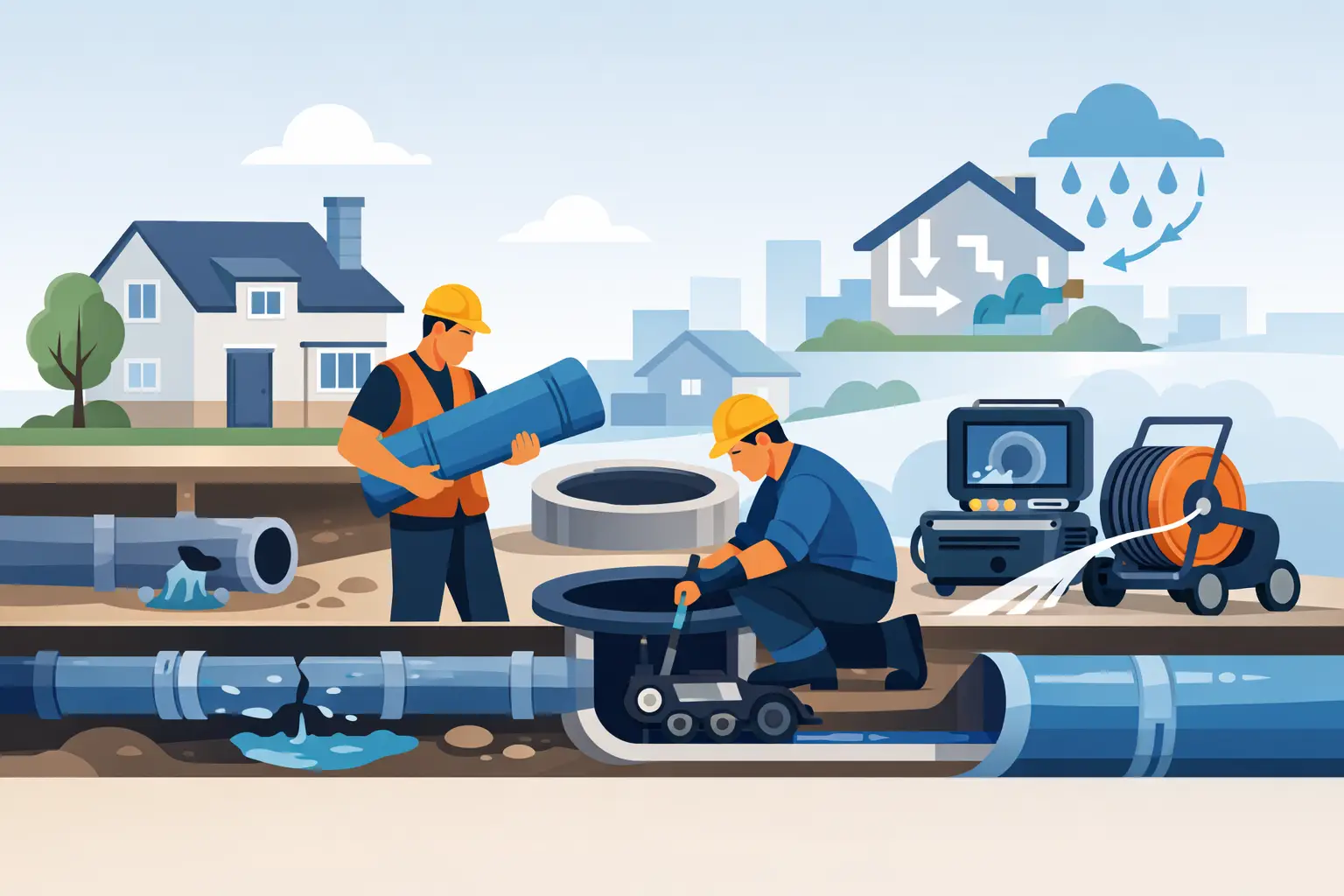
That is why CCTV drain surveys now sit at the centre of many repair decisions. A proper survey shows whether the issue is root ingress, a displaced joint, cracking, scale build-up, collapse or a localised defect. That matters because the right repair for one problem can be the wrong one for another. A recurring blockage caused by wipes and fat needs a different response from a fractured pipe under a driveway.
This move towards diagnosis-led work is especially useful for landlords and commercial sites where repeat call-outs quickly become more expensive than a clear first assessment. It also gives property owners a firmer basis for insurance discussions, maintenance planning and quote comparison.
No-dig methods are becoming the preferred option
One of the clearest drainage repair trends in the UK is the rise of trenchless repair. In practical terms, this means contractors can often repair sections of damaged drain without opening up the full run.
Patch lining is a good example. Where a defect is isolated to a specific section, a resin-impregnated liner can be positioned and cured in place to create a new internal pipe wall. It is quick, cost effective and particularly useful where the drain runs beneath paving, landscaping, extensions or other finished surfaces. If the pipe has failed in several places, full lining may be the better route, but it depends on the pipe condition, diameter and layout.
The appeal is obvious. Less excavation usually means less reinstatement, faster completion and lower disruption to the people using the property. That does not mean no-dig is always the answer. If there is a major collapse, severe deformation or poor access, excavation may still be necessary. A good contractor should say so plainly rather than force a trenchless method where it will not last.
Localised repairs are replacing full-scale replacement where possible
Another important trend is precision. Rather than replacing long sections of drainage as a precaution, many repairs are now targeted far more accurately.
That saves time and money, but it also reduces unnecessary disturbance. If a survey shows one cracked junction or one failed section, there is little value in excavating ten metres of otherwise serviceable pipe. Localised patch repairs, junction sealing and sectional lining can all address specific defects while preserving the rest of the system.
This is particularly relevant on occupied properties. Homeowners do not want their drive excavated for a fault that sits in one short section, and landlords do not want major works if a contained repair will restore performance properly. For facilities teams, targeted repair also helps with budgeting because remedial works can be matched more closely to the actual condition of the asset.
Speed matters more than ever
The technical side of drainage is improving, but customer expectations are changing too. One of the strongest drainage repair trends UK contractors are responding to is the demand for quicker diagnosis, quicker quoting and quicker scheduling.
Urgent drainage issues affect daily life immediately. Toilets backing up, foul smells, overflowing inspection chambers or repeated blockages are not problems people can leave for next month. For commercial premises, the cost of delay can include business interruption, tenant complaints and health concerns.
That is why responsive contractors are increasingly combining reactive attendance with a clear route into repair work. Instead of treating the blockage as one job and the fix as another problem for another week, the better approach is to clear the immediate issue, inspect the line, explain the defect and move straight to a repair recommendation. It is a practical model because it shortens the gap between problem and solution.
Clean reinstatement is now part of the job, not an afterthought
Property owners are also paying closer attention to what happens after the pipe is fixed. A technically sound repair is not enough if the driveway is badly patched or the site is left untidy.
That is one reason trenchless and minimal-dig methods have gained ground, but even where excavation is required, standards around reinstatement are higher. Customers expect paving, tarmac, concrete and landscaped areas to be made good properly. Commercial clients often need work areas left safe, clean and presentable with minimal interruption to staff or visitors.
This might sound like a soft issue, but it affects contractor choice. People remember whether a team turned up when promised, kept the area tidy and finished the site professionally. In drainage work, trust is built just as much by conduct and communication as by the pipe repair itself.
Better evidence is supporting insurance and compliance needs
Drainage repairs used to be seen mainly as reactive maintenance. Increasingly, they are part of a broader documentation and risk-management process.
CCTV footage, condition reports and repair records are useful for homeowners making an insurance case, but they are even more important for landlords, managing agents and facilities teams. If there is a dispute over liability, an ongoing ingress issue or concern about repeated tenant reports, proper evidence makes decision-making much easier.
There is also a compliance benefit. Commercial property stakeholders often need contractors who can provide method statements, sensible scheduling and proof that repairs have been carried out to a professional standard. That is why accreditations, insurance cover and workmanship guarantees are carrying more weight. They reduce risk for the client and give reassurance that the repair will not simply fail again in short order.
Preventative planning is gaining ground
Not every trend is about repair methods. Some of the most useful change is happening earlier, before a drain fully fails.
More landlords and commercial clients are using planned CCTV surveys and maintenance to catch defects before they become emergencies. Homeowners tend to be more reactive, which is understandable, but even they are becoming more aware that repeated slow drainage, gurgling pipework or persistent odours usually point to an underlying defect rather than bad luck.
Preventative work is not always necessary for every domestic property. A house with no history of drainage problems may not need routine surveys. But where there are older drains, tree-heavy surroundings, extensions built over existing runs or recurring blockages, early investigation often saves money. It also helps avoid the worst timing – the bank holiday emergency, the tenant complaint on a Friday night or the drainage failure just before a property sale completes.
What this means when choosing a contractor
These drainage repair trends UK property owners are seeing all point in the same direction: the best outcomes usually come from specialist assessment and the least disruptive effective method, not the most aggressive one.
In practice, that means looking for a contractor who can do more than unblock a drain. They should be able to identify the cause, explain the available repair methods and recommend the one that suits the condition of the pipe and the constraints of the site. Sometimes that will be a no-dig patch repair. Sometimes it will be excavation. The important part is that the recommendation fits the problem.
It also makes sense to check the basics that reduce risk – recognised approvals where relevant, strong insurance cover, clear quoting and a workmanship guarantee. For many clients, especially where access routes, driveways or commercial premises are involved, tidy completion and minimal disruption are just as important as the repair itself.
At Watermains & Drains UK, that practical approach is exactly why modern diagnostics and no-dig methods matter. They help solve drainage faults properly while keeping damage, delay and disruption to a minimum.
If your drains are showing early signs of trouble, the smart move is not to wait for a full failure. A fast inspection and the right repair method can be the difference between a contained job and a much bigger one.





