

Water Leak Correlator Review for UK Sites
A leak under a driveway or access road rarely announces itself clearly. You might see a damp patch, a drop in pressure, or a rising bill, but the pipe itself could be metres away from where the symptoms appear. That is why a proper water leak correlator review matters – not as a gadget test, but as a practical look at whether the equipment can help find the leak quickly, cleanly and with less disruption.
For homeowners, landlords and site managers, the real question is simple. Will a correlator reduce guesswork enough to avoid unnecessary excavation? Sometimes yes, and very effectively. Sometimes no, especially where site conditions are working against it. The value of the tool depends less on marketing claims and more on pipe material, background noise, access points and the experience of the operator.
Water leak correlator review: what the tool actually does
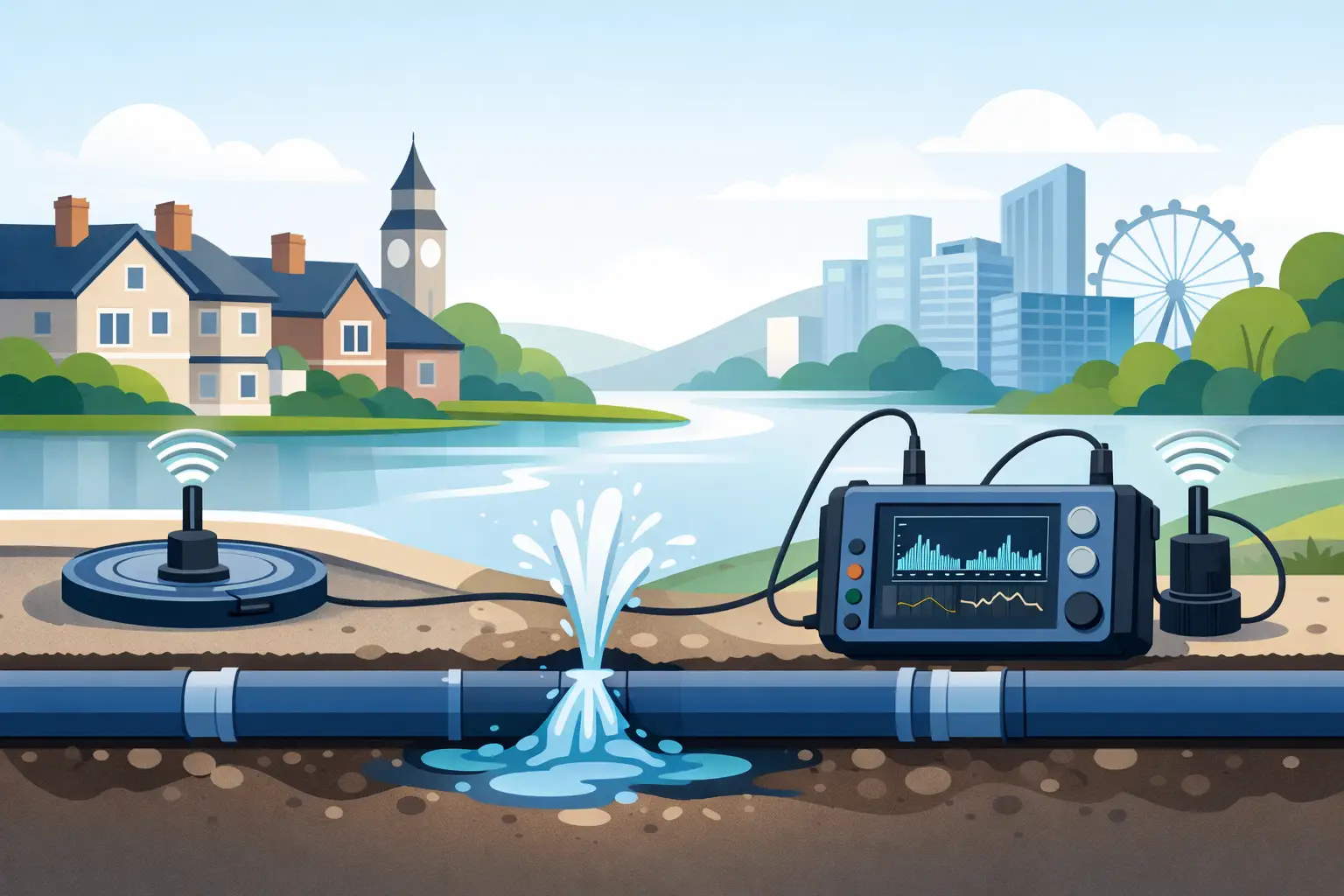
A water leak correlator is an acoustic leak detection instrument. In straightforward terms, sensors are attached to fittings on the same pipe run, often hydrants, valves or stop taps, and they listen for leak noise travelling through the pipe. The unit then compares the time taken for that sound to reach each sensor and estimates the leak position between the two points.
That sounds neat on paper, and on suitable pipework it can be very effective. Long, fairly direct pipe runs with good access at both ends are where correlators tend to show their strength. Metal pipes usually carry leak noise well, which gives the equipment a clearer signal to work with. On external water mains and supply pipes, that can make the difference between a targeted excavation and a trial-and-error dig.
Where people get disappointed is when they expect the correlator to behave like a scanner that simply points to the problem regardless of site conditions. It does not work like that. It is one specialist method within a wider leak detection process.
Where correlators perform well
In a fair water leak correlator review, it is worth saying that the technology has a clear place on the right job. If there is a continuous pressurised leak on a service pipe, and there are usable contact points at each end of a known section, correlation can narrow the search area significantly.
This is especially useful on properties where disruption matters. A buried supply pipe beneath paving, tarmac, landscaped areas or a shared access route is exactly the sort of scenario where you want to avoid broad excavation. If the correlator gives a reliable position, the repair can often be planned with a much smaller opening and a tidier reinstatement.
For commercial sites, schools, retail units and managed properties, the benefit is not just cost. It is operational control. Better pinpointing usually means less downtime, less disturbance to occupants and a cleaner route to repair.
The limitations most reviews gloss over
The weak point in many product-led articles is that they treat all leaks and all pipe systems as though they behave the same way. They do not.
Plastic pipe can be much harder for a correlator to read accurately because leak noise does not always travel as well as it does through metal. Depth also matters. A deeper pipe can reduce signal quality. So can loose ground conditions, low operating pressure and intermittent leaks.
Then there is background noise. Busy roads, plant, pumps and general site activity can interfere with readings. Even in domestic settings, internal stop taps, shared supply arrangements or poor pipe records can complicate what should be a straightforward survey.
None of that means correlators are ineffective. It means they need to be used in the right context, by someone who knows when the reading is trustworthy and when it needs checking against other evidence.
Why operator skill matters as much as the equipment
A correlator in untrained hands can create false confidence. The unit may produce a location, but that does not automatically make it correct. Good leak detection is part equipment, part interpretation.
An experienced specialist will first look at the basics. Is the pipe route confirmed or assumed? Are the contact points definitely on the same pipe section? Is the leak likely to be continuous enough for acoustic correlation? Are there other fittings, branches or changes in material that could affect the result?
That groundwork matters because leak detection is not just about owning modern kit. It is about choosing the right method and building a sensible picture from the site conditions. On some jobs, the correlator gives the lead answer. On others, it is a supporting tool rather than the deciding one.
Correlator versus other leak detection methods
A water leak correlator review is incomplete without comparing it to the alternatives. Acoustic ground listening is often used alongside correlation. Instead of comparing noise between two fixed points, the engineer listens directly above the pipe route to identify where the leak sounds strongest. This can help confirm or refine a correlator result.
Tracer gas can be useful where acoustic methods are less reliable, particularly on some non-metallic pipes or difficult ground conditions. Thermal imaging has a place in certain internal or surface-related situations, though it is not a universal answer for buried external water pipes. Pressure testing also remains important, especially when confirming whether a suspected section is actually losing water.
The best approach is usually combined, not single-method. If one method supports another, confidence in the excavation point increases. That is what clients should be paying for – not a single machine being turned on, but a sensible process that leads to a defensible repair location.
What to look for in a practical water leak correlator review
If you are reading reviews because you need a contractor, not because you plan to buy the equipment, focus less on brand names and more on outcomes. The useful questions are practical ones.
Ask whether the contractor can explain when a correlator is suitable and when it is not. Ask whether they use more than one leak detection method. Ask how they verify the pipe route before recommending excavation. If the leak is under hardstanding, ask what repair options are available afterwards, including trenchless methods where appropriate.
For homeowners, clarity matters more than technical jargon. You should be told what has been found, how reliable the location is, and what level of disruption is likely. For landlords and facilities teams, the expectation is slightly different. You may also want method statements, a clear scope, timescales and assurance that reinstatement will be handled properly.
The real-world benefit: less disruption, not just better tech
The reason correlators matter is not that they are clever. It is that better pinpointing can reduce damage to finished surfaces, shorten repair time and lower overall disruption. That is the outcome most customers care about.
If a leak under a drive can be located within a tight working area, the repair becomes easier to manage. If a commercial forecourt only needs one controlled excavation rather than several exploratory digs, business impact is reduced. If a buried supply pipe can then be repaired or replaced with a modern no-dig approach, the value of accurate detection becomes even clearer.
That practical link between detection and reinstatement is often overlooked. Finding the leak is only one part of the job. The full solution includes access, repair, hygiene, compliance and leaving the site in good order.
When a correlator is the wrong starting point
There are situations where going straight to correlation is not the best use of time. If the pipe route is unknown, access points are poor, or the leak is suspected within internal plumbing rather than the buried incoming supply, a different diagnostic method may be more sensible first.
The same applies where there is obvious surface evidence in a very localised area. A competent engineer may decide that direct confirmation by listening, isolation or exposure is more efficient than setting up a correlation run. Good contractors do not force every problem into the same method. They use the one most likely to give a reliable answer quickly.
A contractor view on the verdict
From a field point of view, the verdict in this water leak correlator review is straightforward. It is a valuable piece of specialist equipment when used on the right pipe, in the right conditions, by the right operator. It can save time, reduce unnecessary digging and improve repair planning. But it is not magic, and it should never be treated as a substitute for experience.
For UK properties, especially where external water supply pipes run beneath gardens, drives, paved areas or commercial yards, correlation remains a strong option within a proper leak detection strategy. The key is choosing a contractor who understands the trade-offs and can move from detection to repair without turning a leak investigation into a larger disruption than the leak itself.
That is the standard we work to at Watermains & Drains UK. If a correlator is the right tool, it should lead to a cleaner, faster job. If it is not, you should be told that plainly and given a practical alternative. The best leak detection work is not about impressive kit. It is about finding the fault, fixing it properly and letting you get on with normal life as quickly as possible.
If you are dealing with a suspected buried leak, the most useful next step is not to chase the newest device. It is to get a clear assessment from a specialist who can match the method to the site.





