Best Drain Repair Methods for UK Properties
A drain that backs up repeatedly, smells unpleasant or leaves wet patches outside is rarely fixed for good by another round of rodding. The best drain repair methods deal with the cause of the fault – whether that is a cracked pipe, displaced joint, root ingress or a local collapse – while keeping disruption to your property proportionate to the problem.
For homeowners, landlords and facilities teams, the right answer is not always the biggest repair. A short section of damaged pipe may be restored from inside the drain, with no need to lift a driveway or patio. Where the line has collapsed or has lost its fall, however, excavation and replacement can be the sounder long-term option. A professional survey establishes which approach will provide a dependable result.
Start with a CCTV drain survey
Before choosing a repair, establish exactly what has failed and where. A CCTV drain survey sends a purpose-built camera through the pipework, providing footage of its condition and an accurate location for defects. This prevents costly guesswork, particularly where drains run beneath extensions, block paving, lawns, access roads or shared areas.
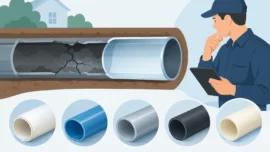
The survey should identify whether the issue is a single crack, open or displaced joints, root growth, fractures, scale build-up, deformation, poor installation or a collapsed section. It also shows the pipe material and diameter, both of which affect the repair method. Clay, plastic, concrete and pitch fibre drains can all behave differently.
A blockage may need to be cleared first using high-pressure water jetting. This restores flow and allows the camera to inspect the pipe properly, but it is not a repair if the underlying drain is damaged. If the same blockage returns, the footage usually explains why.
Best drain repair methods by type of damage
Patch lining for local cracks and failed joints
Patch lining is often the most cost-effective repair when the damage is limited to one small area. A resin-impregnated liner is positioned over the defect inside the drain and cured in place. It forms a strong, watertight sleeve that bridges cracks, seals leaking joints and helps prevent roots entering through gaps.
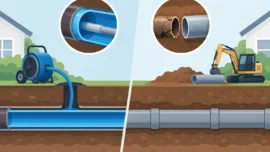
Because the work is carried out within the existing pipe, patch lining is a no-dig method. It can avoid disturbing finished surfaces and is particularly useful beneath driveways, landscaped gardens, internal floors and commercial hardstanding. It is also a practical option when access is available through existing chambers.
Patch lining has limits. It cannot correct a fully collapsed pipe, a serious dip in the line or a drain that has been badly deformed. The pipe must be cleaned and prepared properly, and the repair should be specified to suit the pipe diameter and the fault found on the survey.
Full drain relining for widespread defects
Where a longer run has multiple cracks, open joints or repeated root ingress, full drain relining may be preferable to fitting several individual patches. This technique installs a continuous resin liner through a larger section of the existing drain. Once cured, it creates a new pipe within the old one.
Relining is well suited to drains beneath areas where excavation would cause considerable disruption. It can reduce reinstatement work, shorten the programme and keep homes, tenants or business premises functioning with less disturbance. For commercial properties, this can make a significant difference where access roads, car parks or operational areas cannot easily be closed.
The trade-off is that relining slightly reduces the internal diameter of the pipe. In a correctly sized drain this is rarely a concern, but it should be considered in smaller pipework or systems with existing flow issues. A competent contractor will also confirm that the drain is structurally suitable for lining and that connections can be reopened correctly after installation.
Excavation and replacement for collapsed drains
Excavation remains the right solution for some drainage failures. A pipe that has collapsed, dropped out of level, separated extensively or been crushed by heavy loading needs to be exposed and replaced. The same is true where ground movement has created a substantial void or where there is insufficient access for an internal repair.
A targeted excavation is normally preferable to replacing an entire drainage run unnecessarily. CCTV findings and sonde locating equipment can pinpoint the defect, allowing the contractor to excavate only where required. The damaged section is removed, new pipework is installed at the correct gradient, and the area is backfilled and reinstated.
This method involves more disruption than lining, but it can provide the most reliable outcome where the existing pipe has lost its structural integrity. Good planning matters. Contractors should protect surrounding surfaces, manage spoil carefully and explain how paths, tarmac, paving or garden areas will be reinstated before work starts.
Rebuilding or replacing inspection chambers
A defective inspection chamber can be responsible for leaks, blockages and unpleasant odours even when the main drain is sound. Cracked chamber walls, broken benching, damaged covers and poorly sealed connections should be repaired before they worsen.
Depending on its condition, a chamber may be rebuilt locally, relined or replaced. A secure, correctly formed chamber makes future maintenance easier and gives clear access for surveys and cleaning. For landlords and property managers, this is particularly useful where several flats or commercial units share drainage runs.
Root removal with a permanent follow-up repair
Tree roots naturally seek moisture and can enter drains through small gaps in old joints. Mechanical root cutting and jetting can remove the obstruction and restore flow quickly, but the entry point remains if the damaged joint is not repaired.
Once roots have been cleared, patch lining or relining can seal the affected section and reduce the risk of regrowth. If roots have caused major displacement or collapse, excavation may still be required. Cutting roots without surveying the pipe afterwards can leave the actual defect untreated.
When no-dig repair is the better option
No-dig repairs are often the first choice when the drain remains broadly intact and the fault can be accessed internally. They are especially valuable beneath block paving, patios, driveways, landscaped areas and buildings, where digging would add substantial reinstatement costs.
The main benefits are speed, reduced mess and less disruption to daily life or site operations. That does not mean lining is automatically the best answer. A contractor should recommend it only after reviewing the pipe condition, flow direction, connections and extent of damage. A cheaper short-term option becomes expensive if it is used where a replacement was needed.
Factors that affect drain repair costs
Drain repair costs depend on the type and length of damage, pipe diameter and material, depth, access, ground conditions and the surfaces above the drain. An isolated patch beneath a lawn is a very different job from replacing a deep collapsed pipe beneath a resin-bound driveway or busy service yard.
The need for traffic management, pumping, specialist lifting equipment or out-of-hours working can also affect the quotation. For commercial sites, a clear scope should cover access arrangements, method statements, reinstatement requirements and how drainage services will be kept available during the work.
Be cautious of a quote that is offered before the drain has been surveyed. A proper diagnosis allows the contractor to explain the recommended method, alternatives where appropriate and any risks that may affect the final scope. It also gives you useful evidence for insurers, landlords, managing agents or future property records.
Choosing a drain repair contractor
Look for a specialist contractor that can survey, clear, repair and reinstate rather than passing different stages between multiple firms. This helps keep responsibility clear and reduces delays when a survey reveals a more serious defect.
Ask what repair method is proposed, why it suits the condition of the drain and what guarantee applies to the workmanship. You should also check that the contractor holds suitable insurance, has the equipment to locate defects accurately and can manage the site safely. For work that affects water supply as well as drainage, relevant approvals such as WIAPS and Watersafe provide additional reassurance.
Watermains & Drains UK provides CCTV investigations, patch lining, excavation-led repairs and drainage installations across the North West, with a focus on clean, well-managed work and minimum disruption. A survey-led recommendation helps ensure you pay for the repair the drain actually needs, not a temporary fix that merely delays the next blockage.
If a drain is repeatedly blocking, leaking or showing signs of collapse, arrange an inspection before the fault spreads. Early repair can often protect the surrounding ground, prevent damage to paving or buildings and leave you with a simpler, more cost-effective solution.