

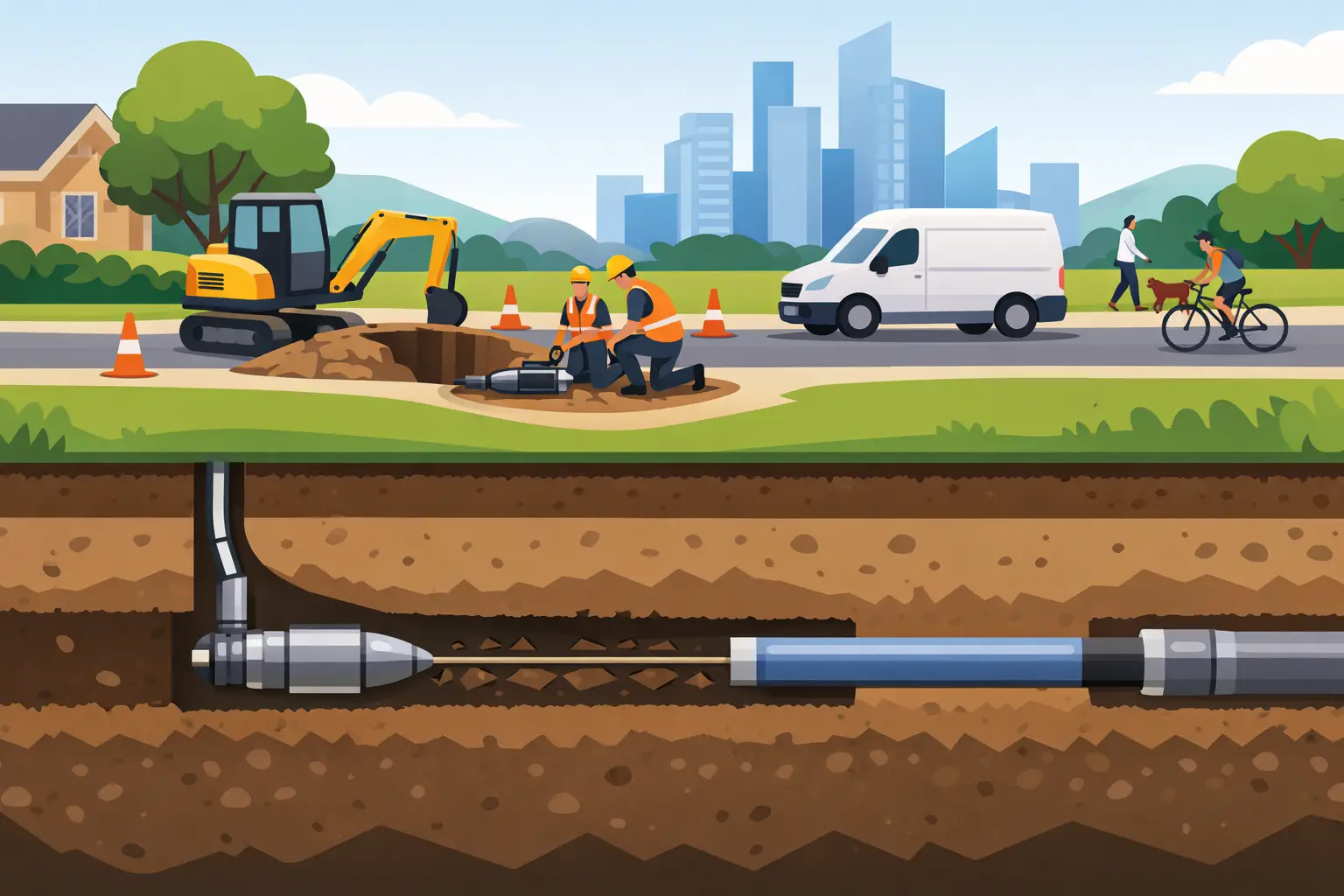
Pipe Moling Installation With Less Disruption
A new water supply does not have to mean digging a trench through your driveway, lawn or paving. Pipe moling installation is a trenchless method that creates a narrow underground route for a new pipe, allowing homeowners, landlords and property managers to upgrade water supplies with far less disturbance to the surface.
For properties with ageing lead pipes, recurring leaks or poor water pressure, this can be a straightforward answer to a disruptive problem. Instead of lifting large areas of block paving or cutting a channel through a landscaped garden, a specialist team works from small entry and exit pits. The result is usually a faster installation, cleaner site and much less reinstatement work.
What is pipe moling installation?
Pipe moling uses a pneumatic underground tool, often called a mole, to bore through suitable ground. The tool is launched from a small pit and travels beneath the surface towards a receiving pit, creating a bore for the new water pipe.
Once the route has been formed, an approved replacement pipe can be pulled through and connected to the property supply. The pits are then backfilled and the small affected areas reinstated. For a typical domestic water supply replacement, the process avoids the long open trench associated with conventional excavation.
This method is particularly useful where the pipe route passes beneath a front garden, tarmac drive, patio, pathway or other finished surface that would be costly and inconvenient to remove. It is commonly used for lead pipe replacement, new water supply pipes to extensions and replacement services where a leaking pipe is buried beneath private land.
Moling is not simply a case of sending a tool underground and hoping for the best. A successful installation depends on a planned route, checks for buried services, suitable ground conditions and experienced operatives who understand water supply regulations.
When is pipe moling the right option?
Pipe moling installation is often the preferred method when there is a relatively direct route between the boundary connection and the property. It works well on many domestic properties where access is limited and keeping the driveway or garden intact matters as much as replacing the pipe itself.
It can be a sensible choice if your existing supply is lead, galvanised steel or old plastic pipe. Lead supply pipes remain a concern because lead can enter drinking water, particularly where water stands in the pipe for long periods. Replacing the private section with a modern supply pipe is a practical long-term improvement and may also support better flow into the property.
A moling route can also help when a property has suffered an underground leak. Signs may include an unexplained increase in water bills, a constantly moving water meter, damp patches outside, reduced pressure or water pooling near the supply route. If the pipe needs replacing rather than repairing, trenchless installation can avoid reopening large sections of ground.
For landlords and commercial property managers, the benefit is often operational. Less excavation means fewer trip hazards, shorter disruption for residents or staff, and reduced reinstatement across car parks, access routes and maintained grounds. The exact approach still depends on the building layout, the location of existing services and whether the water company connection needs work.
How a pipe moling installation is planned
The quality of the planning has a direct effect on the quality of the finished job. Before work begins, a specialist contractor should assess the proposed route, access requirements and connection points. This starts with a site survey rather than an assumption that moling will suit every property.
Checking the existing supply route
The team will identify where the existing pipe enters the building and where it connects at the boundary. On older homes, the supply route is not always obvious. It may run under a path, cross a neighbour’s land or have been altered during previous building work.
The route for the new pipe should be as direct as practical while allowing for safe connection and future access. It must also comply with the requirements that apply to private water supply pipework, including appropriate pipe depth and protection.
Locating buried services
Before boring begins, buried utility services must be considered. Gas, electricity, telecoms, drainage and existing water pipes may all be present beneath a front garden or drive. Service drawings, detection equipment and carefully dug trial holes can be used to reduce the risk of striking an unknown service.
This is one reason why pipe moling should be completed by a competent specialist contractor, not treated as a general excavation job. The aim is not only to avoid surface damage but also to manage what cannot be seen below ground.
Creating the launch and receiving pits
Small pits are excavated at each end of the planned bore. Their size varies with the pipe route and connection arrangements, but they are substantially smaller than a full trench. The mole is positioned in the launch pit and driven towards the receiving pit at the planned depth.
After the bore is complete, the new pipe is installed, connected and tested. Any old redundant pipe can often be left safely in place where removal would cause unnecessary disturbance. The new supply is then flushed as required, with connections made carefully to protect water quality.
What affects the cost and timescale?
Every site is different, so a proper quotation should reflect the route rather than offer a one-size-fits-all price. The length of the new supply, ground type, access, number of connections, internal pipework requirements and reinstatement needs all affect the cost.
A short, clear run beneath soft ground is usually more straightforward than a route beneath deep concrete, extensive paving or ground containing obstructions. Difficult access can also affect the programme, particularly where equipment must be moved through a property or where work needs to be coordinated around tenants, vehicles or business operations.
In many domestic cases, moling is completed more quickly than traditional trenching because there is less excavation and less surface to rebuild. That does not mean it is always the cheapest option on paper. Where ground is unsuitable or the route is heavily congested with services, conventional excavation may be the safer and more cost-effective choice. A reputable contractor will explain that trade-off clearly.
Situations where moling may not be suitable
Pipe moling is highly effective, but it is not appropriate for every route. Very rocky ground, unstable made ground, heavily reinforced areas or routes packed with known buried services may make the method unsuitable. Long or complicated runs may require other trenchless techniques, such as horizontal directional drilling, or a combination of excavation and trenchless work.
The method also needs sensible clearance from existing utilities. If service locations cannot be verified with enough confidence, a contractor may recommend trial holes or a different route. This can feel like an extra step, but it is preferable to damaging a gas pipe, electrical cable or drainage run.
At some properties, the supply pipe enters through an awkward location beneath a floor or behind fitted units. The external moling work may be low-disruption, while the final internal connection still needs careful planning. Discussing these details at survey stage prevents surprises on installation day.
Choosing a specialist water supply contractor
Look for a contractor with specific experience in water supply pipe installation and trenchless methods, rather than choosing solely on the lowest quote. They should be able to explain the proposed route, how buried services will be checked, what is included in reinstatement and whether work on the water supply will meet the relevant standards.
Accreditations such as WIAPS and Watersafe provide useful reassurance for property owners, landlords and facilities teams. Adequate public liability insurance, written workmanship guarantees and clear paperwork are equally valuable where the work affects a shared accessway, tenanted property or commercial site.
Watermains & Drains UK uses trenchless moling for suitable lead pipe replacements and new water supply installations, combining site assessment, approved installation practices and tidy reinstatement. The priority is to provide a dependable new supply without turning a manageable job into weeks of unnecessary disruption.
Looking after the finished installation
Once the new pipe is connected, test the water supply at taps around the property and check that flow and pressure are as expected. If excavated areas have been reinstated with topsoil or turf, allow time for the ground to settle and follow any practical aftercare advice provided.
Keep the installation records, route information and guarantee documents with the property paperwork. They can be useful for future maintenance, insurance queries, renovation work or a later sale. A well-planned pipe moling installation should leave you with the part that matters most: a safe, reliable water supply and a property that still looks like your own.





