HDD Drilling for Water Pipes With Less Disruption
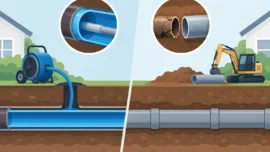
A driveway does not need to become a trench just because a water pipe has reached the end of its life. HDD drilling is a trenchless method that can install or replace pipework beneath gardens, paving, access roads and landscaped areas with only small excavation points at either end. For homeowners, landlords and property managers, that can mean a faster job, less reinstatement and far less disturbance to everyday life.
It is not the right answer for every site. Ground conditions, existing services, pipe route, depth and the type of pipe being installed all matter. However, where conditions allow, horizontal directional drilling provides a practical alternative to traditional open-cut excavation.
What is HDD drilling?
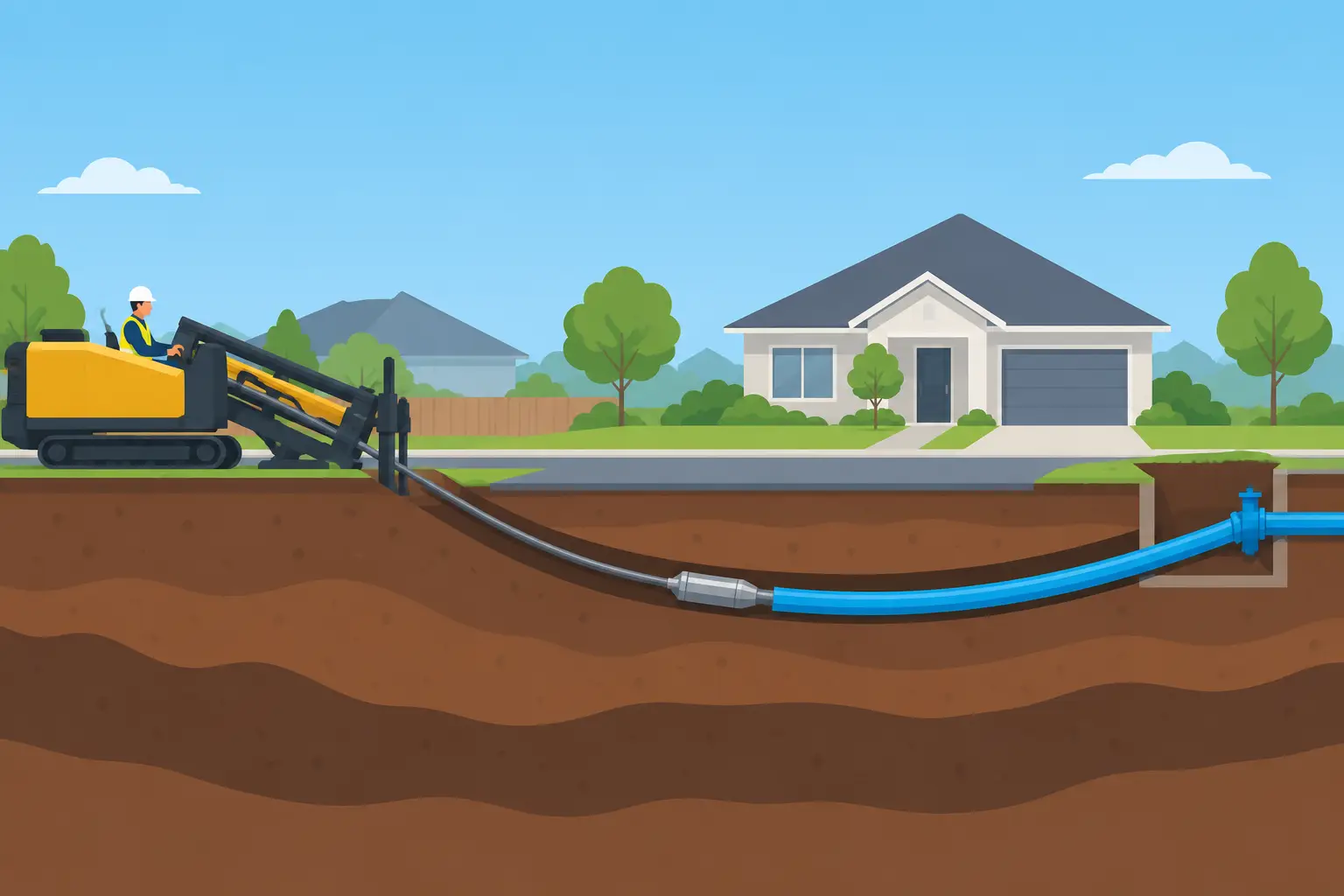
HDD stands for horizontal directional drilling. It is a controlled method of creating an underground bore from one point to another, allowing a new pipe to be pulled through without digging a continuous trench.
The work starts with a properly planned route and small launch and reception pits. A specialist drilling rig sends a guided pilot bore underground. The drill head can be tracked and adjusted as it progresses, helping the operator follow the required line and depth while avoiding known obstacles. Once the pilot bore reaches the exit point, it is enlarged to suit the new pipe, which is then pulled back into place.
For a new water supply, this often means a durable polyethylene pipe can be installed from the boundary connection towards the property with limited excavation. The visible work is generally confined to the connection points rather than the full length of the route.
Where HDD drilling makes the biggest difference
The strongest case for HDD is usually a property where conventional digging would cause expensive or inconvenient damage. A pipe route may cross a block-paved driveway, a carefully maintained garden, a car park, a paved courtyard or a private access road. Digging through these surfaces can increase project time and leave a considerable reinstatement task afterwards.
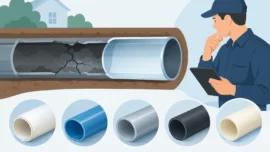
HDD drilling can be especially useful when replacing an old lead supply pipe. Lead pipes are commonly found on older properties, and replacing them is often the simplest long-term solution where lead is present on the private side of the supply. A trenchless installation can bring a modern new supply into the property while preserving much more of the existing surface.
For commercial premises, the benefit is often operational. Reduced excavation can help keep pedestrian routes, parking areas and entrances more manageable during the works. This does not mean there will be no disruption at all. There still needs to be safe access for equipment, excavations for connections and a controlled work area. The difference is that the disruption is focused rather than spread across the whole pipe run.
Water supply installations
New water pipes are one of the most common uses for horizontal directional drilling. Water supply pipework is pressurised, so it does not rely on a continuous fall in the same way as a gravity drain. That makes it well suited to a carefully planned bored route, subject to the correct depth, connection details and water regulations requirements.
The final connection must be completed correctly, with suitable fittings, protection and testing. Where work affects the drinking-water supply, using a competent contractor with the appropriate water-industry approvals gives homeowners and property professionals added confidence that the installation is being handled properly.
Drainage and service crossings
HDD can also be used for certain drainage and service installations, but the application needs more careful assessment. A gravity drain depends on an accurate gradient to carry wastewater away. If the route must maintain a precise fall, existing levels and connection depths may make open excavation the more sensible option.
Where drainage is pumped, or where a pressure pipe is being installed, HDD may be a very effective solution. It is also useful for crossing beneath obstacles where a conventional trench would be impractical. A site survey should establish what is possible before a method is chosen.
Why planning matters before the drill starts
Trenchless work is often described as no-dig, but that should not be confused with no-planning. The best results come from understanding the site before equipment arrives.
The proposed route needs checking for buried utilities such as gas, electric, telecoms and existing water pipes. Drainage layouts, boundary positions, access limitations and overhead restrictions may also affect the set-up. On older sites, records are not always complete, so service detection and careful trial-hole work can be essential.
Ground conditions are equally important. Soil, clay, made ground, cobbles, rock and groundwater can all influence the drilling method, duration and cost. A straightforward route through suitable ground may be completed efficiently. A route containing large obstructions, unstable ground or congested services may need an alternative approach.
This is why a credible quotation should be based on the actual job, not simply a price per metre. A proper assessment considers the pipe size, route length, excavation requirements, connection points, disposal of spoil, traffic or pedestrian management where needed, and how the work area will be left on completion.
The practical benefits for property owners
The obvious advantage of HDD drilling is reduced excavation. That can protect expensive paving, lawns, flower beds and hard landscaping that would otherwise need to be removed and rebuilt. It also usually reduces the volume of spoil, the number of lorry movements and the time spent on reinstatement.
There is a cost benefit too, although it depends on the project. Directional drilling equipment and specialist operatives are not always cheaper than a short, easy trench. On longer routes or where surfaces are costly to reinstate, it can represent better value because it avoids a large part of the repair work after installation.
For occupied homes, less digging often means less dust, noise and inconvenience. For landlords and facilities teams, it can reduce the impact on tenants, customers and site operations. The aim is not merely to make the site look tidier. It is to complete essential infrastructure work with the least reasonable interruption.
When open excavation may be the better option
A specialist contractor should be clear about the limits of trenchless methods. If a pipe is shallow, the route is short and the surface is simple turf or loose ground, conventional excavation may be quicker and more economical. Likewise, severe ground obstructions, very restricted access or complex drainage falls can make an open trench the safer choice.
There are also occasions when excavation is needed to expose and repair a damaged section, investigate a leak, replace defective fittings or make a final connection. HDD is a method, not a cure for every underground problem.
The right approach may be a combination of both. For example, small excavations can be used at either end of the route for connections, while HDD carries the new pipe beneath the driveway between them. This balanced approach often provides the best outcome for the property and the budget.
Choosing an HDD drilling contractor
Experience with directional drilling matters because the work combines planning, service avoidance, drilling control, pipe installation and final connection. Ask how the route will be surveyed, what excavations are required, how utilities will be identified and what reinstatement is included in the quote.
For water supply work, check that the contractor holds relevant approvals and is suitably insured. Homeowners should also ask what testing will be carried out, whether the new pipework is guaranteed and who will deal with any water company requirements. Commercial clients may need method statements, risk assessments and a programme that protects access to the site.
Watermains & Drains UK uses trenchless installation methods alongside conventional excavation where appropriate, allowing each job to be planned around the condition of the site rather than forcing one method onto every property.
A clear survey is the best place to start. Once the route, ground conditions and connection points are understood, it becomes much easier to decide whether HDD drilling is the cleanest, quickest and most cost-effective way to get a reliable new pipe in place.