CCTV Survey vs Jetting: Which Comes First?
A drain has backed up, the smell is returning, or the same toilet keeps struggling to clear. In the CCTV survey vs jetting decision, the right first step depends on whether the immediate priority is restoring flow or finding the reason the problem keeps coming back. Both services are valuable, but they do different jobs.
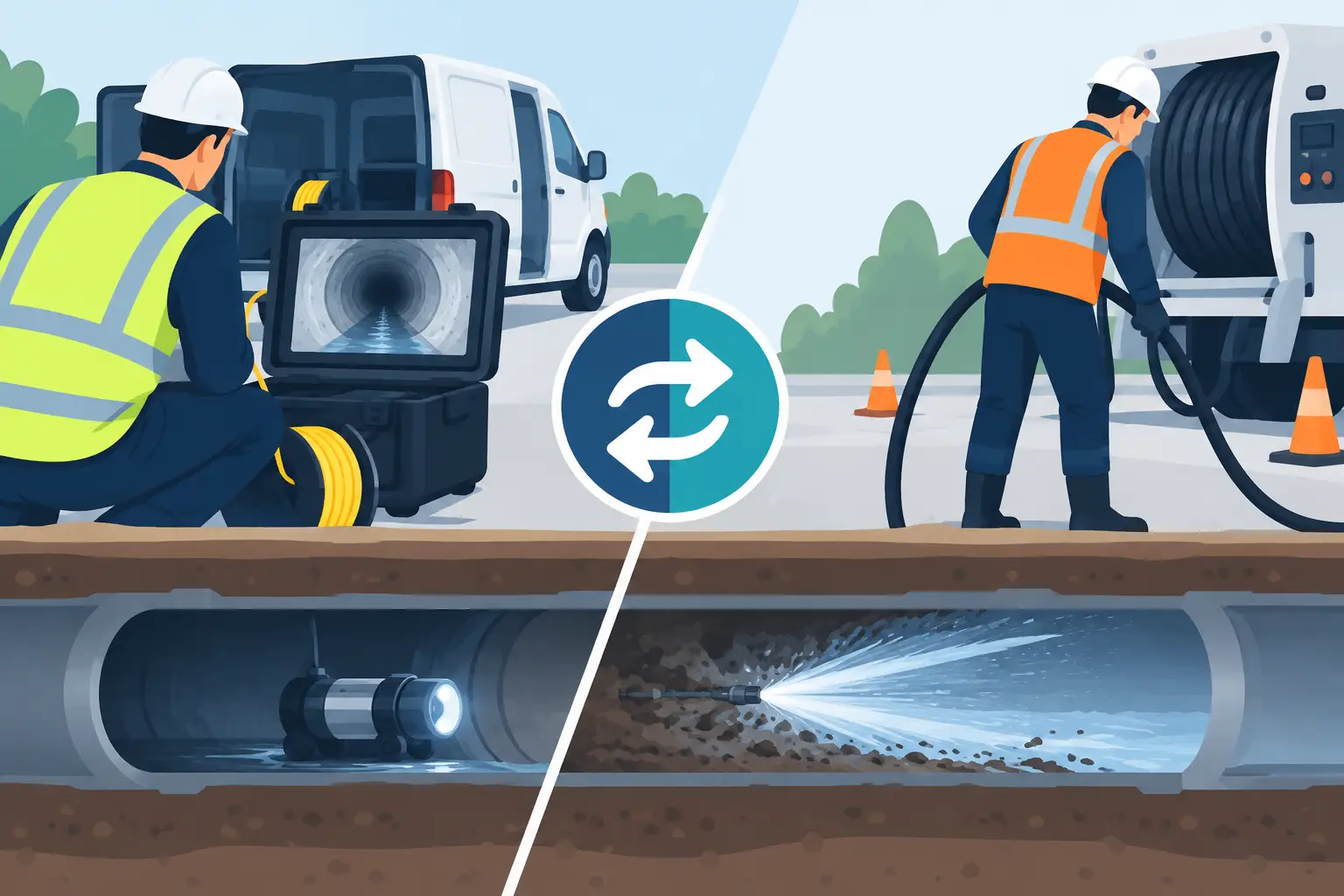
High-pressure water jetting is designed to clear a blockage and clean the inside of a drain. A CCTV drain survey uses a camera to inspect the pipework, identify faults and show exactly what is happening below ground. Choosing the appropriate method can save time, reduce unnecessary work and help avoid repeated call-outs.
CCTV Survey vs Jetting: The Key Difference
Jetting is a cleaning and clearance method. A specialist jetting unit sends high-pressure water through the drain to break up and remove materials such as grease, scale, silt, food waste, soap residue and soft blockages. It is often the fastest practical answer when a drain is overflowing, a sink will not empty or a toilet is backing up.
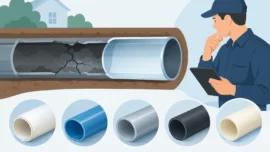
A CCTV survey is an inspection method. A camera is fed through the drainage system and records the condition of the pipe. The survey can reveal root ingress, cracks, displaced joints, collapses, poorly fitted connections, obstructions and standing water caused by incorrect falls. It provides evidence rather than assumptions.
Put simply, jetting answers the question, “Can we get the drain flowing again?” A CCTV survey answers, “Why did it block, and is the pipe itself in sound condition?” In many cases, particularly with recurring problems, both are needed in sequence.
When Jetting Should Come First
For an active blockage, drainage work normally begins with clearance. If wastewater is not moving, the line may be too obstructed for a camera to pass through or produce a useful image. Jetting removes the immediate restriction so the property can return to normal use and the pipe can be inspected properly if required.
This is common where a blockage has developed through everyday build-up. Kitchen drains can collect fats, oils and food particles. Bathroom lines often suffer from hair, soap and wipes. External gullies can fill with leaves, mud and surface debris after heavy rain. In these situations, professional jetting can be a fast, cost-effective solution without excavation.
Jetting is also useful as planned maintenance for landlords, commercial kitchens, managed sites and properties with a history of slow-running drains. Regular cleaning can reduce the risk of an inconvenient blockage, particularly where high use or older pipework makes the system more vulnerable.
However, clearance alone is not always a permanent repair. If the drain blocks again soon afterwards, or if the jetting engineer encounters a hard obstruction, a survey is usually the sensible next move.
When a CCTV Drain Survey Should Come First
A CCTV survey is particularly valuable when the symptoms point to a defect rather than a simple build-up. Repeated blockages in the same location are a clear warning sign. So are persistent foul odours, damp ground around an external drain, unexplained subsidence, slow drainage affecting several fittings, or a problem that returns after previous clearance.
For a house purchase, extension, new build connection or insurance-related issue, a survey may be requested before any work is carried out. Property managers may also need clear footage and a written report to support maintenance decisions, obtain approval for repairs or demonstrate the condition of a drainage asset.
The camera allows the contractor to locate the fault accurately. That matters because drains are usually hidden beneath lawns, driveways, paths and floors. Without a survey, it is easy to spend money clearing a line that has a fractured section, or to excavate an area that is not actually where the fault lies.
A good survey report should explain what has been found in plain language, identify the approximate location and depth where possible, and set out practical repair options. For minor, localised damage, a no-dig patch lining repair may be suitable. Where the pipe is severely displaced or collapsed, excavation and replacement may be necessary. The right answer depends on access, pipe condition and the extent of the defect.
Why the Order Matters
There is no one-size-fits-all rule. The best order is based on the condition of the drain and the urgency of the situation.
If sewage is overflowing or the property has no usable toilet, restoring flow comes first. A professional drainage engineer will assess the access points, work safely and use the least disruptive method that can clear the line. Once the blockage has been removed, CCTV footage can confirm whether there is an underlying problem worth addressing.
If there is no emergency but the drain has a long history of trouble, a survey may be the better starting point. It can prevent repeated jetting visits where roots, a poor connection or damaged pipework are the real cause. It also helps avoid treating symptoms while the original fault worsens underground.
There are occasions when a camera is used initially to establish where the blockage sits, followed by jetting to clear it. Equally, a heavily blocked drain may need jetting first, then a return survey once the water has drained away. A competent contractor should explain the reasoning, rather than sell a standard package that does not fit the job.
What CCTV Surveys Can Find That Jetting Cannot Fix
High-pressure jetting is highly effective at removing many obstructions, but it cannot repair a broken drain. Where a defect is present, repeated cleaning may offer short-term relief while leaving the cause untouched.
Root ingress is one of the most common examples. Fine roots can enter through open joints or cracks, then grow inside the pipe and trap debris. Jetting may remove the roots and restore flow, but the entry point remains. A survey identifies the damaged section so it can be lined, repaired or replaced before the roots return.
The same applies to displaced joints, collapsed clay drains, fractured plastic pipework and sagging sections where waste repeatedly settles. Fat and scale can be cleaned away, but a pipe with the wrong fall will continue to collect debris. Camera footage gives the evidence needed to choose a lasting repair.
Surveys can also reveal issues caused by building work, such as concrete in a drain, redundant connections or incorrectly connected rainwater and foul water systems. These are not problems to solve by increasing water pressure. They need accurate diagnosis and an appropriate drainage repair plan.
Cost, Disruption and Long-Term Value
Homeowners understandably want to know which option costs less. For a straightforward blockage, jetting is often less expensive because it is a direct clearance service. If it resolves the issue and the drain remains free-flowing, no further work may be needed.
But the cheapest first visit is not always the lowest overall cost. Several call-outs for the same blockage can quickly outweigh the cost of a CCTV survey. The footage may show that a small patch lining repair would prevent repeated disruption to tenants, customers or family life.
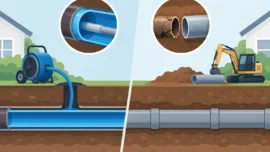
A survey is also useful where reinstatement matters. If a drain runs beneath a recently laid driveway, landscaped garden or commercial forecourt, accurate locating helps target any repair work and minimise excavation. Modern no-dig techniques can often deal with local defects without lifting large areas of paving, although they are not suitable for every type of damage.
For commercial premises, the value is often in avoiding downtime. A blocked toilet block, kitchen drain or trade waste line can affect staff, customers and compliance. Planned survey and maintenance work can be arranged around operating hours, while emergency jetting provides a practical response when a blockage cannot wait.
What to Tell Your Drainage Contractor
The more detail you can provide, the quicker the correct approach can be recommended. Explain whether the drain is fully blocked or simply slow, whether the issue affects one fitting or the whole property, and how often it has happened. Mention recent building work, large trees nearby, heavy rainfall, previous repairs and whether wastewater has escaped externally.
For landlords and facilities teams, it is helpful to keep records of past blockages and drainage reports. Patterns across a block of flats, school, warehouse or retail site can point to a shared drain defect rather than individual misuse. Clear information allows the contractor to plan the right equipment, access requirements and follow-on work.
Watermains & Drains UK carries out emergency drain clearance, CCTV drain surveys and targeted drainage repairs across the North West. The aim is not simply to make the immediate problem disappear, but to recommend the simplest reliable solution with the least disruption to your property.
If a drain is blocked now, prompt jetting may be the priority. If it is blocking repeatedly, do not keep guessing. A clear camera survey after clearance can turn an inconvenient recurring problem into a properly planned repair.