Can Tree Roots Block Drains? Signs and Solutions
A drain can appear to block without warning: the toilet starts rising, the kitchen sink drains slowly, or a manhole outside is full after a period of wet weather. If there are mature trees near the property, it is sensible to ask: can tree roots block drains? They can, particularly where an older pipe has a loose joint, crack or defective connection. The roots are usually finding their way into an existing weakness, rather than forcing their way through a sound modern pipe.
For homeowners, landlords and facilities managers, the priority is not simply getting the water moving again. It is finding out why the blockage occurred and whether the pipe needs a lasting repair. Repeated clearance alone can become expensive, disruptive and unpleasant.
Can tree roots block drains?
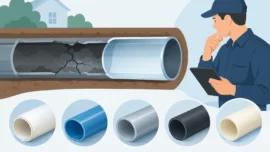
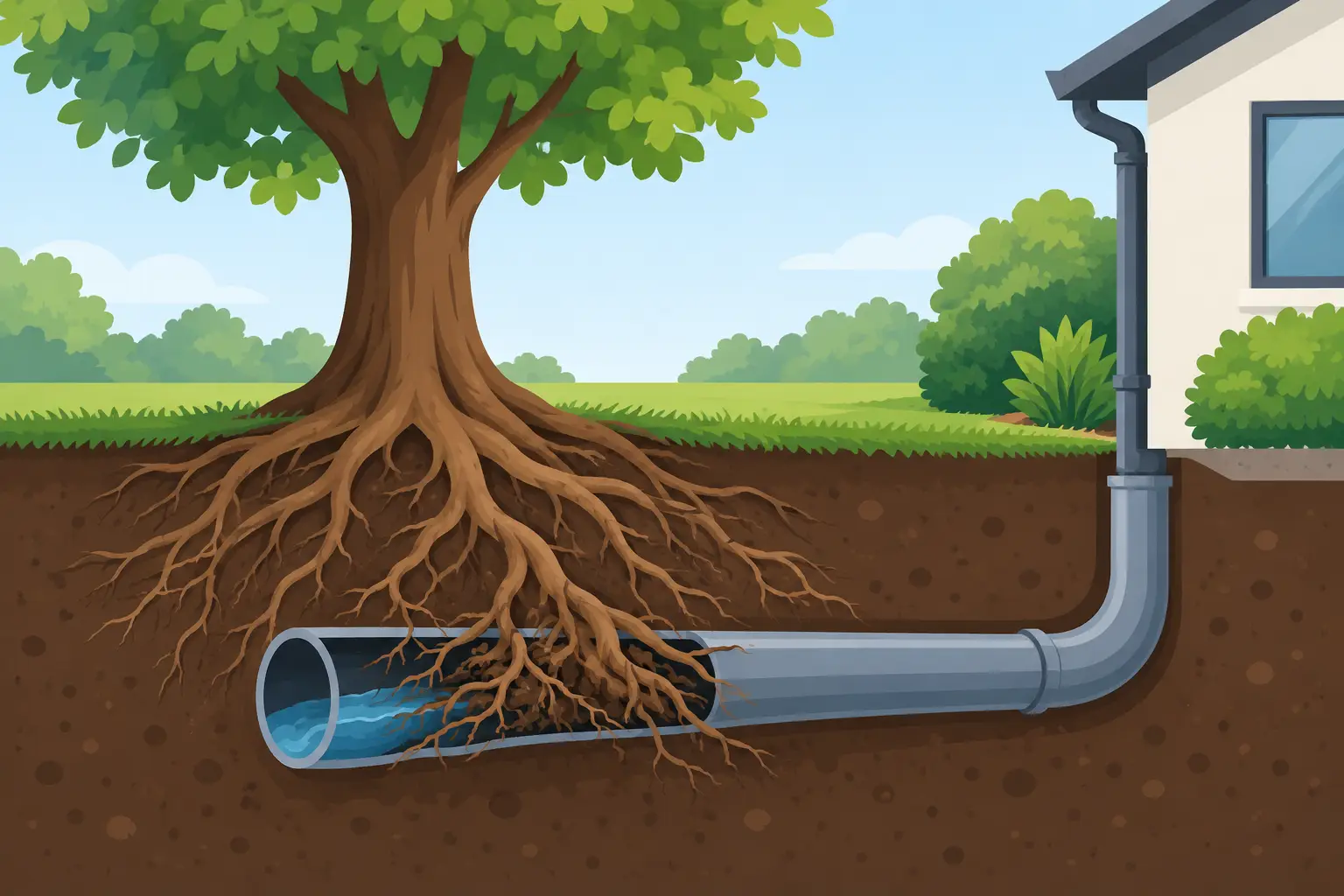
Yes. Tree roots naturally grow towards moisture, oxygen and nutrients. A drain with a small defect can provide all three. Fine roots can enter through displaced joints, redundant connections, cracks or poor-quality repairs. Once inside, they expand and form a fibrous mass that catches toilet paper, fats, wipes and other debris moving through the pipe.
This process is often gradual. At first, the drain may only run slowly from time to time. As roots develop, they reduce the usable diameter of the pipe and create a more frequent obstruction. In severe cases, root growth can contribute to a collapsed or displaced section of drainage, although the underlying condition of the pipe is normally a significant factor.
Clay drainage is particularly vulnerable because it is commonly made up of short pipe lengths with joints between them. Many older homes across Greater Manchester, Stockport, Warrington and Cheshire still have clay drains. Plastic pipes are generally more resistant, but they are not immune if a joint has separated or the pipe has been damaged by ground movement, building work or vehicle loading.
Signs that roots may be affecting your drain
Tree roots are not the only reason for a blocked drain. Grease build-up, unsuitable items flushed down the toilet, scale, damaged pipes and poor gradients can all cause similar symptoms. However, root ingress becomes more likely where blockages keep returning in the same part of the property and there are established trees or large shrubs nearby.
Look out for slow drainage affecting more than one fitting, recurring toilet or gully blockages, unpleasant smells from external drains, and water backing up after heavy use. You may also notice that a blockage returns relatively quickly after it has been cleared. A drain that has been rodded or jetted several times but still causes trouble needs proper investigation rather than another temporary fix.
Outside, unusually lush patches of grass near the drain run can occasionally point to a leak, but this is not proof of root damage on its own. Equally, a nearby tree does not automatically mean roots are the cause. The only reliable way to identify the condition inside an underground pipe is with a professional CCTV drain survey.
Why a CCTV drain survey matters
A CCTV survey puts a camera through the drainage system and records what is actually happening below ground. It can show root ingress, fractures, displaced joints, standing water, scale build-up and collapsed sections. It also helps establish the location and depth of the defect, which is essential before recommending a repair method.
This avoids unnecessary excavation and gives property owners a clear basis for deciding what to do next. For landlords and commercial property managers, a written report and footage can also support maintenance records, planned works and discussions with insurers or tenants.
Clearing roots is not always the same as repairing the drain
Specialist jetting equipment can often remove roots and restore flow, particularly when the blockage is caught early. Mechanical root cutting may also be used where appropriate. This is useful reactive work, but it does not close the gap or crack that allowed the roots into the drain in the first place.
If the pipe remains defective, roots can return. How quickly this happens depends on the tree species, soil conditions, the size of the opening and the level of moisture available. It may be months or it may be much sooner. That is why a good drainage contractor will distinguish between clearing the immediate blockage and repairing the underlying defect.
There are several possible repair routes, and the right one depends on the survey findings.
Patch lining for localised defects
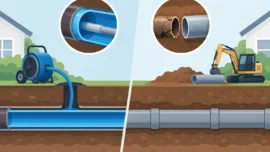
Where root entry is limited to one joint or short damaged section, a patch liner can often provide a cost-effective repair. A resin-impregnated liner is positioned inside the existing pipe and cured in place to create a new watertight section. The work is completed from access points such as manholes, so there is often no need to dig up a patio, driveway or lawn.
Patch lining is not suitable for every drain. If there is a major collapse, extensive deformation, severe changes in level or a long length of damage, a more substantial repair may be needed. A survey should always lead the decision, rather than choosing a repair simply because it sounds less disruptive.
Full drain lining or excavation
For longer runs with multiple defects, full-length drain lining can rehabilitate the pipe internally. It creates a continuous lining within the existing drain and can be a practical option where excavation would affect paving, landscaping or business operations.
Excavation remains the correct solution when a pipe has collapsed badly, has insufficient fall, or cannot be lined successfully. Although digging is more disruptive, it allows the damaged section to be replaced and the line to be corrected where necessary. A professional contractor should explain the trade-off clearly, including access requirements, reinstatement and likely programme.
Should you remove the tree?
Removing or heavily pruning a tree is rarely the first drainage solution. Roots may remain active for some time, and cutting back a mature tree does not repair the defective pipe. There may also be legal, environmental or safety considerations, particularly if the tree is protected or located on neighbouring land.
The practical first step is to repair the drain so it is sealed and structurally sound. If the tree is very close to the building or has caused wider concerns about foundations, seek appropriate arboricultural and structural advice. Drainage work and tree management should be considered separately but coordinated where needed.
What not to do when roots are suspected
Avoid pouring strong chemical drain cleaners into a drain that is already backing up. They are unlikely to resolve a root obstruction and can create a hazard for anyone working on the system afterwards. Do not keep forcing rods through a blocked pipe without knowing its condition either. Old clay drains can crack further if they are already weakened or displaced.
It is also best not to assume that an accessible manhole is the source of the problem. A blockage may sit further along the private drain or in the section connecting towards the public sewer. If several properties are affected, the responsibility may differ from a blockage serving one home or building. A survey helps identify the drain route and the extent of the issue before repair work begins.
Preventing repeat root-related blockages
There is no need to remove every tree near a drain. Prevention is mainly about keeping the drainage system in good condition and dealing with early warning signs. If your property has older drainage, a CCTV survey before a planned driveway, extension or landscaping project can be worthwhile. It identifies vulnerable pipework while access is easier and before new surfaces are laid above it.
For commercial sites, blocks of flats and rented properties, planned inspections can reduce the risk of emergency call-outs and disruption to occupants. This is especially useful where there is a known history of roots, shared drainage or mature landscaping. Clearing leaves from gullies and avoiding wipes, fats and food waste down drains will not stop roots entering a cracked pipe, but it reduces the debris that turns root ingress into a complete blockage.
Watermains & Drains UK can investigate recurring blockages with CCTV drainage surveys, clear root-affected drains and recommend repairs designed to minimise disruption to your property. Where a no-dig solution is suitable, patch lining or drain lining can often avoid unnecessary excavation and reduce reinstatement work.
If a drain has blocked more than once, treat it as useful information rather than bad luck. A timely survey and targeted repair can protect the pipe, the property and the people who rely on it every day.