

How to Locate an External Stop Tap Safely
A burst pipe does not wait for a convenient time. If water is running across a driveway, coming up through a path, or flooding an empty property, being able to locate an external stop tap can limit damage while the right repair is arranged. It is also useful before planned work on a water supply pipe, a new extension, or a suspected underground leak.
An external stop tap, often called a boundary stop tap or stop valve, controls the water supply entering your property from the public water main. It is different from the internal stopcock, which is normally found inside the building. Knowing which valve you are looking for – and when not to touch it – can save time, water and unnecessary disruption.
What is an external stop tap?
The external stop tap is usually housed below ground in a small access chamber, often near the boundary of a property. It provides a way to isolate the incoming supply before it reaches the internal plumbing. Depending on the age and layout of the property, it may serve one home, several properties, or a commercial unit.
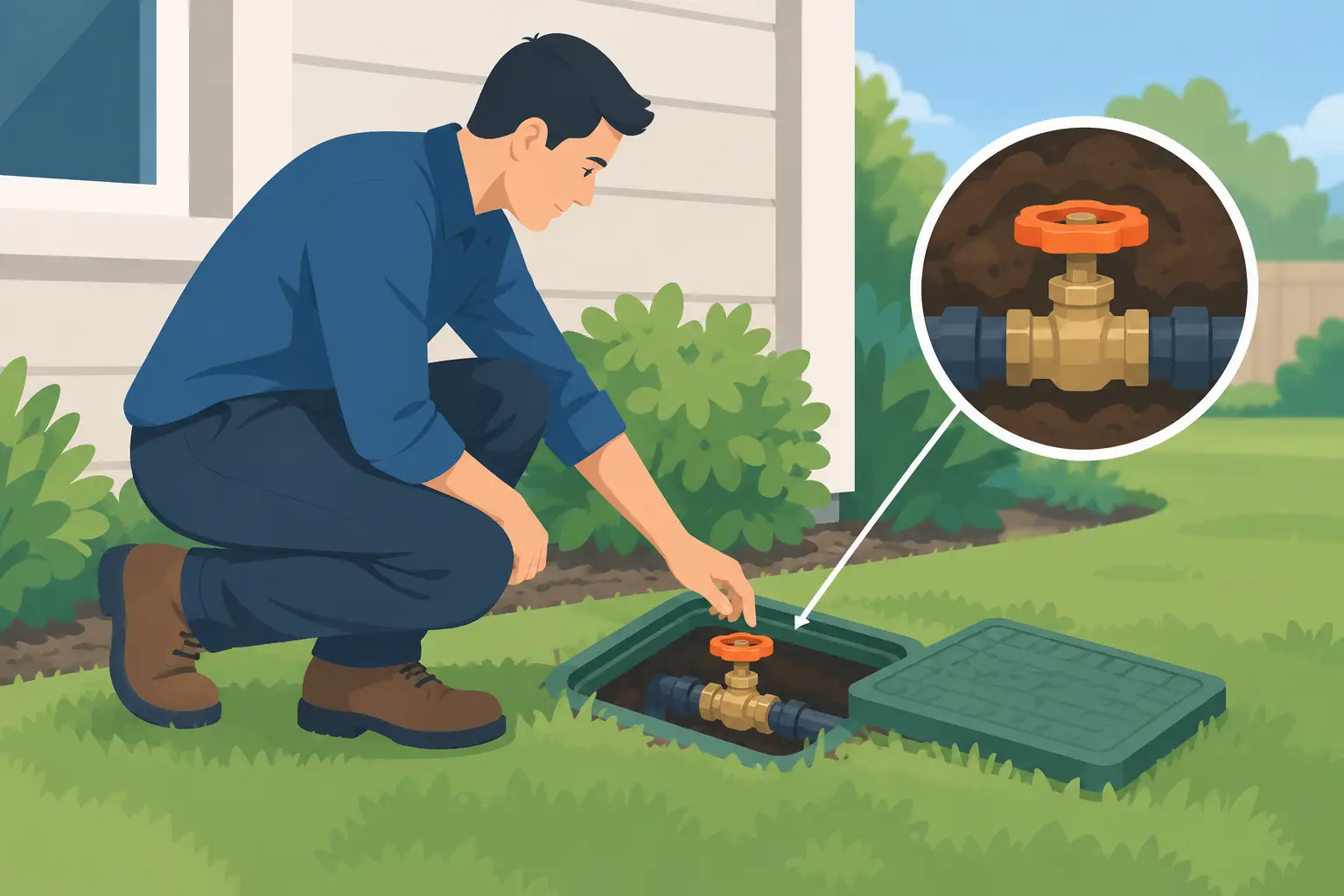
Most chambers have a removable lid at ground level. Underneath, there may be a valve with a square-headed spindle or a small handle. Some are clearly marked “water”; many are not. Older chambers can be hidden by soil, overgrown grass, decorative stone, tarmac repairs or a driveway that has been resurfaced over the years.
The precise ownership and responsibility for the pipework can vary, particularly with shared supplies and older properties. That is one reason to treat an unknown external valve carefully. If you are unsure whether it serves your property alone, a neighbouring property or the water company’s network, professional advice is the sensible option.
Where to locate an external stop tap
Start by looking between the pavement or road and the front of the property. The stop tap is commonly installed close to the property boundary, where the incoming service pipe crosses from the public main towards the building. On many homes, this means the front garden, verge, driveway edge or footpath.
Look for a small square, rectangular or round cover set into the ground. It may be plastic, metal or concrete, and is usually much smaller than a drainage manhole cover. Covers can sit flush with paving or be tucked beside a wall, fence, gatepost or utility meter box.
At properties without a front garden, check the pavement immediately outside the boundary. Do not lift utility covers in the public highway or attempt work where you could obstruct pedestrians or traffic. The relevant water company may need to confirm the location of its equipment.
For properties with a side entrance, long driveway or rural setting, the valve may be closer to the point where the supply pipe enters the land rather than directly in front of the house. Newer developments can have water meters and stop valves grouped in purpose-made boundary boxes. Older terraces sometimes have valves in less obvious shared positions.
Useful clues from the property layout
The route of your internal stopcock can provide a clue. It is often located where the mains water first enters the house, such as under the kitchen sink, in a utility cupboard or near the front of the building. The external supply will normally approach from the same general direction, although pipe alterations over decades can make this less straightforward.
Water meters may also be installed beside or inside the external chamber. If you have a meter and it continues to register usage when every tap and appliance is off, this can indicate a leak on the supply pipe. Do not assume the meter itself identifies the correct valve, particularly where properties share a supply.
If you are a landlord, keep the location recorded in your property file once confirmed. For commercial premises, facilities teams should include the valve location in emergency procedures and make sure access is not blocked by parked vehicles, storage or landscaping.
How to check the external stop tap safely
Before opening a chamber, make sure the surrounding ground is stable and dry where possible. Wear gloves, as lids and chambers can contain dirt, insects and standing water. A purpose-made stop tap key is normally required to operate a recessed valve. Avoid improvising with grips, screwdrivers or excessive force, as this can damage a worn spindle or pipe connection.
Lift the cover carefully. If it is heavy, cracked, jammed or located in the pavement, leave it in place and seek assistance. Once open, clear loose debris only from the top of the valve. Do not reach into deep chambers or disturb pipework that appears corroded, loose or under strain.
If you are certain the valve serves your property and it needs to be isolated, turn it slowly in the direction indicated by the fitting. Older valves may need several turns. Check inside the property by running a cold tap after a short wait. If the water does not stop, the valve may not be yours, may be faulty, or the property may have an alternative or shared supply arrangement.
Never force a stop tap that will not turn. A seized valve can snap, leak or fail to close properly, creating a more urgent problem underground. This is particularly relevant where a lead supply pipe or ageing iron fittings are present. A specialist can isolate the supply using the appropriate equipment and repair or replace damaged pipework with far less risk.
When the stop tap is difficult to find
Not every missing stop tap is simply hidden under leaves. Ground levels change, driveways are relaid, and previous building work can cover access chambers. At some properties, the original valve may have been abandoned after a supply alteration. Shared service pipes can also mean that the expected boundary valve is located outside another property.
Signs that professional investigation is worthwhile include persistently wet ground, an unexplained increase in water bills, low water pressure, the sound of running water when nothing is in use, or water appearing at the edge of a driveway. These can point to a leak on the underground supply pipe rather than an issue inside the home.
A water supply contractor can trace the route of the incoming pipe, identify likely valve positions and investigate leaks without automatically excavating large areas. Acoustic leak detection and other specialist methods can narrow down the problem before work begins. Where replacement is required, trenchless moling is often suitable for installing a new water supply pipe beneath gardens, paths and driveways with minimal excavation.
That approach is not appropriate for every site. Ground conditions, access, pipe route, buried services and the connection point all affect the method. A proper site survey is the best way to establish whether a no-dig installation will reduce cost and reinstatement work compared with conventional excavation.
External stop taps and shared water supplies
Many older homes, converted buildings and some terraces have shared water supplies. One external stop tap may isolate more than one household, while separate internal stopcocks control individual properties. Turning the wrong valve could leave neighbours without water, which is especially problematic in flats, rented homes and business premises.
If you suspect a shared supply, speak to affected occupiers before any planned isolation. For an emergency leak, contact the water company if the problem appears to be on its network or outside your property boundary. If the leak is on private pipework, use a qualified water supply specialist who can assess the arrangement, explain the options and provide a clear quotation for repair or replacement.
For landlords and property managers, replacing an ageing shared lead supply with individual modern connections can improve reliability and make future maintenance much simpler. It does involve coordination, permissions and careful planning, but it can prevent repeated disruption caused by a single failing pipe.
Get help before a small problem becomes major damage
An external stop tap is a valuable emergency control, but it is not something to force, dig around or guess at. If the chamber is inaccessible, the valve is seized, or you have signs of an underground leak, a specialist investigation is faster and safer than repeated trial and error.
Watermains & Drains UK provides water supply investigations, lead pipe replacement and new pipe installation using modern methods designed to keep disruption to driveways, gardens and paved areas to a minimum. The most useful step you can take now is to confirm and record your valve location while everything is dry, accessible and working properly.





