

How to Select Drain Lining That Fits the Repair
A drain can be leaking beneath a driveway, kitchen floor or landscaped garden long before there is a visible problem above ground. That is why knowing how to select drain lining starts with evidence, not a guess based on a slow-draining sink or a single blockage. The right lining repair can seal a damaged pipe without excavation. The wrong approach can leave the underlying issue unresolved.
Drain lining is a no-dig repair method that creates a new pipe within the existing one. It is often a fast, cost-effective option for damaged private drains, but it is not suitable for every defect. A professional CCTV drain survey establishes whether the pipe can be lined, which method is appropriate, and whether excavation is the safer long-term solution.
Start with a CCTV drain survey
A CCTV survey is the basis of any properly specified drain lining job. A camera is fed through the drainage system to record the pipe’s condition, diameter, route, joints and connections. It should identify the exact location and extent of cracking, root ingress, displaced joints, holes, scaling, deformation and standing water.
This matters because similar symptoms can have very different causes. Repeated blockages may be caused by roots entering through an open joint, but they can also result from a collapsed section, a poorly installed connection or a pipe that has lost its fall. Lining can seal cracks and joints. It cannot correct every structural or design problem.
Before lining is considered, the drain should usually be cleaned with high-pressure water jetting. Removing fat, scale, silt and root mass gives the camera a clear view and allows the liner to bond correctly to the host pipe. If the report simply recommends lining without confirming the pipe condition, size and accessibility, ask for more detail.
How to select drain lining by the type of damage
The repair should match the defect, rather than using a full-length liner for a problem that is limited to one short section. In many cases, the choice comes down to patch lining or full drain lining.
Choose patch lining for isolated faults
A patch liner is a short section of resin-impregnated liner installed over a specific defect. It is commonly used for a cracked pipe, failed joint, small hole or localised root ingress. Once positioned and cured, it forms a watertight structural seal across the damaged area.
Patch lining is often the sensible choice where the rest of the drain is in good condition. It keeps costs proportionate, avoids unnecessary work and can usually be installed through existing access points. For landlords and commercial property managers, it can also reduce downtime where a single defective joint is affecting part of the system.
A patch is not a shortcut for a pipe that has multiple defects along its length. If the camera survey shows cracks, open joints and root entry at several locations, repeated patches can become less economical than lining the whole affected run.
Choose full drain lining for widespread deterioration
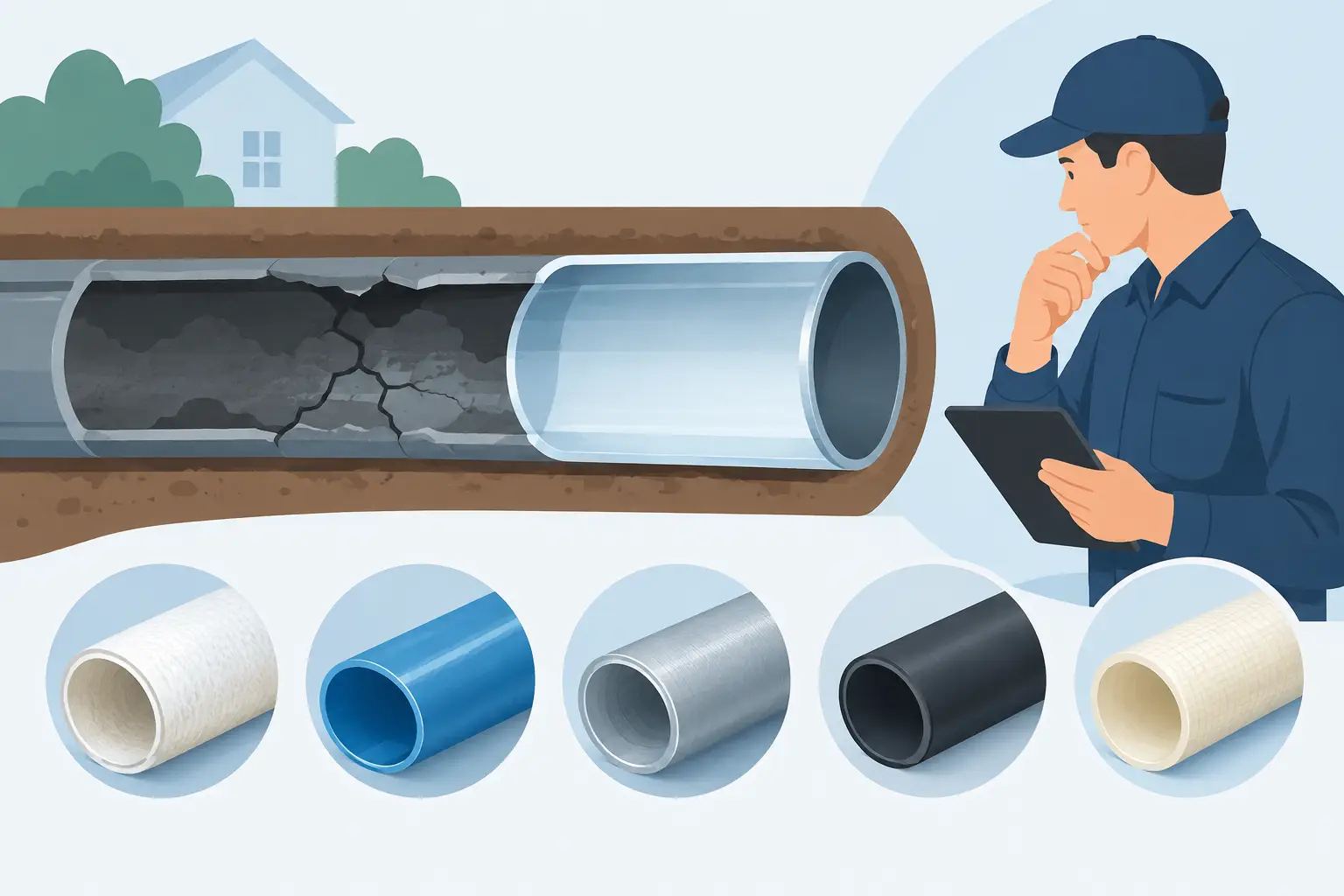
Full drain lining is used when a longer section has recurring damage or deterioration. A resin liner is pulled or inverted through the pipe, inflated against the internal wall and cured to create a continuous new lining. The result is a jointless pipe within the old pipe.
This approach is particularly useful beneath driveways, patios, extension floors and mature gardens, where excavation would involve substantial reinstatement. It can seal numerous minor fractures and defective joints in one operation while improving resistance to root ingress.
The trade-off is that full lining costs more than a local repair and requires a suitable route through the pipe. It also slightly reduces the internal diameter. In a correctly assessed domestic drain, this reduction is usually manageable, but the contractor must confirm that the finished pipe will still provide adequate flow.
Check pipe size, material and route
Drain lining is not a one-size-fits-all product. The liner, resin system and installation method must suit the pipe diameter, length and condition. Domestic foul and surface-water drains are often 100mm or 150mm, although older properties and commercial sites may have different arrangements.
The original pipe material also affects preparation. Clay drains may have open joints, fractures or displaced sections. Cast iron can suffer corrosion and internal scaling. Plastic pipework may be cracked or distorted through ground movement. Each can potentially be lined, but only if the remaining pipe provides a stable enough shape for the liner to form correctly.
The route matters just as much. Bends, changes in diameter, branch connections and limited access can influence what is possible. A liner may be installed from a manhole, rodding eye or other access point, but the contractor needs sufficient entry and exit access to work safely and accurately.
A good specification should also account for laterals. These are the smaller branch pipes connecting toilets, showers, kitchens and gullies to the main drain run. Where a full liner passes a live connection, the connection may need to be reopened from inside the pipe after curing. This is specialist work and should be planned before installation, not treated as an afterthought.
Rule out problems that lining cannot fix
Drain lining is designed to repair the inside of a pipe. It is not a cure for a drain that has fully collapsed, badly displaced or lost the correct gradient. If wastewater is pooling because the pipe has sunk, lining may preserve the poor fall rather than restore drainage performance.
Excavation may be the better answer where there is a major collapse, extensive deformation, missing pipework, severe offset joints or an inaccessible section that cannot be cleaned and prepared. Although digging is more disruptive, a targeted excavation can be the most dependable and cost-effective repair when the pipe’s structure has failed.
This is where an honest contractor adds value. The least disruptive method is not always the right method. The goal is a repair that lasts, protects the property and prevents repeat call-outs.
Consider the water flow and future use
A lining decision should take account of what the drain serves. A short patch on a lightly used garden gully drain is different from a full liner on a shared foul-water run serving several flats, a restaurant kitchen or a busy commercial unit.
Higher-use drains may need closer consideration of flow capacity, grease build-up and maintenance access. Commercial premises may also require work to be scheduled around trading hours, tenant access and health and safety requirements. For homes, the priorities are often protecting the driveway or flooring, keeping disruption low and getting toilets, showers and appliances back in use quickly.
If the pipe has a history of roots, ask why they entered in the first place. Lining can provide an excellent barrier against future ingress, but roots should be removed before the liner is installed. Any nearby trees should be considered too, particularly where roots are likely to continue exerting pressure on already weakened pipework.
Compare quotations on scope, not just price
Two drain lining quotations can look similar while covering very different work. The lower price may only allow for the liner itself, while another quotation includes jetting, root cutting, CCTV inspection, connection reinstatement and a post-repair survey.
Ask what length is being lined, whether the price is for a patch or full run, how access will be gained, and whether cleaning is included. Confirm how branches will be dealt with and whether the finished repair will be camera-checked. The post-installation survey is useful evidence that the liner is continuous, properly cured and free from obstruction.
For a managed property or insurance-related repair, clear reporting is especially valuable. It creates a record of the initial defect, the work completed and the condition of the drain afterwards. This can help with maintenance planning and demonstrate that a professionally specified repair has been carried out.
Choose a specialist contractor for no-dig repairs
Drain lining relies on accurate surveying, correct preparation and careful installation. It is not simply a matter of pushing material through a pipe. The contractor should be able to explain why lining is suitable, identify any limitations, provide a clear scope of work and leave the site clean once the job is complete.
Look for appropriate insurance, relevant drainage experience and a workmanship guarantee that is clearly set out. For homeowners, that provides reassurance that the repair is not a temporary response to the latest blockage. For facilities teams and landlords, it supports predictable scheduling, documentation and reduced disruption to occupiers.
Watermains & Drains UK assesses drainage faults with CCTV surveys and practical no-dig repair options, including local patch lining and longer drain lining installations. Where lining is not appropriate, the recommendation should be based on the pipe condition and the most reliable route to repair.
The best drain lining choice is usually the one that fixes the confirmed defect with the least unnecessary disruption – while still giving the drain a dependable working life. A clear survey and a properly explained proposal make that decision much simpler.





