Commercial Drain Maintenance for UK Properties
A blocked toilet in a busy office, wastewater backing up in a restaurant kitchen or foul odours in a communal corridor can quickly become more than a maintenance issue. It can interrupt trading, inconvenience tenants and create a hygiene concern. Planned commercial drain maintenance gives property managers and business owners a practical way to find issues early, keep drainage moving and avoid the cost and disruption of an emergency repair.
For commercial premises, the right approach is not simply arranging a drain clearance when there is a blockage. It is understanding how the site is used, identifying the sections of drainage most likely to fail and putting an inspection and cleaning programme in place that suits the building.
Why commercial drains need a planned approach
Commercial drainage often works harder than domestic systems. A small blockage can build quickly where many people use the same facilities, where food preparation creates grease deposits, or where older pipework serves several units. Shops, offices, warehouses, schools, care settings, restaurants, industrial sites and rental properties all have different risks, but the outcome is similar when drainage fails: lost time, complaints and potential damage to the premises.
Reactive drain unblocking has its place. If a toilet is overflowing or a gully is backing up, the immediate priority is to make the area safe and restore flow. However, repeated call-outs to the same drain usually indicate an underlying cause. That could be fat and food waste, wipes and sanitary products, tree root ingress, a displaced joint, scale build-up or a damaged section of pipe.
A planned programme helps separate a one-off blockage from a recurring defect. It also allows work to be scheduled around trading hours, tenant access and site safety requirements, rather than being carried out at the least convenient time.
What a commercial drain maintenance programme should cover
The right frequency depends on the property and its use. A restaurant or food premises may need more regular cleaning than a small office, while a property with mature trees or known drainage defects may benefit from seasonal checks. There is no benefit in paying for visits that do not address the risks on site, so the programme should follow a proper initial assessment.
Drain cleaning and clearance
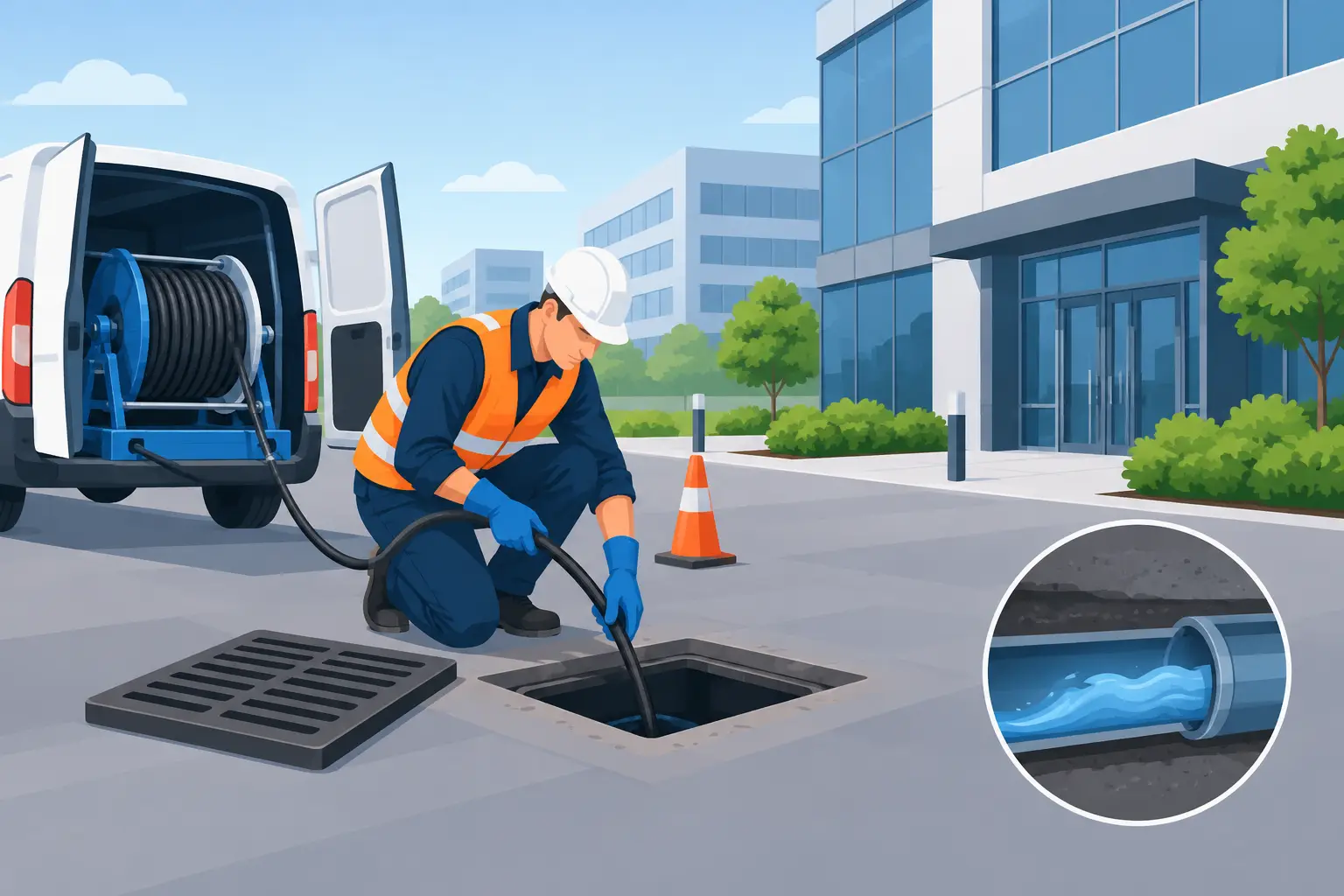
High-pressure water jetting removes debris, silt, grease, scale and loose root growth from pipework. It is often the most effective way to restore capacity before a complete blockage develops. For commercial sites, cleaning may include internal waste pipes, external gullies, rainwater runs, soil stacks and connection points, depending on the drainage layout.
The work should be completed with care around customers, staff, vehicles and landscaped areas. A contractor should manage access, contain wastewater where necessary and leave the working area clean and tidy. For many sites, early morning, evening or agreed low-occupancy visits are the least disruptive option.
CCTV drain surveys
A CCTV drain survey is one of the most useful tools in commercial drainage maintenance. A camera inspection shows what is happening below ground without unnecessary excavation. It can identify root ingress, cracks, displaced joints, collapsed pipework, defective connections and persistent build-up.
For facilities teams and landlords, the survey footage and report provide a clear record of the drain condition. This is helpful when planning budgets, reporting to owners, supporting an insurance matter or demonstrating that a known issue has been investigated properly.
A survey is particularly worthwhile after repeat blockages, before acquiring or leasing a commercial property, and before resurfacing works that could make future repairs more disruptive. It is also sensible where a drain has been damaged by heavy vehicle movements or building work.
Gully, interceptor and surface-water checks
External drainage needs attention too. Blocked gullies can leave standing water around entrances, loading areas and car parks. Besides creating an unpleasant first impression, this can increase slip risks and allow water to collect against the building.
Sites with car parks, workshops or vehicle yards may have interceptors or specialist drainage arrangements that need a separate maintenance plan. These systems should not be treated as ordinary gullies. Their inspection and emptying requirements depend on the site activity and environmental obligations, so the contractor must understand what the system serves before work begins.
Warning signs worth acting on early
Drainage problems are usually easier and less expensive to deal with before wastewater escapes into the building. Staff and cleaners are often the first to notice a change, so it is useful to give them a simple reporting route.
The most common early warnings include:
- slow-draining sinks, toilets or floor drains;
- recurring odours from bathrooms, kitchens or external gullies;
- gurgling noises when appliances or toilets are used;
- water pooling around gullies, manholes or entrances; and
- repeated blockages in the same area of the property.
These signs do not always mean the drain is collapsed. In some cases, a targeted clean will solve the problem. Where symptoms keep returning, a CCTV survey is normally the sensible next step because it avoids guessing and helps target the repair accurately.
When cleaning is not enough
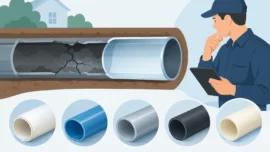
Drain jetting clears an obstruction, but it cannot permanently correct damaged pipework. If the camera inspection shows cracks, open joints or local root entry, a repair may be needed to prevent the issue returning.
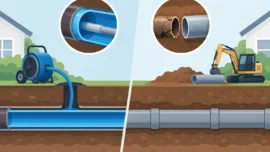
Patch lining can be a cost-effective option for a localised defect. A liner is installed inside the existing pipe to create a new sealed section, avoiding the need to excavate the full drain run. This is often particularly valuable beneath paved areas, access roads, landscaped grounds or busy premises where digging would cause disruption.
Full excavation remains necessary where there is a significant collapse, extensive pipe deformation or a drainage route that needs changing. Even then, careful planning matters. The best solution balances the condition of the pipe, the access available, the expected lifespan of the repair and the impact on daily operations. The cheapest immediate option is not always the most cost-effective if it leaves the site facing further call-outs a few months later.
Building a practical maintenance schedule
A dependable schedule begins with a baseline survey or site review. This should establish the location of manholes and gullies, the known drainage routes, previous problem areas and the type of waste entering the system. A kitchen producing fatty wastewater needs different controls from an office block where wipes are causing blockages.
From there, maintenance can be planned around risk. High-use food premises may require regular preventive cleaning, while a managed office or light industrial unit may only need periodic inspections and prompt action when warning signs appear. Properties with tree-lined boundaries are often best checked before and after periods of strong root growth.
Keep records of visits, survey findings, jetting work and repairs. A simple history makes it easier to spot patterns, justify planned expenditure and avoid repeatedly treating the same symptom. It also gives a new facilities manager or managing agent a clearer picture of the site.
Choosing the right drainage contractor
Commercial work needs more than a van and drain rods. The contractor should be able to respond quickly when a problem is urgent, while also providing clear reports and quoted repair options when a longer-term solution is needed. Ask how access will be managed, whether CCTV evidence is supplied, what reinstatement is included and whether work can be scheduled to reduce disruption to staff, tenants and customers.
For water supply and drainage work, recognised approvals, suitable insurance and a clear workmanship guarantee offer useful reassurance. They show that the contractor understands the standards expected on occupied properties and can take responsibility for the work completed.
Watermains & Drains UK provides reactive and planned drainage services for commercial properties across the North West, including drain unblocking, CCTV surveys, drain repairs and patch lining. The focus is on finding the cause, recommending the most practical repair and completing work with the least disruption possible.
A well-maintained drain is rarely noticed, which is exactly the point. By arranging inspections before recurring issues become emergencies, property managers can protect their premises, keep occupants comfortable and deal with drainage work on their own timetable rather than a blocked drain’s.