

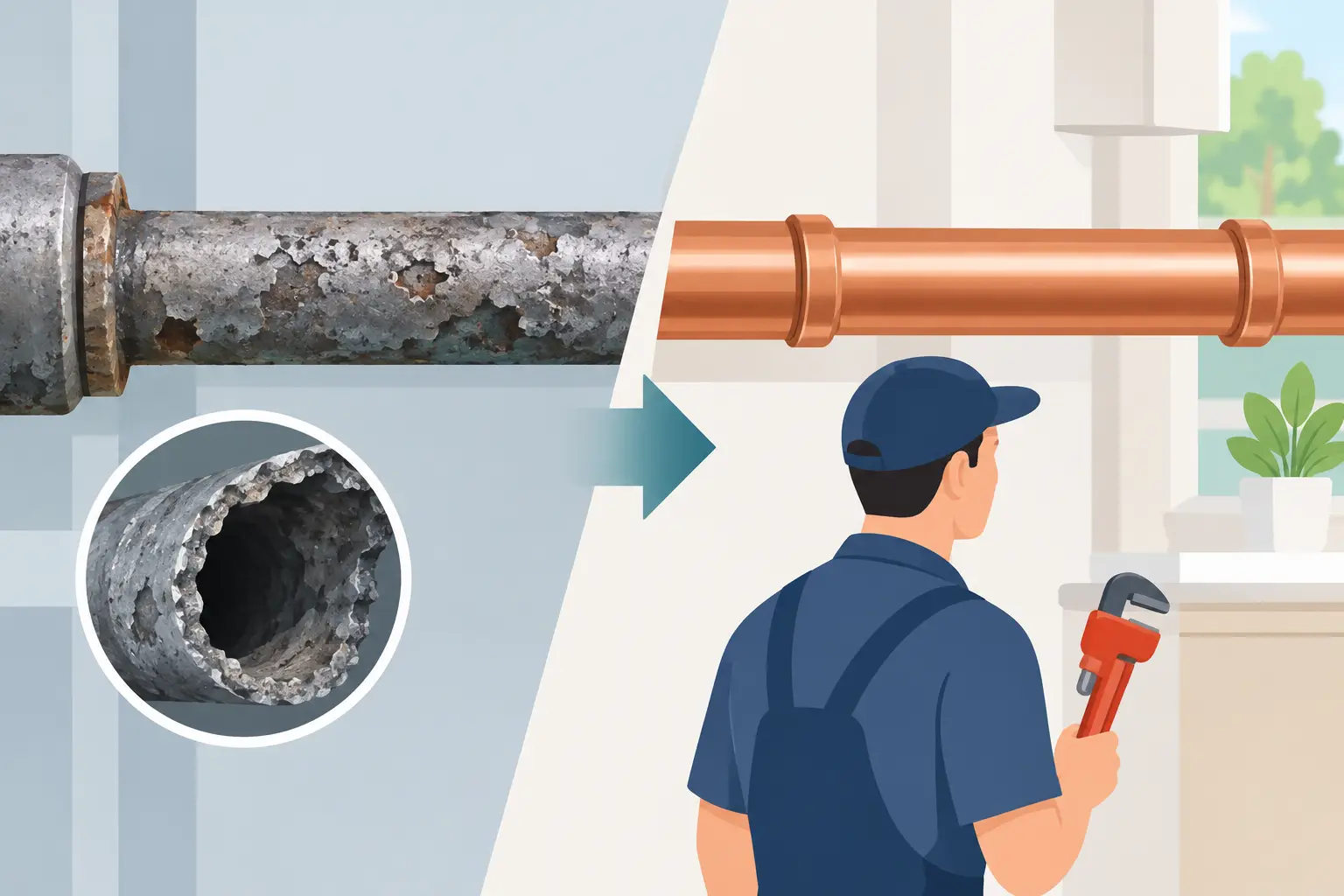
Lead Plumbing: When to Replace Your Water Pipe
A lead water pipe is easy to overlook because most of it sits underground or behind internal fittings. Yet lead plumbing can affect drinking water quality, restrict flow and create an avoidable concern when you come to sell, let or renovate a property. For many homes across the North West, particularly those built before the 1970s, replacing the private lead supply pipe is a practical, long-term improvement rather than a cosmetic upgrade.
The right solution is not always a major excavation project. Modern trenchless installation methods can often install a new water supply with far less disturbance to driveways, paths, gardens and paved areas. The first step is understanding where lead may be present, what responsibility sits with the property owner and how a replacement should be planned.
What is lead plumbing?
Lead plumbing usually refers to the old lead pipework used to bring water from the public water main into a property. In most cases, the relevant section is the private supply pipe running from the boundary stop tap, or communication pipe connection, to the internal stop tap inside the building.
Lead was widely used because it was flexible and durable underground. It is no longer used for new drinking water supplies. Over time, water chemistry can cause small amounts of lead to dissolve into the water, particularly where water has been standing in the pipe for several hours.
A property may have a mixture of materials. For example, an internal stop tap could be connected to a short length of lead pipe, while a previous owner has replaced part of the external run with plastic. A proper inspection matters because replacing only one section may not resolve low flow or remove all lead pipework from the private supply.
How to tell if you have a lead water supply pipe
The most useful place to look is around the internal stop tap, commonly found beneath the kitchen sink, in a utility room or close to where the water supply enters the property. Do not confuse the water supply with gas pipework, and do not disturb any pipe if you are unsure what it serves.
Lead pipe tends to be dull grey, soft-looking and slightly uneven in shape. It does not attract a magnet. If carefully scratched on an exposed section, it often reveals a brighter silver-coloured surface beneath. Older lead pipes may also have swollen or wiped joints rather than modern compression fittings.
Age is another clue. Homes built before 1970 are more likely to have had lead supply pipes, although later replacement work cannot be assumed. Victorian and early twentieth-century properties in Manchester, Stockport, Warrington and Cheshire frequently retain original or partially replaced services.
Water pressure can offer a further indication, but it is not proof. Lead pipes were often installed with a smaller internal diameter than modern polyethylene pipes. Mineral build-up, old stop taps and shared supply arrangements can all reduce the available flow. If taps slow noticeably when another appliance is running, the supply pipe may be part of the issue.
Why replacing lead plumbing is worth considering
The main reason is drinking water quality. Water companies monitor their networks and take measures to reduce lead exposure, but replacing private lead pipework removes a potential source within your own property. This is especially relevant for homes with young children or pregnant residents, where avoiding unnecessary lead exposure is sensible.
There are also practical property benefits. A new water supply pipe can improve flow to taps, showers and combination boilers where an undersized or restricted old pipe is holding the system back. It can reduce the likelihood of pinhole leaks and recurring repairs on ageing pipework. For landlords and property managers, it is a clear improvement to record within planned maintenance and asset information.
Replacement can also make future projects simpler. If you are extending a kitchen, converting a property, adding bathrooms or upgrading heating equipment, dealing with the incoming supply first can prevent disruption later. The best time to renew a buried pipe is often before a new driveway, patio or landscaped garden is installed.
That said, a lead pipe does not automatically mean there is an emergency. The priority depends on the pipe condition, household circumstances, water test results where available, planned building work and whether pressure or leaks are already causing problems. A site survey allows the work to be scoped properly rather than relying on guesswork.
Who is responsible for the pipe?
Responsibility is usually divided between the water company and the property owner. The water company generally maintains the public main and its section of pipe up to the boundary point. The property owner is normally responsible for the private supply pipe from that point into the building.
The exact arrangement varies by property. Some older terraces and converted buildings may have shared supply pipes, where more than one home is served by the same connection. Flats, commercial units and mixed-use sites can be more complex again. Before work begins, a specialist contractor should establish the route, identify the likely connection point and consider whether approvals or coordination with the local water company are required.
Using an approved contractor provides reassurance that the installation is designed for potable water use and notified correctly where necessary. Water Regulations approval is not a detail to overlook. It helps protect the water supply and ensures the new connection, fittings and backflow protection are suitable for the work.
Replacing a lead water pipe with minimal disruption
Traditional replacement involves opening a continuous trench from the house to the boundary. This can be appropriate where access is straightforward, the route is short or other excavation work is already planned. It gives direct visibility of the ground, but it can mean lifting paving, disturbing lawns and allowing time for reinstatement.
For many properties, trenchless moling provides a cleaner alternative. A pneumatic mole creates a narrow bore underground between small launch and reception pits. The old lead supply can then be replaced with a modern polyethylene pipe, avoiding the need to excavate the full length of the route.
This method is particularly useful beneath driveways, garden paths and landscaped areas. It is not suitable for every site. Ground conditions, underground services, access, pipe route and depth must be assessed first. Tree roots, large obstructions, very shallow existing services or complex crossings may mean that a combination of moling and carefully planned excavation is the safer option.
For longer runs or more demanding commercial work, horizontal directional drilling may be considered. This method offers controlled installation beneath roads, car parks and other sensitive surfaces, subject to the site survey and required permissions.
A professional installation is about more than pulling in a new pipe. The route must be planned around existing gas, electric and drainage services. The new supply needs suitable depth and protection, a compliant connection, pressure testing and careful reinstatement of the small excavation points. Inside the property, the incoming pipe and stop tap should be connected neatly and left accessible for future isolation.
What happens during a lead pipe replacement?
A clear survey should come before any quote. The contractor will assess the visible pipework, locate the internal stop tap, discuss the likely route and inspect external surfaces that need protecting. For difficult sites, service plans, trial holes or additional investigation may be needed before confirming the method.
On the day, water is normally isolated for the final connection period rather than throughout the entire job. The team will protect working areas, create any required access pits and install the new pipe using the agreed method. Once connected, the pipe is tested and flushed before the water supply is restored.
Most straightforward domestic replacements can be completed quickly, often within a day, though timescales depend on length, access, connection arrangements and unexpected ground conditions. A good contractor will explain what is included in the quotation, including reinstatement, notification, testing and any exclusions such as specialist paving or landscaping finishes.
Choosing the right contractor
Lead pipe replacement involves drinking water regulations, buried services and reinstatement. It should be treated as specialist infrastructure work, not simply as a plumbing alteration. Look for clear evidence of water-industry approval, appropriate public liability insurance and experience with trenchless methods.
Ask how the route will be checked for buried services, whether the price includes the final connection and reinstatement, and what guarantee applies to the workmanship. For landlords, commercial sites and managed properties, request the documentation needed for your records, including method statements where appropriate.
Watermains & Drains UK provides lead pipe replacement and new water supply installation with modern no-dig methods where site conditions allow. WIAPS and Watersafe approval, £10m public liability insurance and a 25-year workmanship guarantee give property owners and facilities teams practical assurance that the work is being handled correctly.
If your property may still have lead plumbing, arranging a professional survey is a sensible way to replace uncertainty with a clear plan. A new supply pipe can be installed with far less disruption than many homeowners expect, leaving you with cleaner water infrastructure and one less hidden issue beneath the ground.





