Best Methods for Leak Tracing in UK Properties
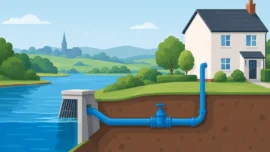
A leak beneath a driveway, suspended floor or commercial hardstanding can waste a surprising amount of water before it becomes visible. Higher bills, a constantly moving water meter, low pressure and damp patches are all warning signs, but they do not identify the point of failure. The best methods for leak tracing locate the source accurately before repair work begins, helping to avoid unnecessary digging, cost and disruption.
For UK homeowners, landlords and facilities teams, the right approach depends on whether the leak is on a cold-water supply, heating system or drainage pipe, as well as the pipe material, depth and surrounding ground conditions. A professional investigation should build evidence in stages rather than relying on guesswork.
Start by confirming that there is a leak
Before specialist equipment is used, the first job is to establish whether water is genuinely escaping from the private supply. Turn off all taps, appliances and water-using equipment, then check the water meter. If the meter’s leak indicator is moving, or the reading rises over a controlled period with no water being used, there is likely to be a leak somewhere after the meter.
This simple check is useful, but it has limits. It cannot tell you whether the issue sits inside the property, under a garden, beneath a driveway or on pipework serving an outbuilding. It also will not locate a leak on a shared supply without a planned isolation test. For commercial sites, separate zones and submeters can help narrow down the affected area before a full survey.
A visible damp area is not always the leak location. Water often follows the line of a trench, drains through granular sub-base beneath paving, or appears at the lowest point of a floor. Treat surface symptoms as clues, not proof.
Best methods for leak tracing on water pipes
Acoustic leak detection
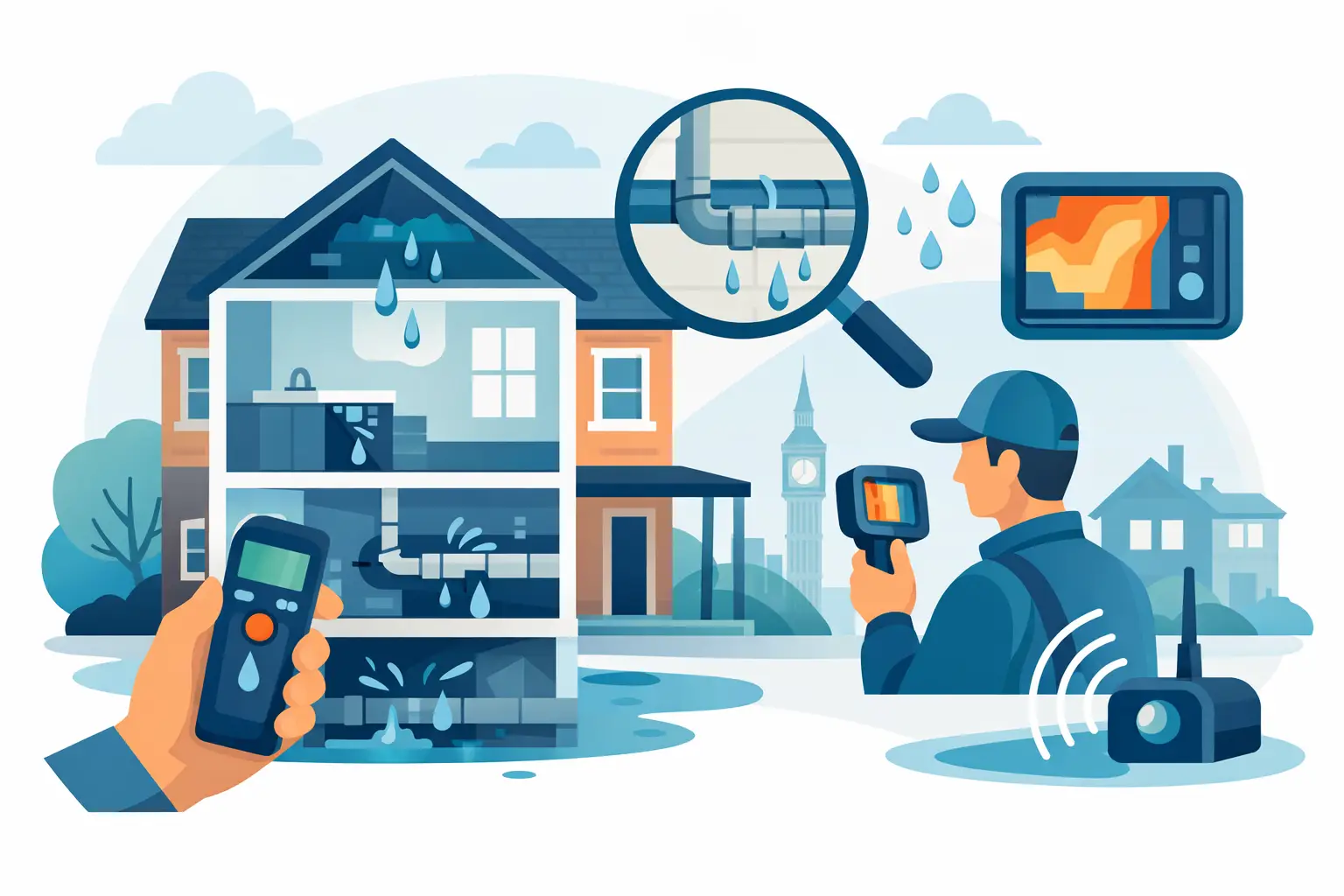
Acoustic testing is one of the most effective methods for pressurised water supply pipes. Escaping water creates a sound and vibration as it passes through a defect. A trained operative uses sensitive ground microphones, listening equipment and contact sensors at accessible points to identify where that sound is strongest.
It is particularly useful for external mains and service pipes beneath lawns, paths and driveways. When conditions are suitable, it can pinpoint a leak closely enough for a small, targeted excavation or a planned trenchless replacement.
Results depend on several factors. Plastic pipes transmit sound less clearly than metal pipes, deep pipework can be harder to hear, and traffic, machinery and flowing water can create background noise. This is why acoustic detection works best as part of a structured survey, not as a single test used in isolation.
Leak noise correlation
A correlator is a more advanced acoustic tool, commonly used on longer water mains and commercial pipe runs. Sensors are placed at two known points on the pipe, such as valves, hydrants or internal fittings. The equipment compares the time it takes for leak noise to reach each sensor and calculates the likely position of the leak.
Correlation can be highly accurate where the pipe route, material and diameter are known. It is especially valuable when digging along the full run would be expensive or disruptive. However, it is less reliable if the pipe route is uncertain, there are numerous branches, or access points are too far apart.
Tracer gas detection
Tracer gas is often the preferred option where acoustic methods are inconclusive, particularly on plastic supply pipes or concealed pipework. The affected pipe is isolated and drained, then filled with a safe, non-toxic forming gas. The gas escapes through the leak and rises through soil, screed or gaps in hard surfaces, where it is detected above ground using a sensitive probe.
This method can locate very small leaks without lifting large areas of flooring or excavating a driveway. It is useful where water has travelled away from the fault, making moisture marks misleading. The downside is that the pipe must be accessible enough to isolate and introduce the gas, and the testing process needs to be carried out carefully by experienced operatives.
Pressure testing and sectional isolation
Pressure testing confirms whether a pipe is holding water at the correct pressure over a set period. It does not normally pinpoint a leak by itself, but it is an essential diagnostic tool. By isolating sections of a supply one at a time, engineers can establish which length is losing pressure and focus further testing there.
For larger properties, blocks of flats and business premises, sectional testing can prevent a broad investigation from becoming unnecessarily intrusive. It also provides useful evidence for repair planning, property management records and some insurance claims.
Thermal imaging and moisture testing
Thermal cameras can identify temperature differences caused by water beneath floors, behind walls or within heating systems. Moisture meters can confirm that a building material is wet and help map the extent of water damage. These tools are useful supporting methods, particularly for internal leaks.
Neither should be treated as final proof of the leak point. A cool area on a thermal image may be caused by insulation gaps, draughts or surface temperature changes. Moisture readings show where dampness is present, not necessarily where the pipe has failed. Used alongside pressure testing, acoustic equipment or tracer gas, they help build a clearer picture.
Drain leak tracing requires a different approach
A drain is not permanently pressurised like a water supply pipe, so listening equipment is rarely the first choice. Drainage investigations normally begin with a CCTV drain survey. A camera is fed through the pipe to identify cracks, open joints, displaced sections, root ingress, collapsed pipework and poor connections.
CCTV footage is particularly valuable because it shows the pipe condition and the exact location of defects along the run. It can distinguish between a local repair, such as patch lining, and damage that requires a larger drainage repair or replacement. For landlords and commercial property managers, a recorded survey also creates a clear condition record.
Where the camera identifies a suspected defect but its impact is uncertain, dye testing can help. Coloured, non-staining dye is introduced into a drain or gully and monitored at the suspected emergence point. Smoke testing is another option for finding faulty drain connections, cracked stacks or odours entering a building. These methods need sensible interpretation, as water and smoke can travel through voids that are not directly above the defect.
Choosing a method that limits disruption
The most cost-effective survey is not always the one with the lowest initial price. A quick visual inspection may be appropriate for a clear, accessible problem, but it can become costly if it leads to exploratory excavation across a driveway or internal floor. The aim should be to identify the pipe route, confirm the type of leak and narrow the repair area before ground is opened.
For a leaking external water service, a typical investigation may combine meter testing, pipe tracing, acoustic detection and tracer gas where needed. For drainage problems, CCTV is usually the starting point, followed by dye or smoke testing if a connection fault is suspected. The appropriate method should follow the evidence, not a fixed sales process.
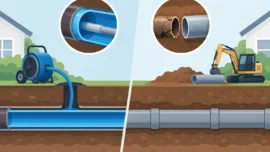
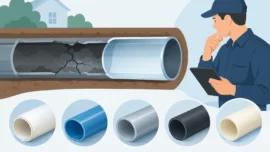
Once the leak location is confirmed, repair options can be assessed properly. A small excavation may be the best solution for a localised fault. If the supply pipe is old, undersized, lead or has suffered repeated failures, replacement can offer better long-term value. Trenchless moling can install a new water supply pipe beneath gardens, paths and many driveways with far less excavation than an open trench, while horizontal directional drilling may suit longer or more complex routes.
When to arrange a professional leak survey
Arrange an investigation promptly if your meter continues to move when water is off, your water bill rises without a clear reason, pressure drops across the property, or damp ground persists during dry weather. On commercial premises, unexplained consumption, recurring drainage odours, wet service yards and tenant complaints should also be addressed early.
If there is water close to electrical equipment, a flooded internal area, signs of structural movement or a serious loss of supply, isolate the water where safe and seek urgent assistance. Avoid repeatedly turning the supply on and off in the hope that the problem will settle. A small defect can rapidly erode soil, undermine paving or cause internal damage.
Watermains & Drains UK carries out leak investigation and water supply repairs with a focus on accurate diagnosis, tidy working and minimal disruption. A clear survey result allows the repair to be quoted on the right basis, rather than asking you to pay for excavation simply to find the fault.
The practical next step is to record your meter reading, note when symptoms began and keep access clear around any stop taps, meters and inspection chambers. Those small details give the investigating team a stronger starting point and can make the route from leak trace to permanent repair much quicker.