7 Common Causes of Repeat Drain Backups at Home
A drain that backs up once may be an isolated blockage. A drain that backs up every few weeks, or whenever the washing machine empties, rain falls heavily or several taps are running, is telling you there is a fault further down the system. The common causes of repeat drain backups are rarely solved for long by simply clearing the nearest gully or pouring chemicals down a plughole. Finding the underlying reason is what protects your property from repeated disruption, unpleasant smells and wastewater damage.
For homeowners, landlords and facilities teams, the priority is usually to get the water moving again. That matters, particularly where a toilet is overflowing or a commercial kitchen cannot operate. But once the immediate blockage has been cleared, a proper investigation can prevent the same call-out becoming a regular expense.
Why a drain keeps backing up
A drainage system relies on clear pipework, the correct fall and a free route to the public sewer or private treatment system. If any part of that route is restricted, damaged or overwhelmed, wastewater looks for the lowest available exit point. That can be a shower tray, ground-floor toilet, external gully or inspection chamber.
The location and timing of the backup provide useful clues. If only one basin is affected, the issue may be within that appliance waste pipe. If several fixtures block together, or sewage rises in an outside chamber, the problem is more likely to be in the main private drain. A professional drainage contractor will use these signs alongside cleaning equipment and a CCTV drain survey to establish what is actually happening underground.
1. A blockage that was only partly cleared
High-pressure jetting and mechanical rodding can restore flow quickly, but a blockage can return if material remains attached to the pipe wall or lodged at a joint. Fat, wipes, sanitary products, food waste and silt can all create a stubborn restriction. A small opening through the debris may be enough for normal use, yet it closes again when a larger volume of water enters the pipe.
This is particularly common in properties where the drain has been cleared from one access point without inspecting the full affected run. Clearing the visible chamber is not necessarily the same as clearing the cause. The right approach depends on the pipe condition and the material involved, but thorough jetting followed by a camera inspection is often the sensible next step when the fault returns.
2. Roots growing into pipe joints
Tree and shrub roots are drawn to moisture. Older clay drainage pipes often have joints that can open slightly over time, allowing fine roots to enter. Once inside, they expand into a dense mass that catches paper, wipes and other debris.
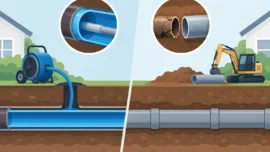
Root cutting can reopen the pipe and provide immediate relief. However, it is not always a permanent repair. If the joint remains open, roots can grow back. Depending on the survey findings, localised patch lining may seal the entry point with far less disruption than excavation. Where the pipe has collapsed or multiple joints have failed, a more extensive repair may be required.
3. Cracked, displaced or collapsed drains
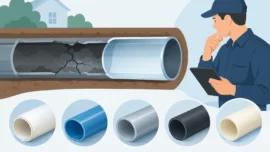
Ground movement, age, heavy loading and previous building work can damage underground pipework. A cracked pipe may allow soil to enter, while a displaced joint creates a lip that collects debris. In more serious cases, a section can deform or collapse, narrowing the route until it blocks repeatedly.
The trade-off is clear: continued clearing may seem cheaper in the short term, but it does not correct a structural defect. CCTV footage allows the contractor to identify the depth, location and severity of the damage before recommending repair. Many isolated defects can be addressed with no-dig patch lining, avoiding unnecessary excavation of patios, driveways or landscaped areas. A collapsed or badly misaligned pipe may still need excavation, but the work should be targeted rather than based on guesswork.
Common causes of repeat drain backups outside the property
Not every recurring backup starts in the pipe beneath the kitchen or bathroom. External drainage, gullies and boundary connections are frequent sources of trouble, especially in older homes and converted properties.
4. Silt, leaves and debris in gullies or surface-water drains
External gullies are designed to collect water from yards, driveways and downpipes. Over time, leaves, moss, gravel and silt settle at the base. During a heavy downpour, the gully cannot drain fast enough and water may pool against the building or back up through a low-level outlet.
This type of problem is often seasonal. Regular clearing helps, but it is worth checking whether the gully is connected to the correct drainage system and whether there is a damaged or poorly graded pipe beyond it. If standing water appears in the same area after routine maintenance, a survey can establish whether there is a deeper restriction.
5. Incorrect pipe fall or poor previous installation
Drainage pipes need sufficient fall to carry solids away. If a section is too flat, wastewater slows down and deposits build up. If it falls too sharply, liquid can run ahead of solids, leaving material behind. Poorly supported pipework can also sag over time, creating a low point known as a belly where waste settles.
These faults are more likely after extensions, alterations or previous repair work, although they can occur in older systems as the ground shifts. Repeated jetting may keep the line usable, but it will not change the pipe gradient. Survey evidence is vital here because a repair recommendation should be based on measured condition, not assumption. In some cases, a short section can be replaced or re-laid with minimal excavation; in others, trenchless methods can reduce the amount of surface reinstatement needed.
6. Shared drains and downstream restrictions
Many homes, terraces, flats and commercial units share sections of drainage before they connect to the public sewer. Your own pipework may be clear, yet a blockage further downstream can force wastewater back towards the property. This is why a neighbour reporting similar issues is useful information, not just an inconvenience.
Responsibility can depend on where the fault sits and how the drainage is configured. A CCTV survey and inspection chamber checks can help identify whether the issue is within a private drain, a shared lateral or a public sewer. For landlords and property managers, clear evidence is especially useful when coordinating occupiers, insurers or the relevant sewerage authority.
7. Rainwater entering the foul drainage system
Heavy rain can expose problems that stay hidden in dry weather. If downpipes, yard drains or surface water have been incorrectly connected into foul drainage, the system can become overloaded during storms. Defective manhole covers, cracked pipes and cross-connections can have a similar effect.
A backup that happens only during or immediately after rainfall should not be dismissed as unavoidable. Some public sewers can surcharge in exceptional weather, but a property-specific pattern may indicate a private defect or incorrect connection. A drainage survey can trace the route and help distinguish between an internal drainage fault and a wider network issue.
Warning signs that should not be ignored
Slow drainage is often the first sign, but it is not the only one. Repeated gurgling from toilets or sinks, foul odours outside, water around inspection chambers, damp patches near a drain run and waste appearing in a lower-level fixture all justify further investigation. A toilet that bubbles when the bath empties is another indication that air and water cannot move freely through the pipework.
Do not keep using appliances that are causing wastewater to rise, particularly if sewage is entering the property. Avoid adding chemical drain cleaners to a serious or recurring blockage. They rarely resolve structural faults, can be hazardous to handle and may complicate later work for the drainage team.
How a CCTV drain survey provides a lasting answer
A CCTV drain survey places a specialist camera inside the pipe to record blockages, root ingress, fractures, displaced joints and poor falls. It moves the diagnosis beyond a best guess. The footage can show whether cleaning is enough, whether a local repair is appropriate, or whether a damaged section needs replacement.
For a homeowner, this means a clearer quote and less risk of paying repeatedly for temporary relief. For landlords, facilities managers and insurance-related cases, a written report and recorded findings provide useful evidence for maintenance planning and responsibility discussions. The best solution is not always the largest repair. If one small defect is causing the backup, a targeted no-dig repair can be faster, cost-effective and far less disruptive than lifting large areas of paving.
When a drain keeps backing up, treat the first clearance as the immediate response and the investigation as the protection against it happening again. Watermains & Drains UK can assess recurring drainage faults with professional cleaning, CCTV surveys and repair options designed to keep disruption to a minimum. Acting before the next overflow gives you more choice, a cleaner site and a better chance of a lasting repair.