HDD Versus Moling Installation: Which Fits?
A new water supply does not have to mean a trench cut through the front garden, driveway or paving. When comparing HDD versus moling installation, the right choice comes down to the route, ground conditions, pipework required and how much control the job needs. Both are trenchless methods designed to keep disruption to a minimum, but they solve different site problems.
For homeowners replacing a lead service pipe, moling is often the fast, cost-effective option. For longer, more complex or tightly controlled routes, horizontal directional drilling (HDD) can provide greater accuracy. A proper site survey is the best way to decide, rather than choosing a method on price alone.
HDD versus moling installation: the key difference
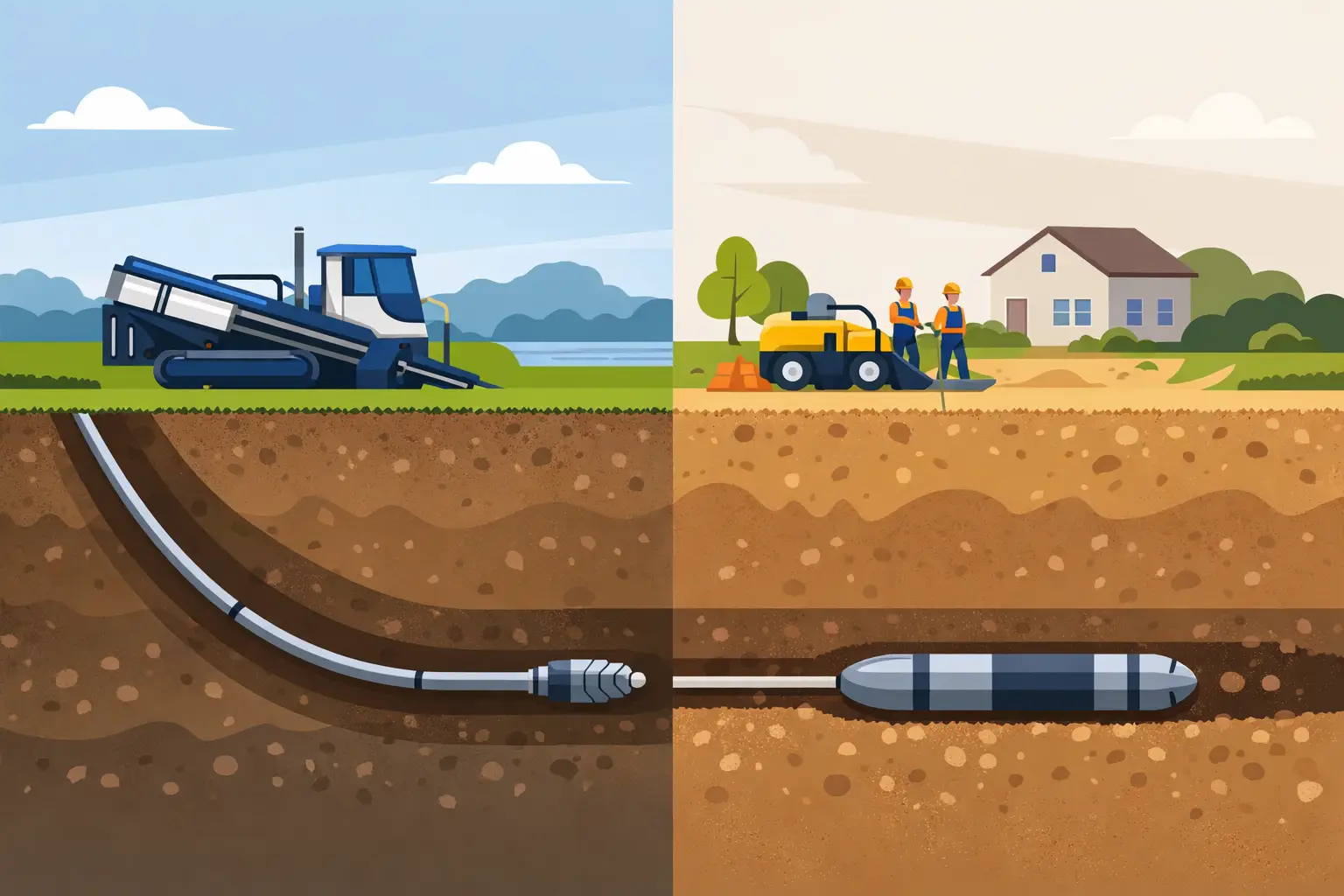
Moling uses a pneumatically powered, torpedo-shaped tool that creates a narrow bore through suitable soil. Small access pits are dug at the start and finish points, then the mole is driven underground between them. Once the bore is complete, the new water pipe can be pulled through.
HDD is a guided drilling process. A drill head follows a planned route underground, with its position monitored throughout the pilot bore. The bore is then enlarged where required before the new pipe is installed. This makes HDD particularly useful where the route needs to avoid known obstacles, maintain a specific depth or travel a longer distance.
Neither method is simply a better version of the other. Moling is efficient where conditions are straightforward. HDD brings a higher level of control where the site demands it.
When moling is the sensible choice
For many domestic lead pipe replacements, moling provides the simplest solution. A typical property may need only a small launch pit near the boundary and a receiving pit close to the house. The team can install a new polyethylene water supply pipe without lifting large sections of block paving, tarmac or lawn.
Moling is normally well suited to relatively short, direct runs through cohesive ground, such as firm clay. It can be an excellent option where access is limited but there is a clear route between the water company connection point and the property.
The practical benefits are easy to see: less excavation, less spoil to remove, quicker completion and reduced reinstatement work. For an occupied home or a rental property, that usually means less inconvenience for residents and a tidier site at the end of the day.
However, moling is not a blind process that should be used without investigation. It is less suitable where there is a high risk of striking unknown services, where the ground contains large stones, rubble or very hard material, or where the route has sharp changes in direction. It also requires enough room to safely create the launch and reception pits.
What moling can and cannot avoid
A mole can travel beneath many surfaces, including gardens, paths and driveways, but small excavations are still needed. Customers should be cautious of any contractor suggesting there will be no digging at all. The aim is least disruption, not an unrealistic promise of zero disturbance.
Before work starts, the route should be assessed for gas, electric, telecoms and drainage services. Trial holes may be needed to confirm depths and positions. This preparation protects the property, the workforce and existing utility infrastructure.
When HDD is the better installation method
HDD is generally chosen when the route is more demanding. Because the drill head is guided, it gives the installer more control over line and depth than a pneumatic mole. That matters when installing a new supply beneath a wider driveway, crossing beneath a road subject to permissions, working around established services or connecting larger-diameter pipework.
It is also useful on commercial sites, developments and properties with long service runs. Facilities managers may need a documented route, carefully controlled depths and a method that supports planned works with less impact on access, customers or tenants. HDD can meet those requirements where open-cut excavation would cause significant disruption.
The process takes more planning and specialist equipment, so it may cost more than moling on a simple domestic job. That does not make it poor value. Where accuracy reduces the risk of damage, avoids extensive reinstatement or allows a route that moling cannot achieve, HDD can be the more economical decision over the whole project.
Ground conditions still matter
Guidance does not remove the need to understand the ground. Difficult geology, buried obstructions, made ground and waterlogged conditions can affect both the drilling approach and programme. HDD may be capable of dealing with more challenging routes, but every installation must be designed around actual site information.
On some sites, a combination of methods is appropriate. For example, HDD may be used for a controlled crossing while a shorter, clear section is moled. The best solution is the one that installs the pipe safely and compliantly with the least practical disruption.
Comparing cost, speed and disruption
The lowest quotation is not always the lowest final cost. The main cost difference in HDD versus moling installation is usually the level of planning, equipment, guidance and technical control involved. Moling can be quicker and less expensive for a clear, short domestic route. HDD can be better value where its precision avoids a failed bore, unnecessary excavation or costly repair to surfaces and services.
Both methods are normally far less disruptive than traditional trenching. Instead of opening the full length of a route, the work is concentrated at access points. That reduces spoil, limits damage to landscaping and cuts down the amount of reinstatement needed.
Timescales depend on the length of the supply, permissions, utility records, ground conditions and whether the existing service can remain live during the work. A straightforward lead pipe replacement may be completed quickly, while a complex commercial installation needs more detailed planning. Clear surveys and a written scope help prevent surprises once work is under way.
Choosing a contractor for trenchless water pipe work
Trenchless work is specialist work. The installation method matters, but so do the people planning and carrying it out. For a new water supply or lead pipe replacement, look for a contractor that understands water regulations, can identify the correct connection arrangements and has experience with both moling and HDD.
Ask how the route will be checked for existing services, what excavations are expected, how surfaces will be protected and what reinstatement is included. For commercial sites, it is reasonable to ask for risk assessments, method statements, programme details and evidence of suitable insurance.
Watermains & Drains UK uses modern no-dig methods alongside practical site surveying to recommend the most appropriate route for the property. WIAPS and Watersafe approvals, £10m public liability insurance and a 25-year workmanship guarantee provide added reassurance when work affects a property’s water supply.
The decision should start with the route
If the run is short, direct and in suitable ground, moling is often the efficient answer. If the route is longer, more constrained or needs closely controlled depth and direction, HDD may be the safer choice. The surface above the pipe matters too: protecting a recently laid driveway or established garden can make trenchless installation particularly worthwhile.
A site survey turns that broad comparison into a practical recommendation. It establishes where the pipe needs to run, what is already underground and which method can deliver a dependable new supply with the least disruption to your home, tenants or business.