

Best No Dig Drainage Repair Methods
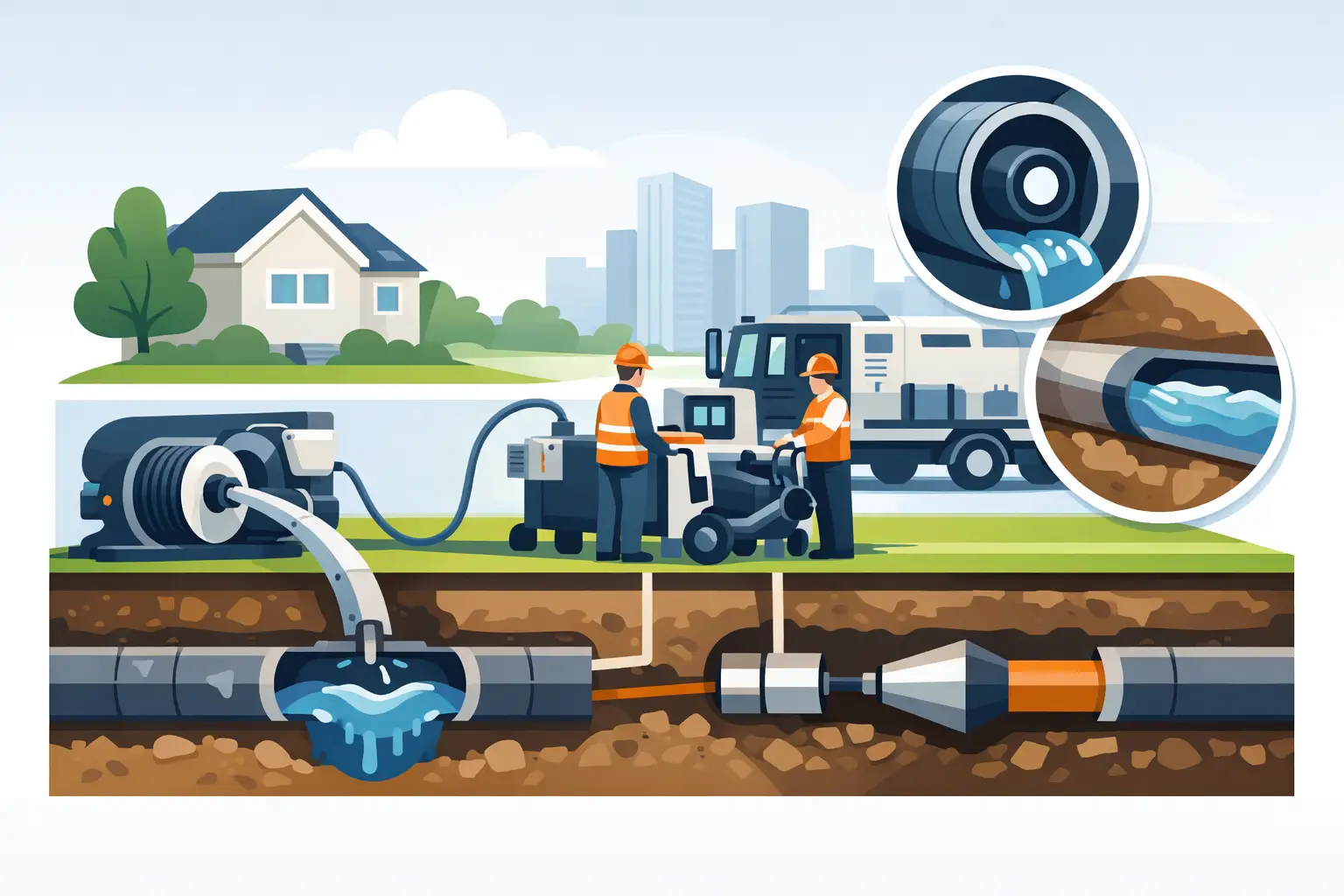
A drain repair does not have to mean digging up a driveway, lifting a patio, or turning a tidy garden into a building site. The best no dig drainage repair methods are designed to fix damaged pipework from within or through small access points, which is exactly why they have become the first choice for many homeowners, landlords and facilities teams.
If the problem is caught early, trenchless repair can be faster, cleaner and more cost effective than traditional excavation. The key is choosing the right method for the fault, the pipe material, the access available and the condition of the line as a whole. No-dig is highly effective, but it is not one single technique and it is not the answer to every drainage issue.
When no-dig repair is the right option
No-dig drainage repair works best where the pipe route runs beneath driveways, lawns, paths, internal floors or landscaped areas that would be expensive and disruptive to excavate. It is commonly used for cracked drains, leaking joints, root ingress, localised fractures and some displaced sections.
Before any repair is specified, a proper CCTV drain survey is usually the starting point. That shows the exact location and extent of the defect, whether the pipe is still structurally viable, and whether a local repair is enough or a longer section needs lining. This matters because treating the wrong problem, or only part of it, can lead to repeat failures.
Best no dig drainage repair methods for common faults
The best method depends on what is actually wrong underground. A fine crack, a failed joint and a fully collapsed pipe do not call for the same approach.
Patch lining for isolated damage
Patch lining is one of the most widely used no-dig repairs for local defects. A resin-impregnated patch is positioned over the damaged section using specialist equipment, then inflated and cured in place. Once set, it forms a new watertight section within the host pipe.
This is often the right choice where there is a single crack, a leaking joint, minor root ingress or a small area of deformation. It avoids replacing an otherwise serviceable run of pipe, which keeps cost and disruption down. For homeowners, that can mean no need to disturb block paving or dig through a finished garden simply to repair one damaged point.
The trade-off is that patch lining is a local repair, not a full reset of the whole line. If the CCTV survey shows several defects across the run, repeated patches may be less sensible than lining a longer section.
Full drain lining for longer runs
Where damage extends across a greater length, cured-in-place pipe lining is often the better solution. In simple terms, a flexible liner coated with resin is inserted into the drain and cured to create a new pipe within the existing one.
This method is effective for multiple cracks, porous joints, water ingress and age-related deterioration where the original pipe still retains enough shape to host a liner. It can restore structural integrity and improve flow without major excavation, which is particularly useful beneath buildings, roads and hard landscaped surfaces.
There are practical limits. Lining slightly reduces the internal diameter of the pipe, so the original drain must be assessed to make sure that reduction will not affect performance. It is also less suitable where the pipe has fully collapsed or where severe deformation prevents the liner from seating correctly.
Robotic cutting and root removal with lining
Tree roots are a common reason drains fail, especially in older systems with vulnerable joints. Simply cutting roots out can provide temporary relief, but if the entry point is left untreated, they often return.
A stronger long-term approach is to remove the roots mechanically, clean the pipe thoroughly, then seal the defective section with a patch liner or full liner. This deals with both the symptom and the cause. It is a good example of why repair planning matters. A fast clearance alone may get flow moving again, but it does not necessarily resolve the defect.
Excavation at one point with trenchless repair beyond
Some drainage jobs are best handled with a hybrid approach. For example, if one section has collapsed completely, a small excavation may be needed to replace that short length, while adjacent sections can then be repaired using no-dig methods.
This still counts as a minimal-disruption strategy and is often the most practical option. It is better to be honest about that than to force a trenchless method where it is not suitable. In drainage repair, the best outcome usually comes from using the least invasive method that still gives a dependable, long-term result.
What no-dig methods can and cannot fix
No-dig drainage repair is highly effective, but there are limits. It can deal with many cracks, fractures, displaced joints, root ingress and leaks. It can also extend the working life of ageing pipework when the structure is basically intact.
What it cannot reliably solve is every case of major collapse, severe backfall, major deformation or poor original drain design. If a pipe has lost its shape entirely, if levels are wrong, or if the system was installed incorrectly in the first place, excavation and replacement may still be necessary.
That is why a clear survey and straightforward advice matter. Customers are better served by a contractor who explains where no-dig is appropriate and where it is not, rather than treating trenchless repair as a one-size-fits-all answer.
How the right method is chosen
Selecting the best no dig drainage repair methods starts with evidence. A CCTV survey identifies the defect, but the decision also depends on pipe diameter, material, depth, access chamber locations, the number of bends, and whether the drain serves a single property or a larger commercial arrangement.
For landlords and commercial clients, there may also be practical and compliance considerations. Repairs in shared access areas, tenanted buildings or operational sites often need to be planned around occupancy and usage. In those cases, no-dig methods are especially valuable because they reduce disruption, shorten programme time and limit reinstatement.
For homeowners, the priorities are usually simpler but no less important. People want the fault fixed properly, without unnecessary mess, hidden extras or weeks of disruption. A clean site, a clear quote and a repair that lasts are what matter.
Why no-dig repair is often better value
Traditional excavation can look straightforward on paper, but the real cost is rarely just the digging. There is also spoil removal, access issues, damage to paving or landscaping, and the cost of reinstating surfaces afterwards. Once those are taken into account, trenchless repair is often the more economical route.
It also tends to be quicker. Less excavation means less labour on reinstatement and less impact on daily life or site operations. For a busy landlord, that can reduce tenant complaints. For a facilities manager, it can mean less downtime and easier scheduling. For a homeowner, it can simply mean keeping the driveway intact.
What to look for in a drainage contractor
No-dig repair only works well when the diagnosis is correct and the installation is done properly. Look for a specialist contractor with CCTV capability, trenchless repair experience, suitable insurance and clear workmanship guarantees. If the work involves wider water or drainage infrastructure, it also helps to use a contractor used to operating to proper standards rather than a generalist trying to cover every trade.
Watermains & Drains UK carries out CCTV surveys, drain repairs and patch lining with a strong focus on minimal disruption, clear quoting and tidy completion. For customers across the North West, that combination of trenchless capability and practical site delivery is often what makes the difference.
Best no dig drainage repair methods in real terms
The phrase sounds simple, but the best no dig drainage repair methods are really the ones that match the defect, protect the surrounding property and give a dependable long-term result. Sometimes that is a straightforward patch liner. Sometimes it is full lining. Sometimes it is a small excavation supported by trenchless repair either side.
What matters most is not choosing the newest-sounding method. It is choosing the method that solves the problem with the least disruption and without compromising quality. If your drain is showing signs of repeated blockage, foul odours, slow flow or subsidence around the line, early investigation usually gives you more repair options and a better outcome.
A tidy repair starts long before any equipment arrives on site – with the right survey, the right recommendation and a contractor prepared to fix the fault properly, not just cover it up.





