Your Water Main, Drainage & Trenchless Solution Specialists

Blog

Lead Pipe Removal Benefits for UK Homes
Blog

Lead Pipe Removal Benefits for UK Homes

If your property still has a lead water supply pipe, the issue is not just age – it is what that pipe could be putting into your drinking water and how it may be affecting flow, reliability and future repair costs. The main lead pipe removal benefits are straightforward: safer water, a more dependable supply and less disruption down the line when the pipe eventually fails.

For many homeowners and landlords across the North West, lead pipework is only discovered when buying an older property, dealing with poor pressure or arranging other groundworks. That is often the point where replacement moves from a nice-to-have to a practical upgrade. Once you know what is involved, the case for replacing lead tends to be less about theory and more about avoiding ongoing problems.

Why lead pipes are still a problem in older properties

Lead supply pipes are most commonly found in older homes built before lead stopped being used for this purpose. Some properties have already had internal plumbing updated but still retain an old external supply pipe running from the boundary to the house. That means the kitchen tap may be fed through a section of ageing lead even if the visible pipework indoors looks more modern.

The first concern is water quality. Lead can enter drinking water as it passes through old pipework, particularly where pipes have deteriorated over time. Even where water treatment reduces risk, many property owners would rather remove the source altogether than rely on temporary control measures.

The second issue is performance. Older lead pipes are often narrower than modern replacements and may have become restricted internally. In day-to-day terms, that can show up as weak flow at taps, poor shower performance or difficulty supplying modern appliances consistently.

The most important lead pipe removal benefits

Safer drinking water

This is usually the reason people start looking into replacement. Removing lead pipework reduces the risk of lead entering the water supply and gives greater confidence in the water used for drinking, cooking and washing food. For households with young children or pregnant women, that peace of mind matters.

For landlords, there is also a duty of care element. If a property still has a lead supply, replacement can be a sensible step to reduce future tenant concerns and demonstrate that the water installation has been properly upgraded.

Better water flow and pressure

Many older supply pipes simply do not perform well by current standards. They may be undersized, partly restricted or vulnerable to minor deformation after years in the ground. Replacing them with a new MDPE supply pipe often improves both flow and pressure, although the exact result depends on the wider network and the condition of the incoming main.

That last point matters. Pipe replacement can make a major difference, but it is not a miracle fix for every low-pressure complaint. If the issue sits elsewhere in the network, a good contractor should say so. Even then, removing an old lead pipe still improves reliability and removes one obvious weak point.

Fewer leaks and fewer emergency repairs

Lead is soft, and old lead service pipes do fail. Some develop pinhole leaks, some split, and some become vulnerable at joints or where past repairs were carried out. A leaking supply pipe can increase bills, create damp ground conditions and, in some cases, affect paving, paths or foundations if left unresolved.

Replacing the pipe removes the uncertainty that comes with ageing materials. It is often more cost effective to replace a lead supply once, properly, than to keep paying for reactive repairs on a pipe that has already reached the end of its useful life.

A stronger long-term investment in the property

Lead pipe replacement is not the most visible improvement, but it is one that supports the overall condition of the property. Buyers are often cautious about older services, and survey findings around lead supply pipes can raise questions during a sale. Upgrading the supply can help remove that point of concern.

For landlords and property managers, it also reduces the chance of avoidable disruption between tenancies or during occupancy. A failed water supply pipe rarely happens at a convenient time.

Lead pipe removal benefits beyond health

When people hear about lead pipe replacement, they often focus only on drinking water quality. That is fair, but the practical lead pipe removal benefits go further than health alone.

A new supply pipe is generally more compatible with modern water demands. Homes now rely on washing machines, dishwashers, mixer showers and outside taps far more than many older systems were designed for. Commercial premises and managed blocks can face the same issue on a larger scale, where dependable supply matters for day-to-day operations and tenant satisfaction.

There is also the matter of compliance and assurance. When replacement is carried out by an accredited contractor using current materials and approved methods, the result is easier to document and easier to rely on. For facilities teams and insurance-related work, that matters just as much as the physical installation itself.

What puts people off replacing a lead pipe

The usual concern is disruption. Homeowners imagine trenches across the driveway, broken paving and a long, messy job. That used to be a fair assumption. It is not always the reality now.

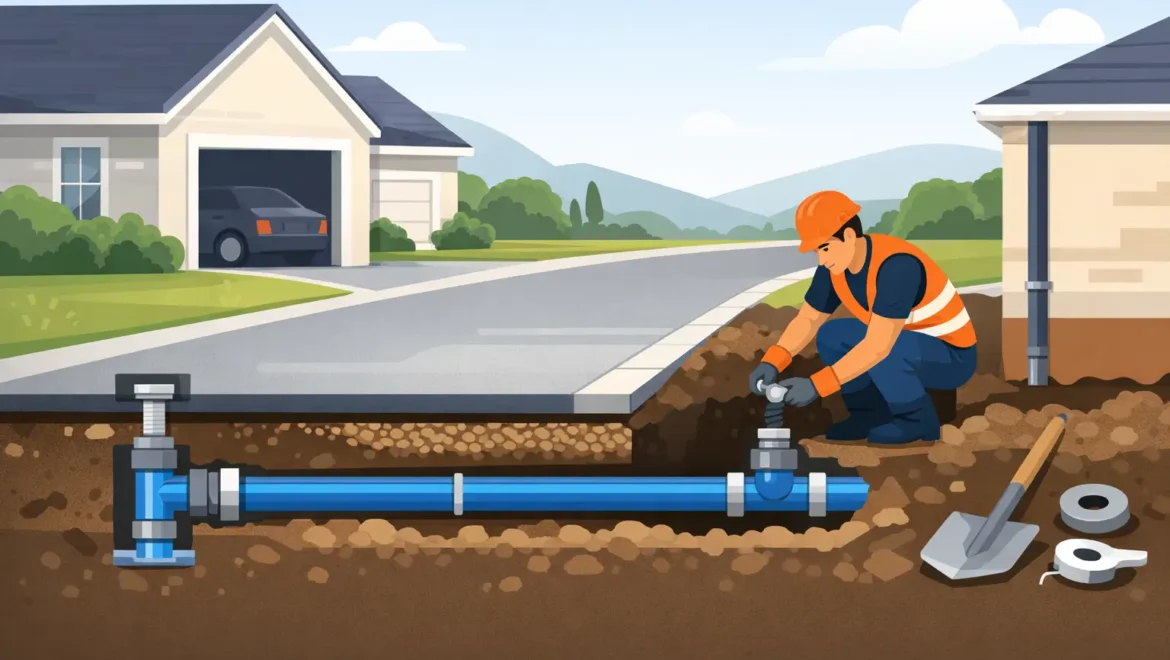
Modern trenchless methods can often reduce excavation significantly. Moling, for example, allows a new water supply pipe to be installed underground with minimal surface disturbance. Instead of opening a continuous trench, the contractor works from small launch and reception pits. In the right ground conditions, that can protect driveways, lawns and paths while speeding up the job.

It does depend on the site. Some properties still require open-cut excavation in places, particularly where access is tight, there are buried obstructions or the layout is complicated. A professional survey and clear quotation should set that out early, rather than promising a no-dig solution where one is not realistic.

How the replacement process usually works

Most lead supply replacements begin with a site assessment to confirm the existing pipe route, entry point and connection arrangements. From there, the contractor can recommend the best installation method and explain any reinstatement needed. For some properties, the work is relatively straightforward. For others, there may be traffic management, shared access issues or coordination with other utility constraints.

The key is planning the work so the property owner knows what to expect. That includes likely timescales, how long the water will be off, whether any permissions are needed and what finish will be left at completion. Good delivery is not only about getting the new pipe in place. It is also about leaving the site tidy and making the process easy to manage.

This is where specialist contractors tend to stand apart from general trades. Water supply replacements need the right approvals, sound installation practice and confidence in working around live services. Watermains & Drains UK positions this as specialist work for a reason – the standard of surveying, installation and reinstatement has a direct impact on the final result.

When replacement makes the most sense

Sometimes replacement is urgent, particularly where a leak has already been found or the pipe is clearly failing. In other cases, it makes sense as a planned upgrade. That could be during renovations, driveway works, extensions or before letting out an older property.

If you already suspect a lead supply pipe, acting before failure usually gives you more control over cost, timing and method. Emergency works are possible, but planned works are easier to organise and usually easier on the property.

For commercial sites, schools, managed residential buildings and landlord portfolios, proactive replacement also reduces the risk of tenant complaints and unplanned shutdowns. A water supply problem can quickly become an operational problem.

Choosing the right contractor matters

Pipe replacement is not just about swapping one material for another. The quality of the route, the connection, the testing and the reinstatement all matter. So do accreditations, insurance cover and the willingness to explain what is and is not possible on your site.

For homeowners, that means looking for clear quoting, practical advice and a method that keeps disruption under control. For landlords and facilities teams, it means using a contractor that can provide confidence on compliance, workmanship and scheduling.

A lead pipe may be hidden underground, but the benefits of replacing it are felt every day in the way the property functions. If your supply is old, unreliable or simply not something you want to keep second-guessing, replacing it is often the simplest way to make the problem go away properly.

Replace Lead Pipework Before Renovation?
Blog

Replace Lead Pipework Before Renovation?

If you are opening up floors, digging out a driveway or reworking a kitchen, it makes sense to replace lead pipework before renovation rather than after everything is finished. It is one of those jobs that is easy to put off because the pipe is out of sight, but once new surfaces are laid, access becomes slower, messier and more expensive.

For many older properties across Manchester, Stockport, Warrington, Cheshire and the wider North West, the incoming water supply may still include lead. Homeowners often discover it only when other works are being planned – an extension, a full refurb, a driveway replacement or a kitchen move. That timing matters. If the property is already about to be disturbed, it is usually the best point to deal with the supply pipe properly.

Why replace lead pipework before renovation makes sense

The main reason is straightforward: access. Renovation often exposes the exact areas contractors need to reach, whether that is the front garden, the sub-floor, external walls or the route into the kitchen stop tap. If you wait until after the project is complete, the same pipe replacement can mean lifting finished floors, cutting into newly plastered walls or breaking through fresh paving.

There is also the question of cost control. Pipe replacement done at the right stage can be planned into the wider works, with excavation, reinstatement and internal alterations coordinated from the outset. Done later, it becomes a separate disruption with its own labour, reinstatement and scheduling issues.

Then there is the practical improvement. Replacing an old lead supply pipe can help deliver better flow, more dependable pressure and a cleaner long-term water supply arrangement. For landlords and property managers, it also removes a known legacy issue before tenants move in or before a refurbished unit is handed over.

What lead pipework means for a renovation project

Lead pipework is most commonly found on older properties, particularly those built before lead use was phased out in domestic supply systems. It may serve the property from the boundary to the internal stop tap, or remain in sections where previous alterations were only partly completed.

During a renovation, that creates a few risks. The first is accidental disturbance. Groundworks, demolition and service alterations can expose brittle or awkwardly routed pipework that was never designed around modern layouts. The second is sequencing. If kitchens, bathrooms or utility spaces are being reconfigured, the water supply route may need to change anyway. The third is missed opportunity. Once hard landscaping, flooring and decorative finishes are complete, the easiest access window has gone.

This is why specialist contractors will usually look at the lead supply as part of the wider site plan, not as an isolated plumbing issue. In many cases, the best result comes from replacing the whole incoming supply with a modern pipe rather than trying to patch around the old one.

When to replace lead pipework before renovation

The best time is usually before final surfaces go in, but after enough of the site is exposed to confirm the route and access. For example, if a driveway is being dug up, a garden remodelled, or internal floors are already lifted, that is often the point to schedule the replacement.

If the project includes an extension, it is worth checking whether the existing water supply is suitable for the enlarged property. A larger home with additional bathrooms, utility appliances or increased occupancy may put more demand on an ageing incoming pipe. In that case, replacing lead pipework is not just about removing old material. It is also about making sure the new layout performs as expected.

For landlords, the timing is often between tenancies or during a planned refurbishment. That avoids bringing contractors back after occupation and reduces the chance of complaints about water quality, pressure issues or further disruption.

Signs your property may still have lead pipes

Some owners know already, especially if previous surveys or water supplier correspondence have flagged it. Others only suspect it when they start opening up the property.

A dull grey pipe that scratches to a shiny metallic finish is one clue. The age of the property is another. So is a history of partial upgrades, where internal plumbing has been modernised but the incoming main was left untouched. If you are unsure, a proper site assessment is the sensible next step. Guesswork during a renovation usually causes delays.

The least disruptive way to replace a supply pipe

This is where method matters. Traditional excavation can still be the right option on some sites, especially where access is very straightforward or where other deep groundworks are already planned. But many homeowners want to avoid trenching across a finished drive, garden or patio if there is a cleaner alternative.

Modern trenchless methods, including moling, are often the better fit. They allow a new water supply pipe to be installed with far less surface disruption than a full open trench. That can make a significant difference on occupied properties and on sites where reinstatement quality matters just as much as the installation itself.

It does depend on the ground conditions, the route, existing services and the site layout. A specialist contractor should assess those factors first rather than promising one method for every job. The right approach is the one that protects the property, suits the programme and leaves a tidy finish.

Replace lead pipework before renovation – and coordinate the sequence

One of the biggest avoidable costs on refurbishment projects is poor sequencing. A lead pipe replacement should be planned around the build, not squeezed in as an afterthought.

If external areas are being opened up, the new supply can often be installed before final surfacing. If floors are being replaced, the internal entry point and connection can be agreed before screeds, tiles or finished timber go down. If the kitchen is moving, the supply route can be designed to support the new layout from the start.

This matters for commercial projects as well. Facilities teams and property managers usually need clear scheduling, method statements and confidence that contractors will leave the site safe and presentable each day. Good coordination reduces downtime and avoids trades working over one another.

Compliance, approvals and workmanship matter

Lead pipe replacement is not a job to hand to a general builder and hope for the best. The incoming water supply is regulated work, and customers need confidence that installation standards, materials and connections meet the right requirements.

That is where specialist credentials matter. Contractors with recognised water industry approvals, the right insurance cover and experience in supply pipe replacement offer a far lower-risk route than trying to combine the work into a general renovation package. It is not only about fitting a new pipe. It is about completing the work correctly, testing it, reinstating properly and giving the property owner confidence in what has been done.

For homeowners, that means fewer surprises and a cleaner handover. For landlords and commercial clients, it means clearer accountability and better documentation.

What affects the cost?

There is no single price that fits every property because the route, access and reinstatement requirements vary. A short, direct run with simple access is very different from a constrained site with hard landscaping, shared boundaries or internal alterations.

The method used will influence cost, but so will what happens afterwards. Reinstating block paving, decorative surfaces or landscaped areas needs care. Equally, a cheaper approach that leaves extensive making-good can quickly stop looking economical.

This is why a proper quotation should consider the whole job, not just the pipe itself. On many projects, replacing the lead supply at renovation stage proves more cost effective precisely because site access is already available and other works are happening at the same time.

A practical decision, not an extra

Home improvement budgets are always under pressure, so it is understandable when owners focus on visible finishes first. But the incoming water supply is one of the few parts of the property that becomes harder to deal with once the nice part of the job is done.

If your property still has a lead supply, renovation is usually the right moment to sort it. You avoid redoing completed work, reduce the chance of later disruption and leave the property with a more dependable water service. For projects across the North West, Watermains & Drains UK sees this regularly – owners spend well on kitchens, floors and landscaping, then wish they had dealt with the old supply while access was easy.

The sensible approach is to check early, plan the route properly and get the work done before the finishes make it awkward. Future you will be glad you did.

Best Fixes for Collapsed Drains in the UK
Blog

Best Fixes for Collapsed Drains in the UK

A collapsed drain rarely starts as a dramatic failure. More often, it shows up as the loo backing up again, foul smells near an outside gully, or a patch of ground that stays wet for no obvious reason. If you are looking for the best fixes for collapsed drains, the right answer depends on where the damage sits, how severe it is, and whether the pipe can still be repaired without full excavation.

What actually causes a drain to collapse?

In most domestic and small commercial settings, collapsed drains are caused by one of a few familiar issues. Older clay pipework can crack or shift over time. Ground movement can push joints apart. Tree roots can force their way into weak points and gradually break the line. In some cases, heavy vehicle loading over a shallow drain is enough to crush it.

Not every broken drain is fully collapsed. That distinction matters. A cracked pipe, an open joint, or a section that has started to deform may still be suitable for trenchless repair. Once the pipe has lost its shape altogether, dropped out of line, or filled with displaced soil, replacement is usually the safer fix.

This is why a proper CCTV drain survey comes first. It shows whether you are dealing with a local defect, a longer failed run, or a complete collapse that is affecting the surrounding ground as well as the pipe itself.

Best fixes for collapsed drains – start with the least disruptive option

The best repair is not always the biggest one. In many cases, the most effective solution is the one that restores the drain properly while causing the least disruption to the property.

For homeowners, that usually means avoiding unnecessary digging through driveways, patios, gardens, or internal floors. For landlords and commercial sites, it often means restoring service quickly and keeping tenants, staff, or customers moving. A specialist contractor should look at access, depth, surface finishes, and the condition of the rest of the line before recommending a method.

Patch lining for localised defects

If the damage is limited to a short section and the drain has not fully caved in, patch lining can be a strong option. This method places a resin-impregnated patch over the damaged area from within the pipe. Once cured, it forms a new internal section that seals cracks, minor fractures, and open joints.

Patch lining is fast, cost effective, and avoids excavation in many cases. It is especially useful where the pipe is otherwise sound and the defect is isolated. The trade-off is simple – it is not a fix for a severe collapse or for a drain that has significantly deformed over a longer length.

Full drain lining for longer sections

Where the pipe has multiple defects along a run but still holds its shape, full lining may be suitable. A liner is inserted and cured in place to create a new pipe within the old one. This can deal with repeated cracking, root ingress, and ageing pipework without digging out the entire line.

For the right drain, this is one of the best fixes for collapsed drains that are not completely flattened or obstructed by major displacement. It can save a great deal of time and reinstatement cost, particularly under finished surfaces. That said, lining slightly reduces the internal diameter of the pipe, so the existing size and flow demands need to be considered.

When excavation is the better fix

There are situations where no-dig methods are no longer enough. If the pipe has collapsed fully, dropped out of level, or become blocked by surrounding soil and debris, excavation is usually the correct route. The same applies where sections have separated so badly that alignment cannot be restored from inside the drain.

A good contractor will not push trenchless repair where it is unlikely to last. If the line has failed structurally, replacing the affected section is often the only dependable answer.

Open-cut repair for accessible external drains

If the damaged section is outside and reasonably accessible, open-cut excavation is straightforward. The failed pipe is exposed, removed, and replaced, then the area is reinstated. This is often the most practical method for shallow drains in gardens or soft ground.

The benefit is clear access to the defect and a complete structural repair. The downside is disruption. Digging through landscaping, paving, or tarmac adds time and cost, and reinstatement quality matters just as much as the pipe repair itself.

Excavation in driveways, roads, or paved areas

Repairs become more involved when the collapse sits beneath block paving, concrete, resin, or vehicle routes. In these cases, the drainage work may be only part of the job. Breaking out surfaces, managing access, and achieving a tidy reinstatement all affect the overall project.

For property managers and insurers, this is where method, programme, and documentation matter. The cheapest quote is not always the most economical one if poor reinstatement leads to further defects or complaints.

Can trenchless methods still help with collapsed drains?

Sometimes, yes. Even where excavation is needed at the point of collapse, trenchless methods can still reduce the scale of the job. A contractor may excavate one failed section and then line adjacent runs rather than dig the whole drain route. That can be a sensible balance between structural repair and keeping disruption under control.

This approach works well where one section has failed completely but the rest of the system shows age-related defects rather than total collapse. It avoids the all-or-nothing thinking that often makes drainage repairs more disruptive than they need to be.

For properties with finished landscaping or limited access, combining local excavation with no-dig repair is often the most practical option.

How to choose the right fix for your property

The best fixes for collapsed drains are chosen on evidence, not guesswork. A proper assessment should consider five things: the location of the defect, the pipe material, depth, access constraints, and whether there is damage beyond the drain itself.

If the collapse is close to the house, there may be a risk of washout beneath paths, extensions, or floors. If roots are involved, simply clearing them is not enough unless the entry point is repaired. If repeated blockages have been happening for months, there may be more than one defect along the run.

That is why a CCTV survey and clear quotation are so important. You need to know what is damaged, what can be saved, what needs replacing, and how the site will be left afterwards.

What homeowners and landlords should ask before approving repairs

Before any work starts, ask whether the drain is suitable for patch lining, full lining, or replacement. Ask what evidence supports that recommendation. Ask how much excavation is genuinely necessary and what surfaces will need reinstating.

It is also worth checking insurance, guarantees, and whether the contractor handles both the drainage repair and the making-good. A specialist drainage contractor should be able to explain the method in plain terms, set out the likely programme, and tell you how disruption will be managed.

For urgent jobs, speed matters, but so does getting the right fix first time. A temporary clear-out on a collapsed drain can restore flow briefly without solving the actual fault.

Why the contractor matters as much as the repair method

Collapsed drains are not just a plumbing issue. They sit at the point where drainage, ground conditions, excavation, and reinstatement all meet. That is why specialist contractors tend to offer better outcomes than a general tradesperson trying to patch over a structural failure.

The difference usually shows in the planning. Proper drainage diagnostics, trenchless capability, safe excavation, tidy reinstatement, and clear communication all matter. For customers across the North West, Watermains & Drains UK is often called in where a simple unblock has not solved the problem and a more reliable repair is needed with as little disruption as possible.

If your drain has collapsed, the smartest next step is not to assume the worst or reach for the quickest fix. It is to get the line surveyed, understand the condition properly, and choose the repair that gives you a sound drain, a clean site, and no need to revisit the same fault a few months later.

Lead Pipe Replacement Before and After
Blog

Lead Pipe Replacement Before and After

When people search for lead pipe replacement before and after, they usually want something very practical. They want to know whether the job will actually improve water pressure, whether the garden or driveway will be left in a mess, and whether replacing an old lead supply is worth the cost and disruption. Fair questions – especially if your property has an ageing private water supply pipe and you are trying to avoid unnecessary excavation.

The reality is that the difference before and after replacement can be significant, but it depends on the condition of the existing pipe, the route of the new supply, and the installation method used. In many properties, the change is not just about removing lead. It is also about solving long-running issues such as poor flow, recurring leaks, low pressure at busy times, and unreliable pipework that has simply reached the end of its useful life.

Lead pipe replacement before and after – what really changes

Before replacement, many older properties are still being supplied through narrow lead pipes that were installed decades ago. These pipes are often undersized by modern standards, and over time they can suffer from internal restriction, poor joints, and general deterioration. Some homeowners only discover the issue when they renovate a kitchen or bathroom and realise the incoming supply cannot keep up with modern demand.

After replacement, the most noticeable change is often improved flow and more consistent pressure. Taps fill faster, showers perform better, and appliances such as combi boilers, washing machines and dishwashers tend to operate more reliably when the incoming main is no longer being limited by old lead pipework. That said, no contractor should promise dramatic pressure gains in every case. If the wider network pressure is low, or there are internal plumbing restrictions within the property, the improvement may be more modest. A proper assessment matters.

There is also the health and compliance side. Lead pipe replacement removes an outdated material from the drinking water supply, which is one of the main reasons many homeowners and landlords decide to proceed. For landlords and property managers in particular, replacing lead is often as much about future-proofing and risk reduction as it is about day-to-day performance.

What the property looks like before the work starts

Before the job, the typical site picture is fairly familiar. You may have an old stop tap arrangement, uncertain pipe routes, and no clear record of where the private supply actually runs. In some properties, the incoming water main may cross under a garden, path or driveway before entering the house at floor level or through an older internal connection point.

This uncertainty is why a proper site survey is so important. The best approach is not to guess and start digging. It is to assess the existing entry point, identify the likely route, check whether trenchless installation is suitable, and plan the reinstatement from the outset. That is where specialist contractors differ from general trades. The job is not just replacing a pipe. It is managing the route, the connection, compliance requirements, and the finish afterwards.

For commercial sites or managed blocks, the before stage also includes access planning, tenant communication and method statements where needed. In those settings, disruption is often the main concern, not just the pipe itself.

Lead pipe replacement before and after in practical terms

If you look at the project in practical terms, the before and after difference usually comes down to four things: water quality confidence, pressure and flow, risk of leaks, and the condition of the external areas once the work is complete.

Before replacement, you may be dealing with uncertainty every time you run the tap or notice fluctuating pressure. After replacement, you should have a new, modern supply pipe installed to current standards, a clear route, and a far lower likelihood of failures caused by ageing lead pipework.

Before replacement, some customers expect major excavation. After replacement, many are surprised by how little disturbance was actually needed when trenchless moling or other no-dig methods are suitable. This is one of the biggest shifts in what people picture versus what really happens on site. Traditional excavation still has its place, especially where access is tight or ground conditions demand it, but modern installation methods can often reduce damage to finished surfaces considerably.

How much disruption should you expect?

This is usually the deciding factor.

If the job is carried out using open-cut excavation, there may be a longer trench, more spoil to remove, and more reinstatement required afterwards. That can be the right method in some situations, particularly where there are complex existing services, shallow obstructions or difficult connection points. It is not automatically the wrong choice. It is simply more intrusive.

Where site conditions allow, trenchless moling can be the cleaner option. Instead of opening up the full route, the contractor creates small launch and reception pits and installs the new pipe underground with minimal surface disturbance. For homeowners, that often means less disruption to lawns, paths and driveways. For landlords and commercial clients, it can mean faster completion and less inconvenience for occupants.

The key point is that before the work, the job may feel disruptive in theory. After the work, the experience is often much more manageable than expected when it has been planned properly and delivered by a contractor used to reinstatement-sensitive sites.

What happens during the replacement

A well-run lead pipe replacement project should feel organised from the start. The route is confirmed, the new pipe is installed, and the final connection is made in line with the relevant water regulations and local requirements. Any necessary excavation is kept controlled, and the site should be left tidy at each stage rather than looking like an open-ended building project.

Inside the property, there may be some localised work where the old supply enters and the new connection is brought in. Outside, the level of visible activity depends on the method. With trenchless techniques, there is usually far less open ground than people expect. With conventional digging, the focus should be on safe working, clean spoil management and good reinstatement.

Good contractors also set expectations properly. Water may need to be isolated during parts of the work. Some jobs are straightforward and completed quickly, while others take longer because of access, reinstatement requirements or coordination with the water authority. A reliable quote should reflect that rather than oversimplifying the process.

The after result – what a good finish should include

After replacement, the obvious result is a new non-lead supply pipe, but the finish should go beyond that.

You should expect a tested and properly connected new water supply, a neat entry point into the property, and external areas reinstated to a professional standard. On a domestic job, that may mean paths, tarmac, block paving or garden areas made good so the work does not leave a permanent reminder. On commercial sites, it should mean a handover that supports ongoing use of the premises without loose ends.

This is where quality matters. Anyone can install a pipe. The standard of reinstatement, communication and site management is what property owners remember afterwards. A cheap job that leaves poor surfaces, unclear paperwork or avoidable delays is not good value.

For that reason, many customers look for recognised approvals, insurance cover and workmanship guarantees. Those are not just sales points. They are a sign that the contractor understands the wider responsibility of working on live water infrastructure at occupied properties.

Is it always worth replacing a lead supply?

In most cases, yes, but there are a few situations where the timing or scope may vary.

If the property is being renovated, it often makes sense to replace the lead pipe as part of the wider works rather than waiting for a leak or pressure problem to force the issue later. If the supply is still functioning but clearly outdated, proactive replacement can avoid emergency repairs and repeated disruption. For landlords, it can also reduce future maintenance risk between tenancies.

The main trade-off is cost versus urgency. Some customers contact a contractor because they have an active leak or very poor pressure and need a quick solution. Others are planning ahead and want the least disruptive route before resurfacing a driveway or landscaping a garden. Both are sensible, but the second option usually gives more control over timing and finish.

A specialist contractor such as Watermains & Drains UK will normally assess the route, advise on trenchless suitability, and quote around the actual site conditions rather than offering a one-size-fits-all answer. That is usually the best way to judge the true before and after value of the work.

What homeowners and landlords should take from the before and after comparison

The biggest difference is not just that an old lead pipe becomes a new plastic one. It is that the property moves from an ageing, uncertain water supply to a cleaner, more dependable and often better-performing system.

Before replacement, the concern is usually disruption. After replacement, the benefit is usually peace of mind. You know what is feeding the property, you are less exposed to leaks from old pipework, and you are not relying on outdated materials that may already be causing hidden issues.

If you are considering the work, the most useful next step is not to guess the scale of the job from worst-case examples online. It is to get the route assessed properly and find out whether a no-dig installation can keep disruption to a minimum. In many cases, the after result is not just better water service – it is a much easier project than people expected.

Can Blocked Drains Affect Foundations?
Blog

Can Blocked Drains Affect Foundations?

A blocked drain under or near a property is not just a nuisance. If you are asking can blocked drains affect foundations, the short answer is yes – in the right conditions, they can. The bigger issue is not the blockage on its own, but what that blockage causes: leaking joints, backed-up foul water, oversaturated ground, washout around pipe runs, and ongoing moisture changes beneath the building.

For homeowners and landlords, that can mean anything from localised damp and unpleasant smells to cracking, movement and expensive repair work if the problem is left too long. The risk is not identical on every property, but it is real enough that recurring drain issues should never be treated as cosmetic.

Can blocked drains affect foundations over time?

They can, particularly when the blockage leads to a concealed leak or repeated surcharge in the drainage system. Foundations rely on stable ground conditions. When a drain is holding water where it should be flowing freely, pressure builds up. If the pipe is cracked, displaced or weakened, that trapped water can escape into the surrounding soil.

Once that happens, the ground around the foundation can change. Some soils lose strength as they become saturated. Others expand when wet and shrink again as they dry. In parts of the North West, where ground conditions can vary even across the same street, that movement can be enough to affect footing support over time.

The key point is this: blocked drains do not usually damage foundations in a single dramatic event. More often, they create the conditions for gradual structural trouble. That is why early investigation matters.

How drainage problems turn into structural problems

A healthy drain system carries wastewater away quickly and predictably. A blocked or damaged system does the opposite. Water backs up, sits in the pipe for longer than intended, and may escape through failed joints, fractures or displaced sections.

If that leak sits near the property, the surrounding ground can soften. Fine material can also be washed away in some cases, leaving small voids around the pipe or close to foundation edges. Even minor voiding can become a larger concern when repeated wetting and drying cycles continue over months.

There is also the damp issue. Saturated ground next to the building can increase moisture against external walls and below floor level. That does not always mean the foundations themselves are failing, but it can point to conditions that need urgent attention before the problem spreads.

For older properties, the risk can be higher. Shallow foundations, ageing pipework, older clay drains and long-term deferred maintenance all increase the chances that a simple blockage is hiding a more significant defect.

The soil beneath your property matters

Not every blocked drain presents the same level of risk. Soil type makes a major difference. Clay soils are especially sensitive because they expand when wet and contract when dry. If a leaking drain keeps one area of ground wetter than the rest, movement can become uneven.

Sandy or made-up ground can behave differently. Water may drain away faster, but it can also carry fines with it, gradually reducing support around parts of the drainage run. That is why a proper diagnosis should look at both the drain condition and the likely ground response.

The location of the blockage matters too

A blockage in an outside gully some distance from the house is not the same as a failed underground drain running directly alongside the foundation line. Proximity matters. So does depth.

If the issue is in a shared drain, a private lateral or a section crossing beneath a driveway near the property, the structural implications may be greater than people first assume. This is one reason CCTV drain surveys are so useful. They show whether the problem is just an obstruction or whether there is a collapsed, cracked or displaced section allowing water into the ground.

Signs a blocked drain may be affecting the foundations

You do not need to wait for major cracking before acting. The earlier signs are often more subtle and easier to deal with. Repeated blockages are one of the clearest warnings, especially when they return after standard unblocking.

You may also notice persistent bad smells outside, gullies overflowing, slow drainage from ground floor fittings, or damp patches along external walls. In some properties, there may be soft ground, sinking paving or areas of the driveway that start to dip near the drainage line.

Inside, keep an eye on cracks that worsen over time rather than appear suddenly. Sticking doors, movement around skirting lines and damp at low level can all point to a drainage issue contributing to ground instability. None of these signs prove foundation damage by themselves, but together they are enough to justify a professional inspection.

When the risk is lower

It is worth being clear that not every blockage means your foundations are under threat. A straightforward obstruction caused by wipes, fat or debris in an otherwise sound pipe may be resolved with no structural consequence at all. If the drain is cleared quickly and the pipework is intact, the long-term risk can be minimal.

The concern rises when the blockage is recurrent, the system is already damaged, or there is evidence of leakage. The age of the property, nearby trees, shallow foundations and reactive soils all add weight to the problem. In other words, it depends on the condition of the drainage system and what the blockage has been doing behind the scenes.

What a proper investigation should include

For properties showing repeat drain problems or signs of movement, guessing is a false economy. A proper investigation usually starts with drainage tracing and a CCTV drain survey. That identifies whether the pipe is blocked, cracked, displaced, bellied or partially collapsed.

If water is escaping into the surrounding ground, the next step is to decide the least disruptive repair method. In many cases, localised drain repairs or patch lining can deal with the defect without major excavation. Where a section has failed completely, replacement may be the better long-term answer.

For homeowners, that means a clearer picture of what is urgent and what is not. For landlords and commercial property managers, it means documented evidence, a sensible repair scope and a faster route to resolving tenant or site issues before they escalate.

Why fast action usually saves money

Drainage problems are rarely at their cheapest once structural symptoms become visible. Clearing a blockage and repairing a failed section early is far more manageable than dealing with prolonged damp, external reinstatement, damaged finishes and a possible structural claim later on.

There is also the disruption to consider. A small drainage repair can often be planned and completed with limited disturbance. If the issue is left and ground conditions worsen, the job can expand quickly. More investigation, more excavation and more reinstatement usually follow.

This is where specialist contractors make a difference. The right team will not just remove the blockage and leave. They will establish why it happened, whether the line is damaged, and whether a no-dig repair is possible to reduce disruption to gardens, paving and driveways. That practical approach is often what prevents a drainage problem turning into a much larger property problem.

What to do if you suspect a drain is affecting your foundations

Start with the drain, not the crack filler. If you have repeated blockages, foul smells, overflowing inspection chambers or damp appearing at low level, arrange a drainage inspection before assuming it is only cosmetic settlement.

A specialist can confirm whether the pipework is simply obstructed or whether there is active leakage into the ground. If repairs are needed, prompt action gives you the best chance of containing the issue before more serious movement develops. At Watermains & Drains UK, that usually means a clear survey, a straightforward explanation of the fault, and the least disruptive repair method that suits the site.

If your property is showing both drainage symptoms and structural movement, it is sensible to act sooner rather than later. The right answer may be relatively simple, but only if the cause is identified early. A blocked drain does not always mean foundation damage, but it is often the warning sign that something below ground needs attention before the repair becomes far more involved.

10 Best Signs You Need Drain Repairs
Blog

10 Best Signs You Need Drain Repairs

A drain rarely fails all at once. More often, it gives you a run of small warnings first – a sink that empties slowly, a smell outside that keeps returning, a patch of ground that never seems to dry out. These are often the best signs you need drain repairs, not just another quick unblock.

That distinction matters. A simple blockage can usually be cleared and forgotten about. A damaged drain is different. Cracks, displaced joints, root ingress and collapsed sections tend to come back, and each recurrence increases the chance of property damage, foul water escape and avoidable disruption. For homeowners, landlords and property managers, acting early usually means a faster, cleaner and more cost-effective repair.

Why drain problems are often misdiagnosed

Many drainage issues look the same at surface level. Water backing up in a gulley could be caused by fat and debris, but it could also point to a broken pipe run further along. Repeated toilet blockages might be down to misuse, or they might be caused by a partial collapse reducing the bore of the pipe.

This is where guesswork becomes expensive. If the same problem keeps returning after rodding or jetting, there is usually an underlying reason. In those cases, the job is not just to restore flow for the day. It is to identify what has failed, where it has failed, and the least disruptive way to put it right.

The best signs you need drain repairs

Some signs are obvious. Others are easy to dismiss until they become urgent. The key is spotting patterns rather than treating each symptom as a one-off.

1. Drains keep blocking in the same area

A single blockage is common. The same blockage coming back every few weeks is not. If one sink, toilet, shower or external drain repeatedly causes trouble, there may be a structural defect catching waste and reducing flow.

Common examples include cracked pipework, offset joints and root ingress. These faults create rough points inside the line where wipes, paper, grease and silt collect. Clearing the blockage may restore service temporarily, but the restriction remains until the damaged section is repaired.

2. Water drains slowly across multiple fittings

If one basin is slow, the issue may be local to that waste pipe. If several fixtures are draining badly at once, especially on the ground floor, the problem is more likely to be in the main drainage run.

This can suggest a partial collapse or a deformed section of pipe restricting flow. It can also indicate a drain line holding standing water because the pipe gradient has been affected. Either way, the symptom points beyond a simple surface blockage.

3. Bad smells keep returning indoors or outside

Foul odours are one of the clearest signs that wastewater is not moving or containing properly. Smells near inspection chambers, gullies, kitchens, utility rooms or downstairs toilets can indicate trapped waste, broken seals or damaged underground pipework.

If the smell returns soon after cleaning or unblocking, it is worth investigating further. A fractured drain or leaking joint can allow foul gases to escape even when water is still getting through. That is why smell alone should not be written off as a housekeeping issue.

4. Damp patches or subsidence around the drain line

Persistent wet ground, sunken paving, soft spots in a driveway or unexplained damp near an external wall can all point to a leaking drain. Escaping wastewater washes away surrounding material over time, which can lead to voids and settlement.

For landlords and commercial sites, this is particularly important because the issue can become both a maintenance problem and a health concern. What starts as minor leakage can eventually affect paths, parking areas, gardens and in some cases nearby foundations. It depends on the location and severity of the defect, but this is not a sign to leave for later.

5. Gurgling sounds from toilets or plugholes

Drains should not be noisy. Gurgling often means air is being trapped or displaced because water is struggling to move through the system properly. You may hear it after flushing a toilet or when a bath empties.

This does not always mean the drain is broken, but it does suggest a restriction somewhere in the line. If the noise is new, frequent or getting worse, it is sensible to have the system checked before it develops into a full backup.

6. Water backs up into the property

This is the point at which a drainage issue becomes urgent. Water or sewage backing up into a shower tray, sink, toilet or floor drain usually means the system can no longer cope with normal discharge.

Sometimes a severe blockage is the cause. Sometimes the underlying reason is a collapsed section or major obstruction outside the property. Either way, recurring internal backups are among the strongest signs you need drain repairs rather than repeated emergency unblocking alone.

7. Tree roots are finding their way into the system

Root ingress is a common issue in older drainage networks, especially where joints have weakened over time. Fine roots enter through tiny openings, then expand inside the pipe as they seek moisture. Once established, they catch debris and accelerate blockage formation.

The problem with roots is that cutting them out may only provide temporary relief. If the entry point remains open, they often return. Depending on the condition of the drain, the right solution might be patch lining, a localised repair or replacement of a failed section.

8. Cracks, displaced joints or collapses show on a CCTV survey

A CCTV drain survey gives you the evidence that symptoms alone cannot. If a survey shows fractures, open joints, deformation, root ingress or a collapse, repair work is usually the right next step.

Not every defect needs excavation. That depends on the material, location and extent of the damage. In many cases, modern no-dig methods can repair isolated faults with far less disruption to paving, gardens or access routes than traditional digging.

9. Pest activity around drains

Rats and other pests are often drawn to damaged drainage systems because broken pipes provide access, shelter and a route between sewers and buildings. If pest control has identified a likely drain defect, the drainage issue needs dealing with as well.

Otherwise, you risk solving one half of the problem only to see it return. For property managers, this is especially relevant in tenanted buildings where recurring pest complaints can quickly become a wider management issue.

10. Your property has older drainage and a history of repairs

Age alone does not mean a drain has failed, but older systems are more prone to wear, movement and joint failure. If a property has had repeat drainage works over the years, or if repairs have been piecemeal, there comes a point where a proper condition assessment saves money.

This is often the case with older homes, converted properties and sites where extensions or hard landscaping have altered the original drain layout. One repair may still be enough, but only if it addresses the actual weak point.

When a repair is better than another temporary fix

A lot depends on frequency, severity and evidence. If a drain blocks once after misuse, repair work may not be necessary. If it blocks three times in six months, smells persist and a survey shows defects, continuing with temporary clearances usually costs more in the long run.

The best outcome is not always the biggest job. Sometimes a local patch repair is enough. Sometimes a short liner achieves the result with minimal disturbance. In other cases, excavation is still the right option, particularly where a pipe has fully collapsed or the line needs regrading. The important point is choosing the repair method to suit the defect, not forcing every problem into the same approach.

What to do if you spot these signs

Start by noting what is happening and where. Is the problem affecting one fixture or several? Is it internal, external or both? Has it happened before? These details help narrow down whether the issue is a local blockage or something more structural.

If symptoms are recurring, a professional assessment is usually the quickest route to clarity. A proper drainage contractor should be able to inspect the system, explain the fault in plain terms and recommend the least disruptive repair method. For many properties, that means using CCTV diagnostics first and then considering targeted repairs such as patch lining or other no-dig options before excavation is discussed.

For customers across the North West, Watermains & Drains UK approaches drainage faults in exactly that way – identify the cause, recommend the practical repair, and keep disruption to a minimum wherever possible.

The earlier you act, the more options you usually have. A slow drain or persistent smell may not feel urgent today, but drainage defects tend to become more disruptive, not less. Catching the problem while it is still localised gives you the best chance of a tidy repair, a faster turnaround and less impact on your home, tenants or site operations.

Guide to Shared Water Supply Pipes UK
Blog

Guide to Shared Water Supply Pipes UK

If your water pressure drops every time next door runs a tap, or a leak appears but nobody is sure whose pipe it is, this guide to shared water supply pipes will help you make sense of the issue quickly. Shared supplies are common in older terraces, semis and converted properties across the North West, and they can create confusion over ownership, repair costs and the best way to replace ageing pipework.

What shared water supply pipes are

A shared water supply pipe is a single incoming pipe that serves more than one property before splitting into separate feeds, or in some cases does not split until it reaches each building. This arrangement is most often found in older housing stock, where properties were built before individual supplies became standard.

In practical terms, several homes may depend on one section of underground pipe. If that section develops a leak, suffers low flow or contains lead, the problem does not always affect just one address. That is why shared supply issues can be slower to diagnose and more awkward to resolve than a simple leak on a private pipe serving one house.

Why shared supplies cause problems

The main issue is that a fault on a shared pipe rarely has a single owner in the obvious sense. One household may notice discoloured water, another may have poor pressure, and a third may not realise there is any issue at all. Meanwhile, the pipe itself may run under a driveway, footpath or garden that belongs to someone else.

Older shared supplies are also more likely to be undersized or made from outdated materials. Lead pipes are a common example. Even when there is no active leak, a lead shared supply may still need replacing for water quality reasons. In other cases, the pipe material may be sound enough, but the layout is inefficient, causing weak pressure at peak times.

There is also the disruption factor. Traditional excavation can mean opening up paths, lawns, patios or hardstanding across more than one property. That is often where trenchless methods make a real difference, because the route can sometimes be renewed with far less surface disturbance.

A guide to shared water supply pipes and responsibility

Responsibility depends on where the pipe is and how it is classified. In broad terms, the water company is usually responsible for the public water main in the street. The pipe running from that main to the property boundary is often referred to as the communication pipe, and responsibility for that section commonly sits with the water company.

Beyond the boundary, the supply pipe is normally the property owner’s responsibility. With a shared arrangement, that can mean two or more owners are jointly responsible for the private section feeding their homes. That sounds straightforward on paper, but in reality it often leads to questions about access, contribution to costs and who should organise the work.

The exact position can vary depending on the layout and the local water undertaker’s rules, so it is sensible to confirm the arrangement before work starts. For landlords and commercial property managers, that early clarification matters because it affects tenant communication, budgeting and programme planning.

How to tell if you have a shared supply

Sometimes the signs are obvious. Pressure may dip when neighbouring properties are using water. You may have been told by a surveyor, plumber or previous owner that the pipe is shared. In older terraces, it is also not unusual to find one incoming pipe serving several homes.

Where it is less obvious, proper tracing is needed. A contractor may carry out inspection, pressure testing or leak investigation to understand how the supply runs and where it branches. In some cases, the only reliable way to confirm the arrangement is by site investigation combined with water authority records.

That stage matters because assumptions can be expensive. Replacing the wrong section, or planning for a single supply when the line is actually shared, creates delays and extra cost.

The most common problems with shared water supply pipes

Leaks are high on the list, especially where older metal or lead pipes have corroded over time. A hidden leak on a shared line can show up as damp ground, unexplained high usage, reduced pressure or repeated wet patches near the property.

Lead pipework is another common issue. Many homeowners first discover they have a shared supply when arranging a lead pipe replacement. If the shared section is lead, replacing only the final branch into one home may improve part of the system, but it may not fully remove the underlying problem.

Low flow is also common. A single older pipe may have been adequate decades ago, but modern demand is different. Extra bathrooms, appliances and higher occupancy levels can expose the limits of a shared line, particularly at busy times of day.

Then there is contamination risk. Any damaged or poorly connected supply pipe can affect water quality. While not every issue leads to contamination, shared layouts do require careful, compliant installation when repairs or upgrades are carried out.

Repair or replace – what is usually best?

It depends on the age, material and condition of the pipe, as well as how many properties it serves. A localised repair may be enough if the pipe is otherwise in good condition and the fault is limited to one accessible section. That can be the fastest and most cost-effective route in the short term.

If the pipe is lead, badly corroded, repeatedly leaking or too small for current demand, replacement is usually the better long-term answer. On shared supplies, a piecemeal repair can leave neighbouring owners facing another failure not long after the first one is fixed.

Where possible, many property owners now choose to move from a shared arrangement to separate individual supplies. This gives each property its own dedicated feed, which makes future responsibility clearer and often improves pressure and reliability. It is not always the cheapest option upfront, but it can remove a lot of future uncertainty.

Minimising disruption during replacement

This is often the deciding factor for homeowners and landlords. Nobody wants a front garden, block paving or driveway dug through if it can be avoided. Modern no-dig methods, including moling and other trenchless techniques, allow new water supply pipes to be installed with much less excavation than traditional open-cut methods.

That approach suits many residential sites where access is tight or finished surfaces need protecting. It can also help commercial sites stay operational, because less excavation usually means less mess, fewer reinstatement issues and a shorter programme.

The right method still depends on site conditions. Ground type, depth, existing services and route length all affect what is practical. A good contractor will assess the site properly rather than promise a one-size-fits-all solution.

What to expect from a proper shared supply project

A well-run job starts with clear investigation and a sensible plan. That means identifying the route, confirming ownership as far as possible, checking whether approvals are needed and agreeing who is instructing the work. For shared arrangements, communication matters just as much as the physical installation.

From there, the work should be carried out by accredited specialists who understand water regulations and reinstatement standards. This is not a job for guesswork. If the aim is a new individual supply, the connection details, testing and final changeover all need to be completed correctly.

For homeowners, the practical questions are usually simple. How long will it take, will the water be off for long, and what will the site look like afterwards? For landlords and facilities teams, there is a wider checklist around tenant notice, access, programme certainty and compliance. Both benefit from the same thing – a contractor who can explain the process plainly and deliver it cleanly.

When to act sooner rather than later

If you know you have lead pipework, recurring low pressure or a suspected leak on a shared supply, putting it off rarely makes life easier. Small faults tend to become urgent faults at inconvenient times. Costs can rise if water damage spreads, access becomes more difficult or emergency excavation is needed.

Acting early also gives you more options. Planned replacement is usually less disruptive than reactive repair, especially where neighbours need to be involved. If you are responsible for multiple properties, sorting a shared supply before a tenancy change or refurbishment can prevent avoidable complaints later.

For property owners across Manchester, Stockport, Warrington, Cheshire and surrounding areas, specialist contractors such as Watermains & Drains UK are typically brought in when the priority is clear diagnosis, compliant installation and the least disruption possible.

Shared water supply pipes are rarely anyone’s favourite property issue, but they are manageable once the layout, responsibility and condition are properly understood. The best next step is usually the simplest one – get the pipe traced, get the facts clear, and deal with it before a shared inconvenience turns into a larger repair.

Drain Smell Outside House Causes Explained
Blog

Drain Smell Outside House Causes Explained

You usually notice it at the worst possible time – stepping onto the drive, opening the back door, or walking past a gully after rain. If you are searching for drain smell outside house causes, the key point is this: bad odours outside are rarely random. They normally point to trapped waste, poor drainage flow, damaged pipework, or a fault in the way the system is venting.

Some causes are simple and localised. Others suggest a wider drainage issue that will not improve on its own. Knowing the difference helps you avoid wasted time, repeated blockages, and unnecessary disruption.

The most common drain smell outside house causes

In most cases, outdoor drain odours come from organic waste sitting where it should not, or sewer gases escaping where they should be contained. That can happen in a surface water gully, a foul drain run, an inspection chamber, or around damaged underground pipework.

A blocked or partially blocked drain is one of the most common causes. Wastewater still moves, but too slowly. Grease, silt, wipes, food residue and general debris build up inside the pipe, then start to smell as they break down. You might not have a full backup indoors yet, but the odour outside can be the first warning sign.

Another regular cause is a dry or faulty trap. Gullies and trapped drainage points are designed to hold a small amount of water, which forms a seal against sewer gases. If that seal dries out in hot weather, or if the trap is damaged, smells can rise straight back out.

There is also the possibility of cracked drains or displaced joints. When underground drainage starts to fail, foul water and gases can escape into the surrounding ground. You may notice the smell in one patch of the garden, near a path, or around inspection covers even when there is no obvious standing sewage.

When the problem is a gully rather than the main drain

Many homeowners assume the main sewer line is at fault, but the issue is often much closer to the property. External kitchen gullies, utility waste outlets and rainwater connections are common trouble spots.

A kitchen waste gully can become coated with fats, oils and food residue. Even if water is still draining away, the buildup creates a strong smell, particularly in warmer weather. The same applies where washing machine or sink waste discharges into an outside trapped gully. The gully may be taking flow, but the sides and trap can still hold foul deposits.

Leaves, moss and general debris can make matters worse. They restrict drainage and create damp organic matter that smells unpleasant in its own right. It is not always a pure sewage smell. Sometimes it is a mix of stagnant water, rotting debris and trapped wastewater.

If the smell is strongest at one gully and nowhere else, that points to a local blockage or trap issue rather than a full drainage collapse. That is useful, but it should not be ignored. Minor external drainage faults often become larger ones once flow reduces further.

Venting problems can also cause outdoor drain odours

A drainage system needs proper ventilation to balance air pressure and move sewer gases safely away. If a soil vent pipe is blocked, undersized, poorly terminated or affected by another fault in the system, smells can appear around the house instead of dispersing as intended.

This sometimes happens after alterations to a property, extensions, or drainage changes that were never quite right. Landlords and property managers see this more often than they expect, especially where older drainage layouts have been adapted over time.

The trade-off here is that venting faults are not always obvious from the surface. The drains may still be flowing reasonably well. Yet the smell keeps returning because the system is not managing gases correctly. In those cases, a proper drainage inspection is usually faster and more cost effective than repeated guesswork.

Could the smell mean a damaged underground drain?

Yes, and this is where the cause matters most. If there is a persistent foul odour outside with no clear blockage at the surface, damaged underground drainage should be considered.

Cracks, open joints and root ingress can all allow foul water to leak into the surrounding ground. Sometimes the only early signs are smell, a soft patch of lawn, slow drainage, or an inspection chamber that runs oddly after heavy use. If left alone, the problem can develop into recurring blockages, local subsidence, or contamination around the property.

For commercial sites and tenanted properties, there is also the practical issue of liability and disruption. A hidden drainage defect can trigger complaints, hygiene concerns and ongoing maintenance call-outs. Dealing with the root cause is generally cheaper than treating the same symptom every few weeks.

Weather, usage and property type all make a difference

Drain smell outside house causes are not always the same from one property to the next. Weather has a big effect. Hot spells can dry out traps and intensify odours. Heavy rain can stir up deposits in the system or overload weak drainage runs. After a long dry period, the first downpour often brings hidden drainage issues to the surface.

Usage matters too. A busy family home with frequent kitchen and bathroom use will stress drains differently from an empty rental between tenants. At vacant properties, trapped gullies can dry out. At heavily used homes or commercial units, grease and solids may build up faster.

Older properties can also have a mix of original and altered drainage. That means shared runs, awkward connections, older clay pipes or patch repairs from previous decades. In those cases, the smell may be the result of several smaller issues rather than one obvious blockage.

What you can check before calling a specialist

It makes sense to start with what is visible and safe to inspect. Check whether the smell is strongest near one gully, inspection cover or external waste outlet. Look for standing water, slow drainage, obvious debris, or gullies coated with residue. If a trapped gully appears dry, restoring the water seal may help in the short term.

You can also note whether the smell worsens after using sinks, toilets or appliances, or after rainfall. That pattern can help identify whether the problem is linked to foul drainage, surface water, or a venting issue.

What is less sensible is repeatedly using off-the-shelf drain chemicals or trying to force rods into a system you cannot see. Those approaches can miss the actual cause, damage pipework, or simply shift the blockage further down the line. Where smells persist, proper diagnosis usually saves time.

When professional drainage investigation is the better option

If the odour keeps returning, spreads across part of the property, or comes with slow drainage and recurring blockages, it is time for a specialist drainage contractor to inspect the system properly.

A professional approach usually starts with identifying whether the issue is localised or structural. That may involve clearing the line, lifting covers safely, and carrying out a CCTV drain survey to check for cracks, root ingress, poor joints, scale buildup or collapsed sections. For property owners, that means less guesswork. For landlords and commercial managers, it provides a clear basis for repairs, insurance discussions and maintenance planning.

Where repairs are needed, the method depends on the defect. Some problems can be resolved with targeted cleaning or localised repair. Others need structural work such as patch lining or section replacement. The important part is using the least disruptive method that will actually solve the fault. At Watermains & Drains UK, that often means modern no-dig or low-disruption repair options where suitable, helping protect drives, gardens and paved areas.

Why acting early usually costs less

Bad smells outside do not always mean a major emergency, but they are rarely harmless. A small blockage can become a full obstruction. A leaking joint can wash out surrounding ground. A drainage defect left unchecked can lead to repeated call-outs, tenant complaints, and more extensive reinstatement work later.

Early action gives you more options. It is easier to clean a restricted drain than deal with sewage backing up. It is easier to repair an isolated defect than replace a larger failed run. And it is far easier to investigate an odour when the symptoms are clear than after temporary fixes have muddied the picture.

If something outside your house smells like drains and it keeps coming back, trust that sign. Drainage systems are meant to carry waste away quietly and cleanly. When they stop doing that, a prompt, professional check is usually the simplest route back to normal.

Driveway Water Pipe Installation Explained
Blog

Driveway Water Pipe Installation Explained

If your water supply pipe runs beneath a driveway, the real concern is rarely the pipe alone. It is the worry about breaking out sound paving, losing access to the property, and ending up with a patchwork repair that never quite matches. That is why driveway water pipe installation needs to be planned properly from the start, with the right method for the ground, the surface finish and the condition of the existing supply.

For many homeowners and landlords, the job begins with a practical problem – low pressure, an ageing lead pipe, a leak under the drive, or a new connection that has to cross hardstanding. For commercial sites, the issue is often access, reinstatement standards and keeping disruption under control. In both cases, the best outcome usually comes from treating it as specialist utility work rather than a basic digging job.

When driveway water pipe installation is needed

A new water pipe under a driveway is commonly required when an older supply pipe has failed, when a lead pipe needs replacing, or when a property is being altered and the incoming supply is no longer adequate. Some owners only discover the problem after repeated leaks or poor flow at taps and showers. Others are prompted by renovation work, insurance requirements or water quality concerns linked to old pipe materials.

Driveways create a specific challenge because access is restricted by finished surfaces such as block paving, tarmac, concrete or resin-bound systems. Excavating straight through the middle may be possible, but it is not always the best choice. The right approach depends on depth, distance, pipe route, obstructions and how important the finished appearance is once the job is complete.

Open trench or trenchless installation?

This is usually the first decision that shapes cost, timescale and disruption. Traditional open-cut excavation is straightforward in principle. Sections of driveway are broken out, a trench is excavated, the new pipe is laid, tested and connected, and the surface is reinstated. On short, simple runs with easy reinstatement, this can still be a sensible option.

The drawback is obvious. It is disruptive, messier, and often slower once spoil removal, making good and curing times are factored in. It can also be less attractive where decorative paving or a recently finished driveway is involved.

Trenchless methods are often better suited to driveway water pipe installation because they allow the pipe to pass beneath the surface with minimal excavation. Moling is commonly used on domestic properties where a new supply needs to travel under a drive or garden between small launch and reception pits. Horizontal directional drilling can be the better choice on longer or more complex routes, particularly where accuracy and control matter.

Neither method is automatic. Ground conditions, existing buried services and available entry points all matter. But where trenchless installation is viable, it usually offers the least disruption and a tidier finish.

What happens before installation starts

A proper site assessment saves problems later. The contractor needs to understand where the current water supply enters the property, the likely route of the replacement pipe, the type of driveway construction and the location of any other underground services. Gas, electric, drainage runs and telecoms all need consideration before any excavation or boring begins.

This stage is also where practical details are agreed. That includes entry and exit points, whether temporary water arrangements are needed, how spoil will be managed, what reinstatement standard is expected and whether any permissions are required. For commercial properties and managed sites, method statements and scheduling can be just as important as the installation itself.

On older homes, the incoming pipe may be shallower, poorly routed or made from outdated materials. That can affect the connection strategy and the ease of replacement. A specialist contractor will usually allow for these unknowns rather than price the work as if every site is identical.

The installation process under a driveway

Most projects follow a similar sequence, even though the method varies. The route is set out first, then any trial holes or small excavations are made to confirm depth and identify existing services. If trenchless moling is being used, launch and reception pits are prepared at each end of the crossing. The bore is then completed beneath the driveway, and the new pipe is drawn through.

Once in place, the pipe is connected, pressure tested and commissioned. Internal supply arrangements may also need adjustment if the point of entry to the building changes. After testing, excavations are backfilled and the disturbed areas are reinstated.

Where open trench excavation is used, there is more surface removal and reinstatement to manage. That does not always mean poor results, but it does place more importance on matching materials and leaving the site safe and tidy at the end of each day.

Surface type makes a difference

Not all driveways are equal. Block paving is often easier to lift and reinstate neatly if handled carefully, although older blocks may have faded and show some variation after re-laying. Tarmac can be practical to repair, but visible joints are common unless larger areas are resurfaced. Patterned concrete and resin finishes are less forgiving, which is one reason trenchless methods are often preferred where appearance matters.

A good contractor will be honest about reinstatement. Some surfaces can be restored almost invisibly. Others can be repaired to a sound standard but may still show a visual difference. It is better to have that discussion before work begins than to argue about expectations afterwards.

Cost factors for driveway water pipe installation

There is no single fixed price because the job is shaped by site conditions. Distance is one factor, but not the only one. The pipe route, ground conditions, driveway construction, depth, access for plant, complexity of the connection and reinstatement requirements all affect the final figure.

Trenchless work can sometimes cost more at the installation stage than a simple excavation, but the overall project may still be better value once reduced making good is taken into account. If breaking out and rebuilding a finished driveway is avoided, the saving in reinstatement and the reduction in disruption can be significant.

For landlords and facilities teams, there is another cost to weigh up – downtime. A slightly higher upfront installation cost may be worthwhile if it shortens programme time, keeps tenants or visitors moving and avoids prolonged disruption to the site.

Compliance, approvals and workmanship

Water supply work is not an area where shortcuts make sense. Materials, pipe sizing, depth, bedding, testing and connection arrangements all need to comply with the relevant standards and water regulations. That is particularly important when a new supply is being installed or an old lead pipe is being replaced.

Using an accredited contractor gives property owners more confidence that the work will be carried out correctly and signed off as required. It also matters for commercial clients, insurers and managing agents who need a clear audit trail, proper documentation and reassurance that the contractor is adequately insured.

Workmanship matters just as much as compliance on paper. A clean route, accurate installation, tidy reinstatement and clear communication on timescales can make the difference between a straightforward project and a stressful one.

Choosing the right contractor for the job

Driveway crossings sit at the point where utility installation and surface reinstatement meet. That is why experience counts. A general groundworker may be able to dig a trench, but that does not always mean they are the best fit for live water supply work, pressure testing, compliant connections and low-disruption installation methods.

Look for a contractor who regularly handles new water supply pipes, lead replacements and trenchless installations, not one who treats it as occasional work. Ask how they intend to route the pipe, what level of disruption to expect, how the driveway will be protected and what guarantee is provided on workmanship.

For householders in the North West, Watermains & Drains UK is the type of specialist contractor that combines accredited water supply expertise with modern no-dig methods, which is often what makes these jobs quicker and less disruptive.

A practical view on the best approach

The cheapest quote is not always the cheapest outcome, especially if it leaves you with extensive reinstatement, a long programme or uncertainty over compliance. Equally, the most advanced method is not always necessary if the route is short and the surface can be lifted and relaid cleanly. The right answer depends on the property, the driveway and the condition of the existing supply.

What most clients want is simple enough – a reliable new water pipe, sensible cost, clear communication and as little mess as possible. That is entirely achievable when the installation is scoped properly and carried out by a contractor who deals with this work every day.

If you are planning work beneath a driveway, the best starting point is a proper site-specific assessment. A good contractor will tell you what can be done, what should be avoided and how to get the pipe installed without turning the whole front of the property into a building site.

Drain Repair Contractors: What to Look For
Blog

Drain Repair Contractors: What to Look For

A drain fault rarely starts as a major job. It is more often a slow sink, a bad smell near an inspection chamber, or a patch of standing water that keeps coming back. The trouble is that small warning signs can point to cracked pipework, root ingress, displaced joints or a collapsed section below ground. That is why choosing experienced drain repair contractors matters. You need a contractor who can identify the actual defect, explain the repair clearly and carry out the work with as little disruption to the property as possible.

For homeowners, that usually means getting the problem sorted without turning the front garden or driveway into a building site. For landlords and commercial property managers, it also means protecting tenants, avoiding repeat call-outs and keeping a clear record of what was found and what was repaired. In both cases, speed helps, but accuracy matters more.

What drain repair contractors should actually do

Good contractors do more than respond to a blockage and hope for the best. Drainage faults need proper diagnosis. A blocked drain may be caused by wipes, grease or scale build-up, but it can also be the result of a structural defect that keeps catching debris. If the underlying issue is missed, the same problem returns and the costs start stacking up.

A specialist drainage contractor should begin by identifying whether the issue is operational, structural or both. That normally involves tracing the affected line, checking access points and, where needed, using a CCTV drain survey to inspect the pipe internally. This is the point where experience shows. A clear survey can distinguish between a simple obstruction, a fracture, root intrusion, a displaced joint or a localised collapse.

Once the defect is confirmed, the contractor should recommend a repair method that suits the condition of the pipe, the depth, the access and the surface above it. Not every drain needs excavation. Not every damaged pipe can be repaired from inside the line either. A reliable contractor will tell you which option is suitable and why.

When a no-dig drain repair is the better option

Many customers assume drain repairs mean digging. Sometimes they do. But modern no-dig methods can often deal with local defects faster and with far less disruption. If the pipe is still broadly intact and the damage is confined to a specific section, patch lining can be a practical solution.

Patch lining works by installing a resin-impregnated repair patch inside the damaged area of pipe. Once cured, it forms a durable internal seal across cracks, minor fractures or leaking joints. The benefit is obvious where the drain runs under paving, landscaped gardens, driveways or internal floors. Instead of excavating the surface and then reinstating it, the repair is carried out through existing access points where possible.

That said, no-dig is not a cure-all. If a pipe has fully collapsed, lost its line, or suffered extensive deformation, an internal repair may not be enough. In those cases, excavation and replacement may be the right answer. The best drain repair contractors will not force a trenchless option where it does not fit. They will choose the method that solves the problem properly.

Signs you may need drain repair contractors rather than a simple unblock

Some drainage issues are straightforward maintenance. Others point to damage in the system. Repeated blockages in the same run are one of the clearest warning signs. If a toilet, gully or outside chamber keeps backing up after being cleared, there is often an underlying defect causing waste or debris to catch.

Persistent foul odours can also indicate a problem with damaged pipework or leaking joints, particularly if the smell is strongest outside near inspection covers or along a drain route. Damp ground, sunken patches of lawn, and unexplained water around chambers are also worth taking seriously. Inside commercial buildings or rented properties, slow drainage across several fixtures at once can suggest a problem on the shared line rather than at a single appliance.

If the property is older, there may be an added risk of ageing drainage materials reaching the end of their service life. Vitrified clay and older pitch fibre systems can deteriorate, deform or crack over time. In those cases, a proper survey is usually more cost effective than repeated emergency attendance with no long-term fix.

What to check before you appoint drain repair contractors

The first point is whether the contractor is genuinely a specialist. Drainage repair is not just general building work below ground. You want a team that deals with CCTV diagnostics, repair methods, excavation, reinstatement and live drainage issues as part of its core service, not as an occasional add-on.

Insurance matters as well. Drainage work can affect utilities, boundaries, hardstanding and occupied properties, so suitable public liability cover is an important safeguard. Guarantees are another useful marker. A contractor willing to stand behind the workmanship is usually more confident in the repair method and installation standard.

For commercial clients and insurance-related work, documentation becomes even more important. Method statements, survey reports, defect evidence and clear repair records can make the process far smoother. Homeowners may not ask for that level of paperwork, but they still benefit from clear quoting, defined scope and an explanation of what reinstatement is included.

Response time is worth checking too, but it should be viewed in context. Fast attendance is valuable during an emergency, particularly where foul water is backing up into a home or business. For planned repair work, however, the real question is whether the contractor can diagnose quickly, quote clearly and then complete the job on schedule.

Why CCTV surveys matter in drain repairs

A CCTV drain survey is not an upsell when used properly. It is often the difference between treating a symptom and fixing the fault. The camera shows the internal condition of the pipe and helps the contractor pinpoint the location, nature and severity of the defect.

That has practical benefits straight away. It can reduce unnecessary excavation, support an accurate quote and confirm whether a no-dig repair is possible. It also gives the property owner a record of the issue, which can be useful for landlords, buyers, facilities teams and insurers.

For more complex sites, especially commercial premises, a survey helps with planning. If the defective drain runs under a service yard, car park or access route, knowing the exact location and repair length can reduce downtime and keep disruption under control.

Minimal disruption should not be a bonus

A proper repair is the priority, but the way the work is delivered matters. Customers do not just remember whether the drain was fixed. They remember whether the contractor turned up when promised, explained the process, kept the site tidy and reinstated surfaces properly afterwards.

This is where specialist contractors stand apart from firms that simply excavate by default. Modern equipment, no-dig options and careful planning can reduce mess and shorten programme times. That matters on domestic driveways and gardens, but it matters just as much for shops, schools, offices and tenanted properties where access and appearance affect day-to-day use.

In practical terms, minimal disruption means using the least invasive method that still provides a lasting repair, protecting surrounding surfaces, and leaving the site in a clean and serviceable condition. It should be standard practice, not a sales extra.

Choosing a contractor for homes, landlords and commercial sites

The right choice often depends on the type of property and the urgency of the issue. A homeowner with a suspected cracked drain under a patio may prioritise a fast survey, a straightforward quote and a no-dig option if suitable. A landlord may need a contractor who can work around tenant access and provide clear records. A facilities manager may need a team that can attend promptly, work safely on a live site and deliver compliant paperwork alongside the repair.

That is why broad capability matters. Contractors who handle emergency unblocking, CCTV surveys, patch lining and excavation-led drainage repairs can usually take a job from first report to completion without passing it between multiple firms. For the customer, that means fewer delays and less confusion.

Watermains & Drains UK works in that specialist way, combining reactive drainage support with planned repairs and modern trenchless methods where they make sense. For customers across the North West, that approach can mean a simpler route from diagnosis to a lasting repair.

If you are comparing drain repair contractors, focus on the basics that affect the result: proper diagnosis, suitable repair methods, clear scope, solid insurance, dependable scheduling and tidy reinstatement. A good contractor should make a difficult job feel controlled from the first visit. When drainage problems are handled properly, the best outcome is often the simplest one – the issue is fixed, the disruption is contained, and you can get back to normal without wondering when the same problem will return.